Does the Mediterranean Diet Really Prevent Chronic Diseases?


Told ya so!

A couple PhD nutritionists with the University of Arizona Cancer Center reviewed the literature in favor of the healthy Mediterranean diet in 2017. They agree with me that the health claims hold up to scrutiny. From the abstract:

A large body of research data suggests that traditional dietary habits and lifestyle unique to the Mediterranean region (Mediterranean diet, MD) lower the incidence of chronic diseases and improve longevity. These data contrast with troubling statistics in the United States and other high income countries pointing to an increase in the incidence of chronic diseases and the projected explosion in cost of medical care associated with an aging population. In 2013, the MD was inscribed by UNESCO in the “Representative List of the Intangible Cultural Heritage of Humanity.” The 2015–2020 Dietary Guidelines for Americans included the MD as a healthy dietary pattern. Therefore, specific objectives of this article are to provide an overview of the nutritional basis of this healthful diet, its metabolic benefits, and its role in multiple aspects of disease prevention and healthy aging.

Source: Mediterranean Diet and Prevention of Chronic Diseases

Steve Parker, M.D.

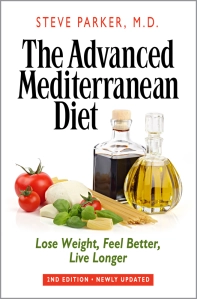
Steve Parker MD, Advanced Mediterranean Diet

Two diet books in one


Brief Review of P.D. Mangan’s “Best Supplements for Men: for more muscle, higher testosterone, longer life, and better looks”

Death in a bottle?

Best Supplements for Men was published in 2017 so should still be up to date. I have the paperback but it’s also available as a Kindle e-book. Per Amazon.com’s rating system, I give it five stars (I love it).

*  *  *

My favorite sentence in this book is, “If you don’t eat, exercise, and sleep right, the health effects of adding any supplement may be minimal to non-existent.” That sets an honest tone. Also in favor of integrity is that the author doesn’t offer Mangan-branded supplements for sale.

I like this book. I learned a lot from it. I’ve benefited by reading the author’s tweets and blog (Rogue Health and Fitness) for several years. He’s smart and, I believe, honest.

The author supports his assertions with numerous scientific references, organized by chapter at the back of the book. If he cites a study done in mice, he tells you. Human studies admittedly carry more weight.

Have you wondered if protein supplements and creatine are good for muscle strength and energy? Does magnesium increase testosterone levels? Does berberine have beneficial health effects? The answers are here.

The author gives good advice regarding calcium supplements that even most physicians don’t know about.

Great recommendations on food.

No book is perfect, and this one is no different. It has no index. So if you’re curious about turmeric or supplements that control diabetes, you have to scan the whole book. My copy didn’t include references for chapter 11. Page numbers for chapters in the index didn’t match the actual chapter starts. My least favorite sentence in the book was something about Dr. Joseph Mercola being a trustworthy source of health information; he is not (search “mercola” at ScienceBasedMedicine.org).

Again, I like this book, learned much from it, and recommend it to men. If you’re taking lots of supplements now, read this book to find out if they help, harm, or are only good for making expensive urine.

Steve Parker, M.D.

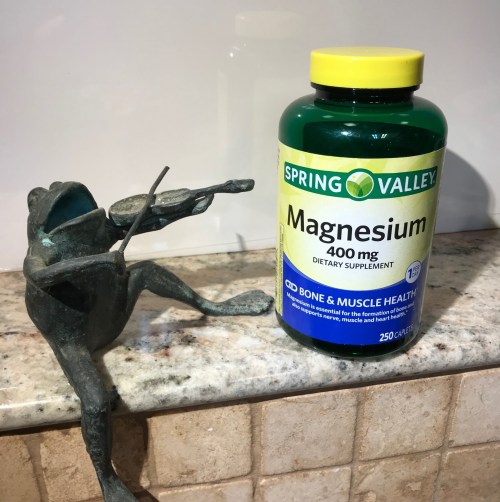
PS: Some personal notes from my reading. Many of the cited studies are “association”-type evidence  rather causation. Berberine may help reduce blood sugars in diabetics just as well as metformin. Creatine: Yes, for muscle growth and strength. Magnesium 700 mg/day increases testosterone. Mag oxide may be worthless due to poor absorption. Mangan likes mag citrate but Lexicomp says it’s no better than oxide; absorption “up to 30%.” Citrulline: Yes, for ED, and may help with HTN. DHEA 50 mg/day increases testosterone in men by 50%, but only in men over 70. During fat weight loss, whey protein helps prevent muscle loss. MCT oil may also help (e.g., cook with coconut oil). ASA 81 mg/day seems to prevent some cancers in folks over 55, especially colorectal cancer.

Nuttin’ But Salads N=1 Experiment: Week 4 Summary

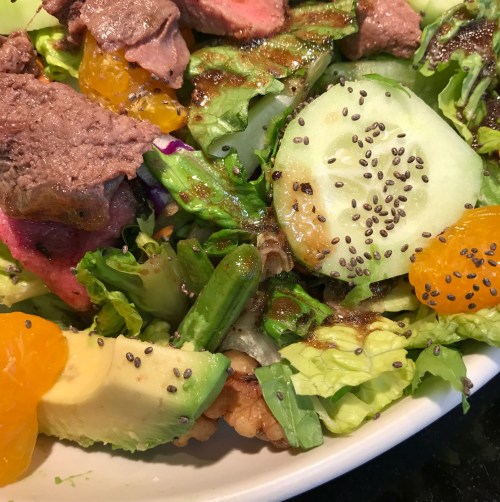
Mixed greens, cheese, walnuts, sous vide chicken, mandarin orange wedges, dried cranberries

My weight is down to 165.8 lb (75.4 kg), compared to 167.4 lb (76.1 kg) last week.

Nuh-uh

I feel good. Workouts are going well. No muscle cramps. I’m feeling a bit chilly much of the time, but that may be because winter finally came to southern Arizona.

Found in the hospitalist office. Not a salad. Didn’t eat any.

I’m eating two big salads a day and that’s it. Remember, I’m relatively sedentary so don’t need lots of calories. If I had a physical job, I might need to eat more often. I’m not bothered much by hunger or temptation. I wonder if I’m in ketosis. Perhaps proper mindset is a large part of my success.

I’m starting to wonder if I might eventually see my six-pack abs. They’re in there. Under an inch of fat.

 Steve Parker, M.D. 

Omega-3 Fatty Acids Linked to Lower Multiple Sclerosis Risk 

Dead whole fish aren’t very appealing to many folks

I’ve been telling you guys for years to eat cold-water fatty fish twice weekly. To protect your heart. Now we have another reason…

“Omega-3 fatty acids may play an important role in lowering the risk of developing multiple sclerosis (MS), researchers suggested.Consuming fish at least once a week — or at least once a month with regular fish oil use — was associated with a 44% reduced risk of MS or its precursor, clinically isolated syndrome (CIS), reported Annette Langer-Gould, MD, PhD, of Kaiser Permanente Southern California in Pasadena, CA, and co-authors, in an early-release abstract from the American Academy of Neurology annual meeting, to be held here in April.”

Source: Omega-3s Linked to Lower MS Risk | Medpage Today

Can You Tell Me About Nutritics?

I’m thinking about using Nutritics for my nutrient analysis, rather than some of the free options like SparkPeople or FitDay. NutritionData still seems to be very popular, too, but they don’t keep up with new versions of the USDA database (currently on Release 28). The fine print at NutritionData shows they use Release 21. FitDay doesn’t say.

I looked up two cups of broccoli florets at FitDay and NutritionData, and was surprised to see zero grams of fiber. How could that be correct? Nutritics shows 3.3 grams, as does the USDA Nutrient Database. I believe Nutritics and USDA on this one. The free nutrient analysis tools you find on the internet all use some version of the USDA database as far as I know.

Click the link below to see Nutritics’ report.

https://www.nutritics.com/app/rec/4b82cb50b2

In that report you’ll see “%RI”, which I assume is short for  percentage of Dietary Reference Intake. The National Health Institutes defines DRI or Dietary Reference Intake:

DRI is the general term for a set of reference values used to plan and assess nutrient intakes of healthy people. These values, which vary by age and gender, include:

  • Recommended Dietary Allowance (RDA): average daily level of intake sufficient to meet the nutrient requirements of nearly all (97%-98%) healthy people.

  • Adequate Intake (AI): established when evidence is insufficient to develop an RDA and is set at a level assumed to ensure nutritional adequacy.

  • Tolerable Upper Intake Level (UL): maximum daily intake unlikely to cause adverse health effects.

So what does Nutritics mean by %RI? I don’t know yet.

Any comments on Nutritics, or your source for nutritional analysis?

Steve Parker, M.D.

Which Foods Make People Fat?

At my other Advanced Mediterranean Diet website, a few years ago I asked visitors to answer a poll question. 2,367 responded thusly:

What single food category makes you gain the most fat weight?Fatty foods like bacon, butter, oils, nuts:
5%
Protein-rich foods: meat, eggs, fish:
0%
Sugary sweet items:
23%
Starches: bread, potatoes, peas, corn:
16%
Carbohydrates:
30%
Pastries, cake, pie, cookies:
25%
Other:
1%

Total Votes: 2367

Yes, I know it’s not a scientific poll, but it’s something. I’m not surprised at the results. I’m wishing I’d offered nuts as a choice since there are at least a few folks who gain weight on nuts, perhaps not realizing that nut calories are mostly from fat.

Steve Parker, M.D.

Ketogenic Diets Resurgent

https://platform.twitter.com/widgets.js

Click the top link above for a five-year Google trend on “ketogenic diet.” WordPress.com doesn’t allow me to embed the graph and I’m not smart enough to use WordPress.org.

A snippet from a recent NBCNews article:

“A main benefit of the diet, and why many of its followers praise the eating plan, is weight loss. Multiple studies show promising results: In a study in The American Journal of Clinical Nutrition, obese men dropped about 14 pounds after following the diet for a month. And in a longer-term study published in Clinical Cardiology, obese adults adhering to a ketogenic diet for about six months noticed significant weight loss — on average, 32 pounds — as well as reductions in total cholesterol and increases in beneficial HDL cholesterol. A review study in the European Journal of Clinical Nutrition also found that the weight loss seen within the first three to six months of following the keto diet was greater than the loss from following a regular balanced eating style.”

Source: Happier, Healthier, Smarter, BETTER: Life tips | NBC News

So I expect to sell more copies of my KMD: Ketogenic Mediterranean Diet book. Someone’s keto Mediterranean diet is even mentioned in the NBC News article.

Front cover


Nuttin’ But Salads N=1 Experiment: Week 3 Summary

Peanut M&Ms in my employer’s office at the hospital. Very tempting but not salad, so not going down my gullet.

Weight today is 167.4 lb (76.1 kg) compared to 168 lb last week, so may or may not be a significant drop. Weight when I started three weeks ago was 175.5 lb (79.8 kg).

Mozzarella cheese, shrimp, roasted garlic cloves, olives, salami, spinach, tomato, and roasted peppers from a jar

Chicken salad on a bed of greens plus tomatoes and strawberries

Salami, greens, olives, cheese, fresh basil

Left-over chicken from El Pollo Loco, greens, avocado, blackberries, pecans, strawberries

Caprese salad-style platter that the whole family munched on. With olive oil and vinegar.

Similar to one above

I was running late for work, didn’t have time to make a salad, so I threw these into my lunch bucket as a substitute: canned oysters and mackerel, apple, avocado

Microwaved pre-cooked frozen meatballs on a bed of mixed greens including asparagus sautéed in butter

Not salad, so not eating it. M&Ms in the Resident’s Office at the hospital.

I feel good. Workouts are going well. I’ve had a few nocturnal muscle cramps like when I was on my ketogenic diet several years ago. I wonder if a calcium supplement would suppress those cramps, but they don’t bother me enough to even fool with it. I’ve been taking mag oxide 800 mg/day for a while, hoping it will keep keep a lid on my blood pressure.

Steve Parker, M.D.

PS: That serving of mackerel provides 31% of the RDA for vitamin D, 20 grams of protein, 773 mg of omega-3 fatty acids, and 15% of the calcium RDA. That vitamin D is important to me since I’m not getting much sun now, and this salad diet may be an insufficient source. Calcium intake may also be inadequate. I haven’t done any nutrient analysis yet.

PPS: Or maybe I shouldn’t worry about adequate nutrients. Don Gorske is on target eat his 30,000th McDonald’s Big Mac on May 4. Two of the burgers a day is about all he eats!

Dietary Fat Linked to Loss of Skeletal Muscle Mass in Women

Loss of skeletal muscle is one hallmark of the aging process. Look around and you’ll see it everywhere. That muscle loss, in turn, contributes to dependency and falls. But as always, remember that correlation is not causation. So the study results may not hold up over time. And we don’t know if they apply to men. Click the link below for all the juicy details.

“To our knowledge, this is the first population-based study to demonstrate an association between a comprehensive range of dietary fat intake and fat-free mass.”

Source: Dietary Fat and Fatty Acid Profile Are Associated with Indices of Skeletal Muscle Mass in Women Aged 18–79 Years | The Journal of Nutrition | Oxford Academic

Which Salad Greens Are the Most Nutritious?

Kale on the left, mustard greens on the right

Since I’m eating nuttin’ but salads these days, I want to be sure I’m getting adequate nutrition. There are about 40 essential vitamins, minerals, amino acids, and fatty acids, “essential” meaning necessary for life and health.

I haven’t found a good source yet for estimates of non-vitamin anti-oxidants and other non-essential nutrients. There are probably hundreds of these that are not essential for life, but optimize health and longevity.

FitDay makes it easy to compare multiple nutrients in various foods. Their standard analysis includes fiber, vitamin A, vitamin B-6, vitamin B12, vitamin C, vitamin D, vitamin E, calcium, copper, iron, magnesium, manganese, pantothenic acid, phosphorus, riboflavin, selenium, thiamine, and zinc.

I compared 12 salad greens for content of these 18 nutrients. Here’s how they stack up, with the most nutritious first and least nutritious last. If two cups of the item provide at least 20% of the Recommended Dietary Allowance for a specific nutrient, I’ve listed it in parentheses.

  1. Dandelion greens (vitamins A, vitamin C, vitamin E, copper, iron, riboflavin)
  2. Kale (vitamin A, vitamin B-6, vitamin C, copper, iron, mangenese)
  3. Brussels sprouts (fiber, vitamin B-6, vitamin C, iron, manganese, thiamine)
  4. Cabbage, green (vitamin C)
  5. Spinach (vitamin A, iron, manganese)
  6. Chard (vitamin A, vitamin C)
  7. Celery
  8. Cucumber
  9. Collards (vitamin A, vitamin C)
  10. Lettuce, romaine or cos (vitamin A, vitamin C)
  11. Lettuce, green leaf (vitamin A)
  12. Lettuce, presumptively iceberg

Dandelion greens and kale are the clear stand-outs, a coin toss to declare one better than the other. Brussels sprouts and cabbage have very similar profiles. Spinach and chard were close. Iceberg lettuce doesn’t have much to recommend it. The list above is essentially one of descending nutrient density.

To learn more about nutrient density, visit Marty Kendall at Optimising Nutrition.

Have I left out any of your favorite salad greens?

Steve Parker, M.D.