
That excess weight can shorten your life
If you’re down at least 4–5 pounds (2.5 kg) since Jan. 1, that’s great. Keep it up. But most folks did well for a couple weeks and started gaining the weight back. Don’t be too hard on yourself. Weight management is not a walk in the park. You probably weren’t adequately prepared for the challenge.
Longterm success requires careful forethought. That’s why I’ve written this eight-part series.
Questions beg for answers. For example . . .
Which of the myriad weight-loss programs will I follow? Can I design my own program? Should I use a diet book? Sign up for Nutri-System, Weight Watchers, or Jenny Craig? Should I stop wasting my time dieting and go directly to bariatric surgery? Can I simply cut back on sodas and chips? What should I eat? What should I not eat? Do I need to start exercising? What kind? How much? Do I need to join a gym? What methods are proven to increase my odds of success? How much weight should I lose? Should I use weight-loss pills or supplements? Which ones? What’s the easiest, most effective way to lose weight? Is there a program that doesn’t require willpower? Now, what were those “top 10 super-power foods” that melt away the fat? Am I ready to get serious and stick with it this time?
This series will answer many of these questions and get you teed up for success. Teed up like a golfer ready to hit his first shot on hole #1 of an 18-hole course. Take 10 minutes to read the following articles. The time invested will pay dividends for years.

C’mon now. Let’s be realistic.
Part 1: Motivation
Immediate, short-term motivation to lose weight may stem from an upcoming high school reunion, swimsuit season, or a wedding. You want to look your best. Maybe you want to attract a mate or keep one interested. Perhaps a boyfriend, co-worker, or relative said something mean about your weight. These motivators may work, but only temporarily. Basing a lifestyle change on them is like building on shifting sands. You need a firmer foundation for a lasting structure. Without a lifestyle change, you are unlikely to vanquish a chronic overweight problem. Proper long-term motivation may grow from:
- the discovery that you feel great and have more energy when you are lighter and eating sensibly
- the sense of accomplishment from steady progress
- the acknowledgment that you have free will and are responsible for your weight and many aspects of your health
- the inspiration from seeing others take charge of their lives successfully
- the admission that you have some guilt and shame about being fat, and that you like yourself more when you’re not fat [I’m not laying shame or guilt on you; many of us do it to ourselves.]
- the awareness of overweight-related adverse health effects and their improvement with even modest weight loss.
Appropriate motivation will support the commitment and willpower that will be needed soon.
PS: I’m thinking of how Dave Ramsay, when he’s counseling people who have gotten way overhead in debt, tells them they have to get mad at the debt. Then they can attack it. Maybe you have to get mad at your fat. It’s your enemy, dragging you down, trying to kill you. Now attack it!
Part 2: The Energy Balance Equation
An old joke from my medical school days asks, “How many psychiatrists does it take to change a light bulb?” Only one, but the light bulb must want to change.
How many weight-loss programs does it take before you lose that weight for good? Only one, but…
Where does the fat go when you lose weight dieting? Metabolic reactions convert it to energy, water, and carbon dioxide, which weigh less than fat. Most of your energy supply is used to fuel basic life-maintaining physiologic processes at rest, referred to as resting or basal metabolism. Basal metabolic rate (BMR) is expressed as calories per kilogram of body weight per hour. Even at rest, a kilogram of muscle is much more metabolically active than a kilogram of fat tissue. So muscular lean people sitting quietly in a room are burning more calories than are fat people of the same weight sitting in the same room.
The major determinants of BMR are age, sex, and the body’s relative proportions of muscle and fat. Heredity plays a lesser role.
Energy not used for basal metabolism is either stored as fat or converted by the muscles to physical activity. Most of us use about 70 percent of our energy supply for basal metabolism and 30 percent for physical activity. Those who exercise regularly and vigorously may expend 40–60 percent of their calorie intake doing physical activity. Excess energy not used in resting metabolism or physical activity is stored as fat.
If you want to lose excess weight and keep it off, you must learn the following equation:
The energy you eat,
minus the energy you burn in metabolism and activity,
determines your change in body fat. [read more]

Cute mouse, but a slave to instincts.
Part 3: Free Will
The only way to lose excess fat weight is to cut down on the calories you take in, increase your physical activity, or do both.
Oh, sure. You could get a leg amputated, develop hyperthyroidism or out-of-control diabetes, or have liposuction or bariatric surgery. But you get my drift.
Although the exercise portion of the energy balance equation is somewhat optional, you must reduce food intake to lose a significant amount of weight. Once you reach your goal weight you will be able to return to nearly your current calorie consumption, and even higher consumption if you have increased your muscle mass and continue to be active.
Are you be able to reduce calorie intake and increase your physical activity temporarily? It comes down to whether we have free will. Free will is the power, attributed especially to humans, of making free choices that are unconstrained by external circumstances or by an agency such as divine will.
Will is the mental faculty by which one chooses or decides upon a course of action; volition.
Willpower is the strength of will to carry out one’s decisions, wishes, or plans.
If we don’t have free will, you’re wasting time trying to lose weight through dieting; nothing will get your weight problem under control. Even liposuction and weight-reduction stomach surgery will fail in time if you are fated to be fat. The existence of free will is . . . [read more]
Part 4: Starting New Habits
You already have a number of good habits that support your health and make your life more enjoyable, productive, and efficient. For example, you brush your teeth and bathe regularly, put away clean clothes in particular spots, pay bills on time, get up and go to work every day, wear your seat belt, put your keys or purse in one place when you get home, balance your checkbook periodically.
At one point, these habits took much more effort than they do now. But you decided they were the right thing to do, made them a priority, practiced them at first, made a conscious effort to perform them on schedule, and repeated them over time. All this required discipline. That’s how good habits become part of your lifestyle, part of you. Over time, your habits require much less effort and hardly any thought. You just do it.
Your decision to lose fat permanently means that you must establish some new habits, such as regular exercise and reasonable food restriction. You’ve already demonstrated that you have self-discipline. The application of that discipline to new behaviors will support your commitment and willpower.

Exercise isn’t very important for weight loss, but critical for preventing weight regain.
Part 5: Supportive Social System
Success at any major endeavor is easier when you have a supportive social system. And make no mistake: losing a significant amount of weight and keeping it off long-term is a major endeavor.
As an example of a supportive social system, consider childhood education. A network of actors play supportive roles. Parents provide transportation, school supplies, a home study area, help with homework, etc. Siblings leave the child alone so he can do his homework, and older ones set an example. Neighbors may participate in carpooling. Taxpayers provide money for public schools. Teachers do their part. The school board oversees the curriculum, supervises teachers, and does long-range planning.
Success is more likely when all the actors work together for their common goal: education of the child. Similarly, your starring role in a weight-loss program may win an Academy Award if you have a strong cast of supporting actors. Your mate, friends, co-workers, and relatives may be helpers or hindrances. It will help if they . . . [read more]
Part 6: Weight Goals
Despite all the chatter about how to lose weight, few talk about how much should be lost.
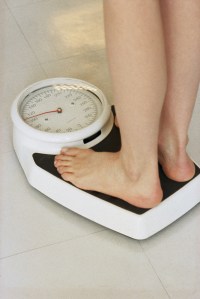
Down 4 pounds in 6 months. I’ll take it!
If you are overweight, deciding how much weight you should lose is not as simple as it seems at first blush. I rarely have to tell a patient she’s overweight. She knows it and has an intuitive sense of whether it’s mild, moderate, or severe in degree. She’s much less clear about how much weight she should lose. If it’s any consolation, clinicians in the field aren’t always sure either.
Five weight standards have been in common usage over the last quarter-century . . . [read more]
Part 7: Creative Visualization
How will your life be different after you make a commitment and have the willpower to lose weight permanently?
Odds are, you will be more physically active than you are now. Exercise will be a habit, four to seven days per week. Not necessarily vigorous exercise, perhaps just walking for 30 or 45 minutes. It won’t be a chore. It will be pleasant, if not fun. The exercise will make you more energetic, help you sleep better, and improve your self-esteem.
After you achieve your goal weight, you’ll be able to cut back on exercise to three or four days per week, if you want. If you enjoy eating as much as I do, you may want to keep very active physically so that you can eat more. I must tell you that I rarely see anyone lose a major amount of weight and keep it off without . . . [read more]
Part 8: Choosing A Program
I listed most of your weight-loss program options in the introductory comments to this series. Now it’s time to make a choice. And it’s not easy sorting through all the options.
Straight away, I must tell you that women over 300 pounds (136 kg) and men over 350 pounds (159 kg) rarely have permanent success with self-help methods such as diet books, meal replacement programs, diet pills or supplements, and meal-delivery systems. People at those high weights who have tried and failed multiple different weight-loss methods should seriously consider bariatric surgery.
I respect your intelligence and desire to do your “due diligence” and weigh all your options: diet books, diet pills and supplements, bariatric surgery, meal replacement products (e.g., SlimFast), portion-control meal providers (e.g., NutriSystem), Weight Watchers, fad diets, no-diet diets, “just cutting back,” etc. You have to make the choice; I can’t make it for you. Here are some well-respected sources of advice to review before you choose . . . [read more]
Last modification date: November 1, 2017






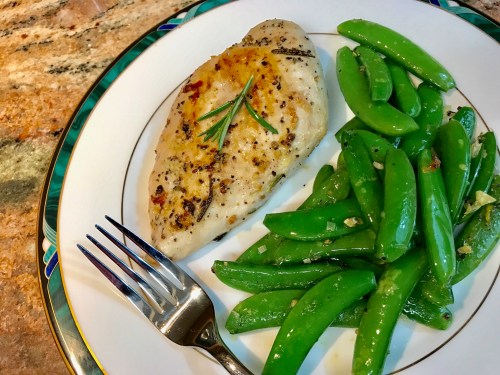





 Advanced Mediterranean Diet