Category Archives: Coronavirus

In the U.S., #COVID19 Deaths Disproportionately Impact Blacks #Coronavirus

“Go back! This is a quarantine zone.”

African Americans and nursing home residents are way over-represented among the deceased from COVID-19.

From JAMA Network:

In Chicago, more than 50% of COVID-19 cases and nearly 70% of COVID-19 deaths involve black individuals, although blacks make up only 30% of the population. Moreover, these deaths are concentrated mostly in just 5 neighborhoods on the city’s South Side. In Louisiana, 70.5% of deaths have occurred among black persons, who represent 32.2% of the state’s population. In Michigan, 33% of COVID-19 cases and 40% of deaths have occurred among black individuals, who represent 14% of the population. If New York City has become the epicenter, this disproportionate burden is validated again in underrepresented minorities, especially blacks and now Hispanics, who have accounted for 28% and 34% of deaths, respectively (population representation: 22% and 29%, respectively).

Source: COVID-19 and African Americans | Health Disparities | JAMA | JAMA Network

Steve Parker, M.D.

Steve Parker MD, Advanced Mediterranean Diet

Click the pic to purchase at Amazon.com. E-book versions also available at Smashwords. com.

Demonstration of Nasopharyngeal Swabbing for #COVID19    #Coronavirus 

If you’re curious, click the link to see the video. I understand the test is very uncomfortable for many. From NEJM:

This video demonstrates the collection of specimens from the surface of the respiratory mucosa with nasopharyngeal swabs for the diagnosis of Covid-19 in adults and in children. It is important to use approved PPE and the appropriate technique to minimize the possibility of spreading the virus.

Source: How to Obtain a Nasopharyngeal Swab Specimen | NEJM

Is Hypertension a True Risk Factor for Serious Illness from #COVID19? #Coronavirus

“I’ll practice extreme social distancing even after house-arrest is lifted for others.”

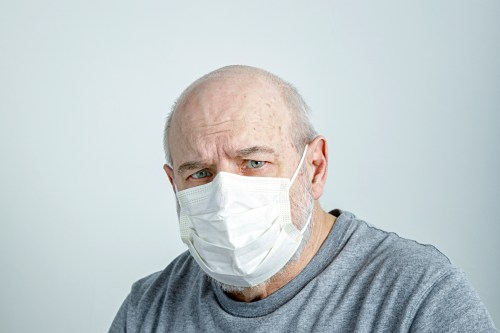
BREAKING NEWS: Gray hair is a risk factor for serious COVID-19 infection.

I keep reading that hypertension (high blood pressure) makes one vulnerable to COVID-19. For instance, many patients hospitalized in New York  had hypertension. The implication is that something about hypertension weakens your immune system such that you’re more likely to die.

In the study linked above, average age of all hospitalized was 63. Fifty-seven percent of them had hypertension. Most healthcare providers know that the prevalence of hypertension rises with age. So you’d expect lots of 63-year-olds to have hypertension. At least 25% of them, right?

With just ten seconds of googling, I found that the prevalence of hypertension in the U.S. for those 60 and older is 63%. I fully expect my blood pressure would be higher than it is now if I lived in New York City, which I’ll never do.

If you’re 63-years-old and hospitalized in New York City for anything, odds are you’re likely to have hypertension. Just like you’re more likely to have gray hair than someone younger. Hypertension and gray hair are incidental markers for advancing age. They don’t per se increase your risk of serious illness from COVID-19.

Now, that being said, be aware that uncontrolled hypertension can damage some major organs that are important for health and longevity. That’s why we treat it. That damage can weaken your heart, kidneys, arteries, and brain. You need those systems to help you fight off any serious infection, not just COVID-19. If you already have organ damage from uncontrolled hypertension, I’ll bet that increases your chances of a bad outcome from any serious infection. Regarding hypertension and function of the immune system, I’m not aware of any good data or connection.

My first link above was to a JAMA Network article detailing the co-morbidities of over 5,000 New York City area residents hospitalized with COVID-19. A few other data points from it:

  • 42% were obese. What’s the obesity rate for 63-year-olds in New York City? I don’t know. Among all adults in New York state, the prevalence of obesity is 28%. This is about 3 points lower than the national average.
  • 34% had diabetes. The study authors don’t make it easy to find, but I bet this is mostly type 2 diabetes. I don’t know the prevalence of diabetes in New York City. In the U.S. overall, among those 65 or older, the prevalence of diabetes is 27%. I’d say at least 90% of that is type 2 diabetes. That 27% includes the 5% who don’t know they have it.
  • Mortality rates for those who received mechanical ventilation in the 18-to-65 and older-than-65 age groups were 76.4% and 97.2%, respectively. Those mortality rates are scary high, but let’s not put too much emphasis on them yet since some of these folks were still in the hospital at the time the report was prepared.

Tracheal intubation in prep for mechanical ventilation

Bottom Line

If I were a 30-years-old and had well-controlled hypertension or gray hair, I wouldn’t worry much about my risk of COVID-19. On the other hand, if I were obese, I’d work on fixing that, starting NOW. Regarding diabetes, if you can’t cure it, keep it under control.

Steve Parker, M.D.

PS: Did you know the definition of hypertension changes over time? Even the one below is outdated. The linked CDC report above used this definition:

Hypertension: Systolic blood pressure greater than or equal to 140 mmHg or diastolic blood pressure greater than or equal to 90 mmHg, or currently taking medication to lower high blood pressure.

PPS: Admittedly, “60 and older” includes 93-year-olds.   You may argue that the incidence of hypertension among 93-year-olds is 85% compared to 45% in 60-70 year-olds. Please do the research and show your work. I’m out of time.

PPPS: Overall prevalence of hypertension in the U.S. is 29%. Curious about the incidence of hypertension in other U.S. age groups?

  • age group 18-39: 7.5%
  • age 40-59: 33.2%
  • 60 and over: 63.1%
Steve Parker MD, Advanced Mediterranean Diet

Click the pic to purchase at Amazon.com. E-book versions also available at Smashwords. com.
Click pic to purchase at Amazon.com. E-book versions also available at Smashwords. com.

 

Smoke fags, save lives: #Cigarettes May Prevent #COVID19 #Coronavirus

“I knew my doctor was FOS”

From Spiked:

There’s not much to laugh about these days, but the news that smokers might be protected from Covid-19 is certainly one of them. With study after study showing that smokers are under-represented in coronavirus wards, the renowned French neuroscientist, Jean-Pierre Changeux, is working on a randomised control trial to test the effect of nicotine patches on Covid-19 patients.

This is far from being a crackpot theory. Changeux has explained his hypothesis at length here. In simple terms, he says that nicotinic acetylcholine receptors play a key role in the development of the disease and that nicotine can put a brake on it. If he is right – and the banter heuristic says he is – it would not only save thousands of lives but would also be one in the eye for the ‘public health’ groups who have been claiming that smoking and vaping are risk factors for Covid-19.

Source: Smoke fags, save lives – spiked

It would be premature to start a smoking habit. And nicotine is not the same a cigarette smoke.

Steve Parker, M.D.

Click pic to purchase book at Amazon.com. E-book versions are also at

Connecting the Dots: Italy, China, and the #Coronavirus #COVID19

Are you tired of this pic yet?

Did the large Chinese population in northern Italy contribute the devastating COVID-19 epidemic there?

From American Renaissance:

For decades, a large, sometimes hostile Chinese community has worked in the Italian fashion and textile industries. Immigrants — legal and illegal — started as a cheap, “exploited” labor source that allowed high-fashion companies to slap a “Made in Italy” label on products churned out in sweatshops. Now, Chinese own many off-the-books factories, ignoring employment and safety laws, and dodging taxes. They are also carving out a competitive niche in the fashion industry, and even buying up iconic Italian companies.

Was the China connection the reason the coronavirus outbreak hit Italy so hard and so early? So much immigration has been illegal — and so many Chinese factories don’t even exist on paper — that contact tracing and other disease control measures were impossible.

The odd thing about the author’s theory is that there doesn’t seem to have been an outbreak of COVID-19 in the Chinese community in Prato, Italy.

Italian seaside tangentially related to this post

Source: Italy, China, and the Coronavirus – American Renaissance

Steve Parker, M.D.

Steve Parker MD, Advanced Mediterranean Diet

Click the pic to purchase at Amazon.com. E-book versions also available at Smashwords. com.
How a Nurse Cared for her #COVID19 Physician Husband at Home #Coronavirus

The caregiver below had a milder case of COVID-19

The Federalist on April 19, 2020, published a story on home care of the COVID-19 patient. The narrator is a retired community health nurse and the patient is her husband of 49 years, an oncologist.

I’ve mentioned “proning” before:

The key reason people go to the hospital with COVID is difficulty in breathing. When my husband started to feel his breathing become more strained, he asked his doctor to order an oxygen tank that he could use at home. Many people may not realize that home oxygen is even a possibility, but it is prescribed for many conditions and there are companies that provide oxygen with systems meant to be used by non-medical professionals, delivered through simple tubes into the nose.

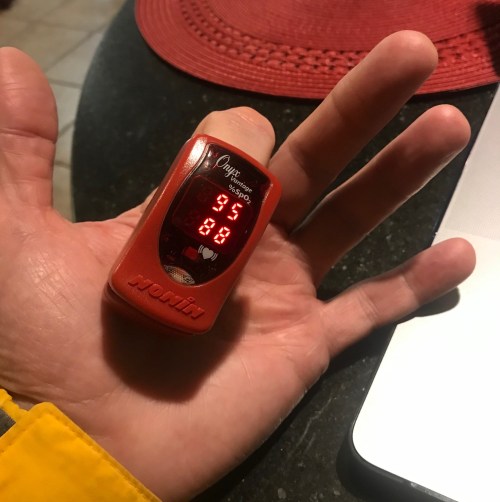
Along with the oxygen, we got an oximeter to measure oxygen saturation in the blood. It’s the little device they often clip onto your finger in a hospital. They’re available at some pharmacies, and we later learned that the oxygen company had a few as well. Having the ability to monitor oxygen levels at home was key to being able to gauge whether it was still safe to be at home and whether things were getting better or worse.

Another simple technique that is now being employed widely in hospitals, is that of sleeping prone, on one’s abdomen. Many hospitals are trying to keep COVID patients face-down for 16 hours a day, with them sitting up the other eight. That maximizes the lungs’ ability to work effectively, which is hard on one’s back. For my husband it was particularly uncomfortable because of a previous neck surgery, but by monitoring his oxygen saturation we could see how helpful it was.

When his oxygen was at 92 percent on his back, it jumped to 97 percent on his abdomen. We would have had to double his supplemental oxygen to get that kind of improvement. When he didn’t want to stay in that position, I used several strategies to keep him there.

I recommend the entire article to you even though I’m not on board (yet?) with hydroxychloroquine and azithromycin and steroids. Nearly all experts I’ve read recommend against the steroids. The steroids may have been given early-on in the epidemic when we really had no idea.

A pulse oximetry device like this was helpful in the case at hand

Steve Parker, M.D.

Steve Parker MD, Advanced Mediterranean Diet

Click the pic to purchase at Amazon.com. E-book versions also available at Smashwords. com.

ZDoggMD Interviews Dr Scott Weingart on Emergency Management of #COVID19 Respiratory Failure

Is O2 saturation of 80-85% good enough without intubating some folks?

Z hits another one out of the ballpark with his interview of a front-line virus warrior. This if fairly technical so you won’t get much out of it unless you’re a hospital nurse, respiratory therapist, or physician. Move along. The basic issue addressed is: what’s the best way to get life-preserving oxygen into a patient with scary-low blood oxygen levels. Who needs to be intubated and mechanically ventilated? Are we doing more harm than good when we intubate?

I’m not sure if Dr Weingart is an emergency medicine physician or intensivist (ICU specialist) or both. He works somewhere on the east coast.

This is a young woman. How about putting this tube into a 95-year-old incurable advanced dementia patient?

Some personal take-away points for me:

  • The concept of the “happy hypoxemic” patient: Despite oxygen saturation 75-85% (scary low), the patient is alert, talking, comfortable, tapping on their phone. Respiratory rate may be 25–35 or even higher (normal is under 20) but they don’t mind. Taking fairly deep breaths, not dog-panting. Don’t rush to intubate!
  • Good idea: Intermittent pr0ning of non-intubated patients to improve oxygen levels. Prone position is lying on your stomach.
  • The happy hypoxemic patient will have low pCO2 on arterial blood gas. May be acidotic (low pH) early on. But if pCO2 starts to rise to normal levels (or above) while patient is still breathing fast and hypoxemic? Probably not long before intubation needed.
  • High-flow nasal cannula oxygen may be OK after all, as long as wearing surgical mask over it. (Some experts say to avoid this oxygen delivery system since it may aerosolize virus into the hospital room, spreading disease to healthcare providers.)
  • After intubation, multi-organ failure often ensues. Unclear whether that deterioration is caused by intubation/mechanical ventilation or not. Was the patient headed down that road anyway?
  • Most non-U.S. countries don’t allow the patient or responsible party to “force” physicians to provide mechanical ventilation. If such therapy is futile, it’s not discussed or offered as an option. I assume the same applies to resuscitation of cardiac arrest.
  • Dr Weingart is seeing unusually high numbers of critically ill young patients with COVID-19. E.g., 35-45 years old. Unclear why.

There is still a huge amount we don’t know about this disease. Any points made in my bullet points or the video may be invalidated tomorrow.

Fortunately, at my hospital in Scottsdale, AZ, the expected COVID-19 surge never materialized, and it probably won’t in the near future. This epidemic is fading. I’m not particularly concerned about an outbreak after the unconstitutional house-arrest is lifted, except for those at high risk for serious illness. Click for my current advice if you’re at risk.

Steve Parker, M.D.

Steve Parker MD, Advanced Mediterranean Diet

Click the pic to purchase at Amazon.com. E-book versions also available at Smashwords. com.

How Do Total #COVID19 Deaths Compare to Other Recent Viral Epidemics? #Coronavirus

Pandemic or Panic-demic?

We don’t know yet since it’s still going on. The U.S. COVID-19 death toll thus far is around 50,000, with New York and New Jersey accounting for 40% of the total.

But for future reference…

The 2017-2018 flu season was a particularly lethal one.

CDC estimates that the burden of illness during the 2017–2018 season was high with an estimated 45 million people getting sick with influenza, 21 million people going to a health care provider, 810,000 hospitalizations, and 61,000 deaths from influenza (Table 1). The number of cases of influenza-associated illness that occurred during 2017-2018 was the highest since the 2009 H1N1 pandemic, when an estimated 60 million people were sick with influenza.

Remember the H1N1 flu pandemic of 2009-2010? Most folks don’t. I don’t. And like now, I was a full-time hospitalist then.

From April 12, 2009 to April 10, 2010, CDC estimated there were 60.8 million cases (range: 43.3-89.3 million), 274,304 hospitalizations (range: 195,086-402,719), and 12,469 deaths (range: 8868-18,306) in the United States due to the (H1N1)pdm09 virus.

The 1968 Hong Kong (H3N2) flu pandemic:

The estimated number of deaths was 1 million worldwide and about 100,000 in the United States. Most excess deaths were in people 65 years and older.

The 1957-1958 Asian flu (H2N2) pandemic:

The estimated number of deaths was 1.1 million worldwide and 116,000 in the United States. [U.S. population in 1957 was 172 million, half what it is now.]

One difference between those flu epidemics and COVID-19 is that the flu deaths were spread out over more months.

Did we quarantine the entire citizenry during those flu epidemics and paralyze the economy? No.

Are we a nation of pansies now?

Steve Parker, M.D.

PS: I’m not sure if AIDS was ever classified as an epidemic. But between 1985 and 2013, about 675,000 people in the U.S. died of or with AIDS.

Steve Parker MD, Advanced Mediterranean Diet

Click the pic to purchase at Amazon.com. E-book versions also available at Smashwords. com.


Despite “miracle cure” testimonials #hydroxychloroquine and #azithromycin probably do not work against #COVID19 #Coronavirus

Artist’s rendition of Coronavirus

How does he find the time to do it? Dr David Gorski at Science Based Medicine hits another one out of the ballpark:

The COVID-19 pandemic has been a golden opportunity for quackery and antivaccine conspiracy theories. This is not unexpected, given the size and the current lack of specific therapies for the disease other than supportive care and the current death toll. However, there is another assault on evidence- and science-based medicine that doesn’t come from quacks (although quacks have definitely joined in on the attack). Rather, it comes from desperate and/or opportunistic doctors who, either through a terrified imperative to “do something, anything” in the face of dying patients whom they can’t save or from self-aggrandizing doctors like Dr. Mehmet Oz, Didier Raoult, and others, who, drunk with the arrogance of ignorance and loving the attention, promote unproven treatments with no evidence an irresponsible attitude of, “What harm could it do?” (Answer: A lot. The specific drugs, chloroquine and hydroxychloroquine, have toxicities that have been well-known since the 1960s.) Add to that politicians like Donald Trump, full of magical thinking and possessed of a long history of selling snake oil himself, glommed onto these drugs as the solution to the pandemic before clinical trials showed any benefit.

***

I agree with Dr Gorski’s overall assessment:

I’ll conclude by simply saying this. Taken together, the evidence that hydroxychloroquine, chloroquine, or the hydroxychloroquine/azithromycin combination is an effective treatment for COVID-19 is getting weaker with every publication, to the point where I am 95% sure now that they either don’t work or that any benefit they might have will be outweighed by side effects. Could I still be wrong? Sure, and I’d be happy to be wrong given the desperate need for effective treatments against COVID-19. But I don’t think I am. In the end, the hype over these drugs and particularly the rush by doctors on the flimsiest of evidence to make hydroxychloroquine, in essence, a standard of care, have shown just how weak most doctors’ allegiance to evidence-based medicine is and represent one of the most massive failures of EBM that I can recall.

Source: “Miracle cure” testimonials aside, azithromycin and hydroxychloroquine probably do not work against COVID-19 – Science-Based Medicine

Steve Parker, M.D.

PS: In New York, they found obesity linked to severity of COVID-19 illness.  I can help you with that.

Steve Parker MD, Advanced Mediterranean Diet

Click the pic to purchase at Amazon.com. E-book versions also available at Smashwords. com.

Obesity Is a Major Risk Factor for #COVID19 Hospitalization in New York #Coronavirus

Mom and dad both at risk

From an article at ZDnet:

For months, scientists have been poring over data about cases and deaths to understand why it is that COVID-19 manifests itself in different ways around the world, with certain factors such as the age of the population repeatedly popping up as among the most significant determinants.

Now, one of the largest studies conducted of COVID-19 infection in the United States has found that obesity of patients was the single biggest factor in whether those with COVID-19 had to be admitted to a hospital.

Source: NYU scientists: Largest U.S. study of COVID-19 finds obesity the single biggest factor in New York’s hospitalizations | ZDNet

Click for the journal article abstract at MedRxIv. At a single academic health system (Langone NYC Health Center) in NYC, COVID-19 patients with BMI over 40 were six times more likely to be admitted to the hospital than other patients. BMI over 40 is a very big person. Click to calculate your BMI. When the full article is available, we may learn how those with BMI over 40 performed in terms of ICU admissions, need for ventilators, and survival rates. Over 4,000 patients were studied.

From the ZDnet article:

“The chronic condition with the strongest association with critical illness was obesity, with a substantially higher odds ratio than any cardiovascular or pulmonary disease,” write lead author Christopher M. Petrilli of the NYU Grossman School and colleagues in a paper, “Factors associated with hospitalization and critical illness among 4,103 patients with Covid-19 disease in New York City,” which was posted April 11th on the medRxiv pre-print server. The paper has not been peer-reviewed, which should be kept in mind in considering its conclusions.

That’s not in the abstract I read.

Steve Parker, M.D.

Steve Parker MD, Advanced Mediterranean Diet

Click the pic to purchase at Amazon.com. E-book versions also available at Smashwords. com.