Category Archives: Coronavirus

How Do Total #COVID19 Deaths Compare to Other Recent Viral Epidemics? #Coronavirus

Pandemic or Panic-demic?

We don’t know yet since it’s still going on. The U.S. COVID-19 death toll thus far is around 50,000, with New York and New Jersey accounting for 40% of the total.

But for future reference…

The 2017-2018 flu season was a particularly lethal one.

CDC estimates that the burden of illness during the 2017–2018 season was high with an estimated 45 million people getting sick with influenza, 21 million people going to a health care provider, 810,000 hospitalizations, and 61,000 deaths from influenza (Table 1). The number of cases of influenza-associated illness that occurred during 2017-2018 was the highest since the 2009 H1N1 pandemic, when an estimated 60 million people were sick with influenza.

Remember the H1N1 flu pandemic of 2009-2010? Most folks don’t. I don’t. And like now, I was a full-time hospitalist then.

From April 12, 2009 to April 10, 2010, CDC estimated there were 60.8 million cases (range: 43.3-89.3 million), 274,304 hospitalizations (range: 195,086-402,719), and 12,469 deaths (range: 8868-18,306) in the United States due to the (H1N1)pdm09 virus.

The 1968 Hong Kong (H3N2) flu pandemic:

The estimated number of deaths was 1 million worldwide and about 100,000 in the United States. Most excess deaths were in people 65 years and older.

The 1957-1958 Asian flu (H2N2) pandemic:

The estimated number of deaths was 1.1 million worldwide and 116,000 in the United States. [U.S. population in 1957 was 172 million, half what it is now.]

One difference between those flu epidemics and COVID-19 is that the flu deaths were spread out over more months.

Did we quarantine the entire citizenry during those flu epidemics and paralyze the economy? No.

Are we a nation of pansies now?

Steve Parker, M.D.

PS: I’m not sure if AIDS was ever classified as an epidemic. But between 1985 and 2013, about 675,000 people in the U.S. died of or with AIDS.

Steve Parker MD, Advanced Mediterranean Diet

Click the pic to purchase at Amazon.com. E-book versions also available at Smashwords. com.


Despite “miracle cure” testimonials #hydroxychloroquine and #azithromycin probably do not work against #COVID19 #Coronavirus

Artist’s rendition of Coronavirus

How does he find the time to do it? Dr David Gorski at Science Based Medicine hits another one out of the ballpark:

The COVID-19 pandemic has been a golden opportunity for quackery and antivaccine conspiracy theories. This is not unexpected, given the size and the current lack of specific therapies for the disease other than supportive care and the current death toll. However, there is another assault on evidence- and science-based medicine that doesn’t come from quacks (although quacks have definitely joined in on the attack). Rather, it comes from desperate and/or opportunistic doctors who, either through a terrified imperative to “do something, anything” in the face of dying patients whom they can’t save or from self-aggrandizing doctors like Dr. Mehmet Oz, Didier Raoult, and others, who, drunk with the arrogance of ignorance and loving the attention, promote unproven treatments with no evidence an irresponsible attitude of, “What harm could it do?” (Answer: A lot. The specific drugs, chloroquine and hydroxychloroquine, have toxicities that have been well-known since the 1960s.) Add to that politicians like Donald Trump, full of magical thinking and possessed of a long history of selling snake oil himself, glommed onto these drugs as the solution to the pandemic before clinical trials showed any benefit.

***

I agree with Dr Gorski’s overall assessment:

I’ll conclude by simply saying this. Taken together, the evidence that hydroxychloroquine, chloroquine, or the hydroxychloroquine/azithromycin combination is an effective treatment for COVID-19 is getting weaker with every publication, to the point where I am 95% sure now that they either don’t work or that any benefit they might have will be outweighed by side effects. Could I still be wrong? Sure, and I’d be happy to be wrong given the desperate need for effective treatments against COVID-19. But I don’t think I am. In the end, the hype over these drugs and particularly the rush by doctors on the flimsiest of evidence to make hydroxychloroquine, in essence, a standard of care, have shown just how weak most doctors’ allegiance to evidence-based medicine is and represent one of the most massive failures of EBM that I can recall.

Source: “Miracle cure” testimonials aside, azithromycin and hydroxychloroquine probably do not work against COVID-19 – Science-Based Medicine

Steve Parker, M.D.

PS: In New York, they found obesity linked to severity of COVID-19 illness.  I can help you with that.

Steve Parker MD, Advanced Mediterranean Diet

Click the pic to purchase at Amazon.com. E-book versions also available at Smashwords. com.

Obesity Is a Major Risk Factor for #COVID19 Hospitalization in New York #Coronavirus

Mom and dad both at risk

From an article at ZDnet:

For months, scientists have been poring over data about cases and deaths to understand why it is that COVID-19 manifests itself in different ways around the world, with certain factors such as the age of the population repeatedly popping up as among the most significant determinants.

Now, one of the largest studies conducted of COVID-19 infection in the United States has found that obesity of patients was the single biggest factor in whether those with COVID-19 had to be admitted to a hospital.

Source: NYU scientists: Largest U.S. study of COVID-19 finds obesity the single biggest factor in New York’s hospitalizations | ZDNet

Click for the journal article abstract at MedRxIv. At a single academic health system (Langone NYC Health Center) in NYC, COVID-19 patients with BMI over 40 were six times more likely to be admitted to the hospital than other patients. BMI over 40 is a very big person. Click to calculate your BMI. When the full article is available, we may learn how those with BMI over 40 performed in terms of ICU admissions, need for ventilators, and survival rates. Over 4,000 patients were studied.

From the ZDnet article:

“The chronic condition with the strongest association with critical illness was obesity, with a substantially higher odds ratio than any cardiovascular or pulmonary disease,” write lead author Christopher M. Petrilli of the NYU Grossman School and colleagues in a paper, “Factors associated with hospitalization and critical illness among 4,103 patients with Covid-19 disease in New York City,” which was posted April 11th on the medRxiv pre-print server. The paper has not been peer-reviewed, which should be kept in mind in considering its conclusions.

That’s not in the abstract I read.

Steve Parker, M.D.

Steve Parker MD, Advanced Mediterranean Diet

Click the pic to purchase at Amazon.com. E-book versions also available at Smashwords. com.

Elder Care Facilities Contribute Inordinately to #COVID19 Deaths in Colorado and Massachusetts #Coronavirus


Sad…

“Our society must make it right and possible for old people not to fear the young or be deserted by them, for the test of a civilization is the way that it cares for its helpless members.”     -Pearl Buck (1892-1973)

The Massachusetts Department of Public Health published stats on their COVID-19 deaths as of April 10, 2020:

  • 599 total deaths
  • 247 deaths “reported in long-term care facilities”
  • 247 is 41% of total deaths

Colorado, as of April 5, reported that 39% of their total COVID-19 deceased patients had been living in nursing homes or residential healthcare facilities. Specifically, 55 deaths of the 140 total.

Colorado Public Radio apparently obtained more current data, reporting that 81 of Colorado’s 250 COVID-19 deaths were linked to elder care facilities. Eighty-one is 31% of the total deaths.

It doesn’t take a genius to figure that elder care facilities are populated overwhelmingly by folks a high risk for serious COVID-19. I fully expect that good facilities are redoubling their infection control efforts.

The first (?) outbreak of COVID-19 in the U.S. was in a care facility in Kirkland, WA, near Seattle. The Centers for Medicare and Medicaid Services (CMS) has given the facility until Sept 16 (sic) to resolve their deficiencies.

Steve Parker, M.D.

Steve Parker MD, Advanced Mediterranean Diet

Click the pic to purchase at Amazon.com. E-book versions also available at Smashwords. com.

Italian lessons learned about #COVID19 outbreak could help the rest of the world #Coronavirus

Somewhere in the Southwest?

From CBC News on April 2, 2020:

“The biggest mistake we made was to admit patients infected with COVID-19 into hospitals throughout the region,” said Carlo Borghetti, the vice-premier of Lombardy, an economically crucial region with a population of 10 million.

 “We should have immediately set up separate structures exclusively for people sick with coronavirus. I recommend the rest of the world do this, to not send COVID patients into health-care facilities that are still uninfected.”

***

However, the virus was not only spread to “clean” — i.e. infection-free — hospitals by admitting positive patients. In early March, as the number of infected was doubling every few days, authorities allowed overwhelmed hospitals to transfer those who tested positive but weren’t gravely ill into assisted-living facilities for the elderly.

“It was like throwing a lit match onto a haystack,” said Borghetti, who spoke out against the directive at the time. “Some facilities refused to take in the positive patients. For those that did [take them in], it was devastating.”

I don’t know of any free-standing COVID-19 hospitals in the U.S. Some hospitals here are “cohorting” all COVID-19 patients on dedicated nursing units, unless they need the ICU. That might help prevent spread to elsewhere in the hospital. And I know assisted-living facilities and nursing homes are quite hesitant, if not outright refusing, to accept transfers that aren’t certified COVID-free. I don’t blame them.

Source: The lessons Italy has learned about its COVID-19 outbreak could help the rest of the world | CBC News

Steve Parker, M.D.

Steve Parker MD, Advanced Mediterranean Diet

Click the pic to purchase at Amazon.com. E-book versions also available at Smashwords. com.

Low #Coronavirus antibody levels raise questions about reinfection risk  #COVID19 #CoronavirusVaccine

Are you tired of this pic yet?

One way our bodies prevent infection a second time by the same germ is to produce proteins called antibodies. The initial infection leads to antibody production that is specific to that infection. When the germ enters our body the next time, antibodies attack and neutralize it.

You’ve heard of vaccines. They work by inducing production of antibodies.

From South China Morning Post:

Researchers in Shanghai hope to determine whether some recovered coronavirus patients have a higher risk of reinfection after finding surprisingly low levels of Covid-19 antibodies in a number of people discharged from hospital.

A team from Fudan University analysed blood samples from 175 patients discharged from the Shanghai Public Health Clinical Centre and found that nearly a third had unexpectedly low levels of antibodies.

In some cases, antibodies could not be detected at all.

Source: Coronavirus: low antibody levels raise questions about reinfection risk | South China Morning Post

From National Geographic on April 10

If the past is any indicator, the world won’t have a coronavirus vaccine for more than a year, probably longer. The mumps vaccine—considered the fastest ever approved—took four years to go from collecting viral samples to licensing a drug in 1967. Clinical trials come with three phases, and the first stages of the current COVID-19 trials aren’t due for completion until this fall, spring 2021, or much later. And there are good reasons to allow time for safety checks. Some preliminary vaccines for the related coronavirus SARS, for instance, actually enhanced the disease in model experiments.

***

One major hitch in developing a COVID-19 vaccine is that no medically proven predecessor exists for any type of human coronavirus. This despite the fact that the 2002 SARS and 2012 MERS outbreaks, both caused by viral cousins of the new coronavirus, were warning shots that claimed about 1,600 lives.

Be skeptical about all the vaccine happytalk you hear from Trump, Birx, Fauci, et al.

Steve Parker, M.D.

Steve Parker MD, Advanced Mediterranean Diet

Click the pic to purchase at Amazon.com. E-book versions also available at Smashwords. com.


Revive the Economy With Extreme Social Distancing Only for Those at Risk for Serious Illness From #COVID19 #Coronavirus

Why ruin her life her when her risk of serious illness is so low?

On April 2,2020, I proposed a four-point plan to resuscitate the U.S. economy.  Here ’tis:

  1. Young and middle-aged healthy adults go back to work now.
  2. Young and middle-aged healthy adults and children return to usual social interactions and school, using 6-foot distancing and face masks if desired.
  3. Extreme social distancing for those at risk for serious illness from COVID-19 for the next 2–3 months, then re-evaluate the situation. The goal is NO EXPOSURE  to those who may transmit the virus to them. Protect the medically frail who are over 60, particularly if over 70 or 80.
  4. Continued isolation of COVID-19 cases until they’re no longer infectious.

See a section below for details of extrema social distancing for those at risk for serious illness from COVID-19, the disease caused by coronavirus SARS CoV2. But first…

Background: Panic and Over-Reaction?

Around mid-March, federal and many state authorities recommended extreme social distancing for most of the U.S. population. Whether strongly recommended or “do this under penalty of law,” we were told to avoid groups of over 50 people, then it was 10 people, then close your restaurant, bolt the door to your bar, chain the doors to the gym, shutter your house of worship, and stay at home unless your job is considered “essential” by ONE person, usually a state governor. This looks like “house arrest,” with permission to go the grocery store and walk your dog (but no more than 100 yards from the house). (Admittedly, seven or eight states did not go on “lock-down.”) Municipal, state, and federal parks were declared off limits. Beaches were closed. A man in Colorado was arrested for playing ball with his daughter in an empty park. A paddle boarder was arrested at Malibu pier for asserting his right to pursue happiness. Walton County in Florida even closed some backyards. I’ve heard of fines for up to $1,000 in some jurisdictions if you get caught, and/or up to six months in jail (the paddle boarder). In some states, e.g., Rhode Island, these measures bordered on martial law. Whether these restrictions were constitutional is a question for another day.

How did our rulers justify these draconian measures? To “flatten the curve” of the epidemic so that medical resources (especially hospitals) wouldn’t be overwhelmed and, of course, to “save lives.” I understand those goals and agree with many of the measures taken early-on when we didn’t know much about this virus. We couldn’t trust information coming from China, where this pandemic started. When Italy became an apparent disaster, it really got my attention; that’s when my wife and I started prepping (a few days before I published prepping advice on March 20).

With restaurants, gyms, bars, and other service businesses being stifled, and hotel occupancy down by 70%, 17 million people lost their jobs and applied for unemployment benefits. And this was just in the first three weeks of “shelter in place” orders. The unemployment rate has exploded from 3.5% to an expected 15–20% almost overnight. Undoubtedly, thousands of businesses will be filing for bankruptcy within the next few months.

Both of these tribal elders are at risk due to age alone

What should we have done instead in early April or even earlier? Extreme social distancing for those at risk of serious illness. They are the ones who would overwhelm hospitals when they contract COVID-19. Yes, I know young, previously health folks have come down with the virus and tragically died, but they are a small minority of those needing ICU care (intensive care and a ventilator). When you peruse the list of those at risk of serious illness from coronavirus, be aware that risk increases as conditions stack up in an individual. The more risk factors you have, the more extreme must be your infection-prevention measures. I’m at risk myself, being 65 and having hypertension, but I’ve been blessed otherwise with good health (and work at it, too), so I’m going into the hospital to work my shifts, potentially exposing myself to the virus. I’m not worried even though Dr Anthony Fauci says I should stay home. (My wife and children worry.)

My Advice on Extreme Social Distancing for those at risk of Serious Illness From COVID-19

Essentially, don’t let other people bring the virus to you and don’t go out and expose yourself to virus carriers who may look and feel healthy.

Give the virus time to “burn itself out” in the healthy population. Allow time for “herd immunity”: increasing numbers of people who have been infected and beat the virus will no longer carry the virus and transmit it to you. Viruses are not alive; they propagate only in living organisms that pass the virus from one organism to another. Don’t be that viral host. People can be “infected” with the  virus and have no, or minimal, symptoms. That tends to be young healthy folks. After 2–3 months, we’ll re-evaluate the situation. For now:

  • Isolate yourself. As much as possible, stay in your residence and don’t let others in. Have groceries and other supplies delivered to the front door.  Don’t invite deliverers in, and don’t shake hands.
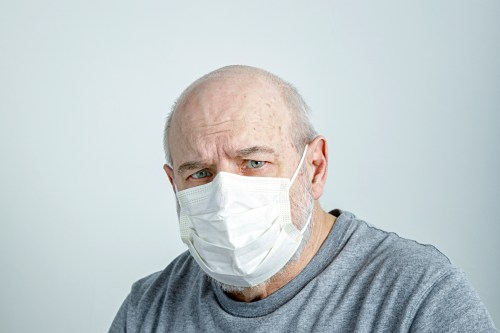
  • If you have to go out, wear a surgical mask and stay at least six feet away from others.
  • If you have to go out and you are in proximity to someone coughing and/or sneezing, move far away immediately. Even if they’re wearing a mask.
  • If you need to see your friends or relatives, use iPhone face-time, Skype, Zoom, WebEx, or similar internet options.
  • If you’re in a nursing home, skilled nursing facility, or other sort of senior living facility, insist that they abide by these restrictions. They need to severely restrict who enters the facility.
  • If you’re mostly independent but need a little assistance, consider moving in temporarily with someone who’s in your same situation, needing a little help. Help each other.
  • If over 60–65 and still working, consider quitting your job temporarily, or retiring. Let a younger, healthier person take over. Unemployed Gen X, millennials, and Gen Z folks are looking for opportunity! Millions of them are now unemployed.
  • If you live with others or live in a multi-generational household, spend more time in your room, wear a surgical mask, stop hugging and kissing, practice social-distancing within the home. Housemates who are younger and/or healthier than you are going out into the community, potentially picking up the virus. You can’t know if these symptom-free housemates are carriers and transmitters of the virus.
  • If you need medical care, see if your physician is willing to practice “telemedicine”: talk by phone or examine and chat via Doxy.me, WebEx, Zoom, Skype, iPhone face-time, etc. Note: these options may not be HIPAA-compliant, which will inhibit your doctor.
I get it now, doc

A Few More Things to Get You Through This Crisis

  • Endeavor to ensure your chronic medical condition is being optimally managed and under as good control as possible.
  • While isolating yourself, don’t do anything that will worsen or exacerbate your underlying conditions. E.g., if you have lung or heart disease, don’t smoke. Liver disease? Don’t drink alcohol or take too much acetaminophen. Kidney disease? Don’t take NSAIDs.
  • Maintain or improve your level of physical fitness via exercise.
  • Eat healthful foods, not junk.
  • Of course, practice frequent hand-washing and don’t touch your face after contact with anyone or anything that might transmit the virus.

Hang in there! This is a temporary situation and we’ll get through it. Remember the H1N1 Swine Flu pandemic of 2009? Very few do. But that virus  infected roughly 100 million Americans, killing about 75,000, the CDC estimates. As of early AM April 10, 2020, the U.S. death toll from COVID-19 is a little under 17, 000.

The history of this pandemic will be written a couple years from now. If truth be told, it will be a story of panic and over-reaction.

Steve Parker, M.D.

PS: The governor of South Dakota agrees with me that folks over 65 or with serious health conditions should stay at home for now.

PPS: I strongly disagree with Dr Ezekiel Emanuel that we have no choice. Emanuel was an architect of the Affordable Care Act, aka Obamacare. From Dr E:

Realistically, COVID-19 will be here for the next 18 months or more. We will not be able to return to normalcy until we find a vaccine or effective medications. I know that’s dreadful news to hear. How are people supposed to find work if this goes on in some form for a year and a half? Is all that economic pain worth trying to stop COVID-19? The truth is we have no choice.

PPPS: It turns out that northern Italy isn’t very similar to the U.S., given the severe air pollution in Lombardy, the many Chinese living there, the very old population, and mis-coding of causes of death.
Steve Parker MD, Advanced Mediterranean Diet

Click the pic to purchase at Amazon.com. E-book versions also available at Smashwords. com.

#COVID19 fatalities in Israel are mostly elderly men, average age 79.8 #Coronavirus


I’m getting worried, doc

Only 6% of the COVID-19 fatalities in Israel are under 60 years old, similar to global averages. And 64% of the deceased are male, in other countries. As of the date of the article below, Israel had only 34 total COVID-19 deaths. There are bound to be more; 83 cases are on ventilators and I suspect 50–90% of them will not make it.

From The Times of Israel on April 2, 2020:

Most of Israel’s coronavirus fatalities have been elderly men with underlying medical conditions, in line with global averages.

The average age of Israel’s dead was 79.8 years old as of Thursday afternoon. Of the 34 dead, 21, or 64 percent, were men, and 13 were women.

Ninety-four percent of Israel’s fatalities — all but two — are over the age of 60, in line with the average in Europe of 95%.

The vast majority of Israel’s dead had underlying medical conditions, as do most senior citizens. Israeli medical authorities rarely specify which preexisting conditions the fatalities had.

I’ve never seen a breakdown at to how many seriously ill COVID-19 patients have morbid obesity.

Source: Israeli coronavirus fatalities are mostly elderly men, average age 79.8 | The Times of Israel

Steve Parker, M.D.

Steve Parker MD, Advanced Mediterranean Diet

Click the pic to purchase at Amazon.com. E-book versions also available at Smashwords. com.
QOTD: U of Cambridge virologist Greatorex on the chance of #relapse after #COVID19 #Coronavirus

Artist’s rendition of Coronavirus

…[Relapse] doesn’t happen with these respiratory viruses. The symptoms that drag on are your body’s response to the virus, but the virus is gone after a few days. I take great umbrage at the lengths of time you are meant to be infectious for because it is just not true. Nine days is nonsense. You don’t excrete a live virus that long.

Those studies are not checking for live virus, they are checking for genome. They do something called a PCR test (polymerase chain reaction), which is the test we are using to diagnose patients. It doesn’t tell you that you have live virus in your nose, it tells you have had it. For about 72 hours of a viral infection you have a live virus. In children it can last for longer – four or five days have been observed in flu.

So, there’s a big difference between how long we can detect the virus and how long they can infect someone else. With this coronavirus the only way you can say, yes, they are still shedding live virus – which is the only thing that will infect someone else, is if you take that sample from the patient and extract it and put it on tissue culture cells and then see it growing. That is done very rarely. There are not a lot of studies that look at live viruses. It is very easy to do PCR tests. It is harder to do live virus studies.

Source: Cambridge virologist explains what we do and don’t know about Covid-19

2nd QOTD: Derek Lowe on #Hydroxychloroquine and #COVID19 #Coronavirus

Hey now, be careful!

It’s no wonder that this work [use of hydroxychloroquine for COVID-19] has set off so many arguments: statistically, it’s like a funhouse mirror. Here, though, is where some of the folks pinging me on Twitter and sending me emails tend to get more worked up, especially to that point about anecdotal data. I can see where they’re coming from: if you haven’t done this stuff, you can look at a report of people responding to such a treatment and figure that the answer is here – right here, and anyone who doesn’t see it must have some ulterior motives in ignoring what’s in front of their face. But that’s not how it works.

It’s weird and startling, though, if you haven’t had the opportunity to go back through clinical research (and even patient treatment) and seen how many things looked like they worked and really didn’t. It happens again and again. Alzheimer’s drugs, obesity drugs, cardiovascular drugs, osteoporosis drugs: over and over there have been what looked like positive results that evaporated on closer inspection. After you’ve experienced this a few times, you take the lesson to heart that the only way to be sure about these things is to run sufficiently powered controlled trials. No short cuts, no gut feelings – just data.

You get that good data via double-blind randomized controlled trials.

David also referenced a worrisome study. The combo of hydroxychloroquine and metformin in mice caused 30% mortality. Many human type 2 diabetics take metformin.

Source: Hydroxychloroquine Update For April 6 | In the Pipeline

Steve Parker, M.D.