Monthly Archives: November 2012

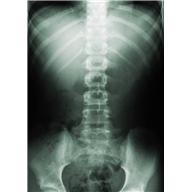
Exercises For Low Back Pain

Flexibility and strengthening exercises help to reduce the pain and disability of chronic nonspecific low back pain.  Hoping to find a simple straightforward program to suggest to you, I reviewed “Exercise-based therapy for low back pain” at UpToDate.com.

Unfortunately, I didn’t find much.

By the way, exercises don’t help with acute low back pain (under 4 weeks duration).

You need to work with your personal physician for a diagnosis and treatment plan.  I’m not your doctor.  He may well refer you to a physical therapist, which is a good idea.

Some factoids from UpToDate:

  • low back pain is the most common musculoskeletal disorder worldwide
  • 85% of us experience low back pain at some point
  • in the U.S., yearly total cost of low back pain exceeds $100 billion

Here’s a quote that may shock you:

For most patients with low back pain, a specific etiology [cause] cannot be established with certainty.

I bet your doctor, chiropractor, or massage therapist never told you that.

The UpToDate folks suggest a combination of core strengthening (especially abdominal and trunk extension), directional preference (e.g., McKenzie method), general physical fitness, flexion and extension movements, aerobics, and functional restoration programs.  Some studies found benefit with Alexander technique, yoga, Pilates, and tai chi.

They didn’t mention Dr. John Sarno (“Your pain is from repressed anger”) or the Five Tibetan Rituals.

I hate to leave you empty-handed, so take this:

Again, if low back pain is a significant issue for you, it’s a good idea to work with a physical therapist.

What’s worked for you?

Steve Parker, M.D.

QOTD: Warren G. Harding and Recession

The White House

[U.S. President Warren G.] Harding inherited an absentee presidency and one of the sharpest recessions in American history.  By July 1921 it was all over and the economy was booming again.  Harding had done nothing except cut government expenditure….

—Paul Johnson, in his book, Modern Times, 1983 & 1991

Five Tibetan Rituals for Relief of Back Pain

A position you’ll see in the video

I was browsing at author Jerry Pournelle’s blog recently and noticed his 2006 reference to five Tibetan rituals (sometimes called rites) that relieved his back pain.  I assume the author has garden-variety run-of-the-mill low back pain like most middle-aged folks.

I’m not recommending or endorsing these.  I may try them someday myself.  They just look like flexibility and strengthening exercises to me.

If interested, here’s a how-to article at eHow.com.  Here’s a video demonstration (ignore the top video of Dr. Oz; view the next one down).

Ignore any references you see to Ayurvedic medicine and chakras.

Don’t worry, I’m not going woo on you.

Please share if  you’ve had experience—good or bad—with these.

—Steve

Momentary Muscular Failure and Resistance Training

I was planning to review here an article, Resistance Training to Momentary Muscular Failure Improves Cardiovascular Fitness in Humans: A review of acute physiological responses and chronic physiological adaptations.  It’s by James Steele, et al, in the Journal of Exercise Physiology (Vol. 15, No. 3, June  2012).

Exercise to momentary muscular failure may be safer on a machine

But it’s too technical for most of my readers. Heck, it’s too technical for me!  Too much cell biology and cell metabolism.  You’re dismissed now.  Maybe “American Idol” or “Honey Boo Boo” is on TV.

I’m just going to pull out a few pearls from the article that are important to me.  I ran across this in my quest for efficient exercise.  By efficient, I mean minimal time involved.

The authors question the widespread assumption that aerobic and endurance training are necessary for development of cardiovascular fitness.  Like Dr. Doug McGuff, they wonder if resistance training alone is adequate for the development of cardiovascular fitness.  Their paper is a review of the scientific literature.  The authors say the literature is hampered by an inappropriate definition and control of resistance training intensity.  The only accurate measure of intensity, in their view, is when the participant reaches maximal effort or momentary muscular failure.

The authors, by the way, define cardiovascular fitness in terms of maximum oxygen consumption, economy of movement, and lactate threshold.

“It would appear that the most important variable with regards to producing improvement in cardiovascular fitness via resistance training is intensity [i.e., to muscle failure].”

The key to improving cardiovascular fitness with resistance training is high-intensity.  These workouts are not what you’d call fun.

From a molecular viewpoint, “the adenosine monophosphate–activated protein kinase pathway (AMPK) is held as the key instigator of endurance adaptations in skeletal muscle.  Contrastingly, the mammalian target of rapamycin pathway (mTOR) induces a cascade of events leading to increased muscle protein synthesis (i.e.,[muscle] hypertrophy).”  Some studies suggest AMPK is an acute inhibitor of mTOR activation.  Others indicate that “resistance training to  failure should result in activation of AMPK through these processes, as well as the subsequent delayed activation of mTOR, which presents a molecular mechanism by which resistance training can produce improvement in cardiovascular fitness, strength, and hypertrophy.”

You’re not still with me, are you?

“… the acute metabolic and molecular responses to resistance training performed to failure appear not to differ from traditional endurance or aerobic training when intensity is appropriately controlled.”

Chronic resistance training to failure induces a reduction in type IIx muscle fiber phenotype and an increase in type I and IIa fibers.  (Click for Wikipedia article on skeletal muscle fiber types.)

“It is very likely that people who are either untrained or not involved in organized sporting competition, but you have the desire to improve their cardiovascular fitness may find value in resistance training performed to failure.  In fact, this review suggests that resistance training to failure can produce cardiovascular fitness effects while simultaneously producing improvements in strength, power, and other health and fitness variables. This would present an efficient investment of time as the person would not have to perform several independent training programs for differing aspects of fitness.”  [These statements may not apply to trained athletes.]

Before listing their 157 references, the authors note:

“It is beyond the scope of this review to suggest optimal means of employing resistance training (i.e., load, set volume, and/or frequency) in order to improve cardiovascular fitness since there are no published studies on this topic.”

In conclusion, if you’re going to do resistance training but not traditional aerobic/cardio exercise, you may not be missing out on any health benefits if you train with intensity.  And you’ll be done sooner.

Steve Parker, M.D.

PS: See Evidence-based resistance training recommendations by Fisher, Steele, et al.

How To Overcome Your Weight-Loss Stall

"This can't be right!"

“This can’t be right!”

It’s common on any weight-loss program to be cruising along losing weight as promised, then suddenly the weight loss stops although you’re still far from goal weight.  This is the mysterious and infamous stall.

Once you know the cause for the stall, the way to break it becomes obvious.

The most common reasons are:

  • you’re not really following the full program any more; you’ve drifted off the path, often unconsciously
  • instead of eating just until you’re full or satisfied, you’re stuffing yourself
  • you need to start or intensify an exercise program
  • you’ve developed an interfering medical problem such as adrenal insufficiency (rare) or an underactive thyroid; see your doctor
  • you’re taking interfering medication such as a steroid; see your doctor
  • your strength training program is building new muscle that masks ongoing loss of fat (not a problem!).

If you still can’t figure out what’s causing your stall, do a nutritional analysis of one weeks’ worth of eating, with a focus on daily digestible carb (net carbs) and calorie totals.  You can do this analysis online at places like FitDay (http://fitday.com/) or Calorie Count (http://caloriecount.about.com/).

What you do with your data depends on whether you’re losing weight through portion control (usually reflecting calorie restriction) or carb counting.  Most of my patients lose weight with one of these two methods.  Both are outlined in my Advanced Mediterranean Diet, 2nd Edition.

If you’re a carb counter, you may find you’ve been sabotaged by “carb creep”: excessive dietary carbs have insidiously invaded you.  You need to cut back.  Even if you’re eating very-low-carb, it’s still possible to have excess body fat, even gain new fat, if you eat too many calories from protein and fat.  It’s not easy, but it’s possible.

Those who have followed a calorie-restriction weight loss model for awhile may have become lax in their record-keeping.  The stall is a result of simply eating too much.  Call it “portion creep.”  You need to re-commit to observing portion sizes.

A final possible cause for a weight loss stall is that you just don’t need as many calories as you once did.  Think about this.  Someone who weighs 300 lb (136 kg) is eating perhaps 3300 calories a day just to maintain a steady weight.  He goes on a calorie-restricted diet (2800/day) and loses a pound (0.4 kg) a week.  Eventually he’s down to 210 lb  (95.5 kg) but stalled, aiming for 180 lb (82 kg).  The 210-lb body (95.5 kg) doesn’t need 3300 calories a day to keep it alive and steady-state; it only needs 2800 and that’s what it’s getting.  To restart the weight loss process, he has to reduce calories further, say down to 2300/day.  This is not the “slowed down metabolism” we see with starvation or very-low-calorie diets.  It’s simply the result of getting rid of 90 pounds of fat (41 kg) that he no longer needs to feed.

Steve Parker, M.D.

QOTD: Barry Ritholz on Blog Comments

Please use the comments to demonstrate your own ignorance, unfamiliarity with empirical data, ability to repeat discredited memes, and lack of respect for scientific knowledge. Also, be sure to create straw men and argue against things I have neither said nor even implied. Any irrelevancies you can mention will also be appreciated. Lastly, kindly forgo all civility in your discourse . . . you are, after all, anonymous.

—Guidelines preceding the comments section at Barry Ritholtz blog

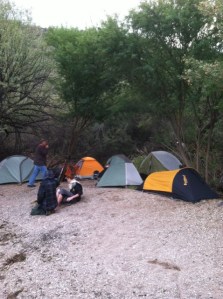
Campout at Burro Cove at the end of Butcher Jones Trail, Arizona

Scottsdale’s Boy Scout Troop 131 completed an overnight backpacking campout last weekend.  Six scouts and four adults participated.  Our original destination was Aravaipa Wilderness Area, but we cancelled due to the threat of rain and life-threatening flash floods in that canyon.

Burro Cove campsite is small.  Everybody had one-man tents.  You could probably squeeze another 4-5 onto the site.  About half way to Burro Cove, we easily spotted another potential campsite on a small peninsula.  We’re not sure, but we think a trail lead to the area.  I bet some campsites here are accessible only by boat.  You need back-up plans in case your spot is taken by others.  Butcher Jones Trail has few flat spots where you could set up 10 tents.

The scouts did a super job hiking with their packs.  I heard no complaints.  One scout carried a 56-pound pack!  Mine was 37 lb; my son’s was 20 lb.  Most packs were probably in the 20-40 lb range.  The Scout Handbook says to limit pack weight to 25% of body weight, in general.  I’m impressed with modern backpack design that distributes pack weight to your pelvis, not your shoulders.

Backpacking teaches you how to survive, even thrive, with minimal modern conveniences.  You have to carefully consider every ounce you carry.  You just need shelter, food, water, clothing, and a degree of physical fitness.  When you return to civilization, you appreciate it even more.

—Steve

Algae-covered rocks in Saguaro Lake


We had a great view of Four Peaks, which had a light dusting of fresh snow


Burro Cove campsite on Saguaro Lake, Arizona

One happy camper

Eureka Solitaire 1-man tent I rented from Arizona Hiking Shack

Quote of the Day: Limits of Tyrants

This one brings the TSA to mind…

Find out just what people will submit to and you have found out the exact amount of injustice and wrong which will be imposed upon them…. The limits of tyrants are prescribed by the endurance of those whom they oppress.

— Frederick Douglass, former slave

Small Study Shows Improved Diabetes and Prediabetes With Biggest Loser Plan

“One more rep then I’m outa here!”

Do you wonder how much exercise it takes to lose a lot of weight quickly?  Read on.

TV’s “The Biggest Loser” weight-loss program works great for overweight diabetics and prediabetics, according to an article May 30, 2012, in MedPage Today.  Some quotes:

For example, one man with a hemoglobin A1c (HbA1c) of 9.1 [poor control of diabetes], a body mass index (BMI) of 51 [very fat], and who needed six insulin injections a day as well as other multiple prescriptions was off all medication by week 3, said Robert Huizenga, MD, the medical advisor for the TV show.

In addition, the mean percentage of weight loss of the 35 contestants in the study was 3.7% at week 1, 14.3% at week 5, and 31.9% at week 24…

The exercise regimen for those appearing on “The Biggest Loser” comprised about 4 hours of daily exercise: 1 hour of intense resistance training, 1 hour of intense aerobics, and 2 hours of moderate aerobics.

Caloric intake was at least 70% of the estimated resting daily energy expenditure, Huizenga said.

At the end of the program, participants are told to exercise for 90 minutes a day for the rest of their lives. Huizenga said he is often told by those listening to him that a daily 90-minute exercise regimen is impossible because everyone has such busy lives.

“I have a job and I work out from 90 to 100 minutes per day,” he said. “It’s about setting priorities. Time is not the issue; priorities are the issue.”

Of the 35 participants in this study, six had diabetes and 12 had prediabetes.  This is a small pilot study, then.  I bet the results would be reproducible on a larger scale IF all conditions of the TV program are in place.  Of course, that’s not very realistic.  A chance to win $250,000 (USD) is strong motivation for lifestyle change.  Can you see yourself exercising for four hours a day?

Steve Parker, M.D.

PS: Although not mentioned in the article, these must have been type 2 diabetics, not type 1.