High Protein Diet Could Help Prevent Weight Regain

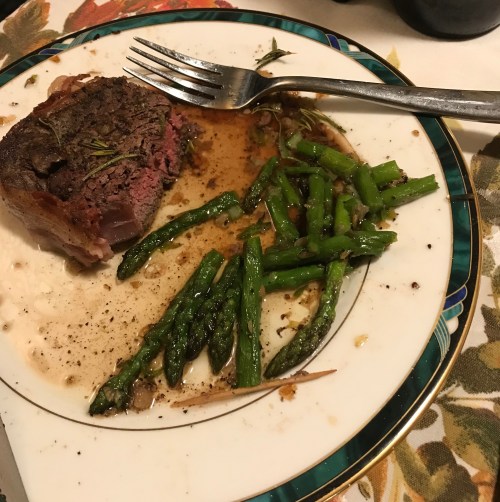
Filet mignon and sautéed asparagus

Weight loss can change your metabolism in such a way that promotes regain of lost weight. For successful weight-losers with prediabetes, a higher protein diet could help with prevention of regain. How much higher protein? 25% versus the usual 15% of calories from fat.

This is important research since most people who lose fat weight gain it back, typically 6–12 months later.

For the boring details, keep reading.

ABSTRACT

Background

Weight loss has been associated with adaptations in energy expenditure. Identifying factors that counteract these adaptations are important for long-term weight loss and weight maintenance.

Objective

The aim of this study was to investigate whether increased protein/carbohydrate ratio would reduce adaptive thermogenesis (AT) and the expected positive energy balance (EB) during weight maintenance after weight loss in participants with prediabetes in the postobese state.

Methods

In 38 participants, the effects of 2 diets differing in protein/carbohydrate ratio on energy expenditure and respiratory quotient (RQ) were assessed during 48-h respiration chamber measurements ∼34 mo after weight loss. Participants consumed a high-protein (HP) diet (n = 20; 13 women/7 men; age: 64.0 ± 6.2 y; BMI: 28.9 ± 4.0 kg/m 2) with 25:45:30% or a moderate-protein (MP) diet (n = 18; 9 women/9 men; age: 65.1 ± 5.8 y; BMI: 29.0 ± 3.8 kg/m 2) with 15:55:30% of energy from protein:carbohydrate:fat. Predicted resting energy expenditure (REEp) was calculated based on fat-free mass and fat mass. AT was assessed by subtracting measured resting energy expenditure (REE) from REEp. The main outcomes included differences in components of energy expenditure, substrate oxidation, and AT between groups.

Results

EB (MP = 0.2 ± 0.9 MJ/d; HP = −0.5 ± 0.9 MJ/d) and RQ (MP = 0.84 ± 0.02; HP = 0.82 ± 0.02) were reduced and REE (MP: 7.3 ± 0.2 MJ/d compared with HP: 7.8 ± 0.2 MJ/d) was increased in the HP group compared with the MP group (P < 0.05). REE was not different from REEp in the HP group, whereas REE was lower than REEp in the MP group (P < 0.05). Furthermore, EB was positively related to AT (rs = 0.74; P < 0.001) and RQ (rs = 0.47; P < 0.01) in the whole group of participants.

Conclusions

In conclusion, an HP diet compared with an MP diet led to a negative EB and counteracted AT ∼34 mo after weight loss, in participants with prediabetes in the postobese state. These results indicate the relevance of compliance to an increased protein/carbohydrate ratio for long-term weight maintenance after weight loss. The trial was registered at clinicaltrials.gov as NCT01777893.

Source: High Compared with Moderate Protein Intake Reduces Adaptive Thermogenesis and Induces a Negative Energy Balance during Long-term Weight-Loss Maintenance in Participants with Prediabetes in the Postobese State: A PREVIEW Study | The Journal of Nutrition | Oxford Academic

Steve Parker, M.D.

PS: I didn’t read the whole study. I leave that to you.

Steve Parker MD, Advanced Mediterranean Diet

Click the pic to purchase at Amazon.com. E-book versions also available at Smashwords. com.

Recipe: Bangladeshi Curried Carp

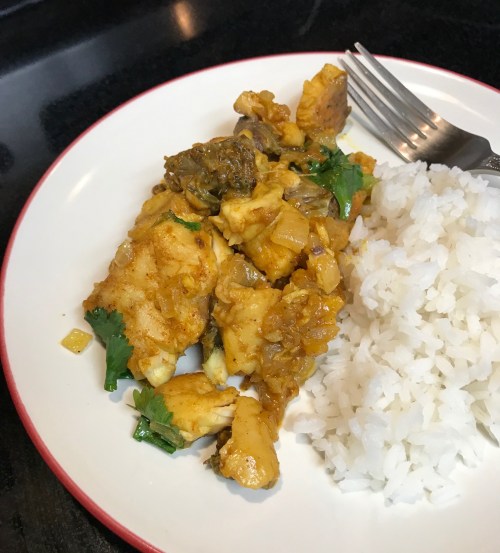
Bangladeshi Curried Carp with rice

Carp have been eaten in various cultures around the world for millennia. In the U.S., not so much. Here, most people consider it a “trash fish,” if not worse.

My inspiration for this recipe was a YouTube video by Luke Nichols at his Catfish and Carp channel. His friend Jay cooked Luke’s very first eaten carp for him. So it’s Jay’s recipe.

Before I forget, I must tell you that you will find some bones in most carp filets. No easy way around it. So you have to be careful when you eat it, and I would not give it to children or scatter-brained adults. The fish we cooked was small and therefore had small bones. They were very thin and flexible and I think I swallowed a few without concern, rather than fish them out of my mouth. When eating fish like this, look at your food well and eat small bites. The bones are one reason carp aren’t eaten widely in the U.S.

From an article at The Florida Times-Union:

Don’t gobble fish off the bone. Rather, put a small piece in your mouth, and work it around a bit to be sure you have all flesh. If a bone sneaks in, you’ll notice right away. Simply remove it with your fingers or napkin and place it on the side of the plate.

Ingredients

carp filets, cut into chunks ~1 x 2 inches (we had 12 oz total uncooked, and the ingredient amounts below are for 12 oz of fish)

Tony Chachere’s Original Creole Seasoning or Old Bay Seasoning to taste (this latter is Jay’s recommendation but my local supermarket didn’t have it)

cooking oil (we used olive oil, about 5–6 Tbsp)

salt to taste

medium onion, diced or chunked

curry powder, 1/2 tsp

coriander powder, 1/2 tsp

turmeric powder, 1/2 tsp

garam masala powder, 1/2 tsp

cumin, 1/2 tsp

paprika, 1/2 tsp

garlic powder, 1/2 tsp

water, 1 or 1.5 cups

Instructions

Sprinkle the carp with Creole or Old Bay Seasoning and set aside for 10–20 minutes.

Sauté the onion chunks in the cooking oil over medium heat until slightly brown. Add some salt while cooking if desired (we didn’t). Then remove half the onions and set those aside.

Add the fish to the frying pan with the remaining onions and cook over medium heat for perhaps 2-3 minutes. Add a little more cooking oil now if desired. I think the idea is to sear the fish rather than cook through and through, so don’t flip or toss the fish too much. It will finish cooking later.

Turn the heat down to low and add 1 or 1.5  cups of water to the frying pan with the fish. Then add all the non-salt spices to the pan and gently stir and flip the fish until spices are evenly dispersed.
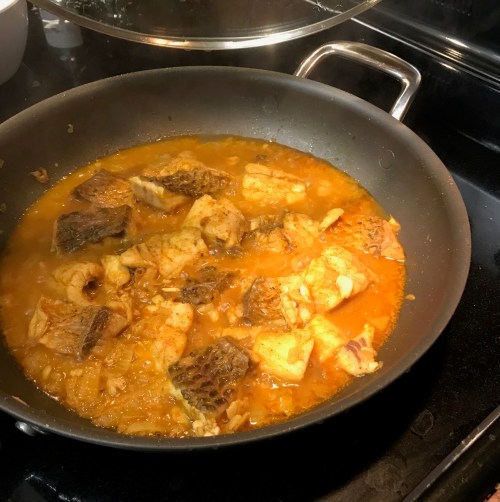
Time to cover the pan

Keep heat on low, cover the pan, and simmer for 15 minutes (or a little less if your filets are thin?).

Finally add the remaining set-aside onions and some cilantro to the pan, stir briefly, remove from heat and enjoy!

Servings: Two. Often served with rice in Bangladesh.

My son and I had a great time catching this carp, cooking it, and eating it. Thanks, Paul!

Steve Parker, M.D.



Carp Fishing at Bartlett Lake, Arizona

Fishing pier at Rattlesnake Cove, Bartlett Lake

The leading edge of a  cold front had finished coming through, dumping about 1/2 inch of rain on the area and dropping daytime highs to 50° F and lows to 40°. December 28, 2019.

Our first view of Bartlett Lake, uphill from the marina

Paul and I had our lines in the water at 2PM, from the fishing pier at Rattlesnake Cove Day Use Area. The rain and sleet had just stopped but the pier had a covered area if needed. We offered the fish two kinds of bait. The first was what I used last about 45 years ago and I’ll call Oklahoma: a dough made from simmering water, flour, cornmeal, strawberry jello (3 oz), vanilla flavoring, and sugar. The second bait I’ll call Captain Carp’s: Panco, sweet corn from a can, and strawberry jello (6 0z).

Captain Carp is actually Luke Nichols, a criminal defense lawyer. At the start of his videos he often gives his website, CatsAndCarps.com. I watch most videos at 1.25 times normal speed, so Cats and Carps sounds like Captain Carp.

One of Paul’s first ever carp

I got definite nibbles on Oklahoma in about 10 feet of water, but no great bites or landed fish. On Captain Carp’s bait in ~ 20 feet water, we caught four carp ranging from 2 to 4.5 lb. The linked video above explains how to use Captain Carp’s “pack bait” method. A “slip sinker” rig is also probably important. CC explains his rigs in much more detail in other YouTube videos.

This was our basic rig. 2- or 1-ounce pyramid sliding sinker. Before casting, sinker is coated with pack bait, ending up about the size of a lime or lemon. And the hook is embedded in the pack bait ball. We should probably also get some plastic line protectors that spread the pressure of the sinker over 2 cm; you connect the sinker to the plastic instead of directly to the line. Captain Carp also is a huge proponent of the “hair rig,” which we should probably adopt.

I only caught one compared to Paul’ three

Five total hours of fishing, and nearly all the landed fish were from the same spot over 30 minutes, about 45-60 minutes before sunset at 5:30 PM. It was around 37° F when we quit at 7 PM. Fortunately there wasn’t much wind. We’re not used to that cold.

From that same recreation area you can easily walk along the shore northwards  for perhaps half a mile,  casting lures for bass and other fish. Not sure if walk would be that easy when lake level is higher. I’m guessing it’s about 15 feet below max now. There are man-made fish habitats along that route. One of these days….

Our honey hole was off this end of the pier, casting toward the center of the lake

Another half-mile north of that is Bartlett Flats, where the Verde River’s flood plain is indeed flatter and wider, and often under water depending on lake level. Perhaps best to have a pick-up truck or sturdy car to explore here. Lot’s of room to walk along the bank casting lures, or stay in one spot.

Pro Tip: Hold your fish in front of your body with outstretched arms to make it look bigger!

The next lake on the Verde River not much further north is Horseshoe Lake. When full, it’s a large lake. But its primary purpose seems to be holding excess river water until it’s needed further downstream. I guess for Phoenix metro area residents or agriculture. So it’s not managed as a fisheries habitat. It’s often drained close to dry during summer. Probably not a great place to fish.

I filleted the largest fish right there on the banks of lake and we’ll cook it up tomorrow. The smaller ones we released and we’ll come back and catch them in Spring when they’re bigger!

Steve Parker, M.D.

PS: Carp are not one of the Mediterranean diet cold-water fatty fish loaded with healthy omega-3 fatty acids.

Steve Parker MD, Advanced Mediterranean Diet

Click the pic to purchase at Amazon.com. E-book versions also available at Smashwords. com.

Prediabetes Is Way Too Common in the Youth of U.S.A.

I’m worried about the kid’s future health

Stats from JAMA Pediatrics:

In the United States, about 1 of 5 adolescents [12–18 y.o.] and 1 of 4 young adults [19–34 y.o.] have prediabetes. The adjusted prevalence of prediabetes is higher in male individuals and in people with obesity. Adolescents and young adults with prediabetes also present an unfavorable cardiometabolic risk profile, putting them both at increased risk of type 2 diabetes and cardiovascular diseases.

Source: Prevalence of Prediabetes Among Adolescents and Young Adults in the United States, 2005-2016. – PubMed – NCBI

I’m doing my part to prevent conversion of prediabetes to type 2 diabetes. The right diet, exercise, and weight loss are just what the doctor ordered.

Steve Parker, M.D.

Steve Parker MD, Advanced Mediterranean Diet

Click the pic to purchase at Amazon.com. E-book versions also available at Smashwords. com.

The Right Workout Routine Helps Fight Dementia

Steve Parker MD

A slow leisurely pace won’t cut it

Dementia is a devastating and expensive development for an individual and his family. Most dementias are progressive and incurable. If it can be prevented, it should be. Exercise is one preventative. But how much and what kind of exercise?

Nine percent of U.S. adults over 65 have dementia. That’s 3.650,000 folks.

From The Globe and Mail:

In 2017, a team led by the lab’s director, Jennifer Heisz, published a five-year study of more than 1,600 adults older than 65 that concluded that genetics and exercise habits contribute roughly equally to the risk of eventually developing dementia. Only one of those two factors is under your control, so researchers around the world have been striving to pin down exactly what sort of workout routine will best nourish your neurons.

Heisz’s latest study, published last month in the journal Applied Physiology, Nutrition, and Metabolism, offers a tentative answer to this much-debated question. Older adults who sweated through 12 weeks of high-intensity interval training improved their performance on a memory test by 30 per cent compared with those who did a more moderate exercise routine.

This was a small study, only about 20 sedentary participants (all over 60 years old) subjected to one of three protocols for twelve weeks, exercising thrice weekly:

  1. Four-minute bouts of vigorous treadmill walking at 90-95% of maximum heart rate, repeated four times, with three minutes easy walking between the high-intensity spells intervals (HIIT)
  2. Walking at 70-75% of max heart rate for 47 minutes (burning the same number of calories as group #1
  3. Thirty minutes of relaxed stretching

Alex Hutchinson’s full article is well worth a couple minutes of your time if you want to avoid dementia.

Source: New study shows the right workout routine can help fight dementia – The Globe and Mail

Steve Parker, M.D.

PS: Wanna know something else that prevent dementia? The Mediterranean diet!

Steve Parker MD, Advanced Mediterranean Diet

Click the pic to purchase at Amazon.com. E-book versions also available at Smashwords. com.

Healthcare Lessons from Dr. Keith Smith

Russ Roberts interviewed Dr Keith Smith who has revolutionary thoughts about healthcare reform. From Medium:

The Surgery Center of Oklahoma provides a wide range of surgical procedures. All their prices are transparent, all-inclusive, and can be viewed online. They take no insurance. Their prices are considerably lower, often by many multiples, than the prices charged by hospitals. Smith claims they have not changed their base prices for 20 years. This is in a world where health care costs have risen relentlessly everywhere else. Patients of the Center seem to be very enthusiastic about their treatment.

You can listen to my conversation with Dr. Smith here:https://www.econtalk.org/keith-smith-on-free-market-health-care/

There were two aspects of the conversation. The first was how the surgery center worked — the incentives it faces, the ability to offer a cash price that enough people can still afford to pay, how the surgeons are monitored for quality, how the surgeons reach out to patients and work with them, how surprises on the operating table are handled and so on. The second thing we talked about was how the rest of the health care system works — the fake prices, the incentives to inflate these fake prices, the bizarre interactions of hospitals and insurance companies, the lack of transparency and so on.

Source: Health Care Lessons from Dr. Keith Smith – Russ Roberts – Medium

Steve Parker, M.D.

PS: Until the U.S. has a better, more affordable healthcare system, you should take action NOW to stay healthy. What are you waiting for?

Steve Parker MD, Advanced Mediterranean Diet

Click the pic to purchase at Amazon.com. E-book versions also available at Smashwords. com.

Prediabetes Is a Problem for U.S. Adolescents and Young Adults

Great exercise but with risk of concussions, broken bones, and torn menisci

Obesity is a risk factor for type 2 diabetes in adults and also plays a significant role in the development of the disease at younger ages. Obesity is highly prevalent among US adolescents and young adults. Many adolescents and young adults with obesity already have blood sugar metabolism abnormalities, which is of great public health concern in view of the sharp increase in type 2 diabetes in adolescence.

From JAMA Network:

In the United States, about 1 of 5 adolescents and 1 of 4 young adults have prediabetes. The adjusted prevalence of prediabetes is higher in male individuals and in people with obesity. Adolescents and young adults with prediabetes also present an unfavorable cardiometabolic risk profile, putting them both at increased risk of type 2 diabetes and cardiovascular diseases.

Source: Prevalence of Prediabetes Among Adolescents and Young Adults in the United States, 2005-2016 | Adolescent Medicine | JAMA Pediatrics | JAMA Network

Steve Parker, M.D.

PS: Regular exercise and loss of excess fat weight are two great ways to prevent both prediabetes and type 2 diabetes. They also help with treatment.

Steve Parker MD, Advanced Mediterranean Diet

Click the pic to purchase at Amazon.com. E-book versions also available at Smashwords. com.


Improve Diet Quality With Salads

A masterpiece by Sunny Parker

I’m not generally a fan of U.S. federal government committee recommendations on what we should eat. They’ve led us astray before. For what it’s worth, the USDA and National Cancer Institute have put together a Healthy Eating Index. Salad-eaters score higher on the Index. I do believe the best salads are better than the crap most Americans eat.

From the Journal of the Academy of Nutrition and Dietetics:

Abstract

Background

Consuming salad is one strategy with the potential to harmonize diets more closely with national dietary guidance. However, it is not known whether nutrient intake and diet quality differ between people who consume vegetable-based salad and those who do not.

Objective

The objective of this study was to compare nutrient intake and diet quality between salad reporters and nonreporters.

Design

This study is a cross-sectional analysis of 1 day of dietary intake data collected via 24-hour recall.

Participants/setting

Adults 20 years and older (n=9,678) in What We Eat in America, National Health and Nutrition Examination Survey 2011-2014 were included. Respondents who ate salad on the intake day were considered salad reporters.

Main outcome measures

This study estimated nutrient intake from all foods and beverages (excluding supplements) and evaluated diet quality using the Healthy Eating Index (HEI) 2015.

Statistical analyses

Nutrient intake and HEI scores were compared between salad reporters and nonreporters using paired t tests with regression adjustment for confounding variables. Results were considered significant at P<0.001.

Results

On the intake day, 23% of adults consumed salad. Energy, protein, and carbohydrate intakes did not differ between salad reporters and nonreporters. Salad reporters had higher intakes than nonreporters of dietary fiber, total fat, unsaturated fatty acids, vitamins A, B-6, C, E, K, folate, choline, magnesium, potassium, and sodium (P<0.001). Total HEI 2015 scores were significantly higher for reporters (56 of a possible 100 points) than nonreporters (50 points) P<0.001. Reporters also had significantly higher scores for eight of 13 HEI components: total vegetables, greens and beans, whole fruits, total protein foods, seafood and plant proteins, fatty acids, refined grains, and added sugars (P<0.001).

Conclusions

Incorporating vegetable-based salad into one’s diet may be one effective way to increase nutrient intake and improve overall diet quality. Regardless of salad reporting status, HEI scores show that diets of US adults need improvement.

Source: Consuming Vegetable-Based Salad Is Associated with Higher Nutrient Intakes and Diet Quality among US Adults, What We Eat in America, National Health and Nutrition Examination Survey 2011-2014 – Journal of the Academy of Nutrition and Dietetics

Steve Parker, M.D.

Steve Parker MD, Advanced Mediterranean Diet

Click the pic to purchase at Amazon.com. E-book versions also available at Smashwords. com.

Scientific evidence of various diets for weight loss

One of our favorite go-to salads

From Science Direct:

New dietary strategies have been created to treat overweight and obesity and have become popular and widely adopted. Nonetheless, they are mainly based on personal impressions and reports published in books and magazines, rather than on scientific evidence. Animal models and human clinical trials have been employed to study changes in body composition and metabolic outcomes to determine the most effective diet. However, the studies present many limitations and should be carefully analyzed. The aim of this review was to discuss the scientific evidence of three categories of diets for weight loss. There is no one most effective diet to promote weight loss. In the short term, high-protein, low-carbohydrate diets and intermittent fasting are suggested to promote greater weight loss and could be adopted as a jumpstart. However, owing to adverse effects, caution is required. In the long term, current evidence indicates that different diets promoted similar weight loss and adherence to diets will predict their success. Finally, it is fundamental to adopt a diet that creates a negative energy balance and focuses on good food quality to promote health.

Source: Scientific evidence of diets for weight loss: Different macronutrient composition, intermittent fasting, and popular diets – ScienceDirect

Steve Parker, M.D.

PS: I’ve got a diet book that’s two in one: ketogenic vs reduced-calorie.

Steve Parker MD, Advanced Mediterranean Diet

Click the pic to purchase at Amazon.com. E-book versions also available at Smashwords. com.

YES: Is olive oil good for you? 

Olive oil is a prominent component of the Mediterranean diet

From Science Direct:

Abstract

The prevalence of non-communicable diseases is rapidly increasing, and evidence shows that diet and lifestyle are key areas of intervention to decrease their burden. Olive oil is considered one of the key nutritional components responsible for the benefits of the Mediterranean diet, which is characterized by the use of olive oil in meals as the main source of fat; a high consumption of water, fruits, nuts, vegetables, legumes, whole grains, spices, and herbs; a moderate consumption of dairy products (mainly cheese and yogurt), fish, poultry, and red wine; and a reduced consumption of red meat and processed foods. The aim of this review was to summarize evidence from randomized controlled trials on the effect of regular dietary intake of olive oil on three inflammatory markers: C-reactive protein, interleukin-6, and tumor necrosis factor-α. Reviewed RCTs [randomized controlled trials] reveal beneficial effects of olive oil by reducing levels of inflammation markers. Olive oil taken on a regular basis can be a good dietary fat alternative, especially to manage IL-6. However, further research is required to clarify the effects of olive oil consumption on inflammation, comparing to other fats. Moreover, olive oil daily dosage, different time-lenght intervention and follow-up periods should be taken into consideration.

Source: Is olive oil good for you? A systematic review and meta-analysis on anti-inflammatory benefits from regular dietary intake – ScienceDirect

Steve Parker, M.D.

Steve Parker MD, Advanced Mediterranean Diet

Click the pic to purchase at Amazon.com. E-book versions also available at Smashwords. com.