What’s the Best Diet to Combat Non-Alcoholic Fatty Liver Disease (NAFLD)?

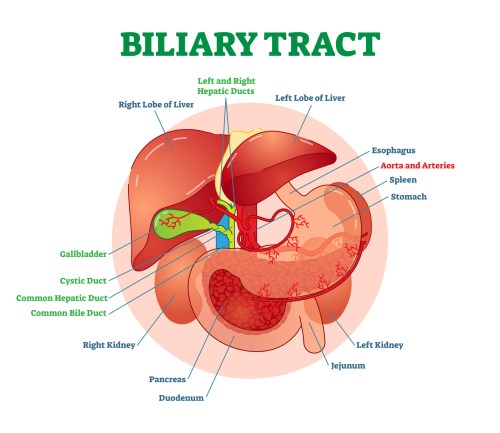
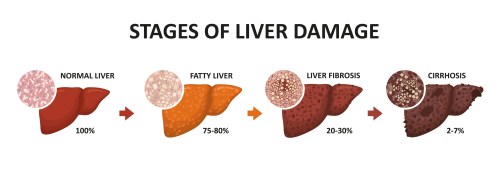
Stages of liver damage. Healthy, fatty, liver fibrosis, and finally cirrhosis

A recent article in Gastroenterology Clinics suggests this one:

•Prioritize intact starches such as brown rice, quinoa, and steel-cut oats, and limit or avoid refined starches such as white bread and white rice

•Replace some of the CHO [carbohydrate], especially refined CHO, in the diet with additional protein from a mixture of animal or vegetable sources, including chicken, fish, cheese, tofu, and pulses

•Include a variety of bioactive compounds in the diet by consuming fruits, vegetables, coffee, tea, nuts, seeds, and extra virgin olive oil

•Get most fat from unsaturated sources, such as olive oil (ideally extra virgin), rapeseed oil, sunflower oil, safflower oil, canola oil, or nuts and seeds

•Limit or avoid added sugars, whether sucrose, fructose, maltose, maltodextrin, or any syrups. If any of these words appear in the first 3–5 ingredients of any food item, it is best to avoid that item and choose a no-sugar version instead. Examples are yogurts and commercial cereals•In particular, avoid liquid sugar such as carbonated sugary drinks/sodas, lemonade, any juices, smoothies, and added sugar to tea and coffee

Source: Nutrition and Nonalcoholic Fatty Liver Disease – Gastroenterology Clinics

See the article for a typical daily menu. Looks like a Mediterranean diet to me.

Excessive fructose and saturated fatty acid consumption appear to be particularly harmful to the liver.

The authors also seem to endorse exercise: 150 t0 300 minutes per week of moderate- to vigorous intensity aerobics exercise, performed at least thrice weekly.

And all experts recommend loss of excess fat weight.

If you really want to get into the weeds, click the link above to read about how fat deposits in liver and muscle lead to metabolic inflexibility, resulting in insulin resistance and mitochondrial dysfunction, which alters lipid metabolism, releasing free fatty acids (some of which are lipotoxic), leading to lipotoxic molecules (like ceramides), causing inflammation and fibrosis.

Steve Parker, M.D.

Steve Parker MD, Advanced Mediterranean Diet

Click the pic to purchase at Amazon.com. E-book versions also available at Smashwords. com.

Despite $10,000 per person per year, U.S. still  not getting its money’s worth in healthcare

From UPI Jan. 31, 2020:

Despite spending far more on health care than other wealthy nations, the United States has the lowest life expectancy and the highest suicide rate, new research shows.

For the study, researchers at The Commonwealth Fund compared the United States with 10 other high-income nations in the Organization for Economic Cooperation and Development (OECD)—Australia, Canada, France, Germany, the Netherlands, New Zealand, Norway, Sweden, Switzerland and the United Kingdom—and with the average for all 36 OECD nations.

In 2018, the United States spent almost 17 percent of its gross domestic product (GDP) on healthcare. That’s more than any other high-income country and twice the overall OECD average. For example, New Zealand and Australia spent 9 percent of GDP on healthcare.

U.S. healthcare spending now tops $10,000 per person, and much of it is driven by private insurance costs such as premiums, according to The Commonwealth Fund report published online Jan. 30.

Source: U.S. health stats remain low despite trillions in healthcare spending – UPI.com

The numbers above are outdated. U.S. health care spending grew 4.6 percent in 2018, reaching $3.6 trillion or $11,172 per person.  As a share of the nation’s Gross Domestic Product, health spending accounted for 17.7 percent.

Click to learn what that money is spent on.

Steve Parker, M.D.

PS: Why not try to avoid healthcare spending by getting and staying as healthy as possible? Let me help now. And for less than $20.

Steve Parker MD, Advanced Mediterranean Diet

Click the pic to purchase at Amazon.com. E-book versions also available at Smashwords. com.


Low-Carb Diet NOT Linked to Psychological Disorders

…at least in Iranians. From Nutrition Journal:

Adherence to the low carbohydrate diet, which contains high amount of fat and proteins but low amounts of carbohydrates, was not associated with increased odds of psychological disorders including depression, anxiety and psychological distress. Given the cross-sectional nature of the study which cannot reflect causal relationships, longitudinal studies, focusing on types of macronutrients, are required to clarify this association.

Source: Adherence to low carbohydrate diet and prevalence of psychological disorders in adults | Nutrition Journal | Full Text

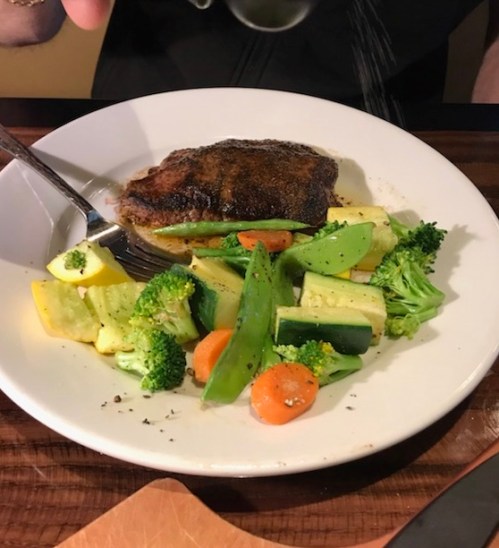
At Longhorn Steakhouse in Amarillo, TX

I’d have been surprised if the researchers did find a linkage. But you don’t know for sure until y0u do the science.

Steve Parker, M.D.

Steve Parker MD, Advanced Mediterranean Diet

Click the pic to purchase at Amazon.com. E-book versions also available at Smashwords. com.


QOTD: Is Blogging Dead?

I’m wondering if the age of blogging is at an end. 12 years ago blogs were the way to express ideas to a wider audience. Twitter and most of the social media we take for granted today was around, but it was certainly less endemic as it is now. Hell, even YouTube was still privately owned back then. If you wanted to build an online media brand you had to really believe in what you were doing to make the effort worthwhile. Blogging has always been a labor of love. That’s especially true today because everyone on social media today is their own Brand of Me. If all you do it curate an Instagram account with no other function than to show off how great a life you live, congratulations, you are your brand. It’s second nature to us now, but it used to take a lot more effort to relate your digital consciousness to an audience. That was what you used to blog for.

-Rollo Tomassi in 2020

Source: Exit Dalrock

PS: All three of my blogs have seen reduced traffic over the last year.

Tea May Prolong Your Life and Prevent Heart Disease

One of my favorite green teas

For years we’ve been hearing about the potential longevity and cardiovascular benefits of green tea. If memory serves, most of the data comes from Japanese studies. Now a Chinese observational study finds 15–20% reductions in atherosclerotic cardiovascular disease (ASCVD) and death, compared to non-tea drinkers. Most of the participants drank green tea, and they did so at least thrice weekly.

From the European Journal of Preventive Cardiology:

Using large prospective cohorts among general Chinese adults, we have provided novel evidence on the protective role of tea consumption on ASCVD events and all-cause mortality, especially among those who kept the habit all along. The current study indicates that tea might be a healthy beverage for primary prevention against ASCVD and premature death.

Source: Tea consumption and the risk of atherosclerotic cardiovascular disease and all-cause mortality: The China-PAR project – Xinyan Wang, Fangchao Liu, Jianxin Li, Xueli Yang, Jichun Chen, Jie Cao, Xigui Wu, Xiangfeng Lu, Jianfeng Huang, Ying Li, Liancheng Zhao, Chong Shen, Dongsheng Hu, Ling Yu, Xiaoqing Liu, Xianping Wu, Shouling Wu, Dongfeng Gu,

The researchers point out that results may not apply to non-Chinese populations.

Steve Parker, M.D.

h/t to Jan at The Low Carb Diabetic (click link for more details about the study)

Steve Parker MD, Advanced Mediterranean Diet

Click the pic to purchase at Amazon.com. E-book versions also available at Smashwords. com.

U.S. Medical Care Costs Rose 4.6% in 2019

…compared to 2.3% for all items in the Consumer Price Index.

Prescription drugs and hospital services each rose 3%. Physician services were up 1.4%.

Somethin’s gotta give.


Nuts Not So Calorific as We Thought

natural cashews, cashew apple

Cashews fresh off the tree. They’re actually fruits, not nuts. And while I’m being pedantic, peanuts aren’t nuts either…they’re legumes.

From RD Franziska Spritzler at DietDoctor:

There’s no denying that nuts are both nutritious and delicious. Yet for years, people have been cautioned to avoid eating too many because they’re also high in calories.

But last week, the USDA reported that nuts are actually lower in calories than originally thought. According to researchers who conducted a serious of studies over the past seven years, many nuts are 16 to 25% lower in calories than currently listed in the USDA nutrient database. The reason? Apparently, we don’t digest and absorb all of the calories from nuts.

Although the USDA’s database hasn’t yet been updated with the new values….

Source: Researchers Reveal That Nuts Have Fewer Calories Than Previously Thought — Diet Doctor

Nevertheless, you can still get fat eating too many nuts.

Steve Parker, M.D.

Steve Parker MD, Advanced Mediterranean Diet

Click the pic to purchase at Amazon.com. E-book versions also available at Smashwords. com.

Avoid Soybean Oil (if you’re a male mouse)

Soybean oil seems to be a real problem for male mice. We need more research in humans before declaring it a dangerous toxin to us. If you’re eating the Standard American Diet, you’ll find it hard if not impossible to avoid.

From EurekAlert:

New UC Riverside research shows soybean oil not only leads to obesity and diabetes, but could also affect neurological conditions like autism, Alzheimer’s disease, anxiety, and depression.

Used for fast food frying, added to packaged foods, and fed to livestock, soybean oil is by far the most widely produced and consumed edible oil in the U.S., according to the U.S. Department of Agriculture. In all likelihood, it is not healthy for humans.

Source: America’s most widely consumed oil causes genetic changes in the brain | EurekAlert! Science News

Steve Parker, M.D.

Steve Parker MD, Advanced Mediterranean Diet

Click the pic to purchase at Amazon.com. E-book versions also available at Smashwords. com.
Mediterranean Diet Ranked as Best Overall of 2020

Santorini, Greek seaside

Not surprising!

Every year, the U.S. News and World Report puts together a panel of experts to rank various diets.

From MedScape:

For the third year in a row, the Mediterranean diet has been named the best diet overall in the U.S. News & World Report annual rankings.

In 2018, the Mediterranean diet shared top honors with the DASH (Dietary Approaches to Stop Hypertension) diet. Both focus on fruits, vegetables, and whole grains. The ketogenic diet, one of the most popular, again fared well in the annual survey, but only in the fast weight loss category. Overall, it was not rated highly.

Angela Haupt, managing editor of health for the publication, says this year’s list has ”no surprises,” as it includes many diets that have been named outstanding before. Trendy diets typically won’t be found on its list, she says, explaining that its experts look for plans that have solid research and staying power.

Source: Mediterranean Diet Repeats as Best Overall of 2020

Click for the traditional Mediterranean diet.

Steve Parker, M.D.

Click pic to purchase book at Amazon.com. E-book versions are also at Smashwords.com.

Steve Parker MD, Advanced Mediterranean Diet

Click the pic to purchase at Amazon.com. E-book versions also available at Smashwords. com.
 

QOTD: Fred Reed on Democracy

An American conceit is that democracy is good and more democracy, better. Unfortunately, the truth is that more democracy means worse results. Placing governance in the hands of the empty-headed, dimwitted, and inattentive, these being the most numerous classes, inevitably leads to disaster.

Fred Reed