Category Archives: Weight Loss

Did You Waste Money on Sensa?

The U.S. Federal Trade Commission has taken action action. Janet Helm has the details. For example:

The makers of  Sensa will need to pay $26.5 million to consumers to settle federal charges that the company used deceptive weight-loss claims and misleading endorsements to sell these sprinkles.

The FTC charged that California-based Sensa Products, LLC, its parent, and Sensa creator Dr. Alan Hirsch and CEO Adam Goldenberg, deceptively advertised that Sensa enhances food’s smell and taste, making users feel full faster, so they eat less and lose weight, without dieting or exercising.

Ketogenic Diet Overview

We’re starting to see a resurgence of interest in ketogenic diets for weight loss and management, at least in the United States. Also called “very-low-carb diets,” ketogenic diets have been around for over a hundred years. A few writers in the vanguard recently are Jimmy Moore, Dr. Peter Attia, and Dr. Georgia Ede. Before them, Dr. Robert Atkins was a modern pioneer with his famous Atkins Diet and its Induction Phase.

What is a Ketogenic Diet?

There are many different programs but they tend to share certain characteristics. They restrict digestible carbohydrate consumption to 50 or fewer grams a day, sometimes under 20 grams. This totally eliminates or drastically reduces some foods, such as grains, beans, starchy vegetables (corn, potatoes, peas, etc), milk, and sugar. Nor can you have products made from these, such as bread, cookies, pies, cakes, potato and corn chips, and candy. You eat meat, eggs, fish, chicken, certain cheeses, nuts, low-carb vegetables (e.g., salad greens, broccoli, green beans, cauliflower), and oils. Total calorie consumption is not restricted; you count carb grams rather than calories. This is a radical change in eating for most people.

You’re may be wondering what “ketogenic” means. First, understand that your body gets nearly all its energy either from fats, or from carbohydrates like glucose and glycogen. In people eating normally, 60% of their energy at rest comes from fats. In a ketogenic diet, the carbohydrate content of the diet is so low that the body has to break down even more of its fat to supply energy needed by most tissues. Fat breakdown generates ketone bodies in the bloodstream. Hence, “ketogenic diet.” Some of the recent writers are using the phrase “nutritional ketosis” to summarize this metabolic state.

Ketogenic Versus Traditional Calorie-Restricted Dieting

Are there advantages to ketogenic diets for weight loss and management? Numerous recent studies have demonstrated superior weight-loss results with very-low-carb diets as compared to traditional calorie-restricted diets. Weight loss is often faster and more consistently in the range of one or two pounds (0.5 to 0.9 kg) a week. Very-low-carb dieters have less trouble with hunger. If you do get hungry, there’s always something you can eat. From a practical, day-to-day viewpoint, these diets can be easier to follow, with a bit less regimentation than calorie-restricted plans.

Ketogenic diets typically lower blood sugar levels, which is important for anyone with diabetes, prediabetes, and metabolic syndrome. We see higher levels of HDL cholesterol (the good kind), lower triglyceride levels, and a shift in LDL cholesterol to the “large fluffy” kind, all of which may reduce the risk of heart disease. Getting even further into the science weeds, very-low-carb diets reduce insulin levels in people who often have elevated levels (hyperinsulinemia), which may help reduce chronic diseases like type 2 diabetes, high blood pressure, some cancers, and coronary heart disease.  Clearly, ketogenic diets work well for a significant portion of the overweight population, but not for everybody.

Sounds great so far! So why aren’t very-low-carb diets used more often? Many dieters can’t live with the restrictions. Your body may rebel against the switch from a carbohydrate-based energy metabolism to one based on fats. Most of us live in a society or subculture in which carbohydrates are everywhere and they’re cheap; temptation is never-ending.

What Could Go Wrong on a Ketogenic Diet?

Very-low-carb ketogenic diets have been associated with headaches, bad breath, easy bruising, nausea, fatigue, aching, muscle cramps, constipation, and dizziness, among other symptoms.

“Induction flu” may occur around days two through five, consisting of achiness, easy fatigue, and low energy. Atkins dieters came up with the term. It usually clears up after a few days. Some people think of induction flu as a withdrawal syndrome from sugar or refined carbohydrate. My conception is that it’s simply an adjustment period for your body to switch from a carbohydrate-based energy system to one based on fat. Your body cells need time to rev up certain enzymes systems while mothballing other enzymes. To prevent or minimize induction flu, Drs. Stephen Phinney, Jeff Volek, and Eric Westman routinely recommend eating 1/2 tsp of table salt daily.

Very-low-carb ketogenic diets may have the potential to cause osteoporosis (thin, brittle bones), kidney stones, low blood pressure, constipation, gout, high uric acid in the blood, excessive loss of sodium and potassium in the urine, worsening of kidney disease, deficiency of calcium and vitamins A, B, C, and D, among other adverse effects. From a practical viewpoint, these are rarely seen, and many experts say they don’t occur in a well-designed ketogenic diet eaten by an essentially healthy person. I favor ketogenic diets designed by physicians or dietitians. In view of these potential adverse effects, however, it’s a good idea to run your ketogenic diet of choice by your personal physician before you get started. This is especially important if you have diabetes, chronic kidney or liver disease, or a history of gout, low blood pressure, or kidney stones.

Athletic individuals who perform vigorous exercise should expect a deterioration in performance levels during the first four weeks or so of any ketogenic very-low-carb diet. Again, the body needs that time to adjust to burning mostly fat for fuel rather than carbohydrate.

Competitive weightlifters or other anaerobic athletes (e.g., sprinters) may be hampered by the low muscle glycogen stores that accompany ketogenic diets. They may need more carbohydrates, perhaps 150 grams a day.

What’s Next After Losing Weight on a Ketogenic Diet?

A majority of folks eventually increase their carbohydrate consumption above 50 grams a day, which usually takes them out of nutritional ketosis. If they return to the typical 200-300 grams a day that most people eat, they’ll probably gain the lost weight back. Many have found, however, that they can go up to 70-100 grams and maintain at a happy weight. A well-designed program should give careful instructions on the transition out of ketosis and avoidance of regain.

To see a ketogenic diet I designed for my patients, visit:

http://diabeticmediterraneandiet.com/ketogenic-mediterranean-diet/

Steve Parker, M.D.

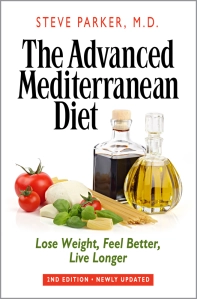
Steve Parker, M.D., is a leading medical expert on the Mediterranean diet and creator of the world’s first low-carb Mediterranean diet.  He has three decades’ experience practicing Internal Medicine and counseling on effective weight-loss strategies.  Dr. Parker is the author of “The Advanced Mediterranean Diet: Lose Weight, Feel Better, Live Longer (2nd Edition),“Conquer Diabetes and Prediabetes: The Low-Carb Mediterranean Diet, “ and “KMD: Ketogenic Mediterranean Diet.”


How Does High-Protein Eating Help Control Appetite and Weight?

Julianne Taylor has a fine post with the sciencey details. She talks about insulin, glycogen, digestion, glycemic index, and the benefits of vegetable and fruit carbohydrates over grains.

Read the whole enchilada.

Does Turning Your Heater Down Help You Lose Weight?

Dr. Stephan Guyenet thinks it might. (I’m skeptical.) It’s not so much central heat as it is failing to expose our bodies adequately to temperatures around 60° F (15.6° C) or lower on a regular basis. Here’s a human experiment Dr. G wrote about:

The second study went further, using a longer cold exposure protocol to investigate changes in fat mass among people with low brown fat activity at baseline (4).  Researchers exposed volunteers to 63 F (17 C) air for two hours a day over a six-week period; again I assume they were lightly clothed.  As in the previous study, they observed an increase in brown fat activity with cold training, and they found that calorie expenditure was higher when subjects were in the ‘cold’ air.  After six weeks of training, body fat mass had declined by about 5 percent.  This is despite the fact that all subjects were lean to begin with!

Read the rest.

Mount Humphries on the horizon is highest point in Arizona, 12,633 ft above sea level. High and cold.

Mount Humphries on the horizon is highest point in Arizona, 12,633 ft above sea level. High and cold.

I thought this study tied in with that one showing an inverse relationship between altitude and obesity. Environmental temperatures rise roughly 3° F with every 1,000 feet (305 meters). But the altitude study controlled for (accounted for) temperature, meaning that the temperature had nothing to do with the association.

Somebody’s probably already tried to link environmental temperatures—whether inside the house or out—to obesity rates. Let me know if you find it.

—Steve

Update:

A few minutes at Pubmed.gov revealed this 2013 abstract:

Objective: Raised ambient temperatures may result in a negative energy balance characterized by decreased food intake and raised energy expenditure. This study tested whether indoor temperatures above the thermoneutral zone for clothed humans (approx. 23 o C) were associated with a reduced body mass index (BMI). Design and Methods: Participants were 100,152 adults (≥ 16 years) drawn from 13 consecutive annual waves of the nationally representative Health Survey for England (1995 – 2007). Results: BMI levels of those residing in air temperatures above 23 o C were lower than those living in an ambient temperature of under 19 o C (b = -.233, SE =.053, p <.001), in analyses that adjusted for participant age, gender, social class, health and the month/year of assessment. Robustness tests showed that high indoor temperatures were associated with reduced BMI levels in winter and non-winter months and early (1995 – 2000) and later (2001 – 2007) survey waves. Including additional demographic, environmental, and health behavior variables did not diminish the link between high indoor temperatures and reduced BMI. Conclusions: Elevated ambient indoor temperatures are associated with low BMI levels. Further research is needed to establish the potential causal nature of this relationship.

And there’s this abstract, probably from the altitude study I mentioned:

http://www.ncbi.nlm.nih.gov/pubmed/23357956

“There was an approximately parabolic relationship between mean annual temperature and obesity, with maximum prevalence in counties with average temperatures near 18 °C [64.4° F].”

I don’t have the full article, but parabolic, to me in this context, probably means the obesity incidence was highest at 64.4° F, with lower obesity incidence both above and below 64.4°.

Of course, living in a particular environment doesn’t equate to exposing yourself to outdoor temperatures. But it makes sense that someone living in a cold environment will have more cold exposure than someone in a hot climate.

Perhaps 64.4° F is a sweet spot for efficient body temp regulation and energy partitioning. Living at temps significantly above or below that may cost you energy-wise: you expend extra calories maintaining a normal body temperature, tending to result in lower obesity incidence.

Kim Kardashian Losing Weight With the Atkins Diet

…according to an article at the LA Times. Twenty-five pounds thus far. I don’t follow celebrities much but in case you do, there you go. The description of her meals in the article is similar to my Low-Carb Mediterranean Diet.

Top Harvard Nutrition Scientist Walter Willett Under the Gun

Forbes has the poop:

In an extraordinary editorial and feature articleNature, one of the world’s pre-eminent scientific journals, has effectively admonished the chair of the Harvard School of Public Health’s nutrition department, Walter Willett, for promoting over-simplification of scientific results in the name of public health and engaging in unseemly behavior towards those who venture conclusions that differ to his.

Dr. Willett was a key promoter of the Mediterranean diet as one of the healthiest back in the 90’s. He worked closely with Oldways on their original Mediterranean diet pyramid.

He has come under fire for being rudely critical of Katherine Flegal, who promotes the idea that people who are overweight (but not obese) tend to live longer than those who are at a normal weight. (By overweight, I mean having a body mass index of 25-30.) I think Flegal is right; her major point has been well-known in the nutrition science community for at least a decade.

Worse than being rude, Dr. Willett is sounding anti-scientific. He seems to think it’s not worth even looking into. Regarding Flegal’s work, the Forbes article quotes him:

“This study is really a pile of rubbish, and no one should waste their time reading it,” he told National Public Radio.

Read the whole enchilada.

What’s the No. 1 Treatment for Obstructive Sleep Apnea?

Weight loss, according to new guidelines from the American College of Physicians. That assumes you’re overweight or obese to begin with. If that applies to you, might I suggest the Advanced Mediterranean Diet?

Chaz Bono Loses 65 Pounds On Low-Carb Diet

Examiner.com has the details:

“I really avoid grains and starches, so meats and vegetables and fruits are my diet,” he tweeted. “I make them all different ways to keep it interesting. What’s worked for me is no sugar, no grains, no dairy except goat cheese, no white starches, portion control, and high intensity workouts.”

My Advanced Mediterranean Diet offers a low-carb option in addition to the traditional Mediterranean diet.

Johns Hopkins Researchers Show Low-Carb Diet Beats Low-Fat for Weight Loss

low-carb diet, low-carb fruits, Steve Parker MD

Low-carb doesn’t mean “meat-only”: You can eat these low-carb fruits

A low-carb diet was superior to a traditional low-fat weight loss diet, and without adverse effects on markers of systemic inflammation, according to a report at ScienceDaily. Some medical professionals are still hesitant to accept the validity of low-carb dieting, fearing that relatively high fat and protein content may promote inflammation, leading to atherosclerosis.  The study at hand should be reassuring in that regard.

Some quotes from ScienceDaily:

The researchers measured the participants’ blood levels for three common markers of inflammation — C-reactive protein, interleukin 6 and tumor necrosis factor-alpha — at the beginning and end of the study. They also measured body weight, body mass index (BMI) and total body and belly fat. At the start, both groups were similar in the various measures, including elevated levels of inflammation markers.

The participants on the low-carb diet lost more weight, on average, than those on the low-fat diet — 28 pounds versus 18 pounds [over the six month trial.

“In both groups, there was a significant drop in the levels of all three measures of inflammation,” says [Kerry] Stewart, indicating that a diet higher in fat and protein doesn’t interfere with the ability to lower inflammation, as long as you are losing weight.

Despite reading several online articles on this study, I can’t determine which low-carb diet was used, nor the level of carbohydrate restriction. Both diet groups exercised three times a week. I expect full details to be published in a scientific journal within a couple years. The research was done at Johns Hopkins University and was not funded by Atkins Nutritionals. U.S. taxpayers funded it.

If you’re looking for a low-carb diet, consider the Low-Carb Mediterranean Diet. Carb restriction starts at under 30 grams a day, but allows for increases over time as long as you’re making weight-loss progress. The typical American eats 250 to 300 grams of carbohydrate daily.

Read the rest at ScienceDaily.

Steve Parker, M.D.

Psychiatrist Georgia Edes Loves Her Ketogenic Diet

Click for details. Ketogenic diets are used for a variety of purposes, but most commonly weight loss.

Here’s Dr. Edes’ version of a ketogenic diet:

My diet consists almost entirely of roasted chicken (with skin), duck (with skin), duck fat, turkey, fish, chicken liver, zucchini, spinach, plantain chips, berries, lettuce, small amounts of black coffee, and salt.  I’ve been avoiding chocolate entirely.   Every once in a while I eat beef, pork, or a very small amount of cheese, or when at a restaurant might order something that includes a cream, wine, or butter-based sauce, but these don’t usually agree with me, so I keep them to a minimum, and most days I completely avoid them.  I steer clear of preserved, smoked, cured, aged, fermented, canned, and processed foods whenever possible.

Most folks will enter ketosis when they get their daily digestible carbohydrate consumption below 30-50 grams. My favorite method is the Ketogenic Mediterranean Diet.