Tag Archives: exercise

Prevention of Type 2 Diabetes Depends on the Cause

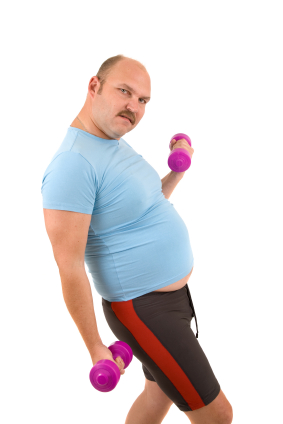
(moonlights as a clown)

The U.S. Centers for Disease Control predicts that one of every three Americans born in 2000 will develop diabetes, mostly type 2.

You can lower your risk of type 2 diabetes significantly by avoiding overweight and obesity, by exercising regularly, and by choosing the right parents.  These provide clues as to the causes of diabetes.

UpToDate.com offers a deceptively simple explanation of what causes type 2 diabetes:

Type 2 diabetes mellitus is caused by a combination of varying degrees of insulin resistance and relative insulin deficiency. [Insulin is the pancreas hormone that lowers blood sugar.] Its occurrence most likely represents a complex interaction among many genes and environmental factors, which are different among different populations and individuals.

So what causes the insulin resistance and relative insulin deficiency?

Understanding the pathogenesis [cause] of type 2 diabetes is complicated by several factors. Patients present with a combination of varying degrees of insulin resistance and relative insulin deficiency, and it is likely that both contribute to type 2 diabetes. Furthermore, each of the clinical features can arise through genetic or environmental influences, making it difficult to determine the exact cause in an individual patient. Moreover, hyperglycemia itself can impair pancreatic beta cell function and exacerbate insulin resistance, leading to a vicious cycle of hyperglycemia causing a worsening metabolic state.

The UpToDate article then drones on for a couple thousand words discussing mouse studies, various genes, free fatty acids, adiponectin, leptin, amylin, insulin secretion, insulin resistance, impaired insulin processing, insulin action, body fat distribution, inflammation, various inflammatory markers, low birth weight, high birth rate, prematurity, etc.  More excerpts:

Increased free fatty acid levels, inflammatory cytokines from fat, and oxidative factors, have all been implicated in the pathogenesis of metabolic syndrome, type 2 diabetes, and their cardiovascular complications.

Insulin resistance may, at least in part, be related to substances secreted by adipocytes [fat cells] (“adipokines” including leptin adiponectin, tumor necrosis factor alpha, and resistin).

Type 2 diabetes most likely represents a complex interaction among many genes and environmental factors.

While it’s too late to pick your parents, you can modify environmental factors that affect your risk of diabetes.  See the second paragraph above.  The Mediterranean diet also prevents diabetes.

Steve Parker, M.D.

Reference: “The Pathogensis of Type 2 Diabetes Mellitus”  by David K McCulloch, MD, and R Paul Robertson, MD, at UpToDate.com, updated June 2012, and accessed November 19, 2012.
Exercise Does and Doesn’t Help With Weight Loss

With regards to TV’s “The Biggest Loser” show:

The show’s 24-week regimen consists of approximately 4 hours of daily exercise, including 1 hour of intense resistance, 1 hour of intense aerobic activity, and 2 hours of moderate aerobic activity (for example, walking), along with a caloric  intake of at least 70% of estimated resting daily energy expenditure, explained Dr. [Robert] Huizenga, who is a former team physician to the L.A. Raiders football team.

exercise for weight loss and management, dumbbells

If you’re not familiar with resistance training, a personal trainer is an great idea

This is an excerpt from “The Biggest Loser Pushes Envelope on Diabetes,” in Internal Medicine News, vol. 45, No.11, page 17.

In a previous post about The Biggest Loser, I’d written that I didn’t know how much they exercised.

For purposes of discussion, let’s assume the documented major weight losses of Biggest Loser contestants is not simply due to caloric restriction.

Dr. Huizenga shared some of his experience at the recent annual meeting of the American Association of Clinical Endocrinologists.  In a study of 35 Biggest Loser participants, about half had prediabetes or type 2 diabetes.  Hemoglobin A1c, a measure of blood sugar control, fell significantly in this subset.  Three of the six with diabetes were able to stop metformin early on.  By week 29 of the study, average body mass index for the entire group had fallen from 46 to 29.

Yes, exercise helps with weight loss.  But most folks aren’t willing or able to exercise vigorously for four hours a day.  Physical activity is more important for maintenance of weight loss, when it demands much less time.

Steve Parker, M.D.

Momentary Muscular Failure and Resistance Training

I was planning to review here an article, Resistance Training to Momentary Muscular Failure Improves Cardiovascular Fitness in Humans: A review of acute physiological responses and chronic physiological adaptations.  It’s by James Steele, et al, in the Journal of Exercise Physiology (Vol. 15, No. 3, June  2012).

Exercise to momentary muscular failure may be safer on a machine

But it’s too technical for most of my readers. Heck, it’s too technical for me!  Too much cell biology and cell metabolism.  You’re dismissed now.  Maybe “American Idol” or “Honey Boo Boo” is on TV.

I’m just going to pull out a few pearls from the article that are important to me.  I ran across this in my quest for efficient exercise.  By efficient, I mean minimal time involved.

The authors question the widespread assumption that aerobic and endurance training are necessary for development of cardiovascular fitness.  Like Dr. Doug McGuff, they wonder if resistance training alone is adequate for the development of cardiovascular fitness.  Their paper is a review of the scientific literature.  The authors say the literature is hampered by an inappropriate definition and control of resistance training intensity.  The only accurate measure of intensity, in their view, is when the participant reaches maximal effort or momentary muscular failure.

The authors, by the way, define cardiovascular fitness in terms of maximum oxygen consumption, economy of movement, and lactate threshold.

“It would appear that the most important variable with regards to producing improvement in cardiovascular fitness via resistance training is intensity [i.e., to muscle failure].”

The key to improving cardiovascular fitness with resistance training is high-intensity.  These workouts are not what you’d call fun.

From a molecular viewpoint, “the adenosine monophosphate–activated protein kinase pathway (AMPK) is held as the key instigator of endurance adaptations in skeletal muscle.  Contrastingly, the mammalian target of rapamycin pathway (mTOR) induces a cascade of events leading to increased muscle protein synthesis (i.e.,[muscle] hypertrophy).”  Some studies suggest AMPK is an acute inhibitor of mTOR activation.  Others indicate that “resistance training to  failure should result in activation of AMPK through these processes, as well as the subsequent delayed activation of mTOR, which presents a molecular mechanism by which resistance training can produce improvement in cardiovascular fitness, strength, and hypertrophy.”

You’re not still with me, are you?

“… the acute metabolic and molecular responses to resistance training performed to failure appear not to differ from traditional endurance or aerobic training when intensity is appropriately controlled.”

Chronic resistance training to failure induces a reduction in type IIx muscle fiber phenotype and an increase in type I and IIa fibers.  (Click for Wikipedia article on skeletal muscle fiber types.)

“It is very likely that people who are either untrained or not involved in organized sporting competition, but you have the desire to improve their cardiovascular fitness may find value in resistance training performed to failure.  In fact, this review suggests that resistance training to failure can produce cardiovascular fitness effects while simultaneously producing improvements in strength, power, and other health and fitness variables. This would present an efficient investment of time as the person would not have to perform several independent training programs for differing aspects of fitness.”  [These statements may not apply to trained athletes.]

Before listing their 157 references, the authors note:

“It is beyond the scope of this review to suggest optimal means of employing resistance training (i.e., load, set volume, and/or frequency) in order to improve cardiovascular fitness since there are no published studies on this topic.”

In conclusion, if you’re going to do resistance training but not traditional aerobic/cardio exercise, you may not be missing out on any health benefits if you train with intensity.  And you’ll be done sooner.

Steve Parker, M.D.

PS: See Evidence-based resistance training recommendations by Fisher, Steele, et al.

For Weight Loss, What’s More Important: Exercise or Food?

This is NOT diet food

What you eat, and how much, are more important than your physical activity.  By far.

  • Your genetics largely determines your response to an exercise program
  • Physical activity isn’t a great way to lose weight
  • School-based or other programs to increase childhood physical activity probably won’t reverse childhood obesity statistics
  • Disregarding weight loss, exercise has other worthwhile metabolic advantages
  • Highly advanced societies shouldn’t blame our overweight problem on decreased levels of physical activity

Skyler Tanner slaughters some sacred cows in his blog post June 4, 2012. I pulled these bullet points from his post. Click on his embedded links for details.

Steve Parker, M.D.

My Fitness Experiment No. 4

And now for something completely different….

Push-ups are one of Chris Highcock’s favorite exercises

If you’re new here, let me fill you in.  I don’t like to exercise.  But I want the benefits of exercise.  So I’m experimenting with ways to gain the benefits with minimal time involvement.  I want to keep my costs down, too.  I’ve already demonstrated I’m fit enough to be in the U.S. Army while working out only 70 minutes a week.

The guys at Whole9 had a series of blog posts on “the five best exercises.”  That’s where I heard of Turkish get-ups and man-makers (see links to YouTube demo videos below).

Everybody has their own ideas as to the Big Five exercises, the ones that are critical to any well-rounded strength training program.  The finalists typically are squats, deadlifts, bent-over rows, bench presses, push-ups, overhead presses, and chin-ups (or pull-ups).  The Big Five aren’t necessarily the Five Best exercises.

Turkish get-ups and man-makers incorporate many of those big five moves.  For instance, the man-maker incorporates a squat, row, overhead press, and push-up.

I’m also interested in maintaining what I’ll call aerobic endurance: the ability to maintain a steady workload at a relatively high heart and breathing rate over a significant length of time.

Heres’ my new plan:

  • Alternate man-makers (MMs) with Turkish get-ups (TGUs) for 20 minutes twice a week, with 1-2 minutes of rest in the middle of the session
  • Finish the sessions with high-intensity intervals (HIT) on a stationary cycle:  easy warm-up for 3 minutes then 1 minute of hard and fast cycling alternating with 1 minute easy coasting while I catch my breath, for a total of 6 fast/slow cycles (15 minutes on cycle)

I did my first session yesterday and it kicked my butt.  The MMs are the most vigorous; at some point I just couldn’t do any more due to breathlessness and weakness, then I switched to TGUs.  After I got my breath back, I returned to the MMs, then alternated back and forth.  I did both MMs and TGUs with 15 lb (6.8 kg) dumbbells.  I’ll increase my weights as able.  I’m not sure the stationary cycle HIIT adds much to this regimen.

Here are YouTube examples of man-makers by SEAL Fit and Travis, and Turkish get-ups by Max ShankGray Cook, and Till Sukopp.  Some man-makers incorporate one push-up, others do two (one before each renegade row).  Here’s an video example of HIIT on a stationary cycle.

MMs and TGUs are scalable for most folks who are starting out in poor condition.  For instance, man-makers require a push-up but many people can’t do even one.  In that case, do a knee push-up.

Again, if one is starting out in poor shape, burpees could be substituted for man-makers; they’re similar.  Burpees can be done with knee push-ups or regular push-ups.  As fitness improves, you graduate to regular push-ups and man-makers with kettlebells or dumbbell weights.

I’ll admit I have some trepidation about hurting myself with this program!

Steve Parker, M.D.

Update August 25, 2012

Not pertinent, but a cool picture

I dragged the old Schwinn Airdyne in from the garage, dusted it off, and replaced the batteries.  Worked like a charm even though no one’s ridden it for eight years.  This war horse is at least 15 years old; we got it used, like my set of dumbbells.  My natural “coasting” speed is around level 2.4; my “damn the torpedoes, full speed ahead” speed is about level 5.5.  I burned 200 calories over 15 minutes, which is about what I did with my treadmill HIIT.  With the MMs, I stuck with 15 lb (6.8 kg) dumbbells.  For the TGUs, I increased to 20 lb (9 kg).  The MMs and TGUs are tough; I’m breathing fairly heavily for the entire 20 minutes.  Not fun.

Update October 6, 2012

This thing is not fun.  But I haven’t missed a session.  I look for excuses to postpone the workout.  After the hellish man-makers and Turkish get-ups, I look forward to the 15 minutes on the bike.  I can’t see keeping this up for the long run unless it pays off big, fitness-wise.

I have to guard against slacking off on my bike performance.  On the treadmill, by comparison, I dialed in the treadmill speed and had to keep up or I’d fall off the back.  No such risk, or motivation, on the bike.

A couple weeks ago I increased the man-maker weights to 20 lb (9 kg) and the Turkish get-up weights to 25 lb (11.4 kg).  I don’t think I’ll be able to increase those weights any time soon; already I’m so short of breath at times that I have to stop and rest for a minute.

My body’s holding up OK.  At one point, however, I developed some mild pain and swelling in my left knee that I thought could be a problem.  It cleared up after a few days and hasn’t recurred.

I’ve completed six weeks of Fitness Experiment No.4.  After resting a few days, I’ll retest my fitness.

How Soon Does Fitness Deteriorate After You Stop Working Out?

The answer varies from person to person and may be different for aerobic versus  strength measures.

I’m reminded of a quote from a famous violinist: “If I don’t practice for one day, I can tell.  If I don’t practice for two days, my conductor can tell.  If I don’t practice for three days, the audience can tell.”

I laid off all exercise for the last three weeks, partly due to a long vacation, partly to see how much my fitness would deteriorate.

Here’s what I found:

  • My time for the one-mile run increased from 8 mins and 54 seconds to 9 mins and 30 seconds
  • My maximum number of push-ups increased from 32 to 36
  • My maximum number of sit-ups increased from 32 to 34
  • My maximum number of pull-ups increased from 8 to 9

Closing Thoughts

Strength measures increased, surprisingly.  Was it just a good day, or did my muscles need the time off to rest and re-build?  Over-training is a real problem for some folks.  At 20 minutes of weight-training twice a week, I doubt I was anywhere near what most consider over-training.  I don’t fiddle-fart around during my exercise sessions, but I’m not puking either.

So I won’t feel too bad in the future if I take a couple or three weeks off from strength training periodically.

My endurance for running deteriorated significantly.  Is it related to the lack of strength training, the lack of treadmill interval work, or both?

Your mileage will vary.

Steve Parker, M.D.


How Much Exercise Is Enough?

Not Darrin Carlson

Darrin Carlson last March shared his ideas on the minimal amount of exercise and equipment needed to achieve reasonable fitness benefits.

Public health authorities for years have recommended physical activity in the range of 150 minutes a week. That ain’t gonna happen for most folks. Darrin says “Two hours a week will work for most people….”

Jonathan Bailor, Chris Highcock, and others suggest 30-60 minutes a week may be enough. Even Darrin admits as much, for the super-dedicated.

I was recently able to pass U.S. Army physical fitness standards by just working out for 70 minutes a week.

-Steve

I’m as Fit as a U.S. Army Soldier!

“Drop and gimme 50, maggot!”

U.S. soldiers, at least those in the Army, have to take a physical fitness test twice a year.  I wondered how I, at 57-years-old, stacked up so I self-administered the three fitness components.  I did not run in army boots, nor carry a rifle or backpack!  Soldiers need to score a minimum of 60 points on each exercise.

The Army Physical Fitness Test (APFT) performance requirements are adjusted for age and sex.

  1. Push-ups: 32 (76 points)
  2. Army sit-ups: 32 (65 points)
  3. Timed two-mile run: 17 minutes, 38 seconds (80 points)

I gotta say I feel pretty good about this, especially since I’ve only been working out for 60-70 minutes a week over the last three months.

Steve Parker, M.D.

Notes:

My first mile of the run was done in 8 minutes and 30 seconds.

My Fitness Experiment #3: Results

One……more……rep!

After finishing six weeks ofChris Highcock’s Hillfit earlier this year, I designed another fitness program using dumbbells and high intensity interval running on a treadmill.

I’ve preached about the benefits of baseline and periodic fitness measurements.  Here are mine, before and after roughly six weeks of my fitness experiment #3:

  • weight: no change (170 lb or 77.3 kg)
  • maximum consecutive push-ups: 34 before, 32 after
  • maximum consecutive pull-ups: no change (8)
  • maximum consecutive sit-ups: 37 before, 35 after
  • time for one-mile walk/run: 8 minutes and 35 seconds before, up to 8 minutes and 54 seconds after (*)
  • vertical jump (highest point above ground I can jump and touch): 279.5 cm before, to 276 cm after
  • toe touch (wearing shoes, stand and lock knees, bend over at waist to touch toes: no change (22 cm)

I worked out twice weekly for a total of 70 minutes.  The U.S. Centers for Disease Control and Prevention recommends 150 minutes a week of moderate-intensity aerobic activity and muscle-strengthening exercise at least twice a week; or 75 minutes per week of vigorous-intensity aerobic activity plus muscle-strengthening activity at least twice a week.

Bottom Line

I was a bit fitter after completing Hillfit a couple months ago.

Or I just had a bad day when I tested this time.  Nevertheless, I prefer my current program to Hillfit.  (Click for report on my six-week Hillfit experience.)

What Next?

For strength and endurance gains, perhaps I should incorporate some Hillfit features into my current plan.

I don’t feel like I’m getting much out of Romanian deadlifts.  Drop ’em?  Do they add anything to squats?  Try Hillfit-style wall squats while hold dumbbells?

How does my fitness compare to other 57-year-old men?  I’m not sure.  One of these days I’ll see how I stack up against U.S. Army fitness standards, which involve a timed two-mile run.

Is my current level of fitness good enough?  Again, not sure.

My highest dumbbell weights are 40 lb (18 kg).  I’m already using those for squats, deadlifts, and one-arm rows.  For future strength gains, I’d have to do those exercise for longer, or more days per week, or buy some 50-lb weights.  A pair of 50-lb dumbbells will cost $50 (used) or $100 (new).

I’ll put together yet another fitness program within the next few months.

I don’t like to exercise, but I want the health benefits.  My general goal is to maximize health benefits while minimizing exercise time.

Steve Parker, M.D.

Notes:

Next time I do the mile run on the treadmill, start at 7.5 mph and increase to 8 mph as much as tolerated.

(*) About 10 days after this I ran a mile in 8 minutes and 30 seconds on a high school track.

How to Prevent Heart Attacks in Women

Researchers studied 24,444 Swedish women over the course of 6.2 years, analyzing dietary patterns, healthy lifestyle choices, and body weight.  Information on the women was obtained mostly by surveys at the start and end of the study.  The women were aged 48 to 83 at the start of the study and were free of diabetes mellitus, cardiovascular disease, cancer, and coronary artery disease.

Heart attacks in the study cohort were identified in the Swedish Hospital Discharge Registry and the Cause of Death Registry.  Over the course of six years there were 308 heart attacks.

The study authors noted a greatly reduced incidence of heart attacks in women with the following characteristics:

  1. high consumption of fruits, vegetables, whole grains, legumes, and fish
  2. moderate consumption of alcohol
  3. avoidance of overweight, especially abdominal fat (waist-hip ratio < 0.85)
  4. physically active (at least 40 minutes daily of walking or bicycling and 1 hour weekly of leisure-time exercise
  5. non-smokers

Women meeting these criteria had a 92% lower risk of having a heart attack!  Such women were only 5% of the cohort, however.  I suspect the physical activity criterion knocked a lot of women out of the super heart-healthy subset.

The authors conclude that “most [heart attacks] in women may be preventable by consuming a healthy diet and moderate amounts of alcohol, being physically active, not smoking, and maintaining a healthy weight.”

I see little reason to doubt that these findings apply to the typical woman in the U.S. or Europe, and not just to Swedes.  The traditional Mediterranean diet of the mid-20th century fulfills the dietary prescription for a healthy heart.  The Advanced Mediterranean Diet incorporates these healthy diet and lifestyle choices while simultaneously working to control weight.

Steve Parker, M.D.

Reference:  Akesson, Agneta, et al.  Combined Effect of Low-Risk Dietary and Lifestyle Behaviors in Primary Prevention of Myocardial Infarction in Women.  Archives of Internal Medicine, 167 (2007): 2,122-2,127.