
Taken with my new iPhone-7 Plus
This was only my third training hike (in prep for Humphreys Peak) and I was pleasantly surprised to feel a positive training effect already. Or maybe I was just high on the beautiful day and setting.

Taken with my new iPhone-7 Plus
This was only my third training hike (in prep for Humphreys Peak) and I was pleasantly surprised to feel a positive training effect already. Or maybe I was just high on the beautiful day and setting.
Comments Off on The View From Pinnacle Peak, Looking Southeast
Posted in Hiking
“In a new sign that Venezuela’s financial crisis is morphing dangerously into a humanitarian one, a new nationwide survey shows that in the past year nearly 75 percent of the population lost an average of 19 pounds for lack of food.”
“Venezuela’s food crisis has gotten so bad that remains of everything from dogs and cats to donkeys and even giant anteaters have been found in garbage bags at city dumps around the country.”
Yum!
But caloric restriction doesn’t work, right?
Source: Study: Venezuelans lost 19 lbs. on average over past year due to lack of food | Fox News
Posted in Weight Loss
Folks who have inherited a gene called APOE4 have a higher risk for developing Alzheimer’s Dementia compared to those who don’t have the gene. A recent review suggests that supplementing with an omega-3 fatty acid called DHA may help prevent or slow the onset of the dementia.
Cold-water fatty fish are a great source of omega-3 fatty acids, and consumption of these fish seems to protect against dementia. The “dose” is one or two servings a week, for years.
Not everyone can afford fish and some folks don’t like the the taste. So supplements are a consideration for them.
From MPT:
“Giving long-term high doses of docosahexaenoic [DHA] acid to carriers of the apolipoprotein E ε4 (APOE4) allele before the onset of Alzheimer’s disease (AD) dementia may reduce the risk for AD, or delay the onset of symptoms, and should be studied, according to an expert review.
While the review of landmark observational and clinical trials that assessed supplementation with ω-3 fatty acids such as docosahexaenoic acid (DHA),revealed it was not beneficial in symptomatic AD, several observational and clinical trials of ω-3 supplementation in the pre-dementia stage of AD suggested it may slow early memory decline in APOE4 carriers, reported Hussein Yassine, MD, of the Keck School of Medicine at the University of Southern California in Los Angeles, and colleagues.”
Source: High-Dose Omega-3 May Lower AD Risk in APOE4 Carriers | Medpage Today
PS: My books have several easy fish recipes in them.
Comments Off on High-Dose Omega-3 Supplement May Lower Alzheimer’s Disease Risk in APOE4 Carriers
Posted in Dementia
Here’s my first and only trailer for The Advanced Mediterranean Diet, (2nd Ed.).” Have a listen and try to identify the source of my accent.
You can thank my son Paul for my limiting it to 3.5 minutes.
Comments Off on Book Trailer for “The Advanced Mediterranean Diet (2nd Ed.)”
Posted in Shameless Self-Promotion
“For those who believe in God, no explanation is necessary. For those who do not believe in God, no explanation is possible.”
—From the opening lines of the 1943 movie, The Song of Bernadette
Jennifer Warnes co-wrote and sang the related and beautiful Song of Bernadette. Here’s a good version.
You’ve heard of the healing waters at Lourdes, France, right? The movie is about that and 14-year-old Bernadette Soubirous.
Comments Off on QOTD: Miracles and Bernadette Soubirous
Posted in QOTD
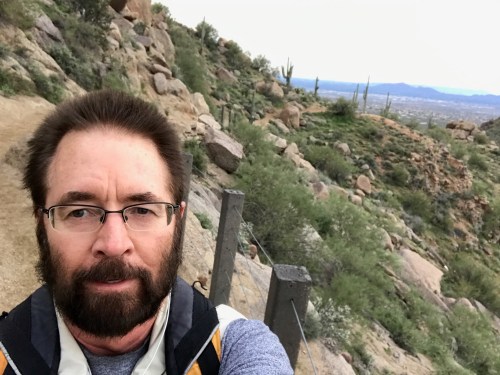
60 degrees F.
Lord willin’, I’m going to hike to the top of Humphreys Peak in Arizona this June. I started training today, at Pinnacle Peak Trail in Scottsdale.
With only a couple bottles of H2O in my backpack, I walked the 3.5 mile round-trip trail in 70 minutes. I mention the water because when I’m in better shape I’ll carry in my pack a 10 or 15 lb dumbbell plus water.
Posted in Hiking
“Many people measure their glucose levels throughout the day with portable glucometers, and quite a few are likely to self-diagnose as pre-diabetics when they see something that they think is a “red flag”. Examples are a blood glucose level peaking at 165 mg/dl, or remaining above 120 mg/dl after 2 hours passed since a meal. Another example is a level of 110 mg/dl when they wake up very early to go to work, after several hours of fasting.
As you can see from the picture above, these “red flag” events do occur in young normoglycemic individuals.If seeing “red flags” helps people remove refined carbohydrates and sugars from their diet, then fine.
But it may also cause them unnecessary chronic stress, and stress can kill.”
Source: Health Correlator: Blood glucose variations in normal individuals: A chaotic mess
Comments Off on From Health Correlator: Blood glucose variations in normal individuals are a chaotic mess
Posted in Uncategorized
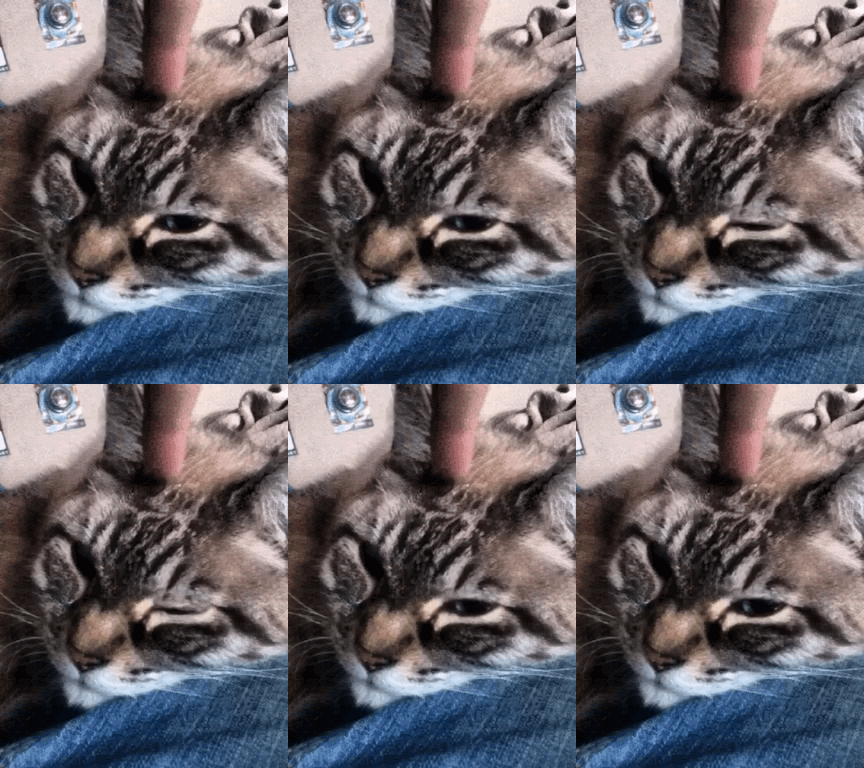
My son Paul made this (I’ll see you in heaven, Romeo)
The Joslin diabetes blog has an interesting article on brown fat and its effect on metabolic rate and insulin sensitivity. Brown fat is just a type of body type different from the more plentiful white fat (which is actually more pale yellow). If there are other colors of body fat, I don’t know.
If you can “activate” your brown fat, it helps you burn more calories, which could be helpful if you’re trying to lose weight. It also improves insulin sensitivity: beneficial if you have type 2 diabetes or are prone to it.
From Joslin:
“When brown fat is fully activated, it can burn between 200 and 300 extra calories per day. It is most successfully activated through cold exposure. A recent study of people with type 2 diabetes had volunteers sit in a 50 degree room for a couple of hours a day for 10 days in shorts and short-sleeved shirts.
“When I say cold, it’s not icy cold, it’s not like the winter in Boston,” she says. “It’s more or less like the temperature we have here in autumn. After this mild cold exposure, all ten volunteers with type 2 diabetes, as shown in that study, displayed increased brown fat activity and improved insulin sensitivity. This is very exciting.”
Dr. Tseng is working on understanding exactly what is happening on a cellular level to activate brown fat in the cold to see if she can create a drug that will mimic the effects. “Although cold works, it’s just not pleasant,” she says. “If you had to sit in a cold room for a few hours every day, perhaps not everybody could accept that.”
Source: How Your Body Temperature Can Affect Your Metabolism | Speaking of Diabetes | The Joslin Blog
Another way to activate brown fat is exercise (at least if you’re a man or a mouse).
Steve Parker, M.D.
Comments Off on Brown Fat and the Cat in the Hat
Posted in Overweight & Obesity
Tagged brown fat, insulin sensitivity, metabolic rate
From a recent meta-analysis:
“In conclusion, there is no evidence that currently available interventions are able to increase physical activity among overweight or obese children. This questions the contribution of physical activity to the treatment of overweight and obesity in children in the studied interventions and calls for other treatment strategies.”
For weight loss in overweight and obese children, you have to focus on diet modification. Same as adults.
Comments Off on We Don’t Know How to Get Overweight Kids to Exercise
Posted in Exercise, Overweight & Obesity
Karl Denninger has a plan that he thinks would reduce the cost of healthcare in the U.S. by up to 85%!
Almost one in every five dollars spent in the U.S. is for “healthcare.” That’s probably the highest percentage of any country, and I don’t think we’re getting our money’s worth.
Karl’s plan hinges on the reality that the healthcare system here is not operating as a free market. There’s too much price-fixing, lack of price transparency, lack of competition, and consumer fraud done by collusion among the big players, such as health insurers, hospitals, physicians, and politicians. Karl says such practices have been illegal for decades, but applicable laws simply have not been enforced by the powers that be.
I’ve always had the impression that health insurers were exempt from anti-trust laws. Karl says that ain’t so.
Read the whole thang if you’re interested in U.S. healthcare reform. For example:
I’ve repeatedly, over some 30 years time, heard that there’s “some law” that exempts health care from anti-trust [laws] when the discussion turns to the topic of price-fixing, collusion, differential billing for commodities of like kind and quantity and similar. Every time I hear this claim I respond the same way: “Show me the law.”
Nobody ever has.
And I haven’t asked just once or twice. I’ve asked dozens of times since the 1990s. I’ve asked politicians. I’ve asked lawyers. I’ve asked political candidates. I’ve asked policy “wonks” of various flavors. Gary Johnson got asked (Lib candidate for President) in person a number of years back in his suite during the Libertarian convention in Orlando. Yet not one of the people I’ve asked has ever replied with a title, chapter and section of US code that provides such an exemption.
As just one of many examples I heard this claim during the campaign from a (Democrat) candidate for the US House when I asked him whether he would demand that the executive enforce anti-trust law against all medical providers and suppliers. He said he’d call me with a cite to the law when I responded that with all due respect the exemption he claimed did not exist at a meet-and-greet in a room full of Libertarians. He never did call me. (He lost the election, incidentally.)
I’m utterly convinced that’s because the oft-claimed exemption doesn’t exist. I’m in fact quite sure of it, because I can actually read the US Code — it’s public, of course, and the sections that could bear on this matter are reasonable in size (that is, I can and have read through them in a day or two.)
Never mind the contravening evidence too – like this case from 1979 that went to the Supreme Court which ruled that Mccarran-Ferguson does not protect insurance companies against anti-trust claims related to drug “discounts” on collusive actions. In other words the insurance company took the case to the Supreme Court and lost, which is damn good evidence that (1) anti-trust does apply to health care broadly including the criminal provisions in the Sherman and Clayton Acts and (2) health insurance firms and providers are not exempt to the extent they collude to restrain trade or fix prices.
It is thus my considered position that the reason the law isn’t enforced isn’t because it doesn’t apply — it isn’t enforced because the Executive voluntarily chooses to refuse to enforce it in collusion with Congress and the States and has done so for 30+ years despite the evidence being clear that the law — a law that carries both ruinous civil and felony criminal penalties — is being violated on a daily, continuing basis by the entirety of the so-called “health system.”
Comments Off on My Fellow Americans: How About Paying 80% Less for Your Healthcare?
Posted in Healthcare Reform
Tagged Karl Denninger
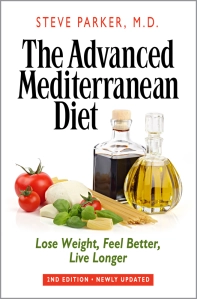
Click the pic to purchase at Amazon.com. E-book versions also available at Smashwords.com.


