Don’t Eat Feed; Eat Food

Future Feed

From Hawaiian Libertarian:

“Food is grown, raised, harvested and processed — and if not consumed while fresh — preserved in as natural and organic a state as possible to keep most of it’s nutritious and nourishing qualities intact.

Feed is mass produced by a few large multinational corporations line using bio-technological innovations to quickly and efficiently manufacture product units ready for global distribution and a near infinite shelf life. Its primary traits are using genetically modified grain products to create a marketable product that is usually adulterated with preservatives and flavor enhancements that give it a long shelf life in airtight packaging and designed in a laboratory to stimulate the taste buds to fool the human body into thinking it’s something good for you.

But above all, the primary difference between Food and Feed can be discerned by this: most real food requires little (if any) corporate mass media marketing campaigns to sell product and expand market shares and waistlines alike.”

Source: Hawaiian libertarian: FEED Inc. & The Corporate Campaign Dialectic

Are You Serious About Losing Weight in 2018?

Then you better start preparing. Read this.


“Hmmm…What’s the best way to lose weight?”


How Does the Mediterranean Diet Protect Against Disease?

From the Journals of Gerontology:

Consuming a Mediterranean diet rich in minimally processed plant foods has been associated with a reduced risk of developing multiple chronic diseases and increased life expectancy. Data from several randomized clinic trials have demonstrated a beneficial effect in the primary and secondary prevention of cardiovascular disease, type 2 diabetes, atrial fibrillation and breast cancer. The exact mechanism by which an increased adherence to the traditional Mediterranean diet exerts its favorable effects is not known. However, accumulating evidence indicates that the five most important adaptations induced by the Mediterranean dietary pattern are: (1) lipid lowering effect, (2) protection against oxidative stress, inflammation and platelet aggregation, (3) modification of hormones and growth factors involved in the pathogenesis of cancer, (4) inhibition of nutrient sensing pathways by specific amino acid restriction, and (4) gut microbiota-mediated production of metabolites influencing metabolic health. More studies are needed to understand how single modifications of nutrients typical of the Mediterranean diet interact with energy intake, energy expenditure, and the microbiome in modulating the key mechanisms that promote cellular, tissue, and organ health during aging.

Remember the Reason for the Season

Stained glass window created by F. Zettler (1878-1911) at the German Church (St. Gertrude’s church) in Gamla Stan in Stockholm, depicting a Nativity Scene.

How Did Walter White Lose That Weight in “Breaking Bad”?

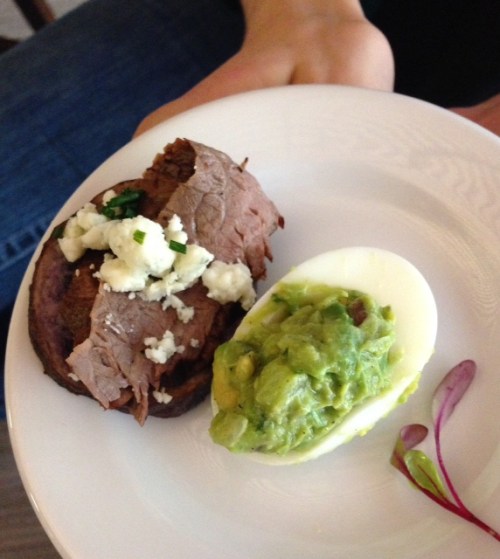
That’s a guacamole deviled egg.
Photo Copyright: Steve Parker

In 2014 Howard Stern interviewed Bryan Cranston and asked how he lost weight so quickly for his role as Walter White on Breaking Bad:

“Stern: When you had chemo and was getting sick playing the part of Walter White, in order to go through rapid weight loss you deliberately didn’t eat for 10 days? True or false?

Cranston: False.

Stern: How’d you lose all that weight?

Cranston: No carbohydrates. I just took out all the carbohydrates.

Stern: How much weight did you drop?

Cranston: 16 pounds, in ten days.

Stern: Painful?

Cranston: No. The first three days are really hard, ’cause your body’s changing and craving sugar and wants, you know, and then you deprive it of the sugar and it starts burning fat.”

Source: How Walter White lost weight in Breaking Bad, it wasn’t chemo – High Steaks

h/t Tom Naughton

My Wife Unboxes an Anova Precision Cooker

My wife got interested in the sous vide cooking method last year. She gave her original Anova cooker away to someone and replaced it with another brand that broke and shocked her, literally. We just got our new Anova and made this unboxing video.

We’ve noticed in our corner of the universe that steaks are getting more expensive. Sous vide cooking allows us to use cheaper and tougher cuts of meat and it comes out very tender. The method often yields foods that are also more flavorful and juicier compared to other cooking styles.

Hank’s First Hike

Hank (son of Tank), a yellow lab

Hank is six months old. Weighs about 60 lb, on the way to 90.

A collection of cairns half way up

Starting at the north trailhead, we made it 3/4 of the way to Tom’s Thumb, three miles round-trip, with 800 feet of vertical elevation.

I needed a selfie-stick

Hank did great on his very first nature hike. No apparent tiredness or soreness from it, whereas my knees were achy for the subsequent 48 hours. This was my first hike since the June trek up Humphreys Peak. On the way down I was wishing I had my trekking poles, but I can’t handle them and a leash.

Steve Parker, M.D.

NASEM: Current U.S. Dietary Guidelines Aren’t Trustworthy

Back to the drawing board

NASEM is the National Academies of Sciences, Engineering, and Medicine. Dr. Andy Harris writes that:

The nation’s senior scientific body recently released a new report raising serious questions about the “scientific rigor” of the Dietary Guidelines for Americans. This report confirms what many in government have suspected for years and is the reason why Congress mandated this report in the first place: our nation’s top nutrition policy is not based on sound science.

Dr. Harris notes that since 1980, when the guidelines were first published, rates of obesity have doubled and diabetes has quadrupled.

Current recommendations to reduce saturated fat consumption and to eat health whole grains do not, after all, reduce rates of cardiovascular disease. That was my conclusion in 2009.

For a mere $68 you can read the NASEM report yourself. Better yet, read Tom Naughton’s thoughts for free.

Steve Parker, M.D.

PS: The diets I’ve designed are contrary to U.S. Dietary Guidelines.

The Latest Chapter In the “Sugar Is Poison” Debate

An unregulated poison?

An unregulated poison?

Gary Taubes argues that sugar is the likely cause of the Western world’s epidemics of obesity, type 2 diabetes, had heart disease.

I agree it’s a strong contributor to those maladies, if only via it’s contribution to overweight and obesity. I wouldn’t say it’s the sole cause.

Here’s an excerpt from Guyenet’s response to Taubes to whet your appetite:

“A Slow-Acting Toxin

According to Taubes, sugar may be a “toxin” and “the primary cause of diabetes, independent of its calories, and perhaps of obesity as well.” Elsewhere in the essay, coronary heart disease is added to the list. Yet Taubes asserts that this speculative hypothesis cannot currently be tested because there is so little existing research on sugar, and so little interest in conducting such research, that “the research necessary to nail it down would take years to decades to complete and is not even on the radar screen of the funding agencies.

”This belief is remarkable in light of the fact that a Google Scholar search returns hundreds of scientific papers on the health impacts of sugar, many of them human randomized controlled trials, and many funded by the U.S. National Institutes of Health. In reality, the health impacts of sugar are of considerable interest to the scientific community, and as such, they have been studied extensively. Having established that this research exists, let’s take a look at it.

The hypothesis that sugar is the primary cause of coronary heart disease is easily refuted. In the United States, coronary heart disease mortality has plummeted by more than 60 percent over the last half century, despite a 16 percent increase in added sugar intake.[9] Roughly half of this decline can be attributed to better medical care, while the other half is attributed to underlying drivers of disease such as lower cholesterol and blood pressure levels and an impressive drop in cigarette use.[10]This striking inverse relationship is incompatible with the hypothesis that sugar is the primary cause of coronary heart disease, although it doesn’t exonerate sugar.

Is sugar the primary cause of diabetes, “independent of its calories”? Research suggests that a high intake of refined sugar may increase diabetes risk, in large part via its ability to increase calorie intake and body fatness, but it is unlikely to be the primary cause.[11] An immense amount of research, including several large multi-year randomized controlled trials, demonstrates beyond reasonable doubt that the primary causes of common (type 2) diabetes are excess body fat, insufficient physical activity, and genetic susceptibility factors.[12]

The ultimate test of the hypothesis that sugar is the primary cause of obesity and diabetes would be to recruit a large number of people—perhaps even an entire country—and cut their sugar intake for a long time, ideally more than a decade. If the hypothesis is correct, rates of obesity and diabetes should start to decline, or at the very least stop increasing. Yet this experiment is far too ambitious to conduct.

Or is it? In fact, this experiment has already been conducted—in our very own country. Between 1999 and 2013, intake of added sugar declined by 18 percent, taking us back to our 1987 level of intake. Total carbohydrate intake declined as well.[13] Over that same period of time, the prevalence of adult obesity surged from 31 percent to 38 percent, and the prevalence of diabetes also increased.[14]”

Source: Americans Eat Too Much Cake, but the Government Isn’t To Blame | Cato Unbound

Enjoy the view:

Well below room temp here

Not much sugar in this environment except for berries in spring and summer

Taubes partial response:

“In stopping an epidemic, nothing is more important than correctly identifying its cause. Where we are today with obesity and diabetes reminds me of where infectious disease specialists were through most of the 19th century, when they blamed malaria and other insect-born diseases on miasma, or the bad air that came out of swamps. That was mildly effective, in that it was an explanation for why the rich in any particular town preferred to build their homes on hills, high above the miasma and, incidentally, away from the swamps and lowlands and slums where the vectors of these diseases were breeding. But only by identifying the vectors and the actual disease agents do we help everyone avoid them and eradicate the diseases. Only by unambiguously identifying the cause can we effectively design treatments to cure it. The kinds of explanations that Dr. Guyenet and Freedhoff put forth – highly palatable foods or ultra-processed foods – are the nutritional equivalents of the miasma explanation. They sound good; they might help some people incidentally eat the correct diets or offer a description of why other people already do, but they’re not the proximate cause of these epidemics. And there is a proximate cause. We have to find it. I can guarantee it’s not saturated fat, regardless of the effect of that nutrient on heart disease risk. What is it?

Now I am going to focus primarily on Dr. Guyenet’s response, as his was by far the most antagonistic, questioning both the history I present in the lead essay as well as the conclusions I’ve derived from the history and the science. While Dr. Guyenet does indeed challenge “specific and testable assertions” related to my lead essay, the one assertion he does manage to refute successfully is not, regrettably, an assertion I made in the article. As for the rest, the evidence against is not nearly as compelling as he presents it.

First, Dr. Guyenet examined “the 1980 Dietary Guidelines to determine if they condemn fat and take a weak stance on sugar as suggested.” He then set out to determine whether the 1980 Guidelines contributed to obesity, diabetes, and coronary heart disease. He concluded that they didn’t.

I was under the impression when I wrote the essay, though, and still am upon re-reading it, that I do not make such a simplistic assertion. The point that I made is not about the 1980 USDA Guidelines alone – Dr. Guyenet and I both note that they urged readers to avoid too much sugar – but rather the entire movement of the research community to demonize fat, and the journalistic coverage of it, and the series of government documents, and the consensus conferences that followed along because of it—all part of the same concerted public health effort that led us by the late 1980s to believe that the essence of a healthy diet is its relative absence of fat and saturated fat. As an unintended consequence, this ill-conceived dogma-building directed attention away from the possibility that sugar has deleterious effects independent of its calories.

These government reports, as I noted, included the FDA GRAS report on sugar in 1986, the Surgeon General’s Report on Nutrition and Health in 1988, the National Academy of Sciences Diet and Health report in 1989, the British COMA report on food policy the same year, and others. I could have also mentioned the 1984 NIH consensus conference on “lowering blood cholesterol to prevent heart disease” that followed on this legendary Time Magazine cover – “Cholesterol, And Now the Bad News” – and the founding in 1986 of the National Cholesterol Education Program, which published its guidelines for cholesterol lowering the following year. All focused on dietary fat and serum cholesterol as the agents of heart disease and all mostly or completely ignored the evolving science on insulin resistance and metabolic syndrome that implicated sugar and other processed carbohydrates.

Indeed, if anything, the more relevant of the two USDA Dietary Guidelines, the one that Dr. Guyenet does not address, is the 1985 version that declared without a caveat, as I noted, that “too much sugar in your diet does not cause diabetes.” This is, of course, remains the critical question and the one that yet has to be rigorously tested (ignoring the tautology implied by the use of the words “too much”).

Dr. Guyenet, Dr. Freedhoff, and I all agree that had Americans eaten as the guidelines cautioned (and just as Michael Pollan would have preferred as well), we’d all very likely be healthier. But we didn’t. The question is whether the dietary fat/serum cholesterol/heart disease obsession directed attention away from the hypothesis that sugar causes heart disease, diabetes, and perhaps obesity as well through its effect on insulin resistance. The secondary question is whether this obsession in government documents, programs, journalistic coverage, and (pseudo)scientific reviews explains why we continued to eat such high sugar diets. As Dr. Guyenet notes, Americans still consume a significant amount of our calories from grain-based desserts and sugary beverages. But why? By focusing on the straw man of the 1980 guidelines, Dr. Guyenet fails to address that question. That he’s taking on a straw man makes me thinks he’s more interested in appearing to win an argument than in dealing with what may be the single most important public health issue of our era.

A key point to make, as Professor Kealey does, is that Americans did indeed respond to the dietary dogma of the 1970s and 1980s by changing their diets. Dr. Freedhoff and Dr. Guyenet are wrong in this regard when they attend only to the total percentage and amounts of fats, carbohydrates, and protein in our diets, and not the type of fats, carbohydrates, and even protein. Looking at what we ate instead of how much we ate supports the supposition that Americans heard the advice on fat and acted on it, even as we were ignoring the sugar advice. As the USDA reports, between 1970 and 2005, we cut down on our use of butter (-17%) and lard (-66%), while almost doubling vegetable oil consumption (from 38.5 pounds per capita yearly to 73.7); we more than doubled how much chicken we ate (33.8 pounds per capita yearly to 73.6, probably skinless white meat, but I’m speculating), while reducing our red meat consumption by 17 percent, and beef by 22 percent. We cut back on eggs, too. So while total fat consumption decreased only marginally, as Drs. Freedhoff and Guyenet note, that marginal decrease is accompanied by a reduction in animal fats and their replacement by vegetable oils, which were thought to be heart healthy and still are (perhaps also erroneously). The type of fats we consumed and the type of foods we consumed changed significantly, and this change was very much in accord with what we were being told.

The post-1980 focus on dietary fat also led to the creation and sale of thousands, perhaps tens of thousands, of non-fat and low-fat food-like substances (credit for the terminology once again to Mr. Pollan). In this instance, the CDC’s publication Healthy People 2000 is informative: Healthy People 2000 included multiple “nutrition objectives” aimed at reducing dietary fat consumption, including the creation of 5,000 low-fat or low-saturated fat products. It included nutrition objectives to reduce salt intake and increase complex carbohydrate and fiber consumption, but included no such objective for sugar or sugar-rich foods. Why not? Indeed, I find that the words “sugar” or “sugars” appear only five times in the almost 400-page final review of how well the guidelines were met. In 1995, the American Heart Association counseled in one of its pamphlets that Americans could control the amount and kind of fat consumed by “choos[ing] snacks from other food groups such as…..low-fat cookies, low-fat crackers,…unsalted pretzels, hard candy, gum drops, sugar, syrup, honey, jam, jelly, marmalade (as spreads).” In 2000, the AHA published this cookbook of low-fat and luscious sugar-rich “soul-satisfying” desserts. I don’t know if Dr. Guyenet would describe this as a “weak stand” on sugar or not, but it does shed light on our failure to limit sugar consumption during a period in which all public health advice was focused on reducing fat.

The more important question, and a very different one, is whether our sugar consumption has uniquely deleterious effects on our health. To refute the claim that consuming sugar might cause heart disease, Dr. Guyenet points out that heart disease mortality has dropped precipitously over the years of the obesity and diabetes epidemics and during a period when sugar consumption clearly increased (technically “caloric sweeteners” since the increase was due primarily to high-fructose corn syrup). Professor Kealey makes a similar point but with a far more nuanced perspective about how mortality rates are confounded by what are, after all, a half-century’s worth of very concerted efforts by medical researchers, the pharmaceutical and medical industry, and public health authorities to reduce mortality. That these efforts succeeded in reducing mortality is indeed commendable, but it makes it far more difficult than Dr. Guyenet suggests to derive meaning from the mortality data. If it’s evidence against the sugar hypothesis, it’s very weak evidence.”

Dr. Michael Eades weighs in with words of wisdom.

From Kerri-Ann Jennings, RD: 15 Natural Ways to Lower Your Blood Pressure

You may need to cut back on alcohol Photo copyright: Steve Parker MD

You may need to cut back on alcohol.
Photo copyright: Steve Parker

Drugs to control hypertension can save your life. I prescribe them all the time. However, there are also “natural” ways to control high blood pressure. Click the link at bottom for some of the better known methods. If you’re trying to avoid drugs, you’ll probably need a combination of tricks. They don’t work for everybody.

Even if you’re already on drugs, you may be able to cut back or stop them if you adopt some of these tips. Check with your doctor first.

“High blood pressure is a dangerous condition that can damage your heart. It affects one in three people in the US and 1 billion people worldwide If left uncontrolled, it raises your risk of heart disease and stroke. But there’s good news. There are a number of things you can do to lower your blood pressure naturally, even without medication. Here are 15 natural ways to combat high blood pressure.”

Source: 15 Natural Ways to Lower Your Blood Pressure

h/t Jan at The Low Carb Diabetic