Low-Carb Diet NOT Linked to Psychological Disorders

…at least in Iranians. From Nutrition Journal:

Adherence to the low carbohydrate diet, which contains high amount of fat and proteins but low amounts of carbohydrates, was not associated with increased odds of psychological disorders including depression, anxiety and psychological distress. Given the cross-sectional nature of the study which cannot reflect causal relationships, longitudinal studies, focusing on types of macronutrients, are required to clarify this association.

Source: Adherence to low carbohydrate diet and prevalence of psychological disorders in adults | Nutrition Journal | Full Text

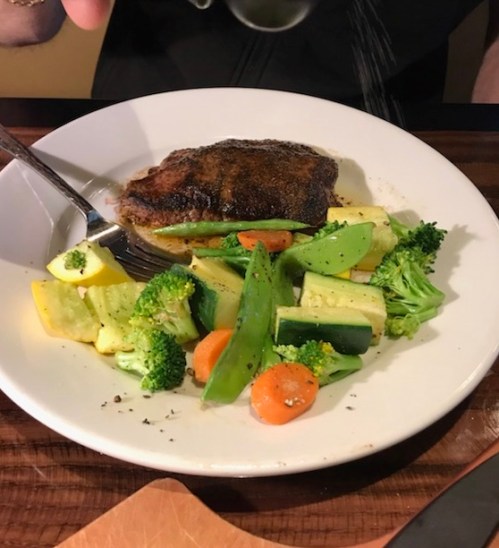
At Longhorn Steakhouse in Amarillo, TX

I’d have been surprised if the researchers did find a linkage. But you don’t know for sure until y0u do the science.

Steve Parker, M.D.

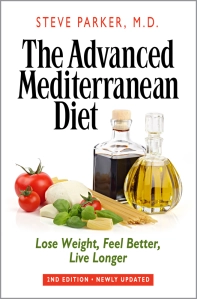
Steve Parker MD, Advanced Mediterranean Diet

Click the pic to purchase at Amazon.com. E-book versions also available at Smashwords. com.


QOTD: Is Blogging Dead?

I’m wondering if the age of blogging is at an end. 12 years ago blogs were the way to express ideas to a wider audience. Twitter and most of the social media we take for granted today was around, but it was certainly less endemic as it is now. Hell, even YouTube was still privately owned back then. If you wanted to build an online media brand you had to really believe in what you were doing to make the effort worthwhile. Blogging has always been a labor of love. That’s especially true today because everyone on social media today is their own Brand of Me. If all you do it curate an Instagram account with no other function than to show off how great a life you live, congratulations, you are your brand. It’s second nature to us now, but it used to take a lot more effort to relate your digital consciousness to an audience. That was what you used to blog for.

-Rollo Tomassi in 2020

Source: Exit Dalrock

PS: All three of my blogs have seen reduced traffic over the last year.

Tea May Prolong Your Life and Prevent Heart Disease

One of my favorite green teas

For years we’ve been hearing about the potential longevity and cardiovascular benefits of green tea. If memory serves, most of the data comes from Japanese studies. Now a Chinese observational study finds 15–20% reductions in atherosclerotic cardiovascular disease (ASCVD) and death, compared to non-tea drinkers. Most of the participants drank green tea, and they did so at least thrice weekly.

From the European Journal of Preventive Cardiology:

Using large prospective cohorts among general Chinese adults, we have provided novel evidence on the protective role of tea consumption on ASCVD events and all-cause mortality, especially among those who kept the habit all along. The current study indicates that tea might be a healthy beverage for primary prevention against ASCVD and premature death.

Source: Tea consumption and the risk of atherosclerotic cardiovascular disease and all-cause mortality: The China-PAR project – Xinyan Wang, Fangchao Liu, Jianxin Li, Xueli Yang, Jichun Chen, Jie Cao, Xigui Wu, Xiangfeng Lu, Jianfeng Huang, Ying Li, Liancheng Zhao, Chong Shen, Dongsheng Hu, Ling Yu, Xiaoqing Liu, Xianping Wu, Shouling Wu, Dongfeng Gu,

The researchers point out that results may not apply to non-Chinese populations.

Steve Parker, M.D.

h/t to Jan at The Low Carb Diabetic (click link for more details about the study)

Steve Parker MD, Advanced Mediterranean Diet

Click the pic to purchase at Amazon.com. E-book versions also available at Smashwords. com.

U.S. Medical Care Costs Rose 4.6% in 2019

…compared to 2.3% for all items in the Consumer Price Index.

Prescription drugs and hospital services each rose 3%. Physician services were up 1.4%.

Somethin’s gotta give.


Nuts Not So Calorific as We Thought

natural cashews, cashew apple

Cashews fresh off the tree. They’re actually fruits, not nuts. And while I’m being pedantic, peanuts aren’t nuts either…they’re legumes.

From RD Franziska Spritzler at DietDoctor:

There’s no denying that nuts are both nutritious and delicious. Yet for years, people have been cautioned to avoid eating too many because they’re also high in calories.

But last week, the USDA reported that nuts are actually lower in calories than originally thought. According to researchers who conducted a serious of studies over the past seven years, many nuts are 16 to 25% lower in calories than currently listed in the USDA nutrient database. The reason? Apparently, we don’t digest and absorb all of the calories from nuts.

Although the USDA’s database hasn’t yet been updated with the new values….

Source: Researchers Reveal That Nuts Have Fewer Calories Than Previously Thought — Diet Doctor

Nevertheless, you can still get fat eating too many nuts.

Steve Parker, M.D.

Steve Parker MD, Advanced Mediterranean Diet

Click the pic to purchase at Amazon.com. E-book versions also available at Smashwords. com.

Avoid Soybean Oil (if you’re a male mouse)

Soybean oil seems to be a real problem for male mice. We need more research in humans before declaring it a dangerous toxin to us. If you’re eating the Standard American Diet, you’ll find it hard if not impossible to avoid.

From EurekAlert:

New UC Riverside research shows soybean oil not only leads to obesity and diabetes, but could also affect neurological conditions like autism, Alzheimer’s disease, anxiety, and depression.

Used for fast food frying, added to packaged foods, and fed to livestock, soybean oil is by far the most widely produced and consumed edible oil in the U.S., according to the U.S. Department of Agriculture. In all likelihood, it is not healthy for humans.

Source: America’s most widely consumed oil causes genetic changes in the brain | EurekAlert! Science News

Steve Parker, M.D.

Steve Parker MD, Advanced Mediterranean Diet

Click the pic to purchase at Amazon.com. E-book versions also available at Smashwords. com.

Mediterranean Diet Ranked as Best Overall of 2020

Santorini, Greek seaside

Not surprising!

Every year, the U.S. News and World Report puts together a panel of experts to rank various diets.

From MedScape:

For the third year in a row, the Mediterranean diet has been named the best diet overall in the U.S. News & World Report annual rankings.

In 2018, the Mediterranean diet shared top honors with the DASH (Dietary Approaches to Stop Hypertension) diet. Both focus on fruits, vegetables, and whole grains. The ketogenic diet, one of the most popular, again fared well in the annual survey, but only in the fast weight loss category. Overall, it was not rated highly.

Angela Haupt, managing editor of health for the publication, says this year’s list has ”no surprises,” as it includes many diets that have been named outstanding before. Trendy diets typically won’t be found on its list, she says, explaining that its experts look for plans that have solid research and staying power.

Source: Mediterranean Diet Repeats as Best Overall of 2020

Click for the traditional Mediterranean diet.

Steve Parker, M.D.

Click pic to purchase book at Amazon.com. E-book versions are also at Smashwords.com.

Steve Parker MD, Advanced Mediterranean Diet

Click the pic to purchase at Amazon.com. E-book versions also available at Smashwords. com.


QOTD: Fred Reed on Democracy

An American conceit is that democracy is good and more democracy, better. Unfortunately, the truth is that more democracy means worse results. Placing governance in the hands of the empty-headed, dimwitted, and inattentive, these being the most numerous classes, inevitably leads to disaster.

Fred Reed

PBMs: Are They Why Your Drug Cost So Much?

Don’t blame her

The American Prospect has an eye-opening article from 2017 that sheds light on pharmacy benefits managers (PBMs). Ever heard of them?

Author David Dayen starts with comments from pharmacy owner Frankil talking about how he determines how much money he makes on retail sale of a drug:

Like any retail outlet, Frankil purchases inventory from a wholesale distributor and sells it to customers at a small markup. But unlike butchers or hardware store owners, pharmacists have no idea how much money they’ll make on a sale until the moment they sell it. That’s because the customer’s co-pay doesn’t cover the cost of the drug. Instead, a byzantine reimbursement process determines Frankil’s fee.

“I get a prescription, type in the data, click send, and I’m told I’m getting a dollar or two,” Frankil says. The system resembles the pull of a slot machine: Sometimes you win and sometimes you lose. “Pharmacies sell prescriptions at significant losses,” he adds. “So what do I do? Fill the prescription and lose money, or don’t fill it and lose customers? These decisions happen every single day.”

Frankil’s troubles cannot be traced back to insurers or drug companies, the usual suspects that most people deem responsible for raising costs in the health-care system. He blames a collection of powerful corporations known as pharmacy benefit managers, or PBMs. If you have drug coverage as part of your health plan, you are likely to carry a card with the name of a PBM on it. These middlemen manage prescription drug benefits for health plans, contracting with drug manufacturers and pharmacies in a multi-sided market. Over the past 30 years, PBMs have evolved from paper-pushers to significant controllers of the drug pricing system, a black box understood by almost no one. Lack of transparency, unjustifiable fees, and massive market consolidations have made PBMs among the most profitable corporations you’ve never heard about.

***

In the case of PBMs, their desire for larger patient networks created incentives for their own consolidation, promoting their market dominance as a means to attract customers. Today’s “big three” PBMs—Express Scripts, CVS Caremark, and OptumRx, a division of large insurer UnitedHealth Group—control between 75 percent and 80 percent of the market, which translates into 180 million prescription drug customers. All three companies are listed in the top 22 of the Fortune 500, and as of 2013, a JPMorgan analyst estimated total PBM revenues at more than $250 billion.

***

PMBs initially came about as a means of saving costs. Why hasn’t that panned out?

The biggest reason experts cite is an information advantage in the complex pharmaceutical supply chain.

***

This lack of transparency enables PBMs to enjoy multiple hidden revenue streams from every other player. “It’s OK to have intermediaries, we have Visa,” says David Balto, an antitrust litigator and former top official with the Federal Trade Commission. “But these companies make a fabulous amount of money, even though they’re not buying the drug, not producing the drug, not putting themselves at risk.”

The PBM industry is rife with conflicts of interest and kickbacks. For example, PBMs secure rebates from drug companies as a condition of putting their products on the formulary, the list of reimbursable drugs for their network. However, they are under no obligation to disclose those rebates to health plans, or pass them along. Sometimes PBMs call them something other than rebates, using semantics to hold onto the cash. Health plans have no way to obtain drug-by-drug cost information to know if they’re getting the full discount.

***

It’s a long article and I confess I haven’t read the whole thing yet. I’ve read enough to rile up my sense of indignation! Pharmaceutical companies and health insurers don’t seem too upset. Because any costs associated with these third-party shenanigans is simply passed on to the consumer—that’s you—in higher insurance premiums, deductibles, and co-pays.

Steve Parker, M.D.

PS: Reduce your needs for drugs with a healthy diet and lifestyle. I can help.

Steve Parker MD, Advanced Mediterranean Diet

Click the pic to purchase at Amazon.com. E-book versions also available at Smashwords. com.


25% of U.S. Healthcare Dollars are Wasted

…according to an article at JAMA Network.

Let’s face it, there’s always going to be some waste. The authors of the study at hand figure that, whatever the dollar amount of waste is, we can reduce it by 1/4. Which could be $250 billion.

That diastolic number (91) is too high

A prior study indicated that 30% of healthcare spending may be considered waste. Is that still valid?

Researchers reviewed the pertinent literature from January 2012 to May 2019 focused on the 6 previously identified “waste domains”:

  1. failure of care delivery
  2. failure of care coordination
  3. overt-reatment or low-value care
  4. pricing failure
  5. fraud and abuse
  6. administrative complexity

Waste-related costs were converted to 2019 dollars.

From the abstract:

Findings

The review yielded 71 estimates from 54 unique peer-reviewed publications, government-based reports, and reports from the gray literature. Computations yielded the following estimated ranges of total annual cost of waste: failure of care delivery, $102.4 billion to $165.7 billion; failure of care coordination, $27.2 billion to $78.2 billion; overtreatment or low-value care, $75.7 billion to $101.2 billion; pricing failure, $230.7 billion to $240.5 billion; fraud and abuse, $58.5 billion to $83.9 billion; and administrative complexity, $265.6 billion. The estimated annual savings from measures to eliminate waste were as follows: failure of care delivery, $44.4 billion to $93.3 billion; failure of care coordination, $29.6 billion to $38.2 billion; overtreatment or low-value care, $12.8 billion to $28.6 billion; pricing failure, $81.4 billion to $91.2 billion; and fraud and abuse, $22.8 billion to $30.8 billion. No studies were identified that focused on interventions targeting administrative complexity. The estimated total annual costs of waste were $760 billion to $935 billion and savings from interventions that address waste were $191 billion to $282 billion.

Conclusions and Relevance 

In this review based on 6 previously identified domains of health care waste, the estimated cost of waste in the US health care system ranged from $760 billion to $935 billion, accounting for approximately 25% of total health care spending, and the projected potential savings from interventions that reduce waste, excluding savings from administrative complexity, ranged from $191 billion to $282 billion, representing a potential 25% reduction in the total cost of waste. Implementation of effective measures to eliminate waste represents an opportunity reduce the continued increases in US health care expenditures.

Source: Waste in the US Health Care System: Estimated Costs and Potential for Savings | Health Care Policy | JAMA | JAMA Network

Here’a radical idea. Why not stay out of the healthcare system as much as possible by getting and staying as healthy as possible? I have few ideas how…

Steve Parker, M.D.

Steve Parker MD, Advanced Mediterranean Diet

Click the pic to purchase at Amazon.com. E-book versions also available at Smashwords. com.