How a Nurse Cared for her #COVID19 Physician Husband at Home #Coronavirus

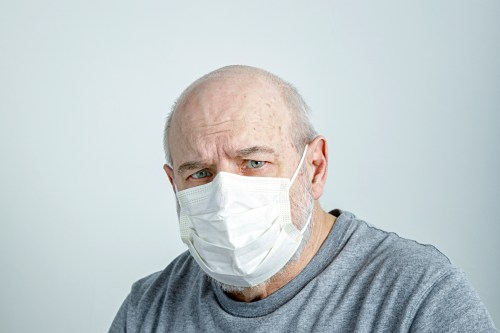
The caregiver below had a milder case of COVID-19

The Federalist on April 19, 2020, published a story on home care of the COVID-19 patient. The narrator is a retired community health nurse and the patient is her husband of 49 years, an oncologist.

I’ve mentioned “proning” before:

The key reason people go to the hospital with COVID is difficulty in breathing. When my husband started to feel his breathing become more strained, he asked his doctor to order an oxygen tank that he could use at home. Many people may not realize that home oxygen is even a possibility, but it is prescribed for many conditions and there are companies that provide oxygen with systems meant to be used by non-medical professionals, delivered through simple tubes into the nose.

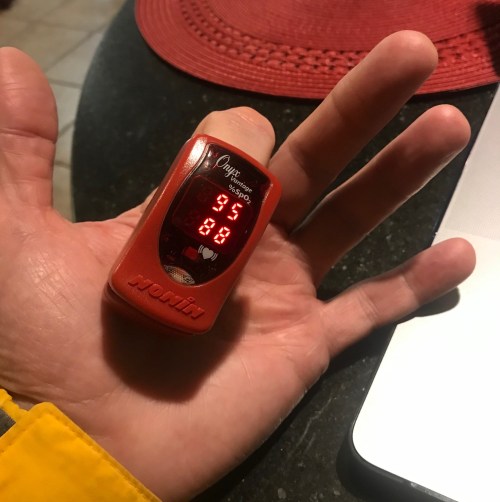
Along with the oxygen, we got an oximeter to measure oxygen saturation in the blood. It’s the little device they often clip onto your finger in a hospital. They’re available at some pharmacies, and we later learned that the oxygen company had a few as well. Having the ability to monitor oxygen levels at home was key to being able to gauge whether it was still safe to be at home and whether things were getting better or worse.

Another simple technique that is now being employed widely in hospitals, is that of sleeping prone, on one’s abdomen. Many hospitals are trying to keep COVID patients face-down for 16 hours a day, with them sitting up the other eight. That maximizes the lungs’ ability to work effectively, which is hard on one’s back. For my husband it was particularly uncomfortable because of a previous neck surgery, but by monitoring his oxygen saturation we could see how helpful it was.

When his oxygen was at 92 percent on his back, it jumped to 97 percent on his abdomen. We would have had to double his supplemental oxygen to get that kind of improvement. When he didn’t want to stay in that position, I used several strategies to keep him there.

I recommend the entire article to you even though I’m not on board (yet?) with hydroxychloroquine and azithromycin and steroids. Nearly all experts I’ve read recommend against the steroids. The steroids may have been given early-on in the epidemic when we really had no idea.

A pulse oximetry device like this was helpful in the case at hand

Steve Parker, M.D.

Steve Parker MD, Advanced Mediterranean Diet

Click the pic to purchase at Amazon.com. E-book versions also available at Smashwords. com.
ZDoggMD Interviews Dr Scott Weingart on Emergency Management of #COVID19 Respiratory Failure

Is O2 saturation of 80-85% good enough without intubating some folks?

Z hits another one out of the ballpark with his interview of a front-line virus warrior. This if fairly technical so you won’t get much out of it unless you’re a hospital nurse, respiratory therapist, or physician. Move along. The basic issue addressed is: what’s the best way to get life-preserving oxygen into a patient with scary-low blood oxygen levels. Who needs to be intubated and mechanically ventilated? Are we doing more harm than good when we intubate?

I’m not sure if Dr Weingart is an emergency medicine physician or intensivist (ICU specialist) or both. He works somewhere on the east coast.

This is a young woman. How about putting this tube into a 95-year-old incurable advanced dementia patient?

Some personal take-away points for me:

  • The concept of the “happy hypoxemic” patient: Despite oxygen saturation 75-85% (scary low), the patient is alert, talking, comfortable, tapping on their phone. Respiratory rate may be 25–35 or even higher (normal is under 20) but they don’t mind. Taking fairly deep breaths, not dog-panting. Don’t rush to intubate!
  • Good idea: Intermittent pr0ning of non-intubated patients to improve oxygen levels. Prone position is lying on your stomach.
  • The happy hypoxemic patient will have low pCO2 on arterial blood gas. May be acidotic (low pH) early on. But if pCO2 starts to rise to normal levels (or above) while patient is still breathing fast and hypoxemic? Probably not long before intubation needed.
  • High-flow nasal cannula oxygen may be OK after all, as long as wearing surgical mask over it. (Some experts say to avoid this oxygen delivery system since it may aerosolize virus into the hospital room, spreading disease to healthcare providers.)
  • After intubation, multi-organ failure often ensues. Unclear whether that deterioration is caused by intubation/mechanical ventilation or not. Was the patient headed down that road anyway?
  • Most non-U.S. countries don’t allow the patient or responsible party to “force” physicians to provide mechanical ventilation. If such therapy is futile, it’s not discussed or offered as an option. I assume the same applies to resuscitation of cardiac arrest.
  • Dr Weingart is seeing unusually high numbers of critically ill young patients with COVID-19. E.g., 35-45 years old. Unclear why.

There is still a huge amount we don’t know about this disease. Any points made in my bullet points or the video may be invalidated tomorrow.

Fortunately, at my hospital in Scottsdale, AZ, the expected COVID-19 surge never materialized, and it probably won’t in the near future. This epidemic is fading. I’m not particularly concerned about an outbreak after the unconstitutional house-arrest is lifted, except for those at high risk for serious illness. Click for my current advice if you’re at risk.

Steve Parker, M.D.

Steve Parker MD, Advanced Mediterranean Diet

Click the pic to purchase at Amazon.com. E-book versions also available at Smashwords. com.

How Do Total #COVID19 Deaths Compare to Other Recent Viral Epidemics? #Coronavirus

Pandemic or Panic-demic?

We don’t know yet since it’s still going on. The U.S. COVID-19 death toll thus far is around 50,000, with New York and New Jersey accounting for 40% of the total.

But for future reference…

The 2017-2018 flu season was a particularly lethal one.

CDC estimates that the burden of illness during the 2017–2018 season was high with an estimated 45 million people getting sick with influenza, 21 million people going to a health care provider, 810,000 hospitalizations, and 61,000 deaths from influenza (Table 1). The number of cases of influenza-associated illness that occurred during 2017-2018 was the highest since the 2009 H1N1 pandemic, when an estimated 60 million people were sick with influenza.

Remember the H1N1 flu pandemic of 2009-2010? Most folks don’t. I don’t. And like now, I was a full-time hospitalist then.

From April 12, 2009 to April 10, 2010, CDC estimated there were 60.8 million cases (range: 43.3-89.3 million), 274,304 hospitalizations (range: 195,086-402,719), and 12,469 deaths (range: 8868-18,306) in the United States due to the (H1N1)pdm09 virus.

The 1968 Hong Kong (H3N2) flu pandemic:

The estimated number of deaths was 1 million worldwide and about 100,000 in the United States. Most excess deaths were in people 65 years and older.

The 1957-1958 Asian flu (H2N2) pandemic:

The estimated number of deaths was 1.1 million worldwide and 116,000 in the United States. [U.S. population in 1957 was 172 million, half what it is now.]

One difference between those flu epidemics and COVID-19 is that the flu deaths were spread out over more months.

Did we quarantine the entire citizenry during those flu epidemics and paralyze the economy? No.

Are we a nation of pansies now?

Steve Parker, M.D.

PS: I’m not sure if AIDS was ever classified as an epidemic. But between 1985 and 2013, about 675,000 people in the U.S. died of or with AIDS.

Steve Parker MD, Advanced Mediterranean Diet

Click the pic to purchase at Amazon.com. E-book versions also available at Smashwords. com.


Despite “miracle cure” testimonials #hydroxychloroquine and #azithromycin probably do not work against #COVID19 #Coronavirus

Artist’s rendition of Coronavirus

How does he find the time to do it? Dr David Gorski at Science Based Medicine hits another one out of the ballpark:

The COVID-19 pandemic has been a golden opportunity for quackery and antivaccine conspiracy theories. This is not unexpected, given the size and the current lack of specific therapies for the disease other than supportive care and the current death toll. However, there is another assault on evidence- and science-based medicine that doesn’t come from quacks (although quacks have definitely joined in on the attack). Rather, it comes from desperate and/or opportunistic doctors who, either through a terrified imperative to “do something, anything” in the face of dying patients whom they can’t save or from self-aggrandizing doctors like Dr. Mehmet Oz, Didier Raoult, and others, who, drunk with the arrogance of ignorance and loving the attention, promote unproven treatments with no evidence an irresponsible attitude of, “What harm could it do?” (Answer: A lot. The specific drugs, chloroquine and hydroxychloroquine, have toxicities that have been well-known since the 1960s.) Add to that politicians like Donald Trump, full of magical thinking and possessed of a long history of selling snake oil himself, glommed onto these drugs as the solution to the pandemic before clinical trials showed any benefit.

***

I agree with Dr Gorski’s overall assessment:

I’ll conclude by simply saying this. Taken together, the evidence that hydroxychloroquine, chloroquine, or the hydroxychloroquine/azithromycin combination is an effective treatment for COVID-19 is getting weaker with every publication, to the point where I am 95% sure now that they either don’t work or that any benefit they might have will be outweighed by side effects. Could I still be wrong? Sure, and I’d be happy to be wrong given the desperate need for effective treatments against COVID-19. But I don’t think I am. In the end, the hype over these drugs and particularly the rush by doctors on the flimsiest of evidence to make hydroxychloroquine, in essence, a standard of care, have shown just how weak most doctors’ allegiance to evidence-based medicine is and represent one of the most massive failures of EBM that I can recall.

Source: “Miracle cure” testimonials aside, azithromycin and hydroxychloroquine probably do not work against COVID-19 – Science-Based Medicine

Steve Parker, M.D.

PS: In New York, they found obesity linked to severity of COVID-19 illness.  I can help you with that.

Steve Parker MD, Advanced Mediterranean Diet

Click the pic to purchase at Amazon.com. E-book versions also available at Smashwords. com.
And Now for Something Completely Different: #OutOfShadows

…to take your mind off the coronavirus pandemic.

You might enjoy this documentary if you’re interested in propaganda, social control, conspiracy theories, child sex trafficking, unseen forces like the Deep State, and the mainstream media oligopoly.

When YouTube bans it, I hope you can still find it at OutOfShadows.org.

Obesity Is a Major Risk Factor for #COVID19 Hospitalization in New York #Coronavirus

Mom and dad both at risk

From an article at ZDnet:

For months, scientists have been poring over data about cases and deaths to understand why it is that COVID-19 manifests itself in different ways around the world, with certain factors such as the age of the population repeatedly popping up as among the most significant determinants.

Now, one of the largest studies conducted of COVID-19 infection in the United States has found that obesity of patients was the single biggest factor in whether those with COVID-19 had to be admitted to a hospital.

Source: NYU scientists: Largest U.S. study of COVID-19 finds obesity the single biggest factor in New York’s hospitalizations | ZDNet

Click for the journal article abstract at MedRxIv. At a single academic health system (Langone NYC Health Center) in NYC, COVID-19 patients with BMI over 40 were six times more likely to be admitted to the hospital than other patients. BMI over 40 is a very big person. Click to calculate your BMI. When the full article is available, we may learn how those with BMI over 40 performed in terms of ICU admissions, need for ventilators, and survival rates. Over 4,000 patients were studied.

From the ZDnet article:

“The chronic condition with the strongest association with critical illness was obesity, with a substantially higher odds ratio than any cardiovascular or pulmonary disease,” write lead author Christopher M. Petrilli of the NYU Grossman School and colleagues in a paper, “Factors associated with hospitalization and critical illness among 4,103 patients with Covid-19 disease in New York City,” which was posted April 11th on the medRxiv pre-print server. The paper has not been peer-reviewed, which should be kept in mind in considering its conclusions.

That’s not in the abstract I read.

Steve Parker, M.D.

Steve Parker MD, Advanced Mediterranean Diet

Click the pic to purchase at Amazon.com. E-book versions also available at Smashwords. com.

Elder Care Facilities Contribute Inordinately to #COVID19 Deaths in Colorado and Massachusetts #Coronavirus


Sad…

“Our society must make it right and possible for old people not to fear the young or be deserted by them, for the test of a civilization is the way that it cares for its helpless members.”     -Pearl Buck (1892-1973)

The Massachusetts Department of Public Health published stats on their COVID-19 deaths as of April 10, 2020:

  • 599 total deaths
  • 247 deaths “reported in long-term care facilities”
  • 247 is 41% of total deaths

Colorado, as of April 5, reported that 39% of their total COVID-19 deceased patients had been living in nursing homes or residential healthcare facilities. Specifically, 55 deaths of the 140 total.

Colorado Public Radio apparently obtained more current data, reporting that 81 of Colorado’s 250 COVID-19 deaths were linked to elder care facilities. Eighty-one is 31% of the total deaths.

It doesn’t take a genius to figure that elder care facilities are populated overwhelmingly by folks a high risk for serious COVID-19. I fully expect that good facilities are redoubling their infection control efforts.

The first (?) outbreak of COVID-19 in the U.S. was in a care facility in Kirkland, WA, near Seattle. The Centers for Medicare and Medicaid Services (CMS) has given the facility until Sept 16 (sic) to resolve their deficiencies.

Steve Parker, M.D.

Steve Parker MD, Advanced Mediterranean Diet

Click the pic to purchase at Amazon.com. E-book versions also available at Smashwords. com.

The Three Questions #LifePlanning #FinancialPlanning

I’ve been reading and watching Downtown Josh Brown for three years. Recently at his website I watched Blair duQuesnay interview George Kinder. He’s a financial Life Planner who now trains financial planners.

The title of the interview was “How Would You Change Your Life If There Were Only Ten Years Left?”

Nobody knows how much time we have left on this planet. My answers to the questions at age 25, when I though I’d live forever, would be different than my answers now, at age 65.

Now that you’re under house arrest by your governor in this time of Coronavirus Pandemic, you should have time to watch the interview and answer the questions for yourself. If you have a “significant other,” the two of you should discuss.

So you’re not going to watch the video? Below are the questions, in order. Decide your answers before moving to the next question. In fact, it’s best if you don’t even read the subsequent questions before answering the earlier ones. I suggest writing down your (and your SO’s) answers. It may take a few hours or days of contemplation.

  1. If y0u had all the money you need for the rest of your life, how would you live? What would you do?
  2. Assume you don’t have all the money you need for the rest of your life. (Or maybe you do already?)  But now, you have a trusted physician who informs you that you have an ailment that will kill you between five and 10 years from now (you’ll be fine until you keel over unexpectedly), what would you do with your life?
  3. Your physician says you only have 24 hours left to live. The question is not how to spend your last 24 hours. The question is what did you miss? Who did you not get to be?

George says that five areas typically come up for consideration with these questions:

  1. Family and relationships
  2. Values or spirituality
  3. Creativity
  4. Community
  5. Planet Earth

Blair volunteered that when she considered the three questions, the issue of children came up. My sense is that she decided to have them, and did.

Go.

Steve Parker, M.D.

PS: Have you ever heard of The Sinner’s Prayer?

PPS: Happy Easter to all my Christian readers!

Steve Parker MD, Advanced Mediterranean Diet

Click the pic to purchase at Amazon.com. E-book versions also available at Smashwords. com.
 

Is Body Weight Linked to Survival of Heart Patients with #COVID19? #Coronavirus

This can’t be a good prognostic sign

Maybe…

We have very little data thus far relating body mass index and survival of COVID-19 in any population.

I ran across a small study out of Wuhan, China. Researchers compared 16 heart patients admitted to the ICU with 96 admitted elsewhere in the hospital. Of the non-survivors, nearly all had BMI over 25. Of the survivors, only one in five had BMI over 25.

Conclusion: COVID-19 patients combined with cardiovascular disease are associated with a higher risk of mortality. Critical patients are characterized with lower lymphocyte counts. Higher BMI are more often seen in critical patients and non-survivor. ACE inhibitor/Angiotensin receptor blocker drug use does not affect the morbidity and mortality of COVID-19 combined with cardiovascular disease. Aggravating causes of death include fulminant inflammation, lactic acid accumulation and thrombotic events.

Remember, in non-Asians, BMI between 25 and 30 is simply overweight. BMI over 30 qualifies as obesity in most cases. In the U.S., about a third of adults are overweight, and a third are obese.

Adverse effects of obesity occurs at lower BMIs in Chinese and other populations. So obesity in Chinese adults is a BMI over 28. The obesity rate among both men and women in China is 14%.

Source: [Clinical Characteristics and Outcomes of 112 Cardiovascular Disease Patients Infected by 2019-nCoV] – PubMed

Steve Parker, M.D.

Steve Parker MD, Advanced Mediterranean Diet

Click the pic to purchase at Amazon.com. E-book versions also available at Smashwords. com.

Italian lessons learned about #COVID19 outbreak could help the rest of the world #Coronavirus

Somewhere in the Southwest?

From CBC News on April 2, 2020:

“The biggest mistake we made was to admit patients infected with COVID-19 into hospitals throughout the region,” said Carlo Borghetti, the vice-premier of Lombardy, an economically crucial region with a population of 10 million.

 “We should have immediately set up separate structures exclusively for people sick with coronavirus. I recommend the rest of the world do this, to not send COVID patients into health-care facilities that are still uninfected.”

***

However, the virus was not only spread to “clean” — i.e. infection-free — hospitals by admitting positive patients. In early March, as the number of infected was doubling every few days, authorities allowed overwhelmed hospitals to transfer those who tested positive but weren’t gravely ill into assisted-living facilities for the elderly.

“It was like throwing a lit match onto a haystack,” said Borghetti, who spoke out against the directive at the time. “Some facilities refused to take in the positive patients. For those that did [take them in], it was devastating.”

I don’t know of any free-standing COVID-19 hospitals in the U.S. Some hospitals here are “cohorting” all COVID-19 patients on dedicated nursing units, unless they need the ICU. That might help prevent spread to elsewhere in the hospital. And I know assisted-living facilities and nursing homes are quite hesitant, if not outright refusing, to accept transfers that aren’t certified COVID-free. I don’t blame them.

Source: The lessons Italy has learned about its COVID-19 outbreak could help the rest of the world | CBC News

Steve Parker, M.D.

Steve Parker MD, Advanced Mediterranean Diet

Click the pic to purchase at Amazon.com. E-book versions also available at Smashwords. com.