The Sixth Circuit Court of Appeals unanimously ruled that the national eviction moratorium mandated by the U.S. Centers for Disease Control and Prevention (CDC) is unconstitutional. The court said in its ruling that the matter ultimately needed to be resolved by Congress.
The three-judge panel ruled that the CDC engaged in federal overreach by mandating that tenants who are unable to pay their rent and are in breach of their rental agreements may not be evicted. The CDC had implemented a moratorium in response to millions of people losing their jobs due to governors shutting down their state economies to slow the spread of COVID-19.
Posted onJuly 30, 2021|Comments Off on COVID-19 Vaccination Indoctrination: A Pre-Planned Psyop?
Have you taken the vaccine yet?
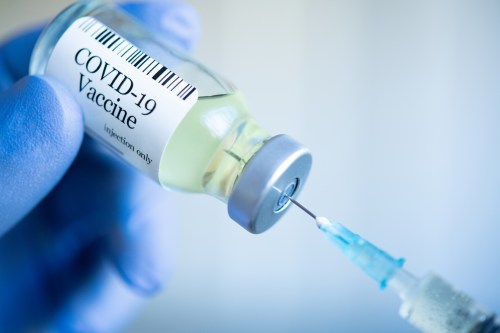
Baron Bodissey at Gates of Vienna argues that the overwhelming push to get us all vaccinated ASAP is a carefully planned and coordinated psychological operation. It’s a long read but worth your time. Some excerpts:
“They really, really, want us to get vaccinated.
“Whom do I mean when I use the word “they”? Well, for starters, there’s the government. All Western governments, in fact, even that of Hungary. “They” also includes the major media, Big Tech, the MSM [mainstream media], the universities and secondary schools, and all major philanthropic organizations. All of them are pushing relentlessly for all citizens to submit to the injection of an experimental medical treatment that uses messenger RNA, and whose long-term side effects are completely unknown.
“For as far back as I can remember, I have never experienced such a relentless full-court press by all social and political institutions in pursuit of a single goal. Perhaps the war effort from 1939-1945 was like this, but I wasn’t alive then, so I don’t know.
“Before I started researching the propaganda push behind the vax, I had never heard of the term “social marketing”. It is an important concept in this dystopian age, so we would all be well-advised to learn more about it. The California STD/HIV Prevention Training Center — which is funded by the Centers for Disease Control and Prevention, and is a joint project of the California Department of Health Services, Sexually Transmitted Disease Control Branch, the University of California, Berkeley, School of Public Health, and the University of California, San Francisco, School of Medicine — gives the following definition of social marketing:
Social marketing is the use of commercial marketing principles and techniques to improve the welfare of people and the physical, social and economic environment in which they live. It is a carefully planned, long-term approach to changing human behavior.
“I bring all this up because of a paper that was published by The National Center for Biotechnology Information, which is part of the National Library of Medicine, which is a branch of the National Institutes of Health (NIH). The NIH, as you may recall, is where Dr. Anthony Fauci rules over a little fiefdom known as NIAID, the National Institute of Allergy and Infectious Diseases.
“It is beyond my level of analytical competence to peel back all the layers of manipulative strategy found in this paper, so I’ll just highlight a few significant points. I recommend reading the whole thing carefully, if you have the time and the stomach to work your way through all the sociological jargon.
“My main conclusion from reading all this is that the “vaccine hesitants” have already lost the propaganda war. It’s done. There’s nothing left but smoking craters and shattered trees. The war is over.
“I am able to think for myself, to a certain extent, and I assume most of my readers are, too. But we are a small minority. The vast majority of the population has been conditioned to take in information from certain acceptable sources and to adopt attitudes and opinions based on what those sources tell them. All major outlets that purvey information — governments, NGOs [non-governmental organizations], the MSM, social media — are already under the control of the pro-vaxers. Collectively they command massive resources, more than enough to hire as many credentialed social marketers as they like.
“And those social marketing experts know how to manipulate the average citizen into thinking exactly what they want him to think.
COVID is making a small comeback; nothing like last December/January when we WERE being crushed by it. We just got our first cases since February, starting about two weeks ago. And one jackass employee who came to work sick, and exposed an entire department to it, instead of taking sick days….
Our ICU is half-full, because half the nursing staff left or quit after COVID 1.0 due to workload burnout. So half the beds are full, with the normal ICU patients (intubated, post-surgical, heart attacks, strokes, major trauma, etc.). The other half are unstaffed, nightly, because we can’t find replacement ICU nurses at anything less than exorbitant rates, so they are unusable beds. AFAIK, we don’t have a single COVID patient in the ICU, but if we did, it wouldn’t be more than 1 or 2. The bigger problem is that this backs up ICU patients into the ER for days on end, and so new patients can’t get in for hours, even for serious problems.
Our new COVID cases are about a 50:50 split between fully vaxxed, and totally unvaxxed.
I’m not vaxxed, and don’t intend to be in any foreseeable future. I won’t be a beta-test guinea pig for an experimental not-a-vaccine, with questionable safety, and no liability to the makers. And even if they put skin in the game – which none of them have, to date – I can’t sue anyone if I’m dead. N95s and hand washing got me through the last 18 months with frothing fulminant COVID patients at halitosis range just fine; I see no need to change course at this point, come hell or high water. When someone makes an actual vaccine, with absolutely the same level of safety as a flu shot, or tetanus booster, that isn’t a frankenvirus DNA experiment, we can talk. Until then, pass the hand sanitizer, and stay your sick ass over there please.
So far at my little hospital in southern Arizona, we’re not seeing nearly as much inpatient COVID-19 as we did in January. But more than a month ago.
The hospital system I work in is requiring all front line healthcare employees to be vaccinated by November 1. Another major system here is doing the same. We have about five major hospital systems.
Aesop’s experience in SoCal is that “new COVID cases are about a 50:50 split between fully vaxxed, and totally unvaxxed.” I suspect that’s all emergency department cases, not simply those who are admitted. As of July 27, 53% of all Californians are fully vaccinated. This suggests to me that the vaccinations may not be very effective at keeping cases out of the ED. But the vaccines were sold to us from the get-go as preventing ~90% of “serious cases” and death. IIRC, serious cases were defined as those needing inpatient care.
Posted onJuly 28, 2021|Comments Off on EudraVigilance Tracks COVID-19 Vaccine Adverse Events in Europe
The various available vaccines likely have different adverse effect profiles
The European Medicines Agency publishes reports of adverse reactions to medications at EudraVigilance. This is the closest European equivalent of the U.S. VAERS (vaccine adverse events reporting system) except it covers more than just vaccines. Click here for their European experience, scroll down to letter C then find your favorite COVID-19 vaccine.
Caveats:
The information on this website relates tosuspected side effects , i.e. medical events that have been observed following the use of a medicine, but which are not necessarily related to or caused by the medicine.
Information on suspected side effects should not be interpreted as meaning that the medicine or the active substance causes the observed effect or is unsafe to use. Only a detailed evaluation and scientific assessment of all available data allows for robust conclusions to be drawn on the benefits and risks of a medicine. [If this hasn’t been done yet, why not?]
The European Medicines Agency publishes these data so that its stakeholders, including the general public, can access information that European regulatory authorities use to review the safety of a medicine or active substance. Transparency is a key guiding principle of the Agency.
Visit Bayou Renaissance Man for a table of various types of adverse effects reported after the individual vaccines. (I haven’t verified the accuracy of the figures.) To put the numbers in perspective, I’d want to know the total number of Europeans vaccinated.
Posted onJuly 26, 2021|Comments Off on U.S. Deaths Attributable to COVID-19 Vaccines
If he’s age 85 and has obesity, diabetes, COPD, and CHF, odds of death over next six months are relatively high, regardless of COVID-19 vaccination
A computer programmer and healthcare data analyst alleges that deaths potentially attributable to COVID-19 vaccines as of July 2021 are 45,000. Not the 9,000 in the Vaccine Adverse Event Reporting System (VAERS) database. Here’s part of the sworn statement of a whistleblower:
On July 9, 2021, there were 9,048 deaths reported in VAERS. I verified these numbers by collating all of the data from VAERS myself, not relying on a third party to report them. In tandem, I queried data from CMS medical claims with regard to vaccines and patient deaths, and have assessed that the deaths occurring within 3 days of vaccination are higher than those reported in VAERS by a factor of at least 5. This would indicate the true number of vaccine-related deaths was at least 45,000. Put in perspective, the swine flu vaccine was taken off the market which only resulted in 53 deaths.
Even the figure of 9,048 deaths attributable to the vaccine is highly debatable. Could be lower, could be higher. I’m not sure anybody anybody knows the true number. But I bet it’s higher than Fauci and most public health authorities claim.
In the U.S., 162,000,000 have been fully vaccinated thus far. If 9,048 actually died from the vaccination, the odds of death for an individual are 0.0056%. If the true number is five times higher, the odds are 0.028%. In more understandable terms, the risk of death is 1 in 18,900 versus 1 in 89,000. If my math is correct.
If the whistleblower’s figure is correct, a one in 18,900 chance of death doesn’t sound too bad. But what if the age-adjusted rates are more like one in a million for 20-year olds compared to one in 1,000 for 60-year-olds? Would that affect your vaccination decision if you’re a healthy 60-years-old?
Astute reader will note my ignoring the other potential adverse effects of the experimental vaccines, including blood clots, strokes, heart attacks, myocarditis, and miscarriages. And effects that may take several years to manifest. Remember, these are the first ever gene therapy vaccines tried in humans.
I’ve never seen the consent form for a COVID-19 vaccine. If it doesn’t at least mention the possiblity of death, it’s not informed consent. It’s fraud.
The six-man team burst through my door on a no-knock raid at 3 AM.
I was soon blinded and deafened by the flash-bang grenade. No time to reach my gun, which probably saved my life. Fortunately my dogs weren’t with me, or they’d have been shot.
Two of the men pointed AR-15s at me while three held me down and their leader yelled, “Parker, this is your last chance to take the vaccine voluntarily. Will you submit?” My foggy mind raced through the options: take the jab, lose my medical license and livelihood, go to prison, fight and die here now….
“PARKER, THIS YOUR LAST CHANCE. WILL YOU SUBMIT TO THE VAX?”
No….never, you sons’o’bitches!”
A thug immediately stabbed my buttock with a rusty #16 needle and injected the toxic brew.
Posted onJuly 19, 2021|Comments Off on The 1976 Swine Flu Vaccine Debacle
To vaccinate or not vaccinate, that is the question…
Most of you don’t remember the 1976 flu epidemic. Early on, it appeared to be on track to equal the 1918 Spanish Flu death rates. Politicians and public health authorities felt like they better do something, anything, to avert disaster. Their response didn’t work out too well. COVID-19 isn’t the flu, but it’s a viral illness that often looks like the flu clinically.
From Discover magazine:
Vaccines were once thought of as an axiomatic good, a longed-for salvation in the form of a syringe, banishing crippling and deadly infections like polio, smallpox and tetanus. But within the past few decades we have seen the emergence of anti-vaccination movements and a rise in cases of childhood diseases that are entirely preventable with a quick jab to the arm.
Over the past five years, outbreaks of mumps, measles and whooping cough have cropped up throughout the country. And then, of course, there is widespread skepticism among the general public on influenza and the merits of a seasonal flu shot. Even as outbreaks of avian and swine flu have periodically emerged in this country, there are still people who resist vaccination against the flu. This seemingly pervasive opposition to flu vaccination is not without its historical and sociological roots.
Some of the American public’s hesitance to embrace vaccines — the flu vaccine in particular — can be attributed to the long-lasting effects of a failed 1976 political campaign to mass-vaccinate the public against a strain of the swine flu virus. This government-led campaign was widely viewed as a debacle and put an irreparable dent in future public health initiatives, as well as negatively influenced the public’s perception of both the flu and the flu shot in this country.
* * *
But while the World Health Organization adopted a cautious “wait and see” policy to monitor the virus’s pattern of disease and to track the number of emerging infections, President Gerald Ford’s administration embarked on a zealous campaign to vaccinate every American with brisk efficiency. In late March, President Ford announced in a press conference the government’s plan to vaccinate “every man, woman, and child in the United States” (1). Emergency legislation for the “National Swine Flu Immunization Program” was signed shortly thereafter on April 15th, 1976 and six months later high profile photos of celebrities and political figures receiving the flu jab appeared in the media. Even President Ford himself was photographed in his office receiving his shot from the White House doctor.
* * *
The American public can be notably skeptical of forceful government enterprises in public health, whether involving vaccine advocacy or limitations on the size of soft drinks sold in fast food chains or even information campaigns against emerging outbreaks. The events of 1976 “triggered an enduring public backlash against flu vaccination, embarrassed the federal government and cost the director of the U.S. Center for Disease Control his job.”
One aspect of the fiasco was that of the 45 million U.S. residents hastily vaccinated against Swine Flu, 450 developed a severe neurological disorder called Guillain-Barre syndrome.
She’s at little risk of serious illness if she’s generally healthy
Children can indeed contract COVID-19. But it is rarely deadly. The infection fatality rate in children between ages 5 and 14 is 0.001%. This means that of every 100,000 children that age who get infected, one will die.
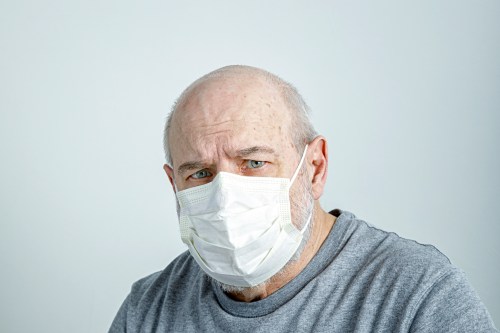
Most schools in the U.S. start back up in about a month. Some school systems will be mandating that children wear face masks, hoping to reduce infections, but not realizing the adverse effects. See the end of this post for the list of bothersome effects. Here’s a study that advises against forced mask-wearing in children:
Many governments have made nose and mouth covering or face masks compulsory for schoolchildren. The evidence base for this is weak.1,2 The question whether nose and mouth covering increases carbon dioxide in inhaled air is crucial. A large-scale survey3 in Germany of adverse effects in parents and children using data of 25 930 children has shown that 68% of the participating children had problems when wearing nose and mouth coverings.
The normal content of carbon dioxide in the open is about 0.04% by volume (ie, 400 ppm). A level of 0.2% by volume or 2000 ppm is the limit for closed rooms according to the German Federal Environmental Office, and everything beyond this level is unacceptable.4Methods
We measured carbon dioxide content in inhaled air with and without 2 types of nose and mouth coverings in a well-controlled, counterbalanced, short-term experimental study in volunteer children in good health (details are in the eMethods in Supplement 1). The study was conducted according to the Declaration of Helsinki and submitted to the ethics committee of the University Witten/Herdecke. All children gave written informed consent, and parents also gave written informed consent for children younger than 16 years. A 3-minute continuous measurement was taken for baseline carbon dioxide levels without a face mask. A 9-minute measurement for each type of mask was allowed: 3 minutes for measuring the carbon dioxide content in joint inhaled and exhaled air, 3 minutes for measuring the carbon dioxide content during inhalation, and 3 minutes for measuring the carbon dioxide content during exhalation. The carbon dioxide content of ambient air was always kept well under 0.1% by volume through multiple ventilations. The sequence of masks was randomized, and randomization was blinded and stratified by age of children. We analyzed data using a linear model for repeated measurements with P < .05 as the significance threshold. The measurement protocol (trial protocol in Supplement 2) is available online.5 Data were collected on April 9 and 10, 2021, and analyzed using Statistica version 13.3 (TIBCO).Results
The mean (SD) age of the children was 10.7 (2.6) years (range, 6-17 years), and there were 20 girls and 25 boys. Measurement results are presented in the Table. We checked potential associations with outcome. Only age was associated with carbon dioxide content in inhaled air (y = 1.9867 – 0.0555 × x; r = –0.39; P = .008; Figure). Hence, we added age as a continuous covariate to the model. This revealed an association (partial η2 = 0.43; P < .001). Contrasts showed that this was attributable to the difference between the baseline value and the values of both masks jointly. Contrasts between the 2 types of masks were not significant. We measured means (SDs) between 13 120 (384) and 13 910 (374) ppm of carbon dioxide in inhaled air under surgical and filtering facepiece 2 (FFP2) masks, which is higher than what is already deemed unacceptable by the German Federal Environmental Office by a factor of 6. This was a value reached after 3 minutes of measurement. Children under normal conditions in schools wear such masks for a mean of 270 (interquartile range, 120-390) minutes.3 The Figure shows that the value of the child with the lowest carbon dioxide level was 3-fold greater than the limit of 0.2 % by volume.4 The youngest children had the highest values, with one 7-year-old child’s carbon dioxide level measured at 25 000 ppm.Discussion
The limitations of the study were its short-term nature in a laboratory-like setting and the fact that children were not occupied during measurements and might have been apprehensive. Most of the complaints reported by children3 can be understood as consequences of elevated carbon dioxide levels in inhaled air. This is because of the dead-space volume of the masks, which collects exhaled carbon dioxide quickly after a short time. This carbon dioxide mixes with fresh air and elevates the carbon dioxide content of inhaled air under the mask, and this was more pronounced in this study for younger children.
This leads in turn to impairments attributable to hypercapnia. A recent review6 concluded that there was ample evidence for adverse effects of wearing such masks. We suggest that decision-makers weigh the hard evidence produced by these experimental measurements accordingly, which suggest that children should not be forced to wear face masks.
Impairments caused by wearing the mask were reported by 68% of the parents. These included irritability (60%), headache (53%), difficulty concentrating (50%), less happiness (49%), reluctance to go to school/kindergarten (44%), malaise (42%) impaired learning (38%) and drowsiness or fatigue (37%).
I hope this is effective ammunition for you when you go the the school board meeting to protest forced masking of your child.
A couple of months ago Scott Gavura explained why the veterinary deworming drug ivermectin is the new hydroxychloroquine, a repurposed drug touted as a “miracle cure” for COVID-19 despite evidence that is, at best, very weak and, at worst, supportive of the conclusion that ivermectin is ineffective against COVID-19. Then, two weeks ago, I posted a typically lengthy, detailed, and snarky article about how ivermectin is the new hydroxychloroquine. What I meant was that, just as 12-15 months ago the antimalarial drug hydroxychloroquine was the repurposed drug touted as a “miracle cure” for COVID-19 that fizzled when tested with rigorous clinical trials, over the first half of 2021 ivermectin has become the repurposed drug touted as a “miracle cure” for COVID-19. Like hydroxychloroquine, which by the end of last summer I was describing as the Black Knight of COVID-19 treatments, an homage to (of course) the Black Knight in Monty Python and the Holy Grail, belief in ivermectin as a highly effective treatment for COVID-19—that will eliminate the need for vaccines, too!—seems similarly immune to having its limbs hacked off by science, the way that they were for hydroxychloroquine. This post won’t be as long—although it might be as snarky—and will deal more with the conspiracy theories that have cropped up around ivermectin. Unsurprisingly, they’re very similar to the conspiracy theories that cropped up around hydroxychloroquine. Many of these conspiracy theories are being promoted by a group of doctors who bill themselves as the Front Line COVID-19 Critical Care Alliance (FLCCC).
I don’t recall Gorski in the article addressing the reasons that physicians and scientists would be promoting ivermectin if it doesn’t work. Dr Joseph Mercola’s in it for the money. Probably Mike Adams, too. But for legitimate practicing physicians and scientists, I can’t see any financial pay-off. Could they be motivated simply by fame, notoriety, or drama? How about a straightforward difference of opinion on how to interpret the data, which happens routinely among scientists and physicians?
We’re in a situation where we have a wildly effective vaccine, multiple choices, lots available, free of charge, and we have folks who are just saying I won’t do it. I think that it’s time to say to those folks, it’s fine if you don’t choose to get vaccinated. You may not come to work. You may not have access to a situation where you’re going to put my grandchildren in jeopardy. Where you might kill them, or you might put them in a situation where they’re going to carry the virus to someone in a high-risk position.
– July 2021: Former Obama administration Secretary of Health and Human Services Administration