We’re in a situation where we have a wildly effective vaccine, multiple choices, lots available, free of charge, and we have folks who are just saying I won’t do it. I think that it’s time to say to those folks, it’s fine if you don’t choose to get vaccinated. You may not come to work. You may not have access to a situation where you’re going to put my grandchildren in jeopardy. Where you might kill them, or you might put them in a situation where they’re going to carry the virus to someone in a high-risk position.
– July 2021: Former Obama administration Secretary of Health and Human Services Administration
I was skeptical, so confirmed it at The Irish Times. The 66-year-old “criminal” was a repeat offender. The article never said she was infected with COVID-19 and spewing germs like a fire hose.
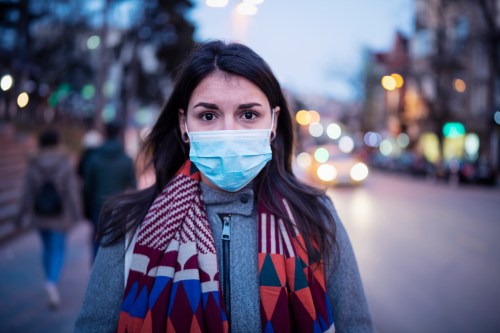
“Don’t you dare get near me!”
I doubt this type of action is coming to the U.S. but you never know. Here, we have enough civil disobedience that the jails would be overwhelmed. And rightfully so.
Steve Parker, M.D.
PS: If she’s not taken the vaccine, will they hold her down and force it on her?
The delta variant of covid-19 was previously called the Indian variant. I guess some of the latter were triggered, so the name was changed to delta. It’s the predominant variant in the U.K. now, and is 15-20% of the cases in Arizona, where I live.
Ivor Cummins says the delta variant is not a big deal:
A couple studies in the medical literature tend to support the use of fluvoxamine for early treatment of COVID-19. Click the links below for specific results of the research.
Fluvoxamine is available as a generic and is also sold in the the U.S. as brand name Luvox. It is FDA-approved for obsessive-compulsive disorder (OCD). It’s also used off-label for several other psychiatric disorders. The usual starting dose for OCD is 50 mg/day, increasing gradually to 100-300 mg/day if needed. The most common side effects are headache (30% of users), insomnia (30%), drowsiness (25%), nausea (35%), and weakness (20%). It is significantly less well-tolerated than ivermectin.
Participants received a dose of 50 mg of fluvoxamine (or matching placebo) in the evening immediately after the baseline assessment and confirmation of eligibility, then for 2 days at a dose of 100 mg twice daily as tolerated, and then increasing to a dose of 100 mg 3 times daily as tolerated through day 15 then stopped. That’s a much more rapid dose escalation than the manufacturer recommends for OCD.
Click for the Seftel study of fluvoxamine if interested. This research was less cleanly-designed compared to Lenze. For instance, a fair number of study subjects didn’t even have symptoms at the time of “diagnosis,” just a positive SARS-CoV-2 antigen test (PCR?). The dose of fluvoxamine was a 50-100 mg loading dose on day 1 followed by 50 mg twice daily for 14 days.
Emergency Use Authorization
All the available U.S. vaccines against COVID-19 are under Emergency Use Authorization. What does this mean? From the FDA:
An Emergency Use Authorization (EUA) is a mechanism to facilitate the availability and use of medical countermeasures, including vaccines, during public health emergencies, such as the current COVID-19 pandemic. Under an EUA, FDA may allow the use of unapproved medical products, or unapproved uses of approved medical products in an emergency to diagnose, treat, or prevent serious or life-threatening diseases or conditions when certain statutory criteria have been met, including that there are no adequate, approved, and available alternatives.
So if there are adequate, approved, and available alternatives to the vaccines, the vaccinations must halt for now. Until they pass the usual multi-year tests that prove adequate safety.
If you think the FDA is immune to pressure from politicians and Big Pharma, think again.
A June (2021) article by Steve Kirsch at OneDayMD.com (who’s that?) is critical of NIH and WHO COVID-19 treatment guidelines. Steve argues, and I must say fairly persuasively, that early treatment should include ivermectin and fluvoxamine. Parts of the world don’t have time to wait for results of large randomized double-blind controlled trials of these drugs. RTWT and decide for yourself if Steve’s right. Warning: It’s a long article but worth it if you’re a healthcare professional.
Who is Steve Kirsch? In his article, Steve mentions that he’s an MIT-trained engineer. From OneDayMD.com:
She’s at little risk of serious illness if she’s generally healthy, so why take the risk of experimental vaccination?
From KTLA Channel 5:
Booster shots will likely be necessary as antibodies from both COVID-19 vaccines and infections wane at the same rate, according to a new UCLA study published Wednesday.
The study published in ACS Nano looked at the two-dose Pfizer and Moderna vaccines, finding that after the second jab, antibody levels decreased an average of 90% within 85 days. That’s the same relatively rapid antibody loss that comes after a natural infection, according to the study.
Senior author of the study, Dr. Otto Yang, said that while more research is needed on the response of the immune system’s long-lasting “memory” T cells to the vaccines, the sharp drop in antibodies suggests that booster vaccinations will likely be needed to maintain protection against the potentially deadly virus.
There has been evidence that immunity from the mRNA vaccines doesn’t just depend on antibodies that dwindle over time, with some experts saying booster shots may only be needed every few years, the Associated Press reported.
“Why can’t we discuss all the options? Why can’t I get ivermection or hydroxychloroquine if my doctor prescribes it? Why are politicians so intimately involved with this disease?”
The social media monopolists (e.g., Twitter, YouTube, Facebook) and mainstream media are censoring news about the coronavirus pandemic that doesn’t fit the approved narrative. Why are they so afraid of open discussion and freedom of speech? You’d almost think they’re trying to hide something. For your consideration, an article excerpt from American Greatness:
In an extraordinary interview last week, Dr. Peter McCullough, an American professor of Medicine and Vice Chief of Internal Medicine at Baylor University, declared that the world has been subjected to a form of bioterrorism, and that the suppression of early treatments for COVID-19—such as hydroxychloroquine—“was tightly linked to the development of a vaccine.”
Dr. McCullough made the explosive comments during a webinar on June 11, with Dr. Reiner Fuellmich, a German trial lawyer, who believes the pandemic was planned, and is “a crime against humanity.”
McCullough said he believes the bioterrorism has come in two stages—the first wave being the rollout of the coronavirus, and the second, the rollout of the dangerous vaccines, which he said may already be responsible for the deaths of up to 50,000 Americans.
Dr. McCullough practices internal medicine and cardiology, is the editor of Reviews in Cardiovascular Medicine, senior editor of the American Journal of Cardiology, editor of the textbook Cardiorenal Medicine, and president of the Cardiorenal Society.
I watched the video in the link above, and Dr McCullough seems like an honest, compassionate, ernest fellow. It doesn’t bother me that he’s a cardiologist. I’m sure his IQ’s higher than mine. Is he right? I don’t know.
Anonymous “PhD researchers and scientists” have attempted to collate all the available studies of various proposed early treatments and preventatives for COVID-19 at c19early.com. Why anonymous? From the website’s FAQs: “We are PhD researchers, scientists, people who hope to make a contribution, even if it is only very minor. You can find our research in journals like Science and Nature. For examples of why we can’t be more specific search for “raoult death threats” or “simone gold fired”. We have little interest in adding to our publication lists, being in the news, or being on TV (we have done all of these things before but feel there are more important things in life now).”
The Front Line COVID-19 Critical Care Alliance (FLCCC Alliance) published their own home-based treatment and prevention protocols. FLCCC is composed of various medical school professors and other physicians, the most famous of whom is probably Dr. Paul E. Marik, Professor of Medicine and Chief of the Division of Pulmonary and Critical Care Medicine at the Eastern Virginia Medical School in Norfolk, Virginia. FLCCC also produced a hospital treatment protocol called MATH+. MATH is methylprednisolone (a corticosteroid), ascorbic acid (vitamin C), thiamine, and heparin, + others (ivermectin was the last major addition). The MATH major components are all “off patent” and relatively cheap. What motivates the FLCCC docs? I don’t see any money in it. A quest for fame? I tend to think they’re trying to do what’s best for the patients who have an illness we didn’t know much about. Dr Gorski would probably call them grifters.
I considered the evidence in favor of hydroxychloroquine (HCQ) in the early months of the pandemic, and was not favorably impressed. Now, after 18 months, do we have good clinical studies that have considered it for prevention or early treatment? I don’t know since I haven’t looked lately. Both HCG and ivermectin are “off patent” so the research won’t be paid for by a pharmaceutical company; it would have to be funded by an un-corrupt government that cares about its citizens.
Compared to HCQ, I’m more favorably predisposed toward ivermectin.
Most community-based non-research physicians working full-time in the trenches, like me, don’t have the time or resources (or intelligence and skepticism?) to figure out the best way to prevent and treat COVID-19. We tend to depend on authoritative sources to teach us. The authorities have disappointed us too many times with this illness, whether through ignorance, corruption, or ineptitude. There have been too many suspicious occurrences. For instance:
If the vaccines are so effective, why do the vaccinated still need to wear a mask?
Why did some politicians, bureaucrats, and pharmacies proscribe the use of hydroxychloroquine and ivermectin, even early-on before we had much data?
Why do social media monopolists and the mainstream media censor and de-platform voices who question the official narrative?
If this disease was so deadly, why did contact-tracing fall by the wayside so soon?
Why did NY governor Cuomo send sick patients back to nursing homes, infecting the high-risk population there?
Why didn’t the CDC understand the adverse effects of the lockdowns, which ended up not saving lives?
Why are health authorities recommending the experimental coronavirus vaccines for healthy people aged 12 to 55 when we know the risks of the virus are low for that population?
By what authority did federal and state governments violate civil rights and shut down and destroy thousands (hundreds of thousands?) of small businesses?
Why did the general public allow themselves to be fear-stricken by the mainstream media?
How does the CDC (Centers for Disease Control) have authority to set a moratorium on evictions, rent payments, and mortgage payments?
The degree of censorship and de-platforming we’ve seen with this illness are unprecedented, adding fuel to the fire of conspiracy theorists.
With luck, we’re in the last days of the pandemic now. The virus may well become endemic at low or seasonally high levels, like the flu and head colds. There will undoubtedly be other pandemics in the future. Let’s learn as much as we can from this one to mitigate the effects of the next.
…at least in terms of deaths, according to researchers at the University of Southern California and the RAND Corporation. Lockdowns are also referred to as shelter-in-place orders, which were implemented with the mistaken idea they would reduce deaths from the COVID-19 pandemic. Note that viruses can kill, but so can lockdowns via social isolation, loss of jobs/income, delayed or no treatment for non-virus illness, etc. The study at hand looked data generated by 43 countries and all U.S. states.
Are you tired of this pic yet?
“…the implementation of shelter-in-place policies [SIP] does not appear to have met the aim of reducing excess mortality [deaths]. There are several potential explanations for this finding. First, it is possible that SIP policies do not slow COVID-19 transmission. As discussed earlier, prior studies find only a modest effect of SIP policies on mobility. A potential reason for the modest impact on mobility may be that individuals change behavior to avoid COVID-19 risk even in the absence of SIP policies. It is also unclear whether modest reductions in mobility could slow the spread of an airborne pathogen. Second, it is possible that SIP policies increased deaths of despair due to economic and social isolation effects of SIP policies. Recent estimates in the U.S between March and August 2020 show that drug overdoses, homicides, and unintentional injuries increased in 2020, while suicides declined. Third, existing studies suggest that SIP policies led to a reduction in non-COVID-19 health care, which might have contributed to an increase in non-COVID-19 deaths. For example, one study in the United Kingdom predicts that there will be approximately an additional 3,000 deaths within five years due to a delay in diagnostics because of the COVID-19 pandemic.”
Posted onJune 28, 2021|Comments Off on Ketogenic Diet Shows Promise in Alzheimer’s Disease
“Sweat Pea, it’s not too late to go keto.”
Here’s the abstract of an article in Advances in Nutrition:
Alzheimer disease (AD) is a global health concern with the majority of pharmacotherapy choices consisting of symptomatic treatment. Recently, ketogenic therapies have been tested in randomized controlled trials (RCTs), focusing on delaying disease progression and ameliorating cognitive function. The present systematic review aimed to aggregate the results of trials examining the effects of ketogenic therapy on patients with AD/mild cognitive impairment (MCI). A systematic search was conducted on PubMed, CENTRAL, clinicaltrials.gov, and gray literature for RCTs performed on adults, published in English until 1 April, 2019, assessing the effects of ketogenic therapy on MCI and/or AD compared against placebo, usual diet, or meals lacking ketogenic agents. Two researchers independently extracted data and assessed risk of bias with the Cochrane tool. A total of 10 RCTs were identified, fulfilling the inclusion criteria. Interventions were heterogeneous, acute or long term (45-180 d), including adherence to a ketogenic diet, intake of ready-to-consume drinks, medium-chain triglyceride (MCT) powder for drinks preparation, yoghurt enriched with MCTs, MCT capsules, and ketogenic formulas/meals. The use of ketoneurotherapeutics proved effective in improving general cognition using the Alzheimer’s Disease Assessment Scale-Cognitive, in interventions of either duration. In addition, long-term ketogenic therapy improved episodic and secondary memory. Psychological health, executive ability, and attention were not improved. Increases in blood ketone concentrations were unanimous and correlated to the neurocognitive battery based on various tests. Cerebral ketone uptake and utilization were improved, as indicated by the global brain cerebral metabolic rate for ketones and [11C] acetoacetate. Ketone concentrations and cognitive performance differed between APOE ε4(+) and APOE ε4(-) participants, indicating a delayed response among the former and an improved response among the latter. Although research on the subject is still in the early stages and highly heterogeneous in terms of study design, interventions, and outcome measures, ketogenic therapy appears promising in improving both acute and long-term cognition among patients with AD/MCI. This systematic review was registered at http://www.crd.york.ac.uk/prospero as CRD42019128311.







 Advanced Mediterranean Diet