“LCHF Diet” Popular in Sweden

LCHF Cheese

Dr. Eenfeldt of DietDoctor.com gave a talk at the recent Ancestral Health Symposium in California, on the rationale of the current low-carb, high-fat diet (LCHF) so popular in his home country of Sweden. It’s very understandable to the general public and is a good introduction to low-carb eating. The entire YouTube video is 55 minutes; if you’re pressed for time, skip the 10-minute Q&A at the end.

He also discusses the benefits of LCHF eating for his patients with diabetes.

If you reduce carbohydrates, you’re going to replace it with either protein, fat, or both. As Dr. Eenfeldt recommends, the Ketogenic Mediterranean and Low-Carb Mediterranean Diets replace carbs more with fats than protein.

Steve Parker, M.D.

What About “The Biggest Loser”?

Dr. Barry Sears (Ph.D., I think) recently wrote about a lecture he attended by a dietitian affiliated with “The Biggest Loser” TV show. She revealed the keys to weight-loss success on the show. Calorie restriction is a major feature, with the typical 300-pounder (136 kg) eating 1,750 calories a day. On my Advanced Mediterranean Diet, 300-pounders get 2,300 calories (men) or 1,900 calories (women).

Although not stressed by Dr. Sears, my impression is that contestants exercise a huge amount.

Go to the link above and you’ll learn that all contestants are paid to participate. In researching my Conquer Diabetes and Prediabetes book, I learned that the actual Biggest Loser wins $250,000 (USD). Also, “The Biggest Loser” is an international phenomenon with multiple countries hosting their own versions, with different pay-off amounts. A former winner, Ali Vincent, lives in my part of the world and still has some celebrity status.

This TV show demonstrates that the calories in/calories out theory of body weight still applies. Including the fact that massive exercise can help significantly with weight loss. In real-world situations, exercise probably contributes only a small degree to loss of excess weight. The major take-home point of the show, for me, is that you can indeed make food and physical activity choices that determine your weight.

Most of us watch too much

I know losing 50 to 10o pounds of fat (25–45 kg) and keeping it off for a couple years is hard; most folks can’t do it. Do you think you’d be more successful if I gave you $250,ooo for your success?

Steve Parker, M.D.

Preserve Brain Function and Size With Right Diet

mp9004223691.jpgNeurology a few days ago reported that the proper diet seems to help prevent age-related brain shrinkage and cognitive decline.

From the press release:

People with diets high in several vitamins or in omega 3 fatty acids are less likely to have the brain shrinkage associated with Alzheimer’s disease than people whose diets are not high in those nutrients, according to a new study published in the December 28, 2011, online issue of Neurology, the medical journal of the American Academy of Neurology.

Those with diets high in omega 3 fatty acids and in vitamins C, D, E and the B vitamins also had higher scores on mental thinking tests than people with diets low in those nutrients. These omega 3 fatty acids and vitamin D are primarily found in fish. The B vitamins and antioxidants C and E are primarily found in fruits and vegetables.

So the dietary pattern linked to preservation of brain size and function in this study is: high omega-3 fatty acids and vitamins B, C, D, and E. I don’t know if study participants were getting these nutrients from supplements or from food or a combination. (I haven’t read the full article.)

Don’t forget: our bodies can make vitamin D if we have enough sun exposure. So supplements and food would not be the only sources.

Note that the time-honored Mediterranean diet is also associated with lower rates of dementia and slower rate of age-related mental decline.

I previously reported that a supplement cocktail of three B vitamins slowed the rate of brain shrinkage. An upcoming post will cover whether brain function was affected.

Steve Parker, M.D.

Reference: Bowman, G.L., et al. Nutrient biomarker patterns, cognitive function, and MRI measures of brain aging. Neurology. doi: 10.1212/WNL.0b013e3182436598

h/t to Randall Parker at FuturePundit

U.S. Diet Change Over the Last Century

U.S. obesity rate over last 40 years

Beth Mazur over at Weight Maven has posted a lecture by Dr. Stephan Guyenet in which he outlines the changes in American diet over the last 100 years. It’s only 16 minutes long. You may find an explanation for our excess weight problem.

Steve Parker, M.D.

Book Review: Low-Carbing Among Friends, Vol. 1

A few months ago I read “Low-Carbing Among Friends, Volume 1” by Jennifer Eloff, Maria Emmerich, Carolyn Ketchum, Lisa Marshall, and Kent Altena.

♦ ♦ ♦

If you’re serious about low-carb eating, you’ll want this book. Five well-known low-carb cooks and chefs present many of their best recipes in a straightforward format. All 300+ recipes are gluten-free, wheat-free, and sugar-free. I read through over half of the recipes and understood all the instructions; I’m confident I could make anything in this book.

Some of of the recipe ingredients will be a little hard to find. You may have to order a few of them online, and the authors tell you where to order. Unless you’re just dabbling in low-carb eating, you’ll want to stock up on some of these anyway.

I have an incurable sweet tooth. I like to share my cooking with my wife, but she has, um, (ahem)… “gastrointestinal problems” with my usual non-caloric sweetener, Splenda. That’s not very common, but is a well-known phenomenon. I was glad to learn herein that erythritol is a trouble-free alternative, GI-wise.

One thing I miss about standard high-carb eating is baked sugary items like cakes and muffins. Sure, I’ve read that if you stay away from those for four to six months, you’ll lose your desire. Not me. And I tried. In my next stretch of days off, I’m making a batch of Jennifer Eloff’s Splendid Gluten-Free Bake Mix and spending some time in the kitchen!

Not being previously familiar with him, I was particularly impressed with Kent Altena’s background. Starting at over 400 pounds (182+ kg), he lost over 200 pounds (91+ kg) and reenlisted in the U.S. National Guard and started running marathons (26.2 miles)! Thank you for your service to our country, Mr. Altena.

The book is laced with commentary from low-carb proponents, including Dana Carpender, Jimmy Moore, Dr. John Briffa, Dr. Andreas Eenfeldt, Dr. Robert Su, and me. I am honored to have been invited.

By the way, recipe measurements are given in both U.S. customary and metric units, which non-U.S. residents will appreciate. Serving size nutrient analysis includes digestible carb grams (aka net carbs). All recipe carb counts are under 10 g; most are under 5 g. All of these would jibe with my KMD: Ketogenic Mediterranean Diet.

If you’re tired of eating the same old things, I’m sure you’ll find many new dishes here that will become time-honored classics in your household.

Steve Parker, M.D.

Disclosure: As a supporter of low-carb eating, I contributed two pages to the book. I did not and will not recieve any remuneration, and I purchased my own copy of the book.

PS: Recipes I want to try: Cinnamon Swirl Cookies, Green Bean and Bacon Salasd, Gingerbread Biscotti, Tuan Burgers, Blueberry Muffins, Pecan Sun-Dried Tomato and Bacon Cauli-Rice, Spicy Shrimp with Avocado Dressing, 24-Hour Chili, Harvest Pancakes, Breakfast Casserole, Bacon Wrapped Jalapeno Poppers, Stuffed Mushrooms, Broccoli Bacon Salad, Seven Layer Salad, Sausage Quiche, Low-Carb Pancakes, Stuffed Hamburgers, Eggplant Parmeson, Flax Bread, Splendid Gluten-Free Bake Mix, and Mock Danish.

Competing Theories of Overweight and Obesity

God, help us figure this out

A few months ago, several of the bloggers/writers I follow were involved in an online debate about two competing theories that attempt to explain the current epidemic of overweight and obesity. The theories:

  1. Carboydrate/Insulin (as argued by Gary Taubes)
  2. Food Reward (as argued by Stephan Guyenet)

The whole dustup was about as interesting to me as debating how may angels can dance on the head of pin.

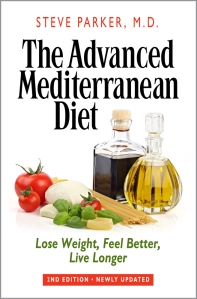
Regular readers here know I’m an advocate of the Carboydrate/Insulin theory. I cite it in Conquer Diabetes and Prediabetes: The Low-Carb Mediterranean Diet and The Advanced Mediterranean Diet: Lose Weight, Feel Better, Live Longer (2nd edition). But the Food Reward theory also has validity. They’re both right, to an extent. They’re not mutually exclusive. The Food Reward theory isn’t as well publiziced as Carbohydrate/Insulin.

Dr. Guyenet lays out a masterful defense of the Food Reward theory at his blog. Mr. Taubes presents his side here, here, here, here, and here. If you have a couple hours to wade through this, I guess I’d start with Taubes’ posts in the order I list them. Finish with Guyenet.

You’d think I’d be more interested in this. I’m still not.

Moving from theory to real world practicality, I do see that limiting consumption of concentrated refined sugars and starches helps with loss of excess body fat and prevention of weight regain. Not for everbody, but many. Whether that’s mediated through lower insulin action or through lower food reward, I don’t care so much.

Steve Parker, M.D.

h/t Dr. Emily Deans

What About Raw Milk?

Caveat emptor

Interest in consuming nonpasteurized milk and cheese seems to be increasing in the U.S. over the last couple years.  I don’t know why.  Is it safe?

In case you’ve forgotten, the process of pasteurization is designed to kill pathogenic organisms that raw milk may harbor.  Campylobacter and Salmonella are two of the common pathogens.

The U.S. Centers for Disease Control and Prevention this month published an article on disease outbreaks associated with nonpasteurized dairy products.  Bottom line: Nonpasteurized products are 150 times more likely to be associated with foodborne illness compared to pasteurized product.  The CDC wants states to consider more stringent regulation.

It’s hard to be sure, but my sense is that foodborne illness related to nonpasteurized dairy products in the U.S. is pretty uncommon, if not rare.

Mark Crislip at Science-Based Medicine says pasteurization is a good thing.

As for me, I see no reason to go out of my way looking for nonpasteurized milk and cheese.

Steve Parker, M.D.

What’s Our Preferred Fuel?

Dr. Jay Wortman has been thinking about whether our bodies prefer to run on carbohydrates (as a sourse of glucose) or, instead, on fats. The standard American diet provides derives about half of its energy from carbs, 35% from fats, and 15% from proteins. So you might guess our bodies prefer carbohydrates as a fuel source. Dr. Wortman writes:

Now, consider the possibility that we weren’t meant to burn glucose at all as a primary fuel. Consider the possibility that fat was meant to be our primary fuel. In my current state of dietary practice, I am burning fat as my main source of energy. My liver is converting some of it to ketones which are needed to fuel the majority of my brain cells. A small fraction of the brain cells, around 15%, need glucose along with a few other tissues like the renal cortex, the lens of the eye, red blood cells and sperm.Their needs are met by glucose that my liver produces from proteins. The rest of my energy needs are met with fatty acids and these come from the fats I eat.

Dr. Wortman, who has type 2 diabetes, in the same long post also writes about oolichan grease (from fish), an ancestral food of Canandian west coast First Nations people.

Folks eating a very-low-carb diet such as the Ketogenic Mediterranean Diet get most of their energy from fats.

Steve Parker, M.D.

Link to Evidence in Favor of HIIT

Tabata's team used stationary bicycles

I ran across this recent scientific review article on HIIT (high-intensity interval training) and thought you might be interested. Looks like it’s slated for publication in The Journal of Physiology.

I’m interested in HIIT as a means to achieve fitness in much less time than the 150 minutes a week of exercise recommended by various public health authorities.

Why didn’t the authors at least mention the oft-cited and apparently pioneering work of Izumi Tabata et al from 1996?

Steve Parker, M.D.

References:

Gibala et al. Adaptations to low-volume, high-intensity interval training (preliminary draft). Journal of Physiology, doi: 10.1113/jphysiol.2011.224725

Tabata, I., et al. Effects of moderate-intensity endurance and high-intensity intermittent training on anaerobic capacity and VO2max. Medicine and Science in Sports and Medicine, 1996 Oct;28(10):1327-30.

Does Eating Meat, Poultry, and Fish Ruin YOUR Mood?

Cow's in a good mood. What a great place to live!

Your mood might improve if you restrict meat, poultry, and fish, according to a pilot study in Nutrition Journal. I don’t have time to read it anytime soon. Why don’t you, and comment below?

-Steve

Reference: Beezhold, Bonnie and Johnston, Carol. Restriction of meat, fish, and poultry in omnivores improves mood: a pilot randomized controlled trial. Nutrition Journal 2012, 11:9 doi:10.1186/1475-2891-11-9. Published: 14 February 2012