
Recreation, not exercise
Perhaps the most destructive as well as most misunderstood concept in fitness today among researchers, the commercial health facilities, and the general public alike is the confusion of exercise and recreation.

Recreation, not exercise
Perhaps the most destructive as well as most misunderstood concept in fitness today among researchers, the commercial health facilities, and the general public alike is the confusion of exercise and recreation.
Comments Off on QOTD: Ken Hutchins on Recreation Versus Exercise
Posted in Exercise
Tagged exercise, Ken Hutchins, recreation

He’s at high risk for metabolic syndrome
“Metabolic syndrome” may be a new term for you. It’s a collection of clinical features that are associated with increased future risk of type 2 diabetes and atherosclerotic complications such as heart attack and stroke. One in six Americans has metabolic syndrome. Diagnosis requires at least three of the following five conditions:
What To Do About It
Metabolic syndrome and simple excess weight often involve impaired carbohydrate metabolism. Over time, excessive carbohydrate consumption can turn overweight and metabolic syndrome into prediabetes, then type 2 diabetes. Carbohydrate restriction directly addresses impaired carbohydrate metabolism naturally. When my patients have metabolic syndrome, some of my recommendations are:
If these are effective, the patient can often avoid costly drugs and their potential adverse effects.
Ask your doctor what she thinks.
Comments Off on Metabolic Syndrome: A Thumbnail Sketch
Posted in Metabolic Syndrome, Uncategorized
Tagged diabetes, metabolic syndrome, prediabetes
Larry Huston has the details. ACE inhibitors are commonly used to treat high blood pressure.
The ACE inhibitors in the study were perindopril, ramipril, trandolapril, captopril, fosinopril, lisinopril, prinivil and monopril.
Comments Off on ACE Inhibitors May Slow Rate of Decline in Dementia
Posted in Alzheimer Disease, Dementia, Uncategorized
Tagged ACE inhibitors, dementia
Melanie Thomassian at Dietriffic thinks so. And maybe not just a treat meal but a treat day, once once a week. I’m sure she’s right, at least for some folks. In my books, I talk about “cheat meals” – same thing as a treat meal.
Visit Melanie’s blog for details.
On the other hand, if you’re seriously addicted to certain fattening foods, you might do better swearing them off permanently. For example, alcoholics should never temp themselves with a drink “just this once.”
Comments Off on Would a “Treat Meal” Improve Your Weight Management Efforts?
Posted in Uncategorized
Tagged cheat meal, Melanie Thomassian, treat meal

Sugar cane
Robert Lustig and associates looked at sugar consumption and diabetes rates in 175 countries and found a strong link between sugar and type 2 diabetes. It’s not proof of causation, just suggestive. From the abstract:
Duration and degree of sugar exposure correlated significantly with diabetes prevalence in a dose-dependent manner, while declines in sugar exposure correlated with significant subsequent declines in diabetes rates independently of other socioeconomic, dietary and obesity prevalence changes. Differences in sugar availability statistically explain variations in diabetes prevalence rates at a population level that are not explained by physical activity, overweight or obesity.
Reminder: Conquer Diabetes and Prediabetes is now available on Kindle. Also, the Advanced Mediterranean Diet is naturally quite low in sugar.
Reference: Basu S, Yoffe P, Hills N, Lustig RH (2013) The Relationship of Sugar to Population-Level Diabetes Prevalence: An Econometric Analysis of Repeated Cross-Sectional Data. PLoS ONE 8(2): e57873. doi:10.1371/journal.pone.0057873
Comments Off on Sugar Linked To Diabetes: 175 countries studied
Posted in Diabetes
Tagged Dr. Robert Lustig, sugar consumption, type 2 diabetes
Weight Maven Beth Mazur summarizes results of the phase III trial needed for FDA approval. Contrave is a combo of naltrexone and bupropion.
Beth’s not very impressed with the drug, and neither am i.
Instead, check out The Advanced Mediterranean Diet.

This treadmill stress test is looking for hidden heart disease
To protect yourself from injury, I suggest that you obtain “medical clearance” from a personal physician before starting an exercise program. A physician is in the best position to determine if your plans are safe for you, thereby avoiding complications such as injury and death.
Nevertheless, most adults can start a moderate-intensity exercise program with little risk. An example of moderate intensity would be walking briskly (3–4 mph or 4.8–6.4 km/h) for 30 minutes daily.
Men over 40 and women over 50 who anticipate a more vigorous program should consult a physician to ensure safety. The physician may well recommend diagnostic blood work, an electrocardiogram (heart electrical tracing), and an exercise stress test (often on a treadmill). The goal is not to generate fees for the doctor, but to find the occasional person for whom exercise will be dangerous, if not fatal. Those who drop dead at the start of a vigorous exercise program often have an undiagnosed heart condition, such as blockages in the arteries that supply the heart muscle. The doctor will also look for other dangerous undiagnosed “silent” conditions, such as leaky heart valves, hereditary heart conditions, aneurysms, extremely high blood pressure, and severe diabetes.

She looks healthy enough, but how can you be sure?
The American Diabetes Association’s Standards of Care state that routine testing of all diabetics for heart artery blockages before an exercise program is not recommended; the doctor should use judgment case-by-case. Many diabetics (and their doctors) are unaware that they already have “silent” coronary artery disease (CAD). CAD is defined by blocked or clogged heart arteries, which reduced the blood flow to the hard-working heart muscle. Your heart pumps 100,000 times a day, every day, for years without rest. CAD raises the odds of fainting, heart attack, or sudden death during strenuous exercise. I recommend a cardiac stress test (or the equivalent) to all diabetics prior to moderate or vigorous exercise programs, particularly if over 40 years old. CAD can thus be diagnosed and treated before complications arise. Ask your personal physician for her opinion.
Regardless of age and diabetes, other folks who may benefit from a medical consultation before starting an exercise program include those with known high blood pressure, high cholesterol, joint problems (e.g., arthritis, degenerated discs), neurologic problems, poor circulation, lung disease, or any other significant chronic medical condition. Also be sure to check with a doctor first if you’ve been experiencing chest pains, palpitations, dizziness, fainting spells, headaches, frequent urination, or any unusual symptoms (particularly during exertion).
Physicians, physiatrists, physical therapists, and exercise physiologists can also be helpful in design of a safe, effective exercise program for those with established chronic medical conditions.
…according to an article at MedPageToday. The 317 study participants were at high risk of Alzheimer’s dementia due to family history. The protective dose of exercise was at least 7.7 MET per hour/week. Please comment if you can translate that into something practical!
Comments Off on Protect Your Aging Hippocampus (and Memory) With Exercise
Posted in Dementia
…according to an article at MedPageToday. Use it or lose it?
Comments Off on Retiring Later May Protect Against Alzheimers Dementia
Posted in Uncategorized
A palliative care nurse asked dying patients what they would have done differently when they had the chance:
1. I wish I’d had the courage to live a life true to myself, not the life others expected of me.
2. I wish I hadn’t worked so hard.
3. I wish I’d had the courage to express my feelings.
4. I wish I had stayed in touch with my friends.
5. I wish that I had let myself be happier.
Read the rest. While you still have your health and time.
Comments Off on Will You Have Regrets on Your Death Bed?
Posted in Longevity
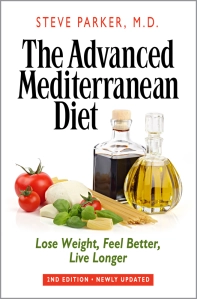
Click the pic to purchase at Amazon.com. E-book versions also available at Smashwords.com.

 Advanced Mediterranean Diet