QOTD: Elmer Davis on Bravery

The republic was not established by cowards; and cowards will not preserve it. This will remain the land of the free only so long as it is the home of the brave.

                  – Elmer Davis

Recipe: Avocado, Tomato, Olives, and Steak

Paleobetic diet

I ate mine for breakfast. Who needs bagels, cereal, and donuts?

This was super-easy to put together because I used leftover steak. But I’ll assume you’re cooking your steak fresh. We bought ours as thinly sliced round steak, about a 1/4-inch thick (0.6 cm). Some places might refer to this as a “minute steak” because it cooks so quickly. Minute steak also refers to a piece of beef, usually the round, that’s been pounded flat, about a 1/4-inch thick. Even if you start with raw meat, you can prepare today’s recipe in 10 minutes.

Paleobetic diet

It tastes as good as it looks

Ingredients:

4 oz (113 g) cooked thin round steak (start with 5 oz raw)

1 California (Hass) avocado, standard size (4.5 oz or 127 g), peeled, pitted, and chunked

14 black olives, pitted, medium size (Purist alert: probably highly processed)

1 tomato, medium-size (medium size or 2.5-inch diameter (6,4 cm), or a large roma tomato), cut into wedges

Salt and pepper to taste, or use commercial steak seasoning such as Montreal Steak Seasoning by McCormick (a favorite at the Parker Compound)

Instructions:

Sprinkle your steak with seasoning then cook over medium or medium-high heat in a skillet, about a minute on each side. Or heat your leftover steak in the microwave. If you overcook, it will be tough.

Place all ingredients artfully on a plate and enjoy.

Advanced Mediterranean Diet Boxes: 1 protein, 6 vegetable

Servings: 1

Nutritional Analysis (via Fitday):

60% fat

12% carbohydrate

28% protein

600 calories

20 g carbohydrate

12 g fiber

8 g digestible carbohydrate

587 mg sodium

1530 mg potassium

Prominent features: Lots of protein, vitamin B6, vitamin B12, copper, iron, niacin, pantothenic acid, phosphorus, selenium, and zinc

Are You Ready for Your 15 Minutes of Fame?

Steve Parker MD, Advanced Mediterranean DIet

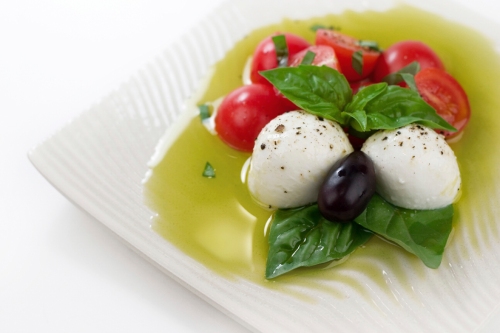
Caprese salad: mozzarella cheese, tomatoes, basil, extra virgin olive oil

A major U.S. women’s magazine is considering doing an article on my Low-Carb Mediterranean Diet. The writer would like to be able to interview folks (by phone) who have done the diet and successfully lost weight with it. Before and after pics would be icing on the cake but are not necessary.

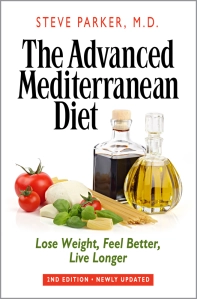
If you’ve The Advanced Mediterranean Diet (2nd edition)KMD: Ketogenic Mediterranean Diet, or Control Diabetes and Prediabetes: The Low-Carb Mediterrean Diet, then you’ve seen the Low-Carb Mediterranean Diet. Advanced Mediterranean Diet also has a traditional portion/calorie-controlled diet. Control Diabetes and KMD both start with the ketogenic Mediterranean diet (30 carb grams/day) and than add more carbohydrates as tolerated by the individual, resulting in the Low-Carb Mediterranean Diet. Most folks following the Low-Carb Mediterranean Diet will max out carb consumption at 80-100 grams a day.

I’m terrible at marketing myself and my ideas, so I’ve not kept track of individual success stories from the past.

If you’d be willing to share your success story, please email me with a few of the details at steveparkermd AT gmail.com and I’ll keep your name on file in case the magazine decides to run with the article. I’ll not divulge your information to anyone else. If you share with me, I’ll assume I have your permission to send your story and e-mail address to the writer.

Thanks for your consideration.

Steve Parker, M.D.

New Guidelines Recommend Mediterranean Diet for Those With Stroke and Transient Ischemic Attack

MedPageToday has the details from the American Heart Association and American Stroke Association. Here’s the pertinent quote:

It … is reasonable to recommend adherence to a Mediterranean-type diet that includes vegetables, fruits, whole grains, low-fat dairy, poultry, fish, legumes, olive oil, and nuts, and limits sweets and red meats.

But how much of those components? Click for my general recommendations

QOTD: President Barack Obama on the Constitution

“I do solemnly swear that I will faithfully execute the Office of President of the United States, and will to the best of my ability, preserve, protect and defend the Constitution of the United States.”

Kris Gunnars Shows Major U.S. Diet Changes Over Last Century

Alleged medical student Kris Gunnars has an article at Business Insider, of all places, that shows graphically many of the major U.S. dietary changes of the last hundred years or so. In this case, transmogrification may be a better term than mere  “changes.” I suspect much of the Western world has evolved in similar fashion.

You need to read the article and ponder the graphs if you question why we have so much obesity, type 2 diabetes, heart disease, hypertension, and perhaps cancer. You’ll see dramatic increases in consumption of added sugars, industrial seed oils (esp. soybean), soda pop and fruit juice (added sugar!), total calories, and fast food. You’ll see how much we’ve increased dining away from home. Butter consumption is down drastically, but doesn’t seem to have done us much good, if any.

Sugar cane

Sugar cane


There’s fairly good evidence that coronary artery disease (CAD; the cause of most heart attacks) was very prominent between 1960 to 2000 or so, but it’s been tapering off in recent years and didn’t seem to be very common 100 years ago. Understand that you can have it for 20 years or more before you ever have symptoms (angina) or a heart attack from it. In fact, the disease probably starts in childhood. I’ve always wondered about the cause of the CAD prevalence trends, and wondered specifically how much of the long-term trend was related to trans-fat consumption. But I’ve never been able to find good data on trans-fat consumption. Kris came up with a chart of margarine consumption, which may be a good proxy for trans-fats. Another of his charts includes shortening, a rich source of trans-fats and probably also a good proxy. Shortening consumption increased dramatically from 1955 until dropping like a rock around 2000.

The timeline curves for trans-fat consumption (by proxy) and prevalence of coronary heart disease seem to match up fairly well, considering a 20 year lag. In the early 1990s, we started cutting back on trans-fats, and here we are now with lower mortality and morbidity from coronary artery disease. (CAD is very complex; lower rates of smoking surely explain some of the recent trend.)

Read the whole enchilada. Very impressive. Highly recommended.

Steve Parker, M.D.

Muscle-Bound Action Heroes: Is it Mother Nature, CGI, Genetics, or Juice?

exercise for weight loss and management, dumbbells

This ain’t cuttin’ it, dude

Logan Hill has an interesting article in Men’s Journal on how actors get that muscled-up lean action hero body. He talks about how an impressive physique is almost a basic requirement to make it in Hollywood these days. It’s not like the good old days. Note the difference between the James Bond of Sean Connery and Daniel Craig (photo at the link). A quote:

Even the type of muscle has changed. “In the Eighties, it was the bigger, the better,” says director Tim Burton. “Think of that shot from Rambo of Sly holding the machine gun and the veins in his forearms bulging.” Actors rarely bulk up like that anymore; they’re all trying to be Tyler Durden.

Every trainer interviewed for this story cited Brad Pitt’s ripped physique in 1999’s Fight Club as an inspiration. Previously known for his lush, golden hair, the girls’ guy Pitt was reborn as Durden, a sinewy, predatory man’s man. “Brad Pitt in Fight Club is the reference for 300,” says Mark Twight, who trained the cast for 300. “Everyone thought he was huge, but he was, like, 155 pounds. If you strip away fat and get guys to 3, 4 percent body fat, they look huge without necessarily being huge.”

To get that hungry look, trainers stress calorie-conscious diets and exercises that pump up fat-burning metabolism. No actor can gain 10 pounds of muscle in a six-week period, but he can lean down to reveal the muscle underneath. Trainers talk about the “lean out” – the final, preshoot crash period when actors drop their BMI (body-mass index) to its bare minimum and unveil muscle definition.

You’ll read about insane commitment to exercise, high-protein diets, rapid weight loss and muscle definition, HGH, anabolic steroids, and even insulin. I imagine a $6 million paycheck is a good motivator.

Read the whole enchilada.

Steve Parker, M.D.

Update September 12, 2014: Mike at Danger and Play says the Logan Hill article is malarkey. You decide. When Mike refers to “gear,” think anabolic or androgenic steroids.

Franziska Reviews Metabolic Syndrome

Dietitian Franziska Spritzler has a great article on metabolic syndrome, which affects one in six Americans. She mentions yours truly. Wherever you live, Franziska is available for consultations. Ain’t the innernet wonderful?

-Steve

Coffee Might Lower Your Risk of Developing Type 2 Diabetes

NBC News has the story. I can’t see many folks starting a coffee habit or drinking more just for this potential benefit. Lower your T2 diabetes risk more reliably by keeping your weight under control, exercising regularly, and it may help to limit concentrated sugars and refined grain products. 

How to Make a Super Salad

diabetic diet, Paleobetic diet, diabetes,

You won’t be able to eat this in one sitting if you’re small or sedentary

This huge salad is a full meal. It fills a 10-inch plate (25 cm). Since it contains five vegetables, you should feel virtuous eating it.

Ingredients:

8 oz (230 g) raw chicken breast tenderloin (it cooks down to 5 oz)

1/4 cup (60 ml) canned mandarin orange wedges (6-7 wedges) (if you can only find these packed in syrup or light syrup, add 3 g to the digestible carb count below)

1/4 tsp (1.2 ml) lemon pepper seasoning

4 oz (110 g) hearts of romaine lettuce

1 oz (30 g) baby spinach

2.5 oz (1/4 cucumber or 70 g) cucumber, peeled and sliced into discs

2 oz (60 g) California avocado, peeled and seeded, cut into wedges (1/2 of standard-sized avocado)

3 oz (85 g) fresh tomato (a typical roma or small tomato)

1 oz (30 g) walnuts

6 tbsp (90 ml) extra virgin olive oil

2 tbsp (30 ml) vinegar (we used balsamic)

1/4 tsp (1.2 ml) salt

1/4 tsp (1.2 ml) fresh ground black pepper

1/4 tsp (1.2 ml) crushed dried rosemary

diabetic diet, Paleobetic diet, low-carb, seasoning

Like Deborah on “Everybody Loves Raymond,” my wife often makes “lemon chicken.” Have you seen the cost of steak lately? Jeez…for what the supermarket’s asking, it’d be cheaper to go to a steakhouse!

Instructions:

First cook the chicken breast over medium heat in a skillet. If you think the meat will stick to the pan, add a smidgen (1/2 tsp or 2.5 ml) of olive oil to the pan. Don’t overcook or the meat will get tough. It’ll take five or 10 minutes.

While that’s cooking, prepare your vinaigrette. In a jar with a lid, place the olive oil, vinegar, salt, pepper, and rosemary, then shake vigorously for 20 seconds. Not 21 or you’ll ruin it. You’re done.

If you use a commercial vinaigrette instead, use one that has no more than 2 g of carbohydrate per 2 tbsp. You may have trouble finding that since so many of the commercial guys add sugar.

Place the lettuce and spinach on a plate then add the cucumber, avocado, tomato, cooked chicken, walnuts, and mandarin orange wedges on top. Drizzle two or three tbsp of the vinaigrette over it (nutritional analysis assumes three). Enjoy.

You could easily substitute steak, turkey, cooked salmon, or canned tuna for the chicken.

Servings: 1

(Actually, you’ll have enough vinaigrette left over for one or two more salads or vegetable servings. Save it in the refrigerator.)

Nutritional Analysis:

57 % fat

12 % carbohydrate

31 % protein

710 calories

25 g carbohydrate

10 g fiber

15 g digestible carb

990 mg sodium

1,570 mg potassium

Prominent features: Rich in protein, vitamin A, B6, C, copper, iron, manganese, magnesium, pantothenic acid, selenium, and phosphorus.

low-carb diet, diabetic diet, Paleobetic diet, balsamic vinaigrette,

I like this and use it. The lower left corner says “with EXTRA VIRGIN OLIVE OIL.” In order, the listed ingredients are water, balsamic vinegar, soybean oil and extra virgin olive oil, SUGAR, etc. Which oil would you guess predominates? Two tbsp has 3 g of carb.  BTW, balsamic has the most carbs of all the vinegars.