Are You Doing the “Dry January” Thing? Don’t Give Up!

This YouTuber mentions a book by Allen Carr: “Quit Drinking Without Willpower.” Comedian Nikki Glaser elsewhere has lauded Carr’s “The Easy Way to Stop Drinking,” but I can’t find that at Amazon.com. I did see his “The Easy Way for Women to Stop Drinking,” “The Easy Way to Control Alcohol,” and “Stop Drinking Now.”

Both Mediterranean and Paleo Diets Linked to Lower Risk of Anxiety, Stress, and Depression

Muslim woman holding fish. Ikan” by U.S. Agency for International Development/ CC0 1.0

…in Muslim Iranian women, according to an article at Journal of Nutrition and Metabolism.

There’s a lot going on in this study. I didn’t understand some of the statistics. Click the link for full details. Here’s the abstract:

Background

Psychiatric disorders have been a challenge for public health and will bring economic problems to individuals and healthcare systems in the future. One of the important factors that could affect these disorders is diet. 

Objective

In the current study with a cross-sectional design, we investigated the association of Paleolithic and Mediterranean diets with psychological disorders in a sample of adult women. 

Methods

Participants were 435 adult women between 20 and 50 years old that refer to healthcare centers in the south of Tehran, Iran. The diet scores were created by the response to a valid and reliable semiquantitative food frequency questionnaire (FFQ), and the psychological profile was determined by response to the Depression, Anxiety, and Stress Scale (DASS-21). The multivariable-adjusted logistic regression was applied to compute the odds ratio (OR) and 95% confidence interval (CI). 

Results

After adjusted for potential confounders, it is evident that participants in the highest Paleolithic diet tertile had lower odds of depression (OR = 0.21; 95% CI: 0.12, 0.37: P < 0.001), anxiety (OR = 0.27; 95% CI: 0.16, 0.45: P < 0.001), and stress (OR = 0.19; 95% CI: 0.11, 0.32; P < 0.001) in comparison to the lowest tertile. Furthermore, those in the third tertile of the Mediterranean diet score were at lower risk of depression (OR = 0.20; 95% CI: 0.11, 0.36; P < 0.001), anxiety (OR = 0.22; 95% CI: 0.13, 0.38; P < 0.001), and stress (OR = 0.23; 95% CI: 0.13, 0.39; P < 0.001) compared with those in the first tertile. 

Conclusion

The result of the current study suggests that greater adherence to Paleolithic and Mediterranean dietary patterns may be related with a decreased risk of psychological disorders such as depression, anxiety, and stress.


  Steve Parker, M.D.

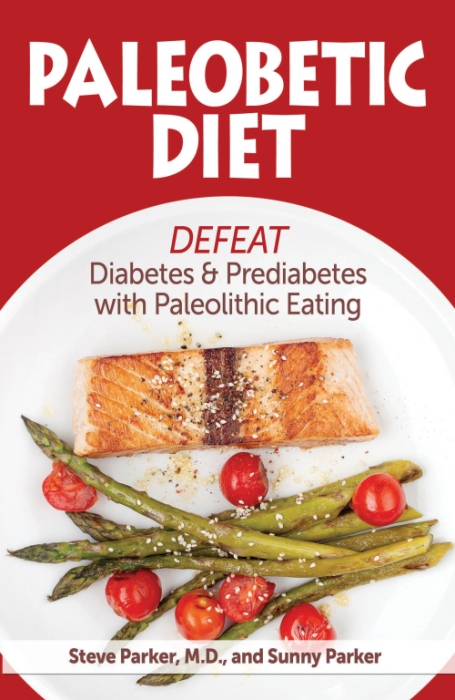
front cover of paleobetic diet

Click to purchase at Amazon.com. E-book also available at Smashwords. com.

Update: My Fitness

It’s piss-poor.

I stopped exercising 18-24 months ago, I’m not even sure why. Probably just got busy with work or life and got out of the habit. I turn 70 next year and know that I must exercise regularly to improve and maintain my vigor as aging progresses. I expect big changes, and not for the better, over the next decade. My father died at 83; my mother is still alive and fairly healthy at 92.

Here’s the program I started yesterday:

  1. Push-ups.
  2. Dumbell overhead presses, Arnold style.
  3. One-arm bent-over rows with dumbell.
  4. Single-leg Romanian dead lifts with dumbell.
  5. Squats with dumbells.
  6. Bench presses (alternating flat and inclined).
  7. Walking the dogs for 2.5-4 miles, at least 2-3 times a week.

A recent visit with my brother-in-law Dale inspired me to start walking the famous “10,000 steps a day,” roughly five miles. That’s what he does. My dogs love it. I usually fail when I’m working a string of 12-hour shifts. If you’re an older woman, maybe 4,400 steps/day is enough for a longevity benefit. In other populations studied, 6,000 to 8,000 steps/day was optimal for the longevity benefit. I admitted a patient to the hospital a few days ago who told me her health insurer sends her a small check monthly if she meets their step goal. She’s saving them money via lower healthcare expenditures, and they’re sharing with her. I love it!

For exercises 1 through 5 above, I’ll do them for 90 seconds each, loading myself with enough weight to exhaust myself by the time I’m done. My cadence for them will be ~5 seconds each direction. E.g., for the bench press, 5 seconds slowly lifting the dumbells up, the 5 seconds slowly lowering them. Sort of like Chris Highcock’s Hillfit program.

Before you start a new fitness program, I suggest you take some baseline measurements.

As in May, 2012, I still weigh 168 lb (76.4 kg). But this required loss of 12 lb (5.5 kg) over the last year. Compared to 2012, however, I’m sure I’ve lost strength and muscle mass and gained girth. At the level of the umbilicus, my abdominal circumference while standing upright is 38.5 inches (98 cm). That number in May, 2012, was 36.5 inches (92.5 cm). If I measure my girth while supine, the number is three inches less. Assuming I’ve lost an inch of height over the last 15 years, my BMI is 23.4. Calculate your BMI here.

  Steve Parker, M.D.

QOTD: A man with an empty stomach…

A man with an empty stomach has one problem, but a man with a full stomach has a hundred.

-Anonymouse

19 Free Expert Weight-Loss Tips

1.  Record-keeping is often the key to success.

2.  Accountability is another key to success. Consider documenting your program and progress on a free website such as FitDay, SparkPeople, 3FatChicks, or others. Consider blogging about your adventure on a free platform such as WordPress or Blogger, or try the newer social media sites. Such a public commitment may be just what you need to keep you motivated.

3.  Do you have a friend or spouse who wants to lose weight? Start the same program at the same time and support each other. That’s built-in accountability.

4.  If you tend to over-eat, floss and brush your teeth after you’re full. You’ll be less likely to go back for more anytime soon.

5.  Eat at least two or three meals daily. Skipping meals may lead to uncontrollable overeating later on. On the other hand, ignore the diet gurus who say you must eat every two or three hours. That’s codswallop.

6.  Eat meals at a leisurely pace, chewing and enjoying each bite thoroughly before swallowing.

7.  Plan to give yourself a specific reward for every 10 pounds (4.5 kg) of weight lost. You know what you like. Consider a weekend get-away, a trip to the beauty salon, jewelry, an evening at the theater, a professional massage, home entertainment equipment, new clothes, etc.

8.  Carefully consider when would be a good time to start your new lifestyle. It should be a period of low or usual stress. Bad times would be Thanksgiving day, Christmas/New Years’ holiday, the first day of a Caribbean cruise, and during a divorce.

9.  If you know you’ve eaten enough at a meal to satisfy your nutritional requirements yet you still feel hungry, drink a large glass of water and wait a while.

10  Limit television to a maximum of a few hours a day.

11.  Maintain a consistent eating pattern throughout the week and year.

12.  Eat breakfast routinely.

13.  Control emotional eating.

14.  Weigh frequently: daily during active weight-loss efforts and during the first two months of your maintenance-of-weight-loss phase. After that, cut back to weekly weights if you want. Daily weights will remind you how hard you worked to achieve your goal.

15.  Be aware that you might regain five or 10 pounds (2-4 kg) of fat now and then. You probably will. Don’t freak out. It’s human nature. You’re not a failure; you’re human. But draw the line and get back on the old weight-loss program for one or two months. Analyze and learn from the episode. Why did it happen? Slipping back into your old ways? Slacking off on exercise? Too many special occasion feasts or cheat days? Allowing junk food or non-essential carbs back into the house?

16.  Learn which food item is your nemesis—the food that consistently torpedoes your resolve to eat right. For example, mine is anything sweet. Remember an old ad campaign for a potato chip: “Betcha can’t eat just one!”? Well, I can’t eat just one cookie. So I don’t get started. I might eat one if it’s the last one available. Or I satisfy my sweet craving with a diet soda, small piece of dark chocolate, or sugar-free gelatin. Just as a recovering alcoholic can’t drink any alcohol, perhaps you should totally abstain from…? You know your own personal gastronomic Achilles heel. Or heels. Experiment with various strategies for vanquishing your nemesis.

17.  If you’re not losing excess weight as expected (about a pound or half a kilogram per week), you may benefit from eating just two meals a day. This will often turn on your cellular weight-loss machinery even when total calorie consumption doesn’t seem much less than usual. The two meals to eat would be breakfast and a mid-afternoon meal (call it what you wish). The key is to not eat within six hours of bedtime. Of course, this trick could cause dangerous hypoglycemia if you’re taking drugs with potential to cause low blood sugars, like insulin and sulfonylureas. If you take drugs for diabetes, talk to your dietitian or physician before instituting a semi-radical diet change like this.

18.  One of the fitness bloggers I used to follow was James Fell. He said, “If you want to lose weight you need to cook. Period.”

19.  Regular exercise is much more important for prevention of weight regain rather than for actually losing weight.

Steve Parker, M.D.


Merry Christmas!

Credit: Zvonimir Atletic / Shutterstock.com

Have You Considered Dying?: Healthcare Memes


  Steve Parker, M.D.

It’s Almost Time for Dry January

See you in February. Or not.

I’ve run across a number of people who slowly increased their alcohol consumption over months or years, not realizing it was causing or would cause problems for them. Alcohol is dangerous, lethal at times.

From a health standpoint, the generally accepted safe levels of consumption are:

  • no more than one standard drink per day for women
  • no more than two standard drinks per day for men

One drink is 5 ounces of wine, 12 ounces of beer, or 1.5 ounces of 80 proof distilled spirits (e.g., vodka, whiskey, rum, gin).

Dry January was conceived in the UK in 2012 or 2014. (A related concept is Sober October.) The idea is simply to abstain from all alcohol for the month of January. The Alcohol Change UK website can help you git ‘er done. Many folks notice that they sleep better, have more energy, lose weight, and save money. There are other potential benefits.

If you think you may have an unhealthy relationship with alcohol, check your CAGE score. It’s quick and easy.

Alternatively, if you make a commitment to a Dry January but can’t do it, you may well have a problem.

Steve Parker, M.D.

PS: Check out this video about the benefits of sobriety.

PPS: This guy quit drinking for 30 days:

The Diet Debate: Which Is Best for Health and Longevity?

santorini, greece
Santorini, Greek seaside

Proper diet undoubtedly promotes healthier aging and longevity. But what’s the right diet? A meta-analysis diet studies proposes an answer. Or more accurately, answers, based on diet-related biomarkers linked to disease and aging. Half of the studies were done in Europe, the rest from North America and Asia. The February, 2023, article was published in Nutrients. You can read the entire article online.

“….the main goal of this systematic review was to perceive the quantity and quality of different diets or aspects in nutrition, how they could modulate biomarkers and prevent aging-related diseases, in order to enlighten new intervention strategies. Biomarkers that are linked to aging-associated metabolism, inflammation processes, cognitive decline, and telomere attrition were scrutinized in order to understand how these mechanisms could actually influence healthy aging. Moreover, it could provide information to future health professionals.”

The researchers conclusions:

“In conclusion, this systematic review demonstrated the necessity for individuals to improve their diets, to reduce the emergence and development of several comorbidities and promote healthy aging. Diets rich in vegetables, fruits, nuts, cereals, fibers, fish, unsaturated fats, containing antioxidants, vitamins, potassium, omega-3—and reducing red meat and ultra-processed food intake—could prevent obesity, CVD [cardiovascular disease], and inflammation, and promote favorable glycemic, insulinemic, and lipidemic responses. Moreover, the Mediterranean diet and ketogenic diet, or a combination of these diets (MMKD), and increasing consumption of vegetables and green tea catechins, could improve one‘s working memory and decrease destabilization of the brain network and the attention domain, preventing cognitive decline. Finally, the Mediterranean diet, supplemented with CoQ or virgin olive oil, or a low-fat diet, also rich in antioxidants, could help to decrease the prevalence of atherothrombosis [arterial blood clots], hepatic steatosis, diabetes, and telomere attrition, as well as prevent oxidative and DNA damage. These diets can enhance one‘s quality of life and increase life expectancy. Moreover, a putative panel of molecular markers would follow the impact of diet/nutrition alterations during aging.”

The biomarkers tested included C-reactive protein, telomere length, HOMA-IR (insulin resistance), cholesterols, fibrinogen, platelet activating factor acetylhydrolase in HDLs, glucose, white blood cells, apolipoproteins, adiponectin, leptin, visceral adiposity index, etc.

Diets mentioned in the article include DASH, modified Alternative Healthy Eating Index, Southern European Atlantic (SEAD), Baltic Sea (a Nordic alternative to the Mediterranean diet), Mediterranean, and ketogenic Mediterranean.

This article is pretty dense reading. For science nerds only!

I was gratified to see several mentions of the ketogenic Mediterranean diet. It deserves more attention from the general public.

Steve Parker, M.D.

PS: If you have my Advanced Mediterranean Diet (2nd edition), you already have the Ketogenic Mediterranean Diet. It’s there in addition to the traditional Mediterranean diet.

9/11: And Now… the Rest of the Story

World Trade Center Photos“/ CC0 1.0

In coming up with that headline, I thought about Paul Harvey. You’re too young to know about him.

Ron Unz has done a lot of research and thinking about 9/11. Who pulled it off? He questions the official narrative. I quote:

So where do we now stand? It seems very likely that the 9/11 attacks were the work of an organization far more powerful and professionally-skilled than a rag-tag band of nineteen random Arabs armed with box-cutters, but also that the attacks were very unlikely to have been the work of the American government itself. So who actually attacked our country on that fateful day seventeen years ago, killing thousands of our fellow citizens?

Effective intelligence operations are concealed in a hall of mirrors, often extremely difficult for outsiders to penetrate, and false-flag terrorist attacks certainly fall into this category. But if we apply a different metaphor, the complexities of such events may be seen as a Gordian Knot, almost impossible to disentangle, but vulnerable to the sword-stroke of asking the simple question “Who benefited?”

America and most of the world certainly did not, and the disastrous legacies of that fateful day have transformed our own society and wrecked many other countries. The endless American wars soon unleashed have already cost us many trillions of dollars and set our nation on the road to bankruptcy while killing or displacing many millions of innocent Middle Easterners. Most recently, that resulting flood of desperate refugees has begun engulfing Europe, and the peace and prosperity of that ancient continent is now under severe threat.

Our traditional civil liberties and constitutional protections have been drastically eroded, with our society having taken long steps toward becoming an outright police state. American citizens now passively accept unimaginable infringements on their personal freedoms, all originally begun under the guise of preventing terrorism.

I find it difficult to think of any country in the world that clearly gained as a result of the 9/11 attacks and America’s military reaction, with one single, solitary exception.