Category Archives: Weight Loss

Dietitian Franziska Spritzler’s Six-Month Ketogenic Diet Trial Results

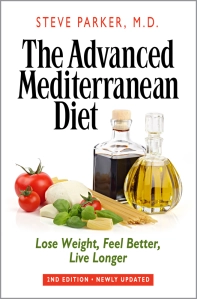
Steve Parker MD, Advanced Mediterranean Diet

Two diet books in one: 1) portion control, and 2) ketogenic

Ketogenic diets help many folks lose excess weight, return blood sugar levels toward normal, and move HDL cholesterol and triglycerides to a healthier range. I include a ketogenic diet as an option in my Advanced Mediterranean Diet (2nd Ed.). They are not for everybody.

Read about Franziska Spritzler’s experience with a ketogenic diet (not my version). Some quotes:

Well, after consistently consuming 30-45 grams of net carbs a day for six months, I have only positive things to say about my very-low-carb experience. Not only are my blood sugar readings exactly where they should be — less than 90 fasting and less than 130 an hour after eating — but I truly feel healthier,  less stressed, and more balanced than ever.

My diet consists of lots of fat from avocados, nuts and nut butters, olive oil, and cheese; moderate amounts of fish, chicken, beef, Greek yogurt, and eggs; and at least one serving of nonstarchy vegetables at every meal and a small serving of berries at breakfast.  It’s truly a rich, satisfying, and luxurious way to eat.

Low-Carb Ketogenic Diet Appears Safe and Effective for Children and Adolescents

A ketogenic diet was safe and effective for weight loss in children and adolescents, according to a small study in the Journal of Pediatric Endocrinology and Metabolism.  Fifty-six children were placed on either a ketogenic diet or a calorie-restricted diet.  The investigators judged the low-carb ketogenic diet more effective.

I don’t treat children, so I don’t normally follow the pediatric scientific literature.  Thanks to Diet Doctor Andreas Eenfeldt for bringlng this to my attention.  I’ve not read the full research report.

In 2010 I reported on research showing a low-carb, high-protein diet was safe and effective for severely obese adolescents.

Which Are the Low-Carb Veggies?

A half cup of sliced bell pepper has about 2 grams of digestible carbohydrate

Laura Dolson over at About.com has a helpful list of low-carb veggies.  Helpful if you experience excessive blood sugar spikes from high-carb items, or if you’re restricting carbs for weight management.

-Steve

What Do Dietitians Think About Ketogenic Diets?

You get it?

Registered Dietitian Franziska Spritzler recently reviewed the concept of low-carb ketogenic diets.  She thinks they are a valid approach to certain clinical situations.  Among dietitians, this puts her in a small but growing minority.

One of your weight-loss choices in my Advanced Mediterranean Diet (2nd Edition) is a ketogenic diet.  Here’s the basic program.

I hesitate to mention this, but I will anyway.  Many, if not most, dietitians too easily just go along with the standard party line on low-carb eating: it’s rarely necessary and quite possibly unhealthy.  Going along is much easier than doing independent literature review and analysis.  I see the same mindset among physicians.

Franziska breaks the mold.

Steve Parker, M.D.

Exercise Does and Doesn’t Help With Weight Loss

With regards to TV’s “The Biggest Loser” show:

The show’s 24-week regimen consists of approximately 4 hours of daily exercise, including 1 hour of intense resistance, 1 hour of intense aerobic activity, and 2 hours of moderate aerobic activity (for example, walking), along with a caloric  intake of at least 70% of estimated resting daily energy expenditure, explained Dr. [Robert] Huizenga, who is a former team physician to the L.A. Raiders football team.

exercise for weight loss and management, dumbbells

If you’re not familiar with resistance training, a personal trainer is an great idea

This is an excerpt from “The Biggest Loser Pushes Envelope on Diabetes,” in Internal Medicine News, vol. 45, No.11, page 17.

In a previous post about The Biggest Loser, I’d written that I didn’t know how much they exercised.

For purposes of discussion, let’s assume the documented major weight losses of Biggest Loser contestants is not simply due to caloric restriction.

Dr. Huizenga shared some of his experience at the recent annual meeting of the American Association of Clinical Endocrinologists.  In a study of 35 Biggest Loser participants, about half had prediabetes or type 2 diabetes.  Hemoglobin A1c, a measure of blood sugar control, fell significantly in this subset.  Three of the six with diabetes were able to stop metformin early on.  By week 29 of the study, average body mass index for the entire group had fallen from 46 to 29.

Yes, exercise helps with weight loss.  But most folks aren’t willing or able to exercise vigorously for four hours a day.  Physical activity is more important for maintenance of weight loss, when it demands much less time.

Steve Parker, M.D.

How To Overcome Your Weight-Loss Stall

"This can't be right!"

“This can’t be right!”

It’s common on any weight-loss program to be cruising along losing weight as promised, then suddenly the weight loss stops although you’re still far from goal weight.  This is the mysterious and infamous stall.

Once you know the cause for the stall, the way to break it becomes obvious.

The most common reasons are:

  • you’re not really following the full program any more; you’ve drifted off the path, often unconsciously
  • instead of eating just until you’re full or satisfied, you’re stuffing yourself
  • you need to start or intensify an exercise program
  • you’ve developed an interfering medical problem such as adrenal insufficiency (rare) or an underactive thyroid; see your doctor
  • you’re taking interfering medication such as a steroid; see your doctor
  • your strength training program is building new muscle that masks ongoing loss of fat (not a problem!).

If you still can’t figure out what’s causing your stall, do a nutritional analysis of one weeks’ worth of eating, with a focus on daily digestible carb (net carbs) and calorie totals.  You can do this analysis online at places like FitDay (http://fitday.com/) or Calorie Count (http://caloriecount.about.com/).

What you do with your data depends on whether you’re losing weight through portion control (usually reflecting calorie restriction) or carb counting.  Most of my patients lose weight with one of these two methods.  Both are outlined in my Advanced Mediterranean Diet, 2nd Edition.

If you’re a carb counter, you may find you’ve been sabotaged by “carb creep”: excessive dietary carbs have insidiously invaded you.  You need to cut back.  Even if you’re eating very-low-carb, it’s still possible to have excess body fat, even gain new fat, if you eat too many calories from protein and fat.  It’s not easy, but it’s possible.

Those who have followed a calorie-restriction weight loss model for awhile may have become lax in their record-keeping.  The stall is a result of simply eating too much.  Call it “portion creep.”  You need to re-commit to observing portion sizes.

A final possible cause for a weight loss stall is that you just don’t need as many calories as you once did.  Think about this.  Someone who weighs 300 lb (136 kg) is eating perhaps 3300 calories a day just to maintain a steady weight.  He goes on a calorie-restricted diet (2800/day) and loses a pound (0.4 kg) a week.  Eventually he’s down to 210 lb  (95.5 kg) but stalled, aiming for 180 lb (82 kg).  The 210-lb body (95.5 kg) doesn’t need 3300 calories a day to keep it alive and steady-state; it only needs 2800 and that’s what it’s getting.  To restart the weight loss process, he has to reduce calories further, say down to 2300/day.  This is not the “slowed down metabolism” we see with starvation or very-low-calorie diets.  It’s simply the result of getting rid of 90 pounds of fat (41 kg) that he no longer needs to feed.

Steve Parker, M.D.

Small Study Shows Improved Diabetes and Prediabetes With Biggest Loser Plan

“One more rep then I’m outa here!”

Do you wonder how much exercise it takes to lose a lot of weight quickly?  Read on.

TV’s “The Biggest Loser” weight-loss program works great for overweight diabetics and prediabetics, according to an article May 30, 2012, in MedPage Today.  Some quotes:

For example, one man with a hemoglobin A1c (HbA1c) of 9.1 [poor control of diabetes], a body mass index (BMI) of 51 [very fat], and who needed six insulin injections a day as well as other multiple prescriptions was off all medication by week 3, said Robert Huizenga, MD, the medical advisor for the TV show.

In addition, the mean percentage of weight loss of the 35 contestants in the study was 3.7% at week 1, 14.3% at week 5, and 31.9% at week 24…

The exercise regimen for those appearing on “The Biggest Loser” comprised about 4 hours of daily exercise: 1 hour of intense resistance training, 1 hour of intense aerobics, and 2 hours of moderate aerobics.

Caloric intake was at least 70% of the estimated resting daily energy expenditure, Huizenga said.

At the end of the program, participants are told to exercise for 90 minutes a day for the rest of their lives. Huizenga said he is often told by those listening to him that a daily 90-minute exercise regimen is impossible because everyone has such busy lives.

“I have a job and I work out from 90 to 100 minutes per day,” he said. “It’s about setting priorities. Time is not the issue; priorities are the issue.”

Of the 35 participants in this study, six had diabetes and 12 had prediabetes.  This is a small pilot study, then.  I bet the results would be reproducible on a larger scale IF all conditions of the TV program are in place.  Of course, that’s not very realistic.  A chance to win $250,000 (USD) is strong motivation for lifestyle change.  Can you see yourself exercising for four hours a day?

Steve Parker, M.D.

PS: Although not mentioned in the article, these must have been type 2 diabetics, not type 1.

Best Weight Loss Diet? Mediterranean and Low-Carb Diets Beat Low-Fat Diet Over Six Years

Israeli flag

Remember Shai et al’s 2008 DIRECT study that compared weight loss over two years on either a low-fat, Mediterranean, or low-carb diet?  I didn’t think so.  I reviewed it at length in 2008.

The same researchers in Israel recently reported the results of an additional four years of follow-up.  Do you know of any other weight loss study over that length of time?  I don’t either.

Of the 322 original study participants, 259 were available for follow-up for an additional four years.  Of these, 67% told researchers they had continued their originally assigned diet.

Over six years, the weight loss was as follows:

  • 0.6 kg (about a pound) in the low-fat group
  • 1.7 kg (almost 4 pounds) in the low-carb cohort
  • 3.1 kg (almost 7 pounds) in the Mediterranean group

The difference between the low-carb and Mediterranean groups was not statistically significant.

Almost all the original study participants (86%) were men, so it’s debatable whether these results apply to women.  I bet they do.  I assume most of the participants were Israeli, so you can also debate whether results apply to other nationalities or ethnicities.

Bottom Line

For long-term weight management, Mediterranean and low-carb diets appear to be more effective than traditional low-fat, calorie-restricted dieting.

Beth Mazur at her Weight Maven blog has some worthwhile comments about the study.  See also Laura Dolson’s remarks at About.com.

Incidentally, my Advanced Mediterranean Diet (2nd Edition) book has both Mediterranean and low-carb diets.

Steve Parker, M.D.

The Secret to Prevention of Weight Regain

“I couldn’t do this when I weighed 220 pounds.”

Regain of lost body fat is the most problematic area in the field of weight management.  Solves this problem for good, and you Nobel Prize in Medicine.

Why do most diets ultimately fail over the long run?  Because people go back to their old habits.

Here are the two secrets to prevention of weight regain:

1)    Restrained eating

2)    Regular physical activity

“Successful losers” apply self-restraint on a daily basis, avoiding foods they know will lead to weight regain.  They limit how much they eat.  They consciously choose not to return to their old eating habits, despite urges to the contrary.

The other glaring difference is that, compared to regainers, the successful losers are physically active.  Oftentimes, they exercised while losing weight, and almost always continue to exercise in the maintenance phase of their program.  This is true in at least eight out of 10 cases.  It’s clear that regular exercise isn’t always needed, but it dramatically increases your chances of long-term success.

Steve Parker, M.D.

For Weight Loss, What’s More Important: Exercise or Food?

This is NOT diet food

What you eat, and how much, are more important than your physical activity.  By far.

  • Your genetics largely determines your response to an exercise program
  • Physical activity isn’t a great way to lose weight
  • School-based or other programs to increase childhood physical activity probably won’t reverse childhood obesity statistics
  • Disregarding weight loss, exercise has other worthwhile metabolic advantages
  • Highly advanced societies shouldn’t blame our overweight problem on decreased levels of physical activity

Skyler Tanner slaughters some sacred cows in his blog post June 4, 2012. I pulled these bullet points from his post. Click on his embedded links for details.

Steve Parker, M.D.