Category Archives: Uncategorized

Which Fish Provide Maximum Health Benefit and Least Mercury?

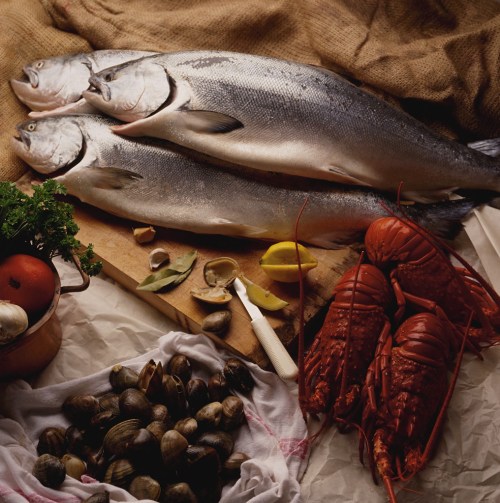
Salmon is a good choice

Salmon is a good choice

The Environmental Working Group has a fresh article reviewing the risk of mercury poisoning from seafood consumption. I’m not familiar with EWG. I’m trying not to hold it against them that Dr. Mark Hyman is on the board of directors.

Anyway, the EWG has some advice for you if you worry about mercury toxicity from fish. I try to stay up to date on the issue since I’m convinced that consumption of cold-water fatty fish twice a week is good for your health, in general. If the mercury doesn’t kill you.

Here are some quotes from the EWG article:

…EWG has compiled a list of “moderate mercury” species that would pose a mercury risk for pregnant woman and children who eat fish regularly. This list is more comprehensive than the 2004 EPA/FDA advisory, which warned that women of childbearing age and young children, who are most susceptible to the damage done by mercury, should eat only six ounces a week of albacore tuna and should avoid four other high-mercury species – swordfish, tilefish, king mackerel and shark.

EWG rightly points out that much of the “seafood” consumed in the U.S. really doesn’t provide much of the healthful omega-3 fatty acids.

Among popular seafood species, salmon stands out as an excellent choice.  Four to eight ounces of salmon weekly, depending on the species, can provide 100 percent of the recommended amount of omega-3s. Some types of farmed salmon present significant environmental health concerns. EWG recommends that people choose wild salmon instead.

EWG’s analysis highlights several other affordable and sustainably produced species, including anchovies, sardines, farmed trout, and mussels.  Just four to eight ounces of these species weekly would meet recommended omega-3 requirements for pregnant women and people with heart disease.

***

Americans eat more than 400 million pounds of canned imported tuna because it is affordable and can be stored for a long time. Canned tuna is the second most popular seafood in the U.S., after shrimp.  An average American eats an average of 2.5 pounds of tuna every year (NOAA 2012).  Albacore tuna, also called “white” tuna, contains significant amounts of omega-3s, but tests indicate that it also contains significant amounts of mercury. “Light” tuna is usually skipjack tuna but can also contain yellowfin tuna. Skipjack and yellowfin have lower mercury levels than albacore, but fewer omega-3s.

As Jim Gaffigan asked, “Has anyone even bothered to ask why the tuna are eating mercury?”

In 30 years of practicing medicine, including 12 years right on the Gulf Coast, I’ve never seen a case of mercury toxicity. Maybe I’ve missed it. Maybe it’s quite rare.

Read the whole enchilada.

Steve Parker, M.D.

h/t Conner Middelmann-Whitney

Should You Try Intermittent Fasting?

Dietitian Brenna has some definite thoughts on it after her recent experiment.

I”ve done a couple 24-hour fasts in the last year (notes here and here).

Dietriffic’s Melanie Thomassian has a thoughtful post on fasting, too.

Steve Parker, M.D.

QOTD: Mark Steyn on Judges

In my cultural tradition, a judge is just a bloke in a wig. He may be a smart bloke in a wig, or he may be an idiot in a wig. But the wig itself is not dispositive. As the English barrister F E Smith is said to have responded when a judge asked if he was trying to show contempt for this court, “No, my Lord. I am attempting to conceal it.”

—Mark Steyn

Things You’ll Regret When You’re Old

What if…?

What if…?

I had a prior post on deathbed regrets. In that same vein, Mike Spohr at Buzzfeed has an article on “37 Things You’ll Regret When You’re Old.” No. 21, neglecting your teeth, resonated with me. I’d never heard anyone else say that. I neglected mine in childhood and exposed them to too many refined carbohydrates. One of my other regrets is quitting Boy Scouts at Life rank instead of forging ahead to Eagle.

Read it unless you’re old and it’s too late. It’s almost time for New Years’ Resolutions.

Image

Merry Christmas!

Nativity Scene

What is 23andMe Really Up To?

23andMe is a genetic testing company that will analyze your personal collection of genes and suggest related health—and disease—implications. If you know you’re prone to developing a certain disease or condition, perhaps you can take steps beforehand to mitigate the risk.

The company was recently directed by the U.S. Food and Drug Administration to stop selling their service. Click for the FDA’s warning letter to 23andMe’s CEO.

Some have questioned 23andMe’s motives. Charles Seife, writing at Scientific American, has some ideas:

But as the FDA frets about the accuracy of 23andMe’s tests, it is missing their true function, and consequently the agency has no clue about the real dangers they pose. The Personal Genome Service isn’t primarily intended to be a medical device. It is a mechanism meant to be a front end for a massive information-gathering operation against an unwitting public.

***

What does 23andMe want to do with all that data? Right now the talk is all about medical research—and, in fact, the company is doing some interesting work. It has been sifting through its genomic database, which is combined with information that volunteers submit about themselves, to find possible genetic links to people’s traits. (The bright-light/sneeze genetic tag is a 23andMe discovery.) More promising are 23andMe’s attempts to recruit people who suffer from certain diseases, such as Parkinson’s and a few types of cancer. Simply through brute-force pattern matching, the company has a chance of finding genetic causes of these ailments, which could lead to a way to combat them. (And perhaps a blockbuster patent or three.)

That’s just the beginning, though.

Read the whole enchilada.

QOTD: Mark Perry on Healthcare Reform

We wouldn’t expect lower prices and better service if America’s supermarkets were run by the federal government, so why would health care be any different?

      —Mark J. Perry

What Are the Only Two Weight Loss Methods That Don’t Require Discipline and Willpower?

1. Amputation

2. Liposuction

Mediterranean Diet May Protect Against Chronic Kidney Disease

…according to an article at MedPageToday. If you’re white, this may not pertain to you. The study mostly involved Hispanics.

NYT Reports High Rate of “Mislabelling” in the Herbal Supplement Industry

Around one-third of the popular supplements aren’t what they claim to be.

What's really in that herbal supplement bottle?

What’s really in that herbal supplement bottle?

I doubt the prescription pharmaceutical industry is anywhere near this bad. A quote of a quote:

“This suggests that the problems are widespread and that quality control for many companies, whether through ignorance, incompetence or dishonesty, is unacceptable,” said David Schardt, a senior nutritionist at the Center for Science in the Public Interest, an advocacy group. “Given these results, it’s hard to recommend any herbal supplements to consumers.”

If you know me, you know I don’t quote CSPI very often.