Category Archives: Uncategorized

QOTD: President Barack Obama on the Constitution

“I do solemnly swear that I will faithfully execute the Office of President of the United States, and will to the best of my ability, preserve, protect and defend the Constitution of the United States.”

Franziska Reviews Metabolic Syndrome

Dietitian Franziska Spritzler has a great article on metabolic syndrome, which affects one in six Americans. She mentions yours truly. Wherever you live, Franziska is available for consultations. Ain’t the innernet wonderful?

-Steve

Coffee Might Lower Your Risk of Developing Type 2 Diabetes

NBC News has the story. I can’t see many folks starting a coffee habit or drinking more just for this potential benefit. Lower your T2 diabetes risk more reliably by keeping your weight under control, exercising regularly, and it may help to limit concentrated sugars and refined grain products. 

You Know Those Gurus Who Say You Need to Eat Carbs Every Few Hours For Energy? They’re Wrong

Amber Wilcox-O’Hearn explains why.

Your heart beats 100,000 times a day, every day, without rest. You’d think it needs a reliable energy source, and you’d be right. One of Amber’s references (#4) reminds me that, “Fatty acids are the heart’s main source of fuel, although ketone bodies as well as lactate can serve as fuel for heart muscle. In fact, heart muscle consumes acetoacetate in preference to glucose.”

Steve Parker, M.D.

SBM Looks at Oil Pulling (Oil Swishing)

I mentioned oil pulling before, without much cogent comment. It involves swishing edible oil around in your mouth for 10-20 minutes, for oral and systemic health benefits. Steven Novella over at Science-Based Medicine gave it more consideration. His conclusion:

Oil pulling is a suggestive misnomer, implying that something bad is being pulled from the mouth (toxins and bacteria). What little scientific evidence exists shows that it is probably not as effective as standard mouth wash, and what benefit it has is likely entirely due to the mechanical act of swishing to remove particles and bacteria from teeth and gums.

There is no reason either theoretically or based upon any evidence to recommend oil pulling (which should be renamed “oil-swishing”) instead of standard modern health care with flossing, tooth-brushing, and mouth rinse. However, it does appear to be better than nothing, and might have a role in developing countries without access to modern oral care. The one caveat is that extended periods of swishing that are commonly recommended (10-20 minutes) are likely not necessary and further present a risk of lipoid pneumonia from accidentally breathing in small amounts of oil.

Read the rest.

Frequent Nuts Consumption Linked to 50% Lower Risk of Fatal Heart Attack

JAMA Internal Medicine has the details. Frequent consumption would be at least four times a week. 

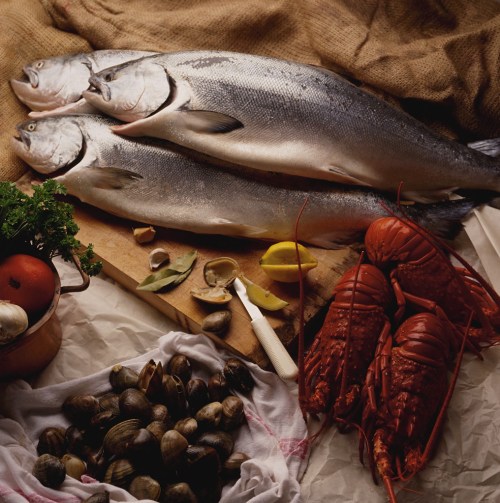
Which Fish Provide Maximum Health Benefit and Least Mercury?

Salmon is a good choice

Salmon is a good choice

The Environmental Working Group has a fresh article reviewing the risk of mercury poisoning from seafood consumption. I’m not familiar with EWG. I’m trying not to hold it against them that Dr. Mark Hyman is on the board of directors.

Anyway, the EWG has some advice for you if you worry about mercury toxicity from fish. I try to stay up to date on the issue since I’m convinced that consumption of cold-water fatty fish twice a week is good for your health, in general. If the mercury doesn’t kill you.

Here are some quotes from the EWG article:

…EWG has compiled a list of “moderate mercury” species that would pose a mercury risk for pregnant woman and children who eat fish regularly. This list is more comprehensive than the 2004 EPA/FDA advisory, which warned that women of childbearing age and young children, who are most susceptible to the damage done by mercury, should eat only six ounces a week of albacore tuna and should avoid four other high-mercury species – swordfish, tilefish, king mackerel and shark.

EWG rightly points out that much of the “seafood” consumed in the U.S. really doesn’t provide much of the healthful omega-3 fatty acids.

Among popular seafood species, salmon stands out as an excellent choice.  Four to eight ounces of salmon weekly, depending on the species, can provide 100 percent of the recommended amount of omega-3s. Some types of farmed salmon present significant environmental health concerns. EWG recommends that people choose wild salmon instead.

EWG’s analysis highlights several other affordable and sustainably produced species, including anchovies, sardines, farmed trout, and mussels.  Just four to eight ounces of these species weekly would meet recommended omega-3 requirements for pregnant women and people with heart disease.

***

Americans eat more than 400 million pounds of canned imported tuna because it is affordable and can be stored for a long time. Canned tuna is the second most popular seafood in the U.S., after shrimp.  An average American eats an average of 2.5 pounds of tuna every year (NOAA 2012).  Albacore tuna, also called “white” tuna, contains significant amounts of omega-3s, but tests indicate that it also contains significant amounts of mercury. “Light” tuna is usually skipjack tuna but can also contain yellowfin tuna. Skipjack and yellowfin have lower mercury levels than albacore, but fewer omega-3s.

As Jim Gaffigan asked, “Has anyone even bothered to ask why the tuna are eating mercury?”

In 30 years of practicing medicine, including 12 years right on the Gulf Coast, I’ve never seen a case of mercury toxicity. Maybe I’ve missed it. Maybe it’s quite rare.

Read the whole enchilada.

Steve Parker, M.D.

h/t Conner Middelmann-Whitney

Should You Try Intermittent Fasting?

Dietitian Brenna has some definite thoughts on it after her recent experiment.

I”ve done a couple 24-hour fasts in the last year (notes here and here).

Dietriffic’s Melanie Thomassian has a thoughtful post on fasting, too.

Steve Parker, M.D.

QOTD: Mark Steyn on Judges

In my cultural tradition, a judge is just a bloke in a wig. He may be a smart bloke in a wig, or he may be an idiot in a wig. But the wig itself is not dispositive. As the English barrister F E Smith is said to have responded when a judge asked if he was trying to show contempt for this court, “No, my Lord. I am attempting to conceal it.”

—Mark Steyn

Things You’ll Regret When You’re Old

What if…?

What if…?

I had a prior post on deathbed regrets. In that same vein, Mike Spohr at Buzzfeed has an article on “37 Things You’ll Regret When You’re Old.” No. 21, neglecting your teeth, resonated with me. I’d never heard anyone else say that. I neglected mine in childhood and exposed them to too many refined carbohydrates. One of my other regrets is quitting Boy Scouts at Life rank instead of forging ahead to Eagle.

Read it unless you’re old and it’s too late. It’s almost time for New Years’ Resolutions.