Category Archives: Recipes

Recipe: Cabbage Soup

This version of cabbage soup isn’t a powerhouse in any one particular nutrient but provides a fair amount of zinc, protein, and vitamins A, B12, and C. A serving of this only has 9 grams of digestible carbohydrate, so you can easily fit it into diabetic diets or ketogenic diets. If you’re a constipated, a bowl or two of cabbage soup may get things moving, thanks to raffinosepaleo diet, Steve Parker MD, cabbage soup

Plan well in advance because this takes a while to cook

Ingredients:

  • water, 4 quarts (3.8 L)
  • parsley, fresh, to taste (3 or 4 sprigs)
  • stew meat (beef), raw, 8 oz (230 g)
  • pepper, to taste (1/4 tsp or 1.2 ml)
  • salt, to taste (1.5 tsp or 8.4 mL) (don’t use this much if on a low-sodium diet)
  • tomato sauce, canned, 4 fl oz (120  ml)
  • carrot, raw, large (4.5 oz or 130 g), peeled and sliced into 1/4-inch (1/2-cm) thick discs
  • cabbage, green, raw, 1/2 of a small one (whole one weighs about 2 lb or 900 g), rinsed, cored, then sliced into quarters or smaller
  • fresh lemon (optional)

Instructions:

Add raw meat to the water in a large pot and boil gently for 30 minutes. Then add tomato sauce, carrot, salt, pepper, parsley, and cabbage. Bring to boil over medium heat and them simmer for 45 minutes.

If it’s too bland for you, add a squeeze of fresh lemon.  Or as a last resort, add some beef bouillon cube or powder.

Servings:

Makes four servings of 2 cups each (475 ml).

Advanced Mediterranean Diet boxes: 1 veggie, 1/2 fat, 1/2 protein

Nutritional Analysis Per Serving:

  • 46% fat
  • 23% carbohydrate
  • 31% protein
  • 200 calories
  • 12 g carbohydrate
  • 3 g fiber
  • 9 g digestible carb
  • 1,200 mg sodium
  • 495 mg potassium
  • Prominent features: see first paragraph

PS: Nutritional analysis done at FitDay.com.

Save Time by Microwaving Your Spaghetti Squash

The pale yellow half-squash is cooked. The meaty red sauce is low-carb.

Both of these weighed about 4 pounds (1.8 kg). The pale yellow half-squash is cooked. The meaty red sauce is low-carb.

My wife found this new spaghetti squash cooking method—new to us at least—on a sticker attached to a squash. We tried it and the finished product is the same as if done in the traditional oven baking way. The whole process just takes 15 minutes. Here it is:

Hope you can read it

Hope you can read it

A different squash had a different stuck-on cooking method that involved both microwaving AND oven baking. Why make it so complicated?

It takes no skill at all to make it look like spaghetti pasta

It takes no skill at all to make it look like spaghetti pasta


IMG_2208

In the northern hemisphere, the spaghetti squash season is autumn and winter. Purchasing in spring and summer may be iffy. We tried one out of season and it was inedible.

Spaghetti Squash Recipes

Low-Carb Spaghetti Sauce

photo-77

IMG_1437


Frozen Fruit Smoothie #2: Raspberries, Blueberries, Strawberries, Banana, Chia Seeds, and Kale


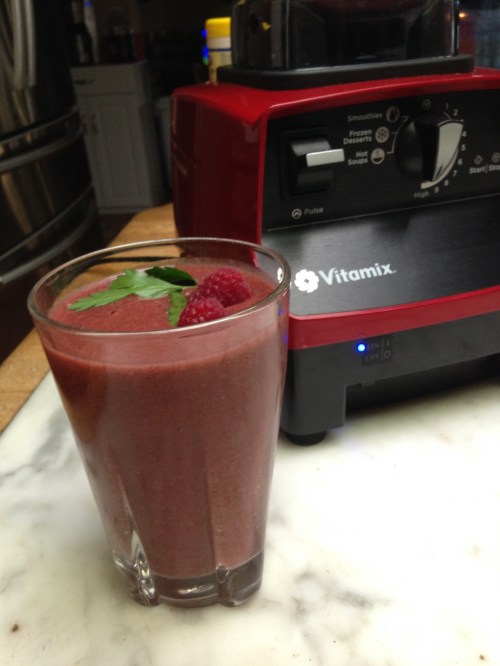
Similar to an Icee, but healthier for you

Similar to an Icee, but more healthful

Try this for dessert instead of calorie-laden items like pie, cake, cookies, and ice cream. Unlike this smoothie, those aren’t very nutrient-dense, either. This smoothie is equivalent in calories to four Oreo cookies which are predominantly sugar and flour.

Since I provide the nutritional analysis below, you can easily incorporate this into the Advanced Mediterranean Diet.

At the Parker Compound, we mix this in a Vitamix. Other devices may work, but I’m not familiar with them.

It's all here

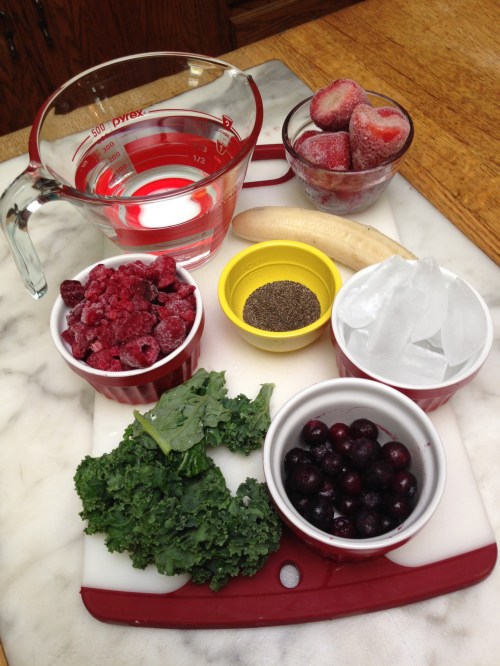
It’s all here

Ingredients

1 cup (240 ml) frozen raspberries

1/2 cup (120 ml) frozen blueberries

1 cup (240 ml) frozen strawberries

1 frozen banana (7 inches or 18 cm), cut into 3–4 pieces

1 tbsp (13 g) chia seeds

1 handful (1/2 ounce?) raw kale

2.5 cups (590 ml) water

1 cup (240 ml) ice cubes

Instructions

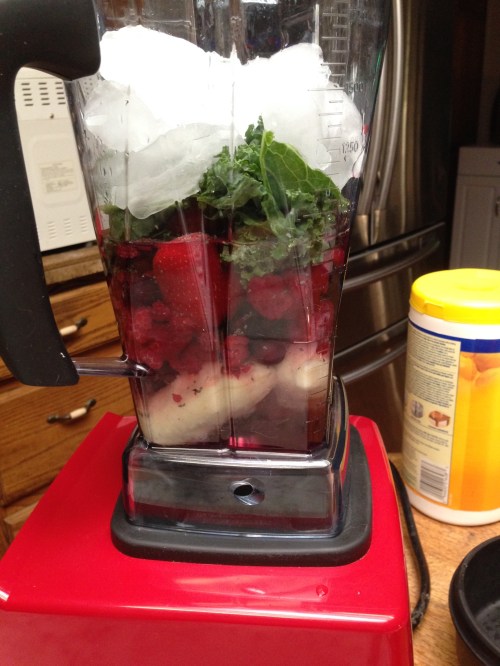
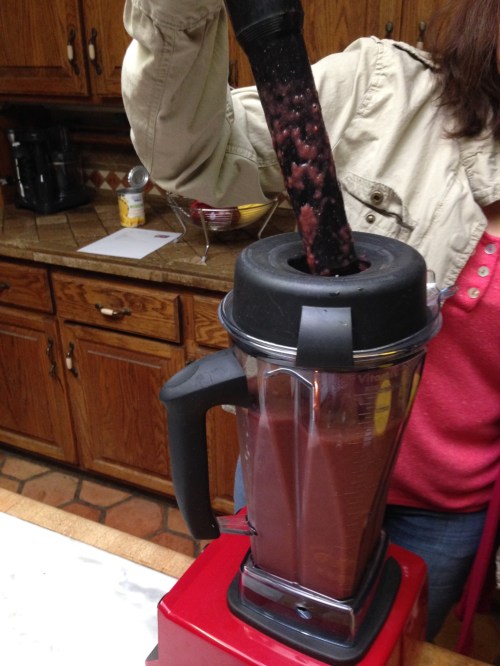
First item into the Vitamix is the water, then banana, all berries, chia seeds, then top off with the ice. Start mixing on variable speed 1 then slowly increase spin rate to 10, for a total mix of 45–60 seconds. Soon after you get started you’ll probably have to use the “plunger” a few times to un-clump the top items.

Loaded and ready to spin

Loaded and ready to spin

Depending on your batch of fruits, this drink may not be as sweet as you like. You could easily sweeten it up with your favorite artificial non-caloric sweetener. I used 1.5 tsp (7.5 ml) of Truvia to good effect, just thrown in with every thing else before or after the primary mix. Or you could use table sugar, about 4 tsp (20 ml), instead of the Truvia. Most of us eat too much sugar. If you go the sugar route, you’ll increase the calories per serving by 15, and increase carbohydrate grams by 4 per serving.

My able assistant wields the plunger

My able assistant wields the plunger

Number of Servings: 3.5 servings of 12 fl oz (350 ml) each

Advanced Mediterranean Diet boxes: 2 and 1/2 fruits

Nutritional Analysis per Serving:

7% fat

90% carbohydrate

3% protein

190 calories

46 g carbohydrate

7 g fiber

39 g digestible carbohydrate

5 mg sodium

290 mg potassium

Prominent features: Rich in vitamin C, fair amount of fiber, homeopathic amounts of sodium

Steve Parker, M.D.

PS: I credit my wife with this recipe.

IMG_2197


Brian Burgers With Brussels Sprouts, Tomato, and Pistachios

diabetic diet, low-carb diet, paleobetic diet

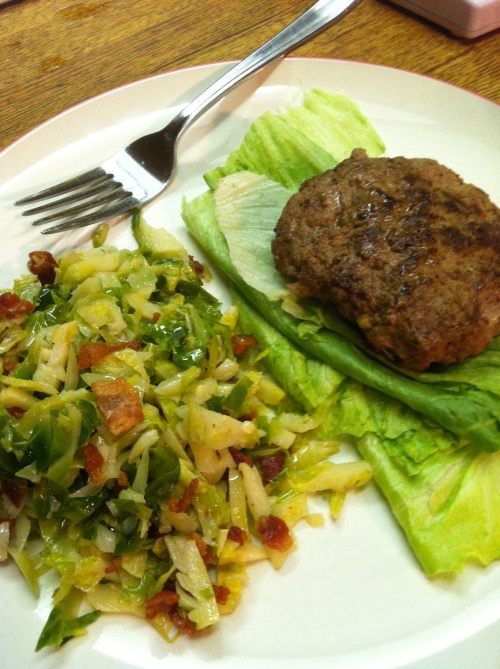
Brian burger and bacon Brussels sprouts

Here’s another meal recipe from my stepson. We put it together originally for a low-carb diet, such as the Ketogenic Mediterranean Diet. But since I provide the nutritional analysis below, it also works with the Advanced Mediterranean Diet.

This makes three servings. You’ll want to make the Bacon Brussels Sprouts to serve with other meals, so I’ve provided an additional nutritional analysis for those alone. Enjoy!

Ingredients:

13 oz (370 g) ground beef, 85% lean

1/2 tbsp (7.5 ml) Tessemae’s All Natural Dressing-Marinade-Dip “Southwest Ranch,” or A1 Steak Sauce or balsamic vinaigrette or AMD vinaigrette (Brian recommends the Tessemae’s Dressing)

1.7 oz (50 g) onion, diced coarse or fine

1 garlic clove, diced

1/8 tsp (0.5 ml) paprika

1–2 pinches of salt (pinch = 1/16 tsp)

pepper to taste (a pinch or 2?)

1/4 tsp (1.2 ml) dried rosemary, crumbled or crushed

1/2 large egg, whisked to blend white and yolk

3 oz (85 g) lettuce

1 lb (450 g) Brussels sprouts (cut and discard bases if desired, probably doesn’t matter),   shredded

8 oz (225 g) bacon (6.5 regular (not thick) 8-inch strips), diced

3 tbsp (45 ml) water

1.5 large tomatoes, sliced

4.5 oz pistachio nuts
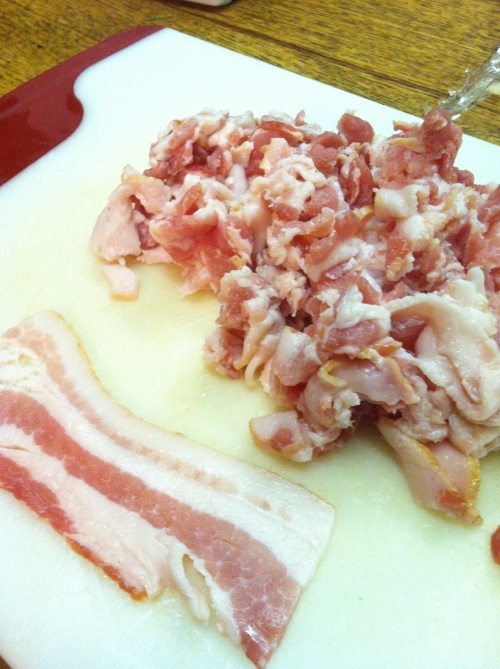
diabetic diet, paleobetic diet, low-carb diet

Prepping the bacon; use a sharp knife

Instructions:

First cook the bacon in a pan over medium–high heat until done. Don’t discard the grease.

Next do your Brussels sprouts prep (shredding). It will take a few minutes to shred it with a knife. Set those aside.
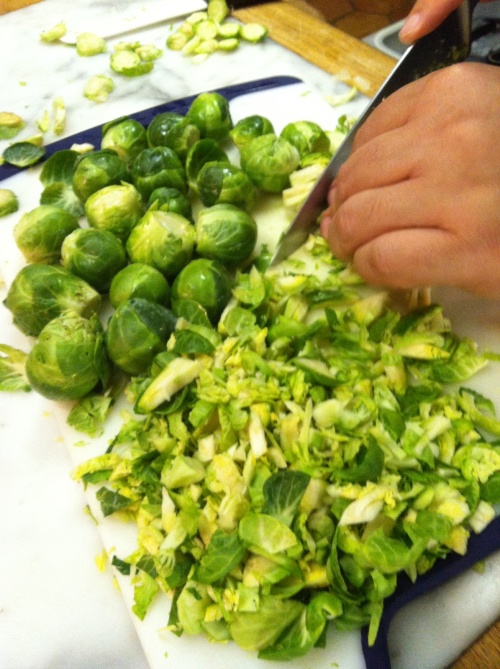
diabetic diet, paleobetic diet, low-carb diet

Brian slaving away. Thanks, dude!

Start on the burgers now. Place the ground beef in a bowl then add your chosen sauce or vinaigrette, onion, egg, garlic, paprika, rosemary, salt, and pepper. Mix thoroughly by hand. Divide the mess into three patties of equal size. Fry or grill over medium heat until done, about 10 minutes.
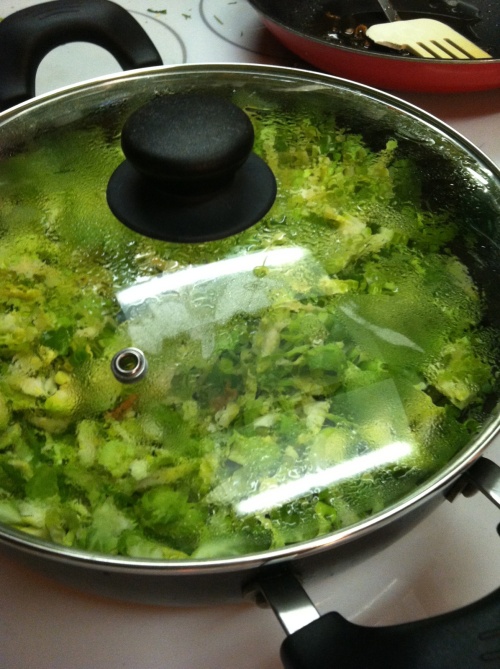
diabetic diet, paleobetic diet, low-carb diet

Steaming in progress

As soon as the burgers are plopped on the heat, start steaming the shredded sprouts thusly. Take a pan with a lid, add 3 tbsp (45 ml) of the bacon grease and the 3 tbsp of water, then heat that up for a minute or two over medium to high heat. Then throw in the shredded sprouts, salt and pepper to taste (probably unnecessary), and cover with a lid. Immediately reduce heat to medium and cook for 4–6 minutes. The sprouts will soften up as they cook. Gently shake the pot every minute while steaming to prevent contents from sticking to the pan. If necessary, remove the lid and stir while cooking, but this may increase your cooking time since you release hot steam whenever you remove the lid. When the sprouts are done, remove from heat and add the remaining bacon and bacon grease, then blend.
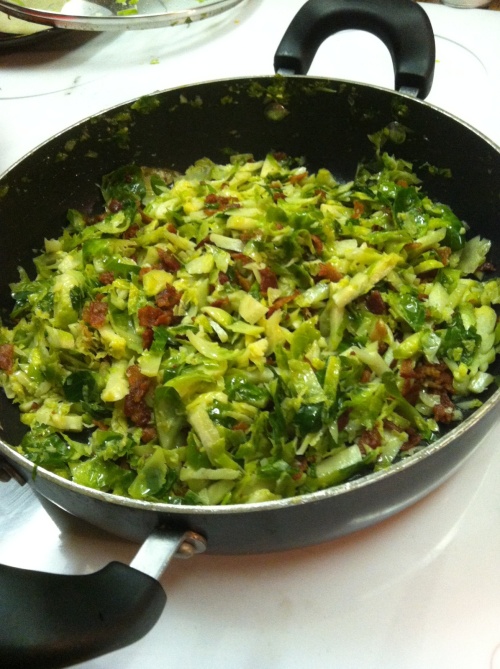
Bacon has been added and blended after the sprouts are cooked

Bacon has been added and blended in after the sprouts are cooked

Serve the burger on a bed of lettuce (1 0z). Enjoy tomato and pistachios on the side. Serving sizes are below.

Number of Servings: 3 (one burger patty, 1 oz (30 g) lettuce, 1 cup (240 ml) of sprouts, 1/2 tomato or a third of all the slices, 1.5 oz (40 g) pistachio nuts)

Advanced Mediterranean Diet boxes: 2 veggies, 1 protein, 4 fats

Nutritional Analysis per Serving:

58% fat

17% carbohydrate

25% protein

740 calories

32 g carbohydrate

12 g fiber

20 g digestible carbohydrate

827 mg sodium

1,802 mg potassium

Prominent features: Rich in fiber, protein, vitamin B6, B12, C, copper, iron, manganese, niacin, pantothenic acid, phosphorus, riboflavin, selenium, thiamine, and zinc.

Nutritional Analysis for Bacon Brussels Sprouts: (1 cup, no added salt):

Advanced Mediterranean Diet boxes: 1 veggie, 1 fat, 1/4 protein

47% fat

28% carbohydrate

26% protein

180 calories

14 g carbohydrate

6 g fiber

8 g digestible carbohydrate

530 mg sodium

709 mg potassium

Prominent features: mucho vitamin C.
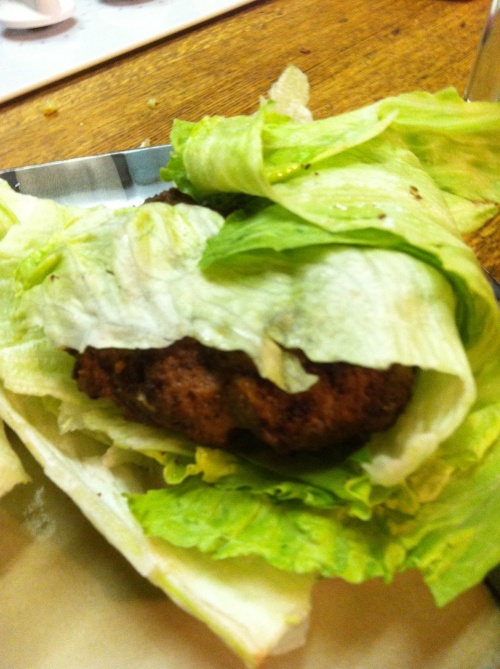
diabetic diet, paleobetic diet, low-carb diet

Brian likes his burger wrapped in 2 oz of lettuce

Recipe: Spaghetti Squash Spaghetti

paleobetic diet, diabetic diet, low-carb diet, spaghetti squash, spaghetti

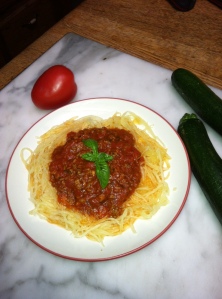
Meaty spaghetti sauce over spaghetti squash

Recently we’ve looked at low-carb spaghetti sauce and cooking spaghetti squash. It’s not too much of a stretch to put them together and call it spaghetti. Substituting spaghetti squash for spaghetti pasta means lower calories and more fiber per serving. And everybody needs to eat more vegetables, right?

Use the nutritional analysis below to fit this easily into the Advanced Mediterranean Diet or Low-Carb Mediterranean Diet.

paleobetic diet, spaghetti, squash, low-carb diet, diabetic diet, paleo diet

Cooked spaghetti squash partially teased apart with a fork

Ingredients:

3/4 cup (240 ml) low-carb spaghetti sauce

2 cups (480 ml) cooked spaghetti squash

Instructions:

Prepare the ingredients after clicking on links above. Assemble as in the photo. Enjoy.

Number of Servings: 1

Advanced Mediterranean Diet boxes: 2 veggies, 2 fats, 1/2 protein

Nutritional Analysis: 

52% fat

33% carbohydrate

15% protein

408 calories

36 g carbohydrate

7 g fiber

29 g digestible carbohydrate

1,398 mg sodium

1,201 mg potassium

Prominent features: Rich in B12, copper, iron, niacin, thiamin, B6

Have You Tried Roasted Radishes?

I’m not a big fan of radishes, but a recent post by Darya Pino Rose got me interested in roasting some. Roasting mellows them out. According to NutritionData.com, a half cup of raw sliced radishes has only 2 grams of digestible carbohydrate. That would also supply 29% of the adult RDA for vitamin C, 7% of folate, and 8% of potassium. Antioxidants? Other phytochemicals? Googling “nutritional benefits of radishes” yields a bunch of unreliable sources.

Click for the roasted radish recipe recommended by Darya.

Sardines and Avocado Together? Ewwww!!??

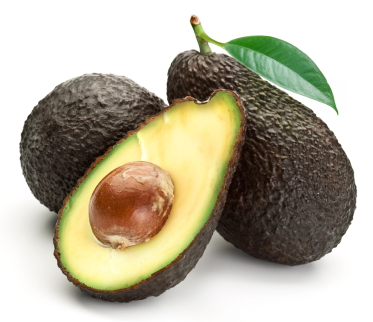
California or Hass avocado

California or Hass avocado

Several years ago, Alton Brown lost a major amount of weight, and one of the items on his diet was sardine-avocado sandwiches. I like sardines. I like avocados. But I never ever would have considered eating them mixed together.

I recently read Franziska Spritzler’s The Low Carb Dietitian’s Guide to Health and Beauty (great book; my review). One of her recipes involves the sardine-avocado combo, so I’m resolved to give it a try. Her recipe was simply 4 oz (120 g) canned sardines mixed with 1/2 medium avocado and sea salt, stuffed in a large red bell pepper. I bet the sardine-avocado mix would be good on a bed of lettuce if I don’t have a bell pepper. A little black pepper and a squeeze of lemon, too?

I may even try Franziska’s Chocolate Avocado Pudding, another combo I never would have imagined.

Click for Alton Brown’s sardicado sandwich.

Steve Parker, M.D.


Recipe: Apple, Pecan, Blueberry Lunch Bowl

paleobetic diet, diabetic diet, low-carb diet

So simple even a redneck can make it (I is a redneck)

Since I provide you with nutritional analysis below, you can easily work this meal into the Advanced Mediterranean DietLow-Carb Mediterranean Diet, or KMD: Ketogenic Mediterranean Diet.

Ingredients:

2.5 oz (70 g) apple, diced (“red delicious” variety works well) (this is half a medium-sized apple)

2.5 oz (70 g) pecans, crumbled into small pieces

2.5 oz (70 g) raw blueberries

Instructions:

Mix all together in a bowl, then enjoy. I know a lotta you bros will just eat all the components individually—but try the mix once for new flavors.

Servings: 1

Advanced Mediterranean Diet boxes: 1.5 fruit, 2 fat

Nutritional Analysis:

76% fat

20% carb

4% protein

570 calories

30 g carbohydrate

10 g fiber

20 g digestible carb

1.4 mg sodium

421 mg potassium

Prominent features: Quick and easy. Rich in copper, manganese, and thiamine. Inadequate protein to get you through the day, but you’ll make up for it at breakfast or dinner.

Recipe: Natchez Eggs

kk

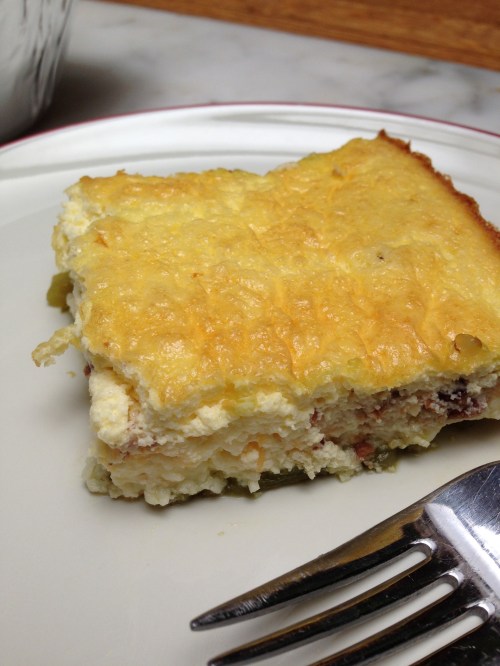
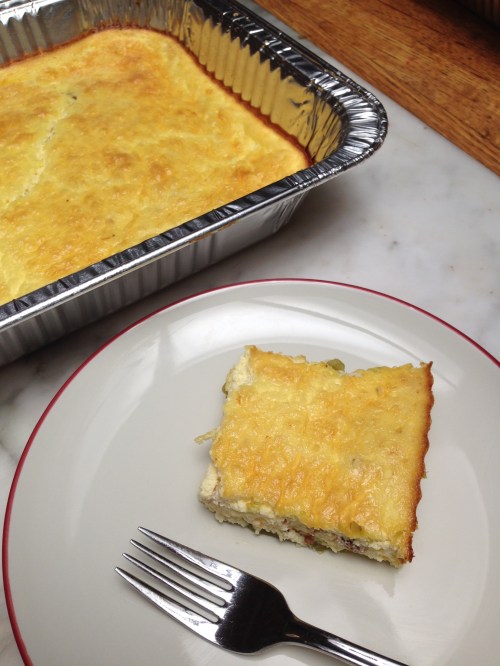
This particular batch contained Bacon Bits

Natchez Eggs is an old family recipe.  It’s sort of an egg casserole, good for breakfast.  We tend to dust off this recipe when we have house guests—it feeds many people at once, quickly and easily.

It’s not in The Advanced Mediterranean Diet (2nd Edition) or KMD: Ketogenic Mediterranean Diet, although it’s compatible with both of those.

Note my use of both U.S. customary and metric measurements, which I also use in the books. I have no idea how much it costs to ship a book from the U.S. to New Zealand, but the e-book versions (AMD or KMD) have no shipping charges.

The low carbohydrate content of this dish is a bonus if you have diabetes, prediabetes, or metabolic syndrome.

kk

Note the light brown crust which tells you it’s probably finished cooking

Ingredients

Cheese, shredded (four-cheese mexican blend), 8 0z (224 g)
Sour cream, 16 oz (448 g)
Green chiles, diced, canned, 8 oz net weight (224g)
Eggs, large, 10 (50 g each)

Preparation

Pre-heat oven to 350°F (175°C).  Mix eggs thoroughly in a blender for 3–4 minutes on medium speed, then pour into bowl.  Coat a baking dish (9 x13 inches, or 22 x 34 cm) with butter, vegetable oil, PAM or no-stick baking spray.  Whisk eggs and sour cream together in bowl.  Drain excess water from the chile cans, then spread chiles evenly on the bottom of a dish, then layer the cheese evenly on top.  Next, ladle or pour the eggs/sour cream on top.  Bake for about 30 minutes, until the eggs are firm, not runny, and you see patches of thin light brown crust.

Number of Servings

12 servings of 4 oz or 110 g each.  Leftovers hold up well in refrigerator for eating over the next few days.

Nutrient Analysis

A serving has 3 grams of digestible carbohydrate, 200 calories, 140 calories from fat, 8 grams of saturated fat, 10 grams of protein, 210 mg cholesterol, 4 grams of carboydrate, 1 gram of fiber (so only 3 grams of digestible carb).

Advanced Mediterranean Diet boxes: 1 fat and 1/2 protein

Options

After you add the cheese layer, sprinkle layer of  Hormel Real Crumbled Bacon (4 oz or 112 g) before finishing up with the  egg mixture.  This adds 33 calories and zero carbs per serving.  Or just serve with bacon on the side (my preference).  An alternative to the Hormel product is to cook and crumble your own bacon (12 oz or 340 g uncooked weight).  Using too much bacon will overwhelm the other flavors.  Experiment with different cheeses.

You can also tweak it if you wish with additional ingredients such as diced bell peppers or chopped green onions (chives). I wouldn’t add more than one ingredient per batch. I wonder if small chunks of broccoli would work.

Steve Parker, M.D.

Spaghetti Squash Recipes

low-carb diet, spaghetti squash, paleobetic diet, diabetic diet

The yellow spaghetti squash is at the top. It’s related to pumpkins and zucchini.

Many weight-conscious folks are cutting down on carbohydrate consumption. One way to do that is to find lower-carb alternatives to carb-rich items.

An alternative to spaghetti pasta is spaghetti squash. A cup of cooked spaghetti squash has 10 g of carb; a cup of cooked spaghetti has 43 g. The fiber grams are about the same. Numbers are from FitDay.com.

Spaghetti squash is a classic low-carb vegetable. If you’ve never tried it, you should. As vegetables go, it’s one of the largest, heaviest, and most interesting to prepare. Easy, too. The spaghetti squash season is autumn and winter in the northern hemisphere. Purchasing in spring and summer may be iffy.

In my part of the world, supermarket spaghetti squashes weigh between two and five pounds. We cooked a three-pounder (1.4 kg) that yielded five cups; a five-pounder (2.3 kg) gave us 12 cups. A serving size is one, maybe two cups. What you don’t eat immediately stays fresh in the refrigerator for at least several days. Re-heat by microwaving or stir-frying.

Like pasta and potatoes, the squash by itself is bland. It’s a great substrate for sauces or seasonings.

low-carb diet, paleobetic diet, diabetic diet, spaghetti squash

Raw squash cut in half lengthwise

Here’s how we cook it at the Parker Compound. Preheat the oven to 375º F 0r 190º C. Very carefully slice the squash in half lengthwise. Spoon out and discard the guts (seeds and membranes like a pumpkin; it even smells like a pumpkin). Put the halves flat-side down in a pan, then add a half inch (1.3 cm) of water to the pan. Cover with foil and bake until the outer shell (rind) is fairly easily pierced with a paring knife. This will be about 45 minutes for a two-pound squash (0.9 kg); 90 minutes for a four-plus pounder (2.3+ kg). Then turn them over, re-cover with foil, and cook 15 minutes more, until very tender. Remove from the oven and allow them to cool for a few minutes. Then use a fork to pull the strands away from the rind.

Other cooks simplify the process and just place the squash halves flat-side down on a baking sheet and cook for 30-60 minutes. Some leave the seeds in while cooking and spoon them out just before the stranding step.

Or you can save time and microwave it. We can’t tell the difference in the final product.

Now what?

You got options.

Our first experiment was with l0w-carb spaghetti sauce.

paleobetic diet, low-carb diet, diabetic diet, spaghetti squash

Low-carb spaghetti

Next we took three cups squash (710 ml) and mixed in 2 tbsp (30 ml) extra virgin olive oil, 2.5 tbsp (37 ml) chopped parsley, 1/2 tsp (2.5 ml) minced fresh garlic, 1/2 tsp (2.5 ml) salt, and 1/8 tsp (0.6 ml) black pepper.

low-carb diet, diabetic diet, paleobetic diet

Seasoned with parsley, olive oil, garlic, salt, pepper

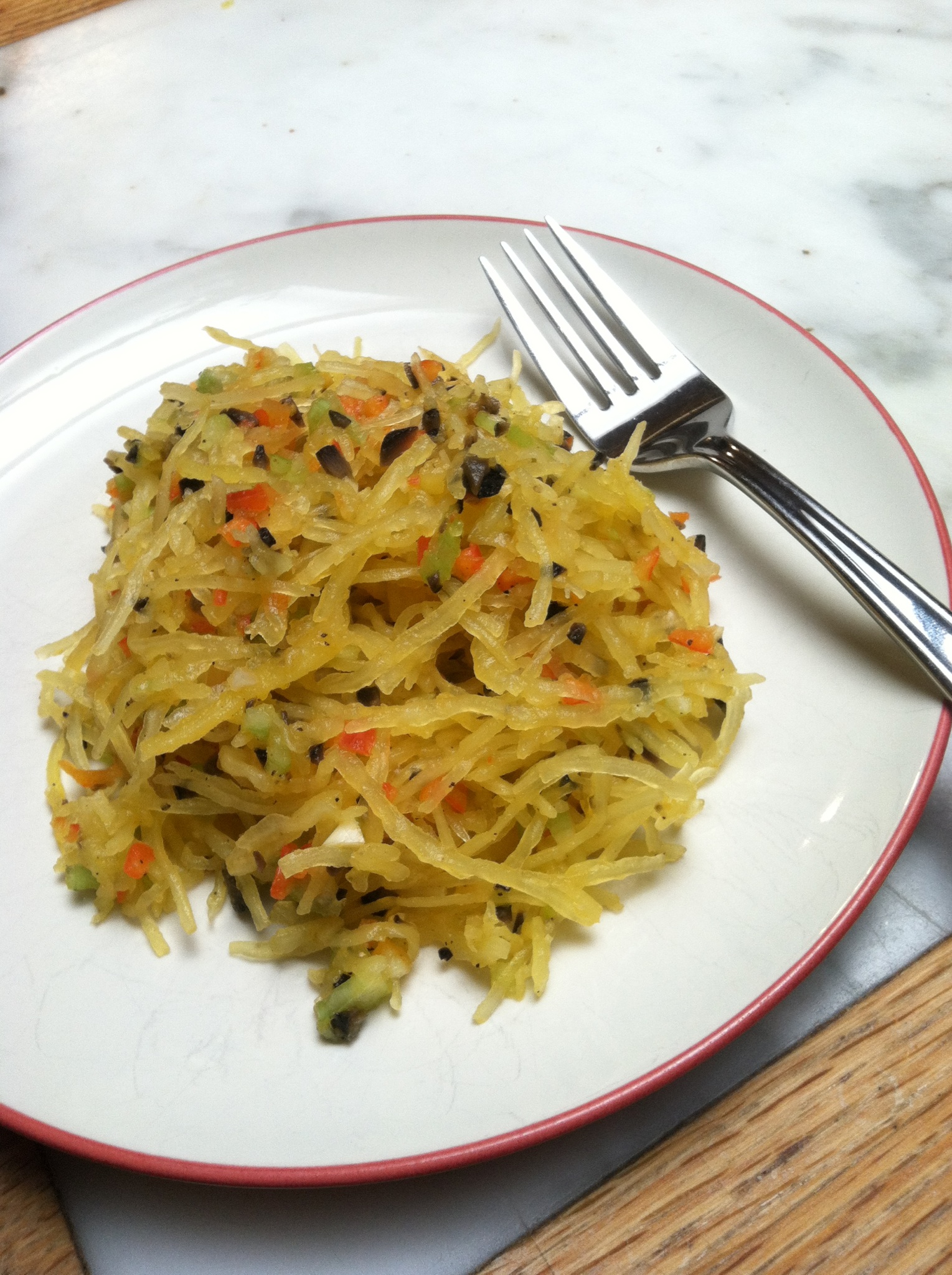
Finally, we took a cup (240 ml) of the squash and added minced celery (4 inches or 10 cm of stalk), 3 minced black olives, 5/8 oz (18 g) of minced sweet (bell) pepper, 1/2 clove of minced garlic, salt (a dash), and pepper to taste.

paleobetic diet, diabetic diet, low-carb diet, spaghetti squash

Seasoned with sweet peppers, black olives, garlic, celery, and salt

These last two options I consider side dishes. By the way, they taste good either cold or warm. They would go well with a number of entrees, such as steak or salmon.

I’ve read that this squash is good with pesto, or just with salt and butter.

Nutrition facts from FitDay.com:

One cup of cooked spaghetti squash has 75 calories (I’ve seen 42 elsewhere), 10 g of carbohydrate, 2 g of fiber, 8 g of digestible carb, 4 g of fat (predominantly MUFA), minimal protein, and a fair amount of vitamins A, niacin, B6, and C. Plus 8% of your RDA for manganese.

Steve Parker, M.D.