Category Archives: Heart Disease

Still Taking Fish Oil Supplements? Think Again

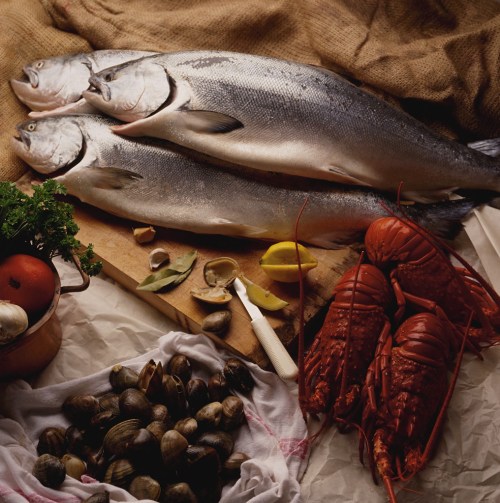
Salmon is one the the cold-water fatty fish loaded with omega-3 fatty acids

Salmon is one the the cold-water fatty fish loaded with omega-3 fatty acids

I’ve been sitting on this research report a few years, waiting until I had time to dig into it. That time never came. The full report is free online (thanks, British Medical Journal!). I scanned the full paper to learn that nearly all the studies in this meta-analysis used fish oil supplements, not the cold-water fatty fish the I recommend my patients eat twice a week. If you’re taking fish oil supplements on your doctor’s advice, don’t stop without consulting her.

Here’s the abstract:

Objective: To review systematically the evidence for an effect of long chain and shorter chain omega 3 fatty acids on total mortality, cardiovascular events, and cancer.

Data sources: Electronic databases searched to February 2002; authors contacted and bibliographies of randomised controlled trials (RCTs) checked to locate studies.

Review methods Review of RCTs of omega 3 intake for 3 6 months in adults (with or without risk factors for cardiovascular disease) with data on a relevant outcome. Cohort studies that estimated omega 3 intake and related this to clinical outcome during at least 6 months were also included. Application of inclusion criteria, data extraction, and quality assessments were performed independently in duplicate.

Results: Of 15 159 titles and abstracts assessed, 48 RCTs (36 913 participants) and 41 cohort studies were analysed. The trial results were inconsistent. The pooled estimate showed no strong evidence of reduced risk of total mortality (relative risk 0.87, 95% confidence interval 0.73 to 1.03) or combined cardiovascular events (0.95, 0.82 to 1.12) in participants taking additional omega 3 fats. The few studies at low risk of bias were more consistent, but they showed no effect of omega 3 on total mortality (0.98, 0.70 to 1.36) or cardiovascular events (1.09, 0.87 to 1.37). When data from the subgroup of studies of long chain omega 3 fats were analysed separately, total mortality (0.86, 0.70 to 1.04; 138 events) and cardiovascular events (0.93, 0.79 to 1.11) were not clearly reduced. Neither RCTs nor cohort studies suggested increased risk of cancer with a higher intake of omega 3 (trials: 1.07, 0.88 to 1.30; cohort studies: 1.02, 0.87 to 1.19), but clinically important harm could not be excluded.

Conclusion: Long chain and shorter chain omega 3 fats do not have a clear effect on total mortality, combined cardiovascular events, or cancer.

Steve Parker, M.D.

Reference: Hooper, Lee et al. Risks and benefits of omega 3 fats for mortality, cardiovascular disease, and cancer: systematic review. BMJ  2006;332:752-760 (1 April), doi:10.1136/bmj.38755.366331.2F (published 24 March 2006).

Legumes Linked to Lower Risk of Heart Disease

Ischemic heart disease, specifically. That’s heart attacks, mostly. I had written that in the first edition of The Advanced Mediterranean Diet, but hadn’t seen much supportive evidence since then (2007). Here it is at AJCN.

Kris Gunnars Shows Major U.S. Diet Changes Over Last Century

Alleged medical student Kris Gunnars has an article at Business Insider, of all places, that shows graphically many of the major U.S. dietary changes of the last hundred years or so. In this case, transmogrification may be a better term than mere  “changes.” I suspect much of the Western world has evolved in similar fashion.

You need to read the article and ponder the graphs if you question why we have so much obesity, type 2 diabetes, heart disease, hypertension, and perhaps cancer. You’ll see dramatic increases in consumption of added sugars, industrial seed oils (esp. soybean), soda pop and fruit juice (added sugar!), total calories, and fast food. You’ll see how much we’ve increased dining away from home. Butter consumption is down drastically, but doesn’t seem to have done us much good, if any.

Sugar cane

Sugar cane


There’s fairly good evidence that coronary artery disease (CAD; the cause of most heart attacks) was very prominent between 1960 to 2000 or so, but it’s been tapering off in recent years and didn’t seem to be very common 100 years ago. Understand that you can have it for 20 years or more before you ever have symptoms (angina) or a heart attack from it. In fact, the disease probably starts in childhood. I’ve always wondered about the cause of the CAD prevalence trends, and wondered specifically how much of the long-term trend was related to trans-fat consumption. But I’ve never been able to find good data on trans-fat consumption. Kris came up with a chart of margarine consumption, which may be a good proxy for trans-fats. Another of his charts includes shortening, a rich source of trans-fats and probably also a good proxy. Shortening consumption increased dramatically from 1955 until dropping like a rock around 2000.

The timeline curves for trans-fat consumption (by proxy) and prevalence of coronary heart disease seem to match up fairly well, considering a 20 year lag. In the early 1990s, we started cutting back on trans-fats, and here we are now with lower mortality and morbidity from coronary artery disease. (CAD is very complex; lower rates of smoking surely explain some of the recent trend.)

Read the whole enchilada. Very impressive. Highly recommended.

Steve Parker, M.D.

Vegetables and Fruits Once Again Linked to Longevity

MedPageToday has some of the details.  A quote:

The largest benefits were seen in people who ate seven or more servings of fruits and vegetables a day compared with those who ate less than one serving, with the higher level of consumption associated with significantly lower all-cause mortality (hazard ratio 0.67; 95% CI 0.58-0.78), lead researcher Oyinlola Oyebode of University College London, and colleagues, reported online in the Journal of Epidemiology and Community Health.

Zucchini, roma tomatoes, and spaghetti squash

Zucchini, roma tomatoes, and spaghetti squash

The population under study was English. In addition to lower risk of death, the heavy fruit and vegetable consumers had lower rates of cancer and cardiovascular disease. Click for the actual research report.

If seven servings a day seems like a lot, note that a typical serving is only half a cup. You’ll get those on my Advanced Mediterranean Diet.

Steve Parker, M.D.

Mediterranean Diet Beats Low-Fat for Heart Disease Prevention

Ughh

Ughh

The American Journal of Medicine has an article entitled “Diets to Prevent Coronary Heart Disease 1957- 2013: What Have We Learned?” The authors conclude:

The Mediterranean-style diet, with a focus on vegetables, fruit, fish, whole grains and olive oil, has proven to reduce cardiovascular events to a degree greater than low fat diets, and equal to or greater than the benefit observed in statin trials.

2013 Was Good For the Mediterranean Diet

Larry Huston, a long-time writer on things cardiologic, notes that:

It was a good year for the Mediterranean Diet. The PREDIMED study provided the best supporting evidence yet, though it seems unlikely if anyone will ever be able to sort out the specific role of the individual components of the Mediterranean diet, which include wine, olive oil, nuts, fish, and, of course, less tangible things like sunshine and lifestyle. The nuts component received a separate boost from the publication of an influential paper in the New England Journal of Medicine.

Actually, Harvard and U. of Athens researchers have an idea which components of the Mediterranean diet prolong life.

Even If You Already Have Cardiovascular Disease, the Mediterranean Diet Helps

…to prevent future events—like heart attacks and strokes—and to prolong life. Details are at the American Journal of Clinical Nutrition.

You’re Still at Risk Healthwise Even If You’re “Metabolically Healthy”

I'll eat my hat if this dude doesn't have metabolic syndrome

I’ll eat my hat if this dude doesn’t have metabolic syndrome

See details at MedPageToday.

Some studies suggest you can be healthy and long-lived while obese as long as you are “metabolically healthy.” That is, if you have normal blood pressure, LDL cholesterol, triglycerides, blood sugar, and waist circumference. A new meta-analysis finds that ain’t so: you’re still at higher risk for death or cardiovascular events if you’re obese and free of metabolic syndrome features.

“Our results do not support this concept of ‘benign obesity’ and demonstrate that there is no ‘healthy’ pattern of obesity,” Kramer and colleagues wrote. “Even within the same category of metabolic status (healthy or unhealthy) we show that certain cardiovascular risk factors (blood pressure, waist circumference, low high-density lipoprotein cholesterol level, insulin resistance) progressively increase from normal weight to overweight to obese.”

Click for the scientific journal abstract.

This report does not directly address the “fat but fit” concept, whereby you can counteract some of the adverse health effects of obesity by being fit. By fit, I mean regularly exercising and achieving a decent level of capacity and tolerance for physical activity. Fat but fit still holds.

Steve Parker, M.D.

Why Are Nuts So Prominent in My Diet Plans?

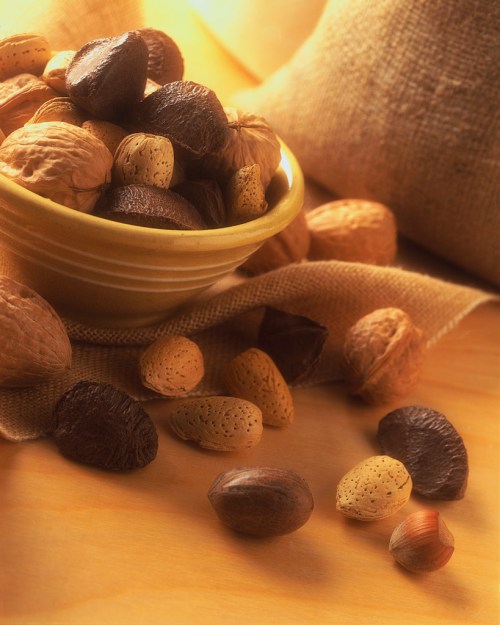
Nuts with more omega-3 fatty acids (compared to omega-6) may be the healthiest

Nuts with the lowest omega-6/omega-3 fatty acid ratios may be the healthiest. In other words, increase your omega-3s and decrease omega-6s.

Conner Middelmann-Whitney explains in her recent post at Psychology Today. In a nutshell, they are linked to longer life and better health. For example:

In the largest study of its kind, Harvard scientists found that people who ate a handful of nuts every day were 20% less likely to die from any cause over a 30-year period than those who didn’t consume nuts. The study also found that regular nut-eaters were leaner than those who didn’t eat nuts, a finding that should calm any fears that eating nuts will make you gain weight.

The report also looked at the protective effect on specific causes of death. “The most obvious benefit was a reduction of 29% in deaths from heart disease—the major killer of people in America,” according to Charles S. Fuchs, director of the Gastrointestinal Cancer Treatment Center at Dana-Farber, the senior author of the report and a professor of medicine at Harvard Medical School. “But we also saw a significant reduction—11% —in the risk of dying from cancer,” added Fuchs.

Read the whole enchilada.

Nuts are integral to my Advanced Mediterranean Diet, Low-Carb Mediterranean Diet, Paleobetic Diet, and Ketogenic Mediterranean Diet.

Walnuts seem to have the lowest omega-6/omega-3 fatty acid ratio of all the common nuts. That may make them the healthiest nut. The jury is still out. Paleo dieters focus on cutting out omega-6s and increasing omega-3s. Julianne Taylor has a great post on how to do that with a variety of foods, not just nuts.

Steve Parker, M.D.

Mediterranean Diet Prolongs Life Even If You Have Existing Cardiovascular Disease

More evidence in favor of the Mediterranean diet as the healthiest around

More evidence in favor of the Mediterranean diet as the healthiest around

We’ve known for years that the Mediterranean diet helps prolong life and prevent heart attacks, cancer, and strokes in folks who start out healthy.

What about patients with existing cardiovascular disease? I’m talking about history of heart attacks, strokes, angina, and coronary artery disease.

Yep. The Mediterranean diet helps them live longer, too.

Details of the study are at the American Journal of Clinical Nutrition. The research was done at Harvard.