Category Archives: Exercise

Is Sitting the New Smoking? Not Quite

Click the link below and you’ll find that young adults in the United States are sedentary for 6-8 hours a day, while adults 60 or older spend 9 hours a day sedentary.

From MedicalNewsToday:

“Sedentary behavior can raise the risk of heart disease, diabetes, and other conditions, even among people who are physically active. This is according to a new scientific statement from the American Heart Association.

Sitting too much is detrimental to health, regardless of physical activity levels, say researchers.In recent years, there has been an increasing number of studies documenting the harms of sedentary behavior – defined as any waking activity that involves sitting or lying down, such as watching TV or working on the computer.

Research has repeatedly linked sedentary behavior with increased risk of obesity, cardiovascular diseases, diabetes, and more.A study published in the American Journal of Preventive Medicine earlier this year estimated that prolonged sitting is responsible for 430,000 all-cause deaths over 54 countries, and a more recent study claimed that sedentary behavior is a leading risk factor for mortality, second only to smoking.”

Source: Prolonged sitting: ‘Exercise does not offset health risks,’ say AHA – Medical News Today
I’ve Long Known That Exercise Is Powerful Medicine, But Didn’t Expect This…

Physical activity improved brain function in schizophrenics:

“The researchers note that a number of previous studies have hailed exercise for its neurocognitive benefits, but that to date, there has not been a comprehensive analysis of how physical activity might affect the cognitive functioning of people with schizophrenia.

With this in mind, the team conducted a meta-analysis of 10 controlled trials involving a total of 385 individuals with schizophrenia. All trials looked at how exercise – predominantly aerobic exercise – affected patients’ cognitive functioning.

The analysis revealed that schizophrenia patients who completed around 12 weeks of aerobic exercise – alongside their usual schizophrenia treatment – had better cognitive functioning than those who did not engage in aerobic exercise.In detail, the team found aerobic exercise significantly improved the attention, social cognition – the ability to understand social situations – and working memory of individuals with schizophrenia.”

Source: Schizophrenia symptoms eased with aerobic exercise – Medical News Today

Ketogenic Diet: More Muscle Gains and Fat Loss

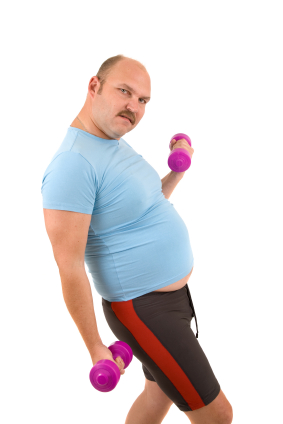
exercise for weight loss and management, dumbbells

Not P.D. Mangan. Visit Rogue Health and Fitness for his pic.

If you’re not reading Rogue Health and Fitness by PD Mangan, start today.

For example:

“What happens when you combine weight lifting with a very low carbohydrate ketogenic diet (VLCKD)? You get greater muscle gains and more fat loss than when compared to a conventional diet.

The study looked at a group of “college aged resistance trained men”, and put them on either a conventional Western diet or a VLCKD.

The conventional diet was 55% carbohydrate, 25% fat, and 20% protein, similar to what lots of people eat, though a bit higher in protein, a bit lower in fat.The low-carb diet was 5% carbohydrate, 75% fat, and 20% protein.

Note that protein, the main macronutrient responsible for muscle growth, was the same in both groups. Both groups did resistance training three times a week for 11 weeks.

The very low carbohydrate group gained twice as much muscle as the conventional group, 4.3 kg vs 2.2 kg.The very low carbohydrate group lost 50% more fat than the conventional group, -2.2 kg vs -1.5 kg.”

Source: More Muscle Gains and Fat Loss on a Ketogenic Diet – Rogue Health and Fitness

For an excellent version of a ketogenic diet, see KMD: Ketogenic Mediterranean Diet or The Advanced Mediterranean Diet (2nd Ed.)

Front cover

Front cover

A Warm-Up Routine for Your Consideration

This video is by Mark Perry, creator of BuiltLean. A warm-up routine might help prevent injuries, if it doesn’t cause one. The seven components are:

1. Lunge with a twist. (good for hips flexor)

2. Knee tucks. (stretches the glutes)

3. High kicks. (hips and your hamstrings)

4. Hip stretch

5. T push-ups. (shoulders)

6. Jump squats (quads)

7. Jump lunges. (hamstrings)

h/t Barry Ritholtz

Mark Rippetoe: “Once Again, Terrible Exercise Science Gets Praised by Mainstream Media”

“An important new science article has been making the rounds, with apparently every newspaper and internet news aggregator in the world repeating the message: You don’t have to lift heavy weights to get stronger.I know you read it. Here’s the first place I saw it, and here’s the actual paper.

It’s important because it both seems to confirm what everybody wants to believe, and because it’s actually a pretty good technical study. But it is wrong, because it studies the wrong questions. Nonetheless, you now think that you don’t have to lift heavier weights to get stronger.”

Source: Once Again, Terrible Exercise Science Gets Praised by Mainstream Media | PJ Media

P.D. Mangan Says Weight Lifting Is Enough; No Need For Other “Aerobic” Exercise


exercise for weight loss and management, dumbbells

Not P.D. Mangan

A hallmark of aerobic exercise is a fast heart rate and heavy rapid breathing during the activity. “Aerobic exercise” is things like jogging, treadmill work, stair-stepping, rowing, soccer, serious bicycling, etc.

I’ve never checked my breathing rate during a weight-training workout, but I do occasionally check a heart rate right after a set: 140-150 is common.

P.D. Mangan writes at his blog:

“Of all the misconceptions about strength training and weight lifting, one that comes up a lot is that they have no aerobic component. Therefore, the idea goes, if you do only weight training, you won’t build sufficient cardiorespiratory fitness, which you need to protect your heart and get the benefits of exercise. But weight lifting increases aerobic fitness, all on its own.

On at least two occasions, when a doctor has asked me what i do for exercise — after remarking that I was in great shape — and I told them weight lifting, they said I needed to add some aerobic exercise (cardio).

It’s obvious that these doctors never lifted weights. At my weight lifting sessions, I have to catch my breath after a set and my heart is often going at around 160 to 180 beats per minute.

It’s not just a couple doctors either. The view is widespread that you must do a very special form of exercise, called aerobics or cardio, to improve heart and lung function and raise VO2max, the most common measure of cardiorespiratory fitness.

On the contrary, weight lifting raises VO2max.”

Source: The Big Misconception About Weight Lifting – Rogue Health and Fitness

Steve Parker, M.D.

PS: Check out Mangan’s wonderful books.

PPS: Do you ever wonder what’s your theoretical maximum heart rate? The common heuristic is to subtract your age from 220, and that’s your answer. The formula doesn’t work if you take certain drugs, like beta blockers, the limit your heart rate.

PPPS: If you dislike uncommon words like “heuristic,” you won’t find them in my books.


Exercise Promotes Melanoma and Prostate Cancer

Needs a bit more hormetic stress

“Would you spot me, bro?”

I’ve always assumed that exercise reduces the risk of cancer, contributing to the well-established fact that folks who exercise live longer than others.

But a recent study found a positive association between exercise and two cancers: melanoma and prostate.

The good news is that exercise was linked to lower risk of 13 other cancers.

Here’s a quote for the New York Times Well blog:

The researchers found a reduced risk of breast, lung and colon cancers, which had been reported in earlier research. But they also found a lower risk of tumors in the liver, esophagus, kidney, stomach, endometrium, blood, bone marrow, head and neck, rectum and bladder.

And the reductions in risk for any of these 13 cancers rose steeply as people exercised more. When the researchers compared the top 10 percent of exercisers, meaning those who spent the most time each week engaging in moderate or vigorous workouts, to the 10 percent who were the least active, the exercisers were as much as 20 percent less likely to develop most of the cancers in the study.

I’m surprised the protective effect of exercise against cancer wasn’t stronger.

Action Plan

So how much physical activity does it take to prevent cancer? And what type of exercise? We await further studies for specific answers.

I’m hedging my bets with a combination of aerobic and strength training two or three times a week.

Steve Parker, M.D.

PS: If you think cancer’s bad, read one of my books. Wait, that didn’t come out right.

QOTD: Exercise or Die?

What fits your busy schedule better, exercising 30 minutes a day or being dead 24 hours a day?

—Randy Glasbergen in a 2008 cartoon

For Seniors on a Weight-Loss Diet, Resistance Training Beats Aerobics for Bone Preservation

according to an article at MedPageToday.

"One more rep then I'm outa here!"

“One more rep then I’m outa here!”

The two experimental groups had about 60 participants each, so it was a relatively small study. (In general, the larger the study, the more reliable the findings.) Most participants were white women; mean age was 69. The experimental intervention ran for five months. An excerpt:

In one trial, the participants were randomized to a structured resistance training program in which three sets of 10 repetitions of eight upper and lower body exercises were done 3 days each week at 70% of one repetition maximum for 5 weeks, with or without calorie restriction of 600 calories per day.
In the second study, participants were randomized to an aerobic program which was conducted for 30 minutes at 65% to 70% heart rate reserve 4 days per week, with or without calorie restriction of 600 calories per day.

The beneficial bone effect was seen at the hip but not the lumbar spine.

Thin old bones—i.e., osteoporotic ones—are prone to fractures. Maintaining or improving bone mineral density probably prevents age-related fractures. In a five-month small study like this, I wouldn’t expect the researchers to find any fracture rate reduction; that takes years. 

Most elders starting a weight-training program should work with a personal trainer.

Steve Parker, M.D.

QOTD: Weight Training Versus Gravity

Average age of study subjects was 71

A good resistance training program will strengthen her bones, improve her balance, and prevent that hip fracture 60 years from now

Adult life is a battle against gravity. Weight training postpones your inevitable defeat.

—Steve Parker, M.D.