Category Archives: Exercise

How Much Exercise Is Enough?

Not Darrin Carlson

Darrin Carlson last March shared his ideas on the minimal amount of exercise and equipment needed to achieve reasonable fitness benefits.

Public health authorities for years have recommended physical activity in the range of 150 minutes a week. That ain’t gonna happen for most folks. Darrin says “Two hours a week will work for most people….”

Jonathan Bailor, Chris Highcock, and others suggest 30-60 minutes a week may be enough. Even Darrin admits as much, for the super-dedicated.

I was recently able to pass U.S. Army physical fitness standards by just working out for 70 minutes a week.

-Steve

I’m as Fit as a U.S. Army Soldier!

“Drop and gimme 50, maggot!”

U.S. soldiers, at least those in the Army, have to take a physical fitness test twice a year.  I wondered how I, at 57-years-old, stacked up so I self-administered the three fitness components.  I did not run in army boots, nor carry a rifle or backpack!  Soldiers need to score a minimum of 60 points on each exercise.

The Army Physical Fitness Test (APFT) performance requirements are adjusted for age and sex.

  1. Push-ups: 32 (76 points)
  2. Army sit-ups: 32 (65 points)
  3. Timed two-mile run: 17 minutes, 38 seconds (80 points)

I gotta say I feel pretty good about this, especially since I’ve only been working out for 60-70 minutes a week over the last three months.

Steve Parker, M.D.

Notes:

My first mile of the run was done in 8 minutes and 30 seconds.

My Fitness Experiment #3: Results

One……more……rep!

After finishing six weeks ofChris Highcock’s Hillfit earlier this year, I designed another fitness program using dumbbells and high intensity interval running on a treadmill.

I’ve preached about the benefits of baseline and periodic fitness measurements.  Here are mine, before and after roughly six weeks of my fitness experiment #3:

  • weight: no change (170 lb or 77.3 kg)
  • maximum consecutive push-ups: 34 before, 32 after
  • maximum consecutive pull-ups: no change (8)
  • maximum consecutive sit-ups: 37 before, 35 after
  • time for one-mile walk/run: 8 minutes and 35 seconds before, up to 8 minutes and 54 seconds after (*)
  • vertical jump (highest point above ground I can jump and touch): 279.5 cm before, to 276 cm after
  • toe touch (wearing shoes, stand and lock knees, bend over at waist to touch toes: no change (22 cm)

I worked out twice weekly for a total of 70 minutes.  The U.S. Centers for Disease Control and Prevention recommends 150 minutes a week of moderate-intensity aerobic activity and muscle-strengthening exercise at least twice a week; or 75 minutes per week of vigorous-intensity aerobic activity plus muscle-strengthening activity at least twice a week.

Bottom Line

I was a bit fitter after completing Hillfit a couple months ago.

Or I just had a bad day when I tested this time.  Nevertheless, I prefer my current program to Hillfit.  (Click for report on my six-week Hillfit experience.)

What Next?

For strength and endurance gains, perhaps I should incorporate some Hillfit features into my current plan.

I don’t feel like I’m getting much out of Romanian deadlifts.  Drop ’em?  Do they add anything to squats?  Try Hillfit-style wall squats while hold dumbbells?

How does my fitness compare to other 57-year-old men?  I’m not sure.  One of these days I’ll see how I stack up against U.S. Army fitness standards, which involve a timed two-mile run.

Is my current level of fitness good enough?  Again, not sure.

My highest dumbbell weights are 40 lb (18 kg).  I’m already using those for squats, deadlifts, and one-arm rows.  For future strength gains, I’d have to do those exercise for longer, or more days per week, or buy some 50-lb weights.  A pair of 50-lb dumbbells will cost $50 (used) or $100 (new).

I’ll put together yet another fitness program within the next few months.

I don’t like to exercise, but I want the health benefits.  My general goal is to maximize health benefits while minimizing exercise time.

Steve Parker, M.D.

Notes:

Next time I do the mile run on the treadmill, start at 7.5 mph and increase to 8 mph as much as tolerated.

(*) About 10 days after this I ran a mile in 8 minutes and 30 seconds on a high school track.

It’s Not Too Late to Get Healthier, Even if Middle-Aged

Are your eventual health problems a matter of fate by the time you reach middle age?

A study from the Medical University of South Carolina asked whether middle-aged folks could improve their health and longevity by making healthful changes in lifestyle.  15,708 study participants, ages 45-64, were surveyed with regards to four “healthy lifestyle” components, namely:

  • five or more fruits and vegetables daily
  • regular exercise
  • healthy weight range (BMI 18.5-29.9)
  • no current smoking

When first surveyed, 8.5% of the participants had all four of the healthy lifestyle components.  When surveyed six years later, 8.4% of the remainder had adopted these four healthy lifestyle features.  Overall death rate and cardiovascular disease events were monitored over the next four years.  Compared to the study participants who did not adopt a healthy lifestyle, the new adopters had a 40% lower incidence of death from all causes and 35% less cardiovascular disease events.

So middle-aged people can improve their longevity and avoid cardiovascular disease by making healthy lifestyle changes.  These improvements are very significant in degree and comparable to, if not better than, results seen with many expensive medications and invasive medical procedures.

Why not make some changes today?

Steve Parker, M.D.

References: King, Dana E., et al.  Turning Back the Clock: Adopting a Healthy Lifestyle in Middle Age.  American Journal of Medicine, 120(2007): 598-603.

How to Prevent Heart Attacks in Women

Researchers studied 24,444 Swedish women over the course of 6.2 years, analyzing dietary patterns, healthy lifestyle choices, and body weight.  Information on the women was obtained mostly by surveys at the start and end of the study.  The women were aged 48 to 83 at the start of the study and were free of diabetes mellitus, cardiovascular disease, cancer, and coronary artery disease.

Heart attacks in the study cohort were identified in the Swedish Hospital Discharge Registry and the Cause of Death Registry.  Over the course of six years there were 308 heart attacks.

The study authors noted a greatly reduced incidence of heart attacks in women with the following characteristics:

  1. high consumption of fruits, vegetables, whole grains, legumes, and fish
  2. moderate consumption of alcohol
  3. avoidance of overweight, especially abdominal fat (waist-hip ratio < 0.85)
  4. physically active (at least 40 minutes daily of walking or bicycling and 1 hour weekly of leisure-time exercise
  5. non-smokers

Women meeting these criteria had a 92% lower risk of having a heart attack!  Such women were only 5% of the cohort, however.  I suspect the physical activity criterion knocked a lot of women out of the super heart-healthy subset.

The authors conclude that “most [heart attacks] in women may be preventable by consuming a healthy diet and moderate amounts of alcohol, being physically active, not smoking, and maintaining a healthy weight.”

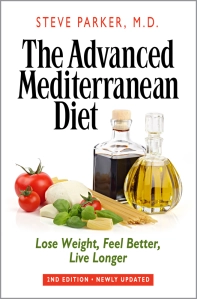
I see little reason to doubt that these findings apply to the typical woman in the U.S. or Europe, and not just to Swedes.  The traditional Mediterranean diet of the mid-20th century fulfills the dietary prescription for a healthy heart.  The Advanced Mediterranean Diet incorporates these healthy diet and lifestyle choices while simultaneously working to control weight.

Steve Parker, M.D.

Reference:  Akesson, Agneta, et al.  Combined Effect of Low-Risk Dietary and Lifestyle Behaviors in Primary Prevention of Myocardial Infarction in Women.  Archives of Internal Medicine, 167 (2007): 2,122-2,127.

Is Exercise Important as Part of a Weight Management Plan?

While physical activity alone seldom results in significant and sustained weight loss, maintaining weight loss without physical activity is nearly impossible.

The quote above is from James Early, M.D., Clinical Associate Professor, Department of Preventive Medicine and Public Health, University of Kansas School of Medicine-Wichita (Wichita, Kansas), as printed in Clinical Cornerstone, 2007, volume 8, No. 3, page 69.

It’s a simple truth, one that bears repeating, as the truth too often is submerged in a roiling sea of misinformation and trivia.

Exercise is extremely important for the vast majority of people who want to lose weight and keep it off, but it’s encouraging to know that it is possible to be successful if you don’t want to or can’t exercise.

This second quote is from the first edition of Thin For Life: 10 Keys to Success From People Who Have Lost Weight and Kept It Off, by Anne Fletcher, page 20.  Out of the 160 “weight-control masters” studied by Anne, 70% exercised three or more times per week.  Nine percent told her they didn’t exercise at all.

For help with your exercise program, consider Physical Activity for Everyone and Shape Up America!

Steve Parker, M.D.

Eye-Popping Statistics

I often talk to people interested in improving their health or losing weight via lifestyle modification, mostly changes in diet and exercise.  Many of them are motivated by health-related facts.  Here is a smattering of facts I compiled in 2008 (so some are outdated), starting out worrisome and ending hopeful: 

  • 65% of U.S. adults are overweight or obese.  Half are overweight, half are obese. 

  • 12% of deaths in the U.S. are due to lack of regular physical activity – 250,000 deaths yearly.

  • 11% of U.S. adults have diabetes mellitus.

  • 24 million in the U.S. have diabetes.  Another 57 million have pre-diabetes, a condition that increases your risk for diabetes.

  • 23% of U.S. adults over 60 have diabetes. 

  • 85% of people with type 2 diabetes are overweight.

  • 200,000 yearly deaths in the U.S. are due to obesity.

  • Excess body fat causes 14 to 20% of all cancer-related deaths in the U.S.

  • 550,000 people die yearly of cancer in the U.S. 

  • Obesity-related cancers in men: prostate and colorectal.  Obesity-related cancers in women: endometrial (uterine), cervix, ovary, breast.  Both sexes: kidney, esophageal adenocarcinoma.

  • 20% of us in the U.S. will die of cancer.

  • Lifetime risk of developing invasive cancer in the U.S. is four in 10 (a little higher in men, a little lower in women).

  • At least one-half of high blood pressure cases are caused by excess body fat.  Every 20 pounds of excess fat increases blood pressure by two to three points.

  • Peak aerobic power (a measure of physical fitness) decreases by 50% between age 20 and 65.

  • Middle-aged and older people through regular exercise can increase their aerobic power by 15 to 20%, equivalent to a 10 or 20-year reduction in biological age. 

  • Regular aerobic exercise reduces blood pressure by 8 to 11 points.  

  • Have you already had a heart attack?  If so, regular exercise reduces the odds of fatal recurrence by 25% and adds two to three years to life.

  • The Mediterranean diet is associated with lower incidence of cancer (colon, breast, prostate, uterus), cardiovascular disease (e.g., heart attacks), and dementia (both Alzheimers and vascular types). 

  • High fruit and vegetable consumption protects against cancer of the lung, stomach, colon, rectum, oral cavity, and esophagus.  The protective “dose” is five servings a day.

  • Coronary artery disease is the cause of heart attacks and many cases of sudden cardiac death.  Legume consumption lowers the risk of coronary artery disease.  The protective dose is four servings of legumes a week. 

  • Whole grain consumption is associated with reduced risk of coronary artery disease (e.g., heart attacks), lower risk of death, lower incidence of type 2 diabetes and several cancers.  The protective dose is three servings a day. 

The good news is that we can significantly reduce our risk of premature death and common illnesses such as high blood pressure, cancer, diabetes, coronary artery disease, and dementia.  How?  Weight management, diet modification, and physical activity.     

Steve Parker, M.D.

Is Exercise Important for Maintenance of Weight Loss In Women?

This news is a bit stale, but I wanted my readers to be sure to see it.

An article in the July 28, 2008, issue of Archives of Internal Medicine teaches us the role of regular physical activity in keeping lost weight from returning to once-overweight women.

Methodology

201 overweight women (body mass index 27-40) aged 21 to 45 wanted to lose excess weight.  They were sedentary at baseline, exercising fewer than three days a week for under 20 minutes.  Sound familiar?  Depending on baseline weight, the participants were assigned to eat either 1200 or 1500 calories per day, and to exercise according to one of four different exercise programs.  Exercise recommendations were to burn a certain number of calories per week (1000 or 2000 calories) at either moderate or vigorous intensity.  There were weekly group meetings for discussion of eating and exercise for the first six months, twice monthly meetings during the next 6 months, and monthly for the next six months.  There was telephone contact for between months  19 to 24.  This is pretty intense contact.  Each participant was given a treadmill to use at home, but my impression is that other forms of exercise were permitted and discussed.

Ten subjects were excluded from follow-up analysis, mostly because they got pregnant.  Nineteen others lost interest and dropped out.

Participants self-reported their physical activity levels.

At 24 months into the study, 170 of the original 201 participants were able to provide objective weight loss data.

Findings

Of the 170 subjects available for full analysis at 24 months, 54 either gained weight or lost none.  Thirty-three lost 0 to 4.9% of initial body weight, 36 lost 5 to 9.9% initial body weight, and 47 (24.6%) lost 10% or more of initial body weight.  [Who says diets don’t work?]

People who lost 10% or more of initial body weight at 24 months reported performing more physical activity – 275 minutes a week – compared with those who lost less than 10% of initial body weight.  This amount of exercise equates to 55 minutes of exercise on five days per week above the baseline level of activity, which was sedentary as you recall.  Whether they were assigned to “moderate” or “vigorous” exercise intensity didn’t seem to matter.  Whether they actually performed at the assigned level is unclear.

These women who sustained a weight loss of 10% or more of initial body weight at 24 months were burning 1835 calories a week in physical activity.

Women who lost less than 10% of initial body weight, or lost no weight, exercised an average of 34 minutes a day on five days a week.

By 24 months, participants on average had regained about half of the weight they had lost during the first six months  [which is typical].

Take-Home Points

After six months of dieting, many people start to regain half of what they lost.  We saw this phenomenon in the Israeli study of low-fat vs low-carb vs Mediterranean diet (DIRECT trial).

If you have a lot of excess fat to lose, you have to wonder if it would make sense to start a different diet program every six months, until you reach your weight goal.  Maybe there’s something about the novelty and excitement of a new diet program that keeps you motivated and disciplined for six months.

The authors note there are few similar long-term studies examining the amount and intensity of physical activity needed to improve weight loss success.  So this is important information.

In using exercise to help prevent weight regain, it may not matter whether the exercise is moderate or intense.

The authors write:

…the inability to sustain weight loss appears to mirror the inability to sustain physical activity.

Long-term sustained weight loss is possible for a significant portion of overweight women.  Although most women won’t do it, success is enhanced by exercising for 55 minutes on five days a week.  Most men won’t exercise that much either.  Which camp do you fall into?

[For physical activity instruction and information, visit Shape Up America!, Physical Activity for Everyone, or Growing Stronger: Strength Training for Older Adults.]

Steve Parker, M.D.

Reference:  Jakicic, John M., et al.  Effect of Exercise on 24-Month Weight Loss Maintenance in Overweight Women.  Archives of Internal Medicine, 168 (2008): 1,550-1,559.  

Are We Fat Because We Eat Too Much, Or Lack Physical Activity?

Are we fat because we eat too much, or lack physical activity?

Most people would say, “It’s both.” Most people would be wrong, at least in terms of populations rather than individuals.

Obesity results from a protracted imbalance between energy intake (calories we eat) and energy expenditure (physical activity and resting metabolism).

Overweight and obesity have increased significantly over the last 25 years in most of the developed world. Is it because we started eating more, or that we have so many energy-saving devices that we now expend less energy on physical activity? If we are less active due to technologic advances, yet keep eating as much as in the past, we will gain weight as the excess calories are stored as fat.

Technologic advances over the last 150 years have allowed us to transform from a labor-intensive agrarian economy to one based on services and information. Computers, in particular, have made it much less labor-intensive to get our jobs done. For example, when I was a hospital intern 30 years ago, I made multiple daily trips from the patient care floors downstairs to Radiology to look at x-ray films. Now, the “films” are at my fingertips on computers close to the bedside.

Have trends in technology over the last 25 years continued to reduced the energy expenditure needed to get through our days? Alternatively, are we exercising less? Either explanation would lead to weight gain if caloric intake remained the same.

Researchers in 2008 studied populations in Europe and North America, examining trends in physical activity energy expenditure over time, since the 1980s. Energy expenditure was evaluated with a highly accurate method called “doubly labelled water.” They found that physical activity energy expenditure actually increased over time, although not by much. They conclude that the ballooning waistlines in the study populations are likely to reflect excessive intake of calories.

(All I have is the abstract of the article. I’ll try to get the full article and report back here if anything additional is interesting.)

So according to Westerterp and Speakman, the problem has not been lack of physical activity. We’re simply eating too much.

On the other hand, a 2011 study found that daily work-related energy expenditure decreased by over 100 calories in the U.S. over the last 50 years.  That could certainly contribute to our expanding waistlines.

Steve Parker, M.D.

Reference: Westerterp, K.R., and Speakman, J.R. Physical activity energy expenditure has not declined since the 1980s and matches energy expenditures of wild mammals. International Journal of Obesity, 32 (2008): 1256-1263. Published online May 27, 2008. doi: 10.1038/ijo2008.74

The Role of Exercise in Maintenance of Weight Loss In Women

A 2008 article in Archives of Internal Medicine teaches us the role of regular physical activity in keeping lost weight from returning to once-overweight women.

Methodology

201 overweight women (body mass index 27-40) aged 21 to 45 wanted to lose excess weight. They were sedentary at baseline, exercising fewer than three days a week for under 20 minutes. Sound familiar? Depending on baseline weight, the participants were assigned to eat either 1200 or 1500 calories per day, and to exercise according to one of four different exercise programs. Exercise recommendations were to burn a certain number of calories per week (1000 or 2000 calories) at either moderate or vigorous intensity. There were weekly group meetings for discussion of eating and exercise for the first six months, twice monthly meetings during the next 6 months, and monthly for the next six months. There was telephone contact for between months 19 to 24. This is pretty intense contact. Each participant was given a treadmill to use at home, but my impression is that other forms of exercise were permitted and discussed.

Ten subjects were excluded from follow-up analysis, mostly because they got pregnant. Nineteen others lost interest and dropped out.

Participants self-reported their physical activity levels.

At 24 months into the study, 170 of the original 201 participants were able to provide objective weight loss data.

Findings

Of the 170 subjects available for full analysis at 24 months, 54 either gained weight or lost none. Thirty-three lost 0 to 4.9% of initial body weight, 36 lost 5 to 9.9% initial body weight, and 47 (24.6%) lost 10% or more of initial body weight. (Who says diets don’t work?)

People who lost 10% or more of initial body weight at 24 months reported performing more physical activity – 275 minutes a week – compared with those who lost less than 10% of initial body weight. This amount of exercise equates to 55 minutes of exercise on five days per week above the baseline level of activity, which was sedentary as you recall. Whether they were assigned to “moderate” or “vigorous” exercise intensity didn’t seem to matter. Whether they actually performed at the assigned level is unclear.

These women who sustained a weight loss of 10% or more of initial body weight at 24 months were burning 1835 calories a week in physical activity.

Women who lost less than 10% of initial body weight, or lost no weight, exercised an average of 34 minutes a day on five days a week.

By 24 months, participants on average had regained about half of the weight they had lost during the first six months [which is typical].

Take-Home Points

After six months of dieting, many people start to regain half of what they lost. We saw this phenomenon recently in the Israeli study of low-fat vs low-carb vs Mediterranean diet.

If you have a lot of excess fat to lose, you have to wonder if it would make sense to start a different diet program every six months, until you reach your weight goal. Maybe there’s something about the novelty and excitement of a new diet program that keeps you motivated and disciplined for six months.  For someone with lots of weight to lose, I wonder if they’d do better switching to a new diet every six months.

The authors note there are few similar long-term studies examining the amount and intensity of physical activity needed to improve weight loss success. So this is important new information.

In using exercise to help prevent weight regain, it may not matter whether the exercise is moderate or intense.

The authors write:

…the inability to sustain weight loss appears to mirror the inability to sustain physical activity.

Long-term sustained weight loss is possible for a significant portion of overweight women. Although most women won’t do it, success is enhanced by exercising for 55 minutes on five days a week. Most men won’t exercise that much either. Which camp do you fall into?

For physical activity instruction and information, visit Shape Up America!, Physical Activity for Everyone, or Growing Stronger: Strength Training for Older Adults.

Steve Parker, M.D.

Reference: Jakicic, John M., et al. Effect of Exercise on 24-Month Weight Loss Maintenance in Overweight Women. Archives of Internal Medicine, 168 (2008): 1,550-1,559.