Category Archives: Coronavirus

Academic Coronaskeptics in the Czech Republic | Gates of Vienna

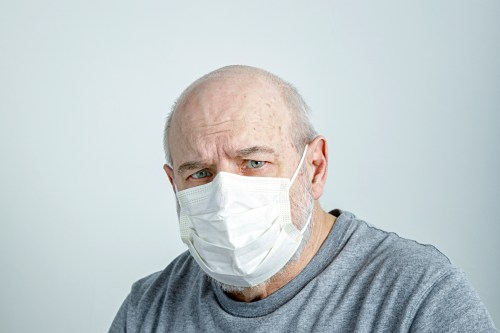
One of these is healthy for age, the other is not. Should they take different precautions?

On April 21, 2020, a panel of experts at Charles University in Prague published some thoughts on the Coronavirus pandemic. I recommend the entire article to you; it’s not long. What particularly caught my attention was advice on social distancing for the elderly and other vulnerable populations:

5. ELDERLY CITIZENS NEED SAFE SOCIAL CONTACT, NOT ABSOLUTE QUARANTINE

The stigmatization and imposition of limitations on older people in the “fight against COVID-19” is baseless and unjustified and establishes age discrimination in public sentiment.

As part of the solution to the COVID-19 crisis, the public is being massively persuaded by fear of the extraordinary danger of infection for “older” people and the necessity of implementing identical emergency measures for this very heterogeneous group, including not leaving their apartments or having specific shopping times. At the same time, the public is finding out that it is precisely these seniors affected by COVID-19 that could overwhelm the health care system. Suggestions were even raised to classify patients based only on age. Defining “endangered old age” at 65+ has led to an unprecedented stigmatization of 20% of the population of the republic, including people who are healthy and not particularly endangered. Some became uncertain of themselves or had to suffer the manipulative behavior of their environment. Many of them suffer from exaggerated fear of infection, from reduced contact with families, isolation, loneliness, deprivation of communication, disruption of daily routines with serious psychological consequences, disproportionate to the risk and the potential for reducing it. Several weeks without going outside has endangered fragile people through loss of stability, mobility, and thus self-sufficiency. However, there is no reason for them not to move freely in open spaces while keeping a distance from other people.

It appears that worsening of the COVID-19 prognosis is mainly related to associated illnesses, not age as such. These include nutritional disorders, oncological and cardiovascular diseases, diabetes, possibly some medications. It is not primarily “the elderly” who are affected, but those who are “fragile and severely ill”. In this, COVID-19 is no different from any other stress factor, including disease, as we know from influenza epidemics, heat waves or freezing weather.

Particularly problematic are residential social service facilities (senior residences, assisted living homes) and long-term care facilities. This is an instance of risky concentration of exceptionally fragile people with a number of serious illnesses. Experience from other countries as well as the initial data from the Czech Republic show that these people probably make up the majority of all COVID-19 victims. This shows that one’s health potential (fitness, resilience, adaptability) is a much stronger predictor than age as such. Many frail patients succumbed to this infection as a non-specific stress factor, just as they would have succumbed to the flu or a major injury.On the contrary, even in the Czech Republic, not enough has been done to protect this most endangered group — residents of residential social services facilities. These include the quality of preventive measures, personnel training, quarantine training, sufficient protective and hygiene products, frequent staff testing, the main source of its [the pathogen’s] introduction, testing in case of suspicious symptoms and the immediate transport of infected clients to high-quality quarantine facilities with the necessary care available should difficulties develop, and so on.

Source: Academic Coronaskeptics in the Czech Republic | Gates of Vienna

Steve Parker, M.D.

PS: Diabetes and obesity are risk factors for severe illness from COVID-19.

Click pic to purchase at Amazon.com. E-book versions also available at Smashwords. com.

CDC Responsible for Lack of Adequate #COVID19 Testing in First Critical Months of U.S. Epidemic

The governments “top men” were working on it

Being on the front lines in the war against the novel coronavirus SARS-CoV-2, I can attest that lack of testing capability was a major problem early-on. An article at Popular Mechanics claims this is the CDC’s fault. This is not the first time I’ve heard this.

From Pop Mech:

Back in January and February—when cases of the deadly disease began aggressively circulating outside of China—diagnostics already existed in places like Wuhan, where the pandemic began. Those tests followed World Health Organization (WHO) test guidelines, which the U.S. decided to eschew.

Instead, the CDC created its own in-depth diagnostics that could identify not only COVID-19, but a host of SARS-like coronaviruses. Then, disaster struck: When the CDC sent tests to labs during the first week of February, those labs discovered that while the kits did detect COVID-19, they also produced false positives when checking for other viruses. As the CDC went back to the drawing board to develop yet more tests, precious time ticked away.

Eventually, the CDC turned over development and distribution of test kits to non-government clinical and research labs.

Source: Coronavirus Test Kits | COVID-19 Test Kits | Coronavirus Testing

Steve Parker, M.D.

Click pic to purchase at Amazon.com. E-book versions also available at Smashwords. com.

Police Investigating Death of Arizona Man From #Chloroquine Phosphate #COVID19 #Coronavirus

From The Washington Free Beacon:

The Mesa [Arizona] City Police Department’s homicide division is investigating the death of Gary Lenius, the Arizona man whose wife served him soda mixed with fish tank cleaner in what she claimed was a bid to fend off the coronavirus. A detective handling the case confirmed the investigation to the Washington Free Beacon on Tuesday after requesting a recording of the Free Beacon’s interviews with Lenius’s wife, Wanda.

Gary Lenius, 68, died on March 22. Wanda, 61, told several news outlets last month that both she and her husband had ingested a substance used to clean aquariums after hearing President Donald Trump tout one of its ingredients, chloroquine phosphate, from the White House briefing room.

Source: Police Investigating Death of Arizona Man From Chloroquine Phosphate

In the U.S., #COVID19 Deaths Disproportionately Impact Blacks #Coronavirus

“Go back! This is a quarantine zone.”

African Americans and nursing home residents are way over-represented among the deceased from COVID-19.

From JAMA Network:

In Chicago, more than 50% of COVID-19 cases and nearly 70% of COVID-19 deaths involve black individuals, although blacks make up only 30% of the population. Moreover, these deaths are concentrated mostly in just 5 neighborhoods on the city’s South Side. In Louisiana, 70.5% of deaths have occurred among black persons, who represent 32.2% of the state’s population. In Michigan, 33% of COVID-19 cases and 40% of deaths have occurred among black individuals, who represent 14% of the population. If New York City has become the epicenter, this disproportionate burden is validated again in underrepresented minorities, especially blacks and now Hispanics, who have accounted for 28% and 34% of deaths, respectively (population representation: 22% and 29%, respectively).

Source: COVID-19 and African Americans | Health Disparities | JAMA | JAMA Network

Steve Parker, M.D.

Steve Parker MD, Advanced Mediterranean Diet

Click the pic to purchase at Amazon.com. E-book versions also available at Smashwords. com.
Demonstration of Nasopharyngeal Swabbing for #COVID19    #Coronavirus 

If you’re curious, click the link to see the video. I understand the test is very uncomfortable for many. From NEJM:

This video demonstrates the collection of specimens from the surface of the respiratory mucosa with nasopharyngeal swabs for the diagnosis of Covid-19 in adults and in children. It is important to use approved PPE and the appropriate technique to minimize the possibility of spreading the virus.

Source: How to Obtain a Nasopharyngeal Swab Specimen | NEJM

Is Hypertension a True Risk Factor for Serious Illness from #COVID19? #Coronavirus

“I’ll practice extreme social distancing even after house-arrest is lifted for others.”

BREAKING NEWS: Gray hair is a risk factor for serious COVID-19 infection.

I keep reading that hypertension (high blood pressure) makes one vulnerable to COVID-19. For instance, many patients hospitalized in New York  had hypertension. The implication is that something about hypertension weakens your immune system such that you’re more likely to die.

In the study linked above, average age of all hospitalized was 63. Fifty-seven percent of them had hypertension. Most healthcare providers know that the prevalence of hypertension rises with age. So you’d expect lots of 63-year-olds to have hypertension. At least 25% of them, right?

With just ten seconds of googling, I found that the prevalence of hypertension in the U.S. for those 60 and older is 63%. I fully expect my blood pressure would be higher than it is now if I lived in New York City, which I’ll never do.

If you’re 63-years-old and hospitalized in New York City for anything, odds are you’re likely to have hypertension. Just like you’re more likely to have gray hair than someone younger. Hypertension and gray hair are incidental markers for advancing age. They don’t per se increase your risk of serious illness from COVID-19.

Now, that being said, be aware that uncontrolled hypertension can damage some major organs that are important for health and longevity. That’s why we treat it. That damage can weaken your heart, kidneys, arteries, and brain. You need those systems to help you fight off any serious infection, not just COVID-19. If you already have organ damage from uncontrolled hypertension, I’ll bet that increases your chances of a bad outcome from any serious infection. Regarding hypertension and function of the immune system, I’m not aware of any good data or connection.

My first link above was to a JAMA Network article detailing the co-morbidities of over 5,000 New York City area residents hospitalized with COVID-19. A few other data points from it:

  • 42% were obese. What’s the obesity rate for 63-year-olds in New York City? I don’t know. Among all adults in New York state, the prevalence of obesity is 28%. This is about 3 points lower than the national average.
  • 34% had diabetes. The study authors don’t make it easy to find, but I bet this is mostly type 2 diabetes. I don’t know the prevalence of diabetes in New York City. In the U.S. overall, among those 65 or older, the prevalence of diabetes is 27%. I’d say at least 90% of that is type 2 diabetes. That 27% includes the 5% who don’t know they have it.
  • Mortality rates for those who received mechanical ventilation in the 18-to-65 and older-than-65 age groups were 76.4% and 97.2%, respectively. Those mortality rates are scary high, but let’s not put too much emphasis on them yet since some of these folks were still in the hospital at the time the report was prepared.

Tracheal intubation in prep for mechanical ventilation

Bottom Line

If I were a 30-years-old and had well-controlled hypertension or gray hair, I wouldn’t worry much about my risk of COVID-19. On the other hand, if I were obese, I’d work on fixing that, starting NOW. Regarding diabetes, if you can’t cure it, keep it under control.

Steve Parker, M.D.

PS: Did you know the definition of hypertension changes over time? Even the one below is outdated. The linked CDC report above used this definition:

Hypertension: Systolic blood pressure greater than or equal to 140 mmHg or diastolic blood pressure greater than or equal to 90 mmHg, or currently taking medication to lower high blood pressure.

PPS: Admittedly, “60 and older” includes 93-year-olds.   You may argue that the incidence of hypertension among 93-year-olds is 85% compared to 45% in 60-70 year-olds. Please do the research and show your work. I’m out of time.

PPPS: Overall prevalence of hypertension in the U.S. is 29%. Curious about the incidence of hypertension in other U.S. age groups?

  • age group 18-39: 7.5%
  • age 40-59: 33.2%
  • 60 and over: 63.1%
Steve Parker MD, Advanced Mediterranean Diet

Click the pic to purchase at Amazon.com. E-book versions also available at Smashwords. com.

Click pic to purchase at Amazon.com. E-book versions also available at Smashwords. com.
 

Smoke fags, save lives: #Cigarettes May Prevent #COVID19 #Coronavirus

“I knew my doctor was FOS”

From Spiked:

There’s not much to laugh about these days, but the news that smokers might be protected from Covid-19 is certainly one of them. With study after study showing that smokers are under-represented in coronavirus wards, the renowned French neuroscientist, Jean-Pierre Changeux, is working on a randomised control trial to test the effect of nicotine patches on Covid-19 patients.

This is far from being a crackpot theory. Changeux has explained his hypothesis at length here. In simple terms, he says that nicotinic acetylcholine receptors play a key role in the development of the disease and that nicotine can put a brake on it. If he is right – and the banter heuristic says he is – it would not only save thousands of lives but would also be one in the eye for the ‘public health’ groups who have been claiming that smoking and vaping are risk factors for Covid-19.

Source: Smoke fags, save lives – spiked

It would be premature to start a smoking habit. And nicotine is not the same a cigarette smoke.

Steve Parker, M.D.

Click pic to purchase book at Amazon.com. E-book versions are also at

Connecting the Dots: Italy, China, and the #Coronavirus #COVID19

Are you tired of this pic yet?

Did the large Chinese population in northern Italy contribute the devastating COVID-19 epidemic there?

From American Renaissance:

For decades, a large, sometimes hostile Chinese community has worked in the Italian fashion and textile industries. Immigrants — legal and illegal — started as a cheap, “exploited” labor source that allowed high-fashion companies to slap a “Made in Italy” label on products churned out in sweatshops. Now, Chinese own many off-the-books factories, ignoring employment and safety laws, and dodging taxes. They are also carving out a competitive niche in the fashion industry, and even buying up iconic Italian companies.

Was the China connection the reason the coronavirus outbreak hit Italy so hard and so early? So much immigration has been illegal — and so many Chinese factories don’t even exist on paper — that contact tracing and other disease control measures were impossible.

The odd thing about the author’s theory is that there doesn’t seem to have been an outbreak of COVID-19 in the Chinese community in Prato, Italy.

Italian seaside tangentially related to this post

Source: Italy, China, and the Coronavirus – American Renaissance

Steve Parker, M.D.

Steve Parker MD, Advanced Mediterranean Diet

Click the pic to purchase at Amazon.com. E-book versions also available at Smashwords. com.

How a Nurse Cared for her #COVID19 Physician Husband at Home #Coronavirus

The caregiver below had a milder case of COVID-19

The Federalist on April 19, 2020, published a story on home care of the COVID-19 patient. The narrator is a retired community health nurse and the patient is her husband of 49 years, an oncologist.

I’ve mentioned “proning” before:

The key reason people go to the hospital with COVID is difficulty in breathing. When my husband started to feel his breathing become more strained, he asked his doctor to order an oxygen tank that he could use at home. Many people may not realize that home oxygen is even a possibility, but it is prescribed for many conditions and there are companies that provide oxygen with systems meant to be used by non-medical professionals, delivered through simple tubes into the nose.

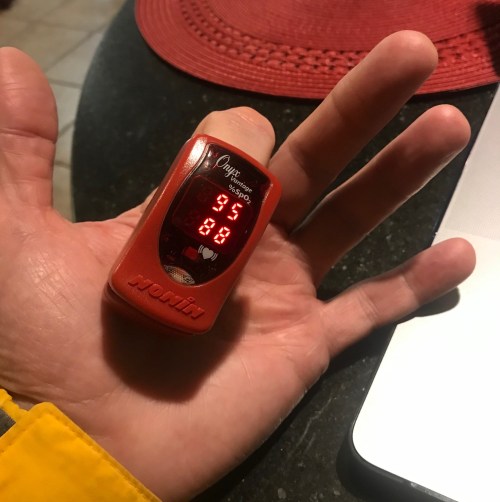
Along with the oxygen, we got an oximeter to measure oxygen saturation in the blood. It’s the little device they often clip onto your finger in a hospital. They’re available at some pharmacies, and we later learned that the oxygen company had a few as well. Having the ability to monitor oxygen levels at home was key to being able to gauge whether it was still safe to be at home and whether things were getting better or worse.

Another simple technique that is now being employed widely in hospitals, is that of sleeping prone, on one’s abdomen. Many hospitals are trying to keep COVID patients face-down for 16 hours a day, with them sitting up the other eight. That maximizes the lungs’ ability to work effectively, which is hard on one’s back. For my husband it was particularly uncomfortable because of a previous neck surgery, but by monitoring his oxygen saturation we could see how helpful it was.

When his oxygen was at 92 percent on his back, it jumped to 97 percent on his abdomen. We would have had to double his supplemental oxygen to get that kind of improvement. When he didn’t want to stay in that position, I used several strategies to keep him there.

I recommend the entire article to you even though I’m not on board (yet?) with hydroxychloroquine and azithromycin and steroids. Nearly all experts I’ve read recommend against the steroids. The steroids may have been given early-on in the epidemic when we really had no idea.

A pulse oximetry device like this was helpful in the case at hand

Steve Parker, M.D.

Steve Parker MD, Advanced Mediterranean Diet

Click the pic to purchase at Amazon.com. E-book versions also available at Smashwords. com.
ZDoggMD Interviews Dr Scott Weingart on Emergency Management of #COVID19 Respiratory Failure

Is O2 saturation of 80-85% good enough without intubating some folks?

Z hits another one out of the ballpark with his interview of a front-line virus warrior. This if fairly technical so you won’t get much out of it unless you’re a hospital nurse, respiratory therapist, or physician. Move along. The basic issue addressed is: what’s the best way to get life-preserving oxygen into a patient with scary-low blood oxygen levels. Who needs to be intubated and mechanically ventilated? Are we doing more harm than good when we intubate?

I’m not sure if Dr Weingart is an emergency medicine physician or intensivist (ICU specialist) or both. He works somewhere on the east coast.

This is a young woman. How about putting this tube into a 95-year-old incurable advanced dementia patient?

Some personal take-away points for me:

  • The concept of the “happy hypoxemic” patient: Despite oxygen saturation 75-85% (scary low), the patient is alert, talking, comfortable, tapping on their phone. Respiratory rate may be 25–35 or even higher (normal is under 20) but they don’t mind. Taking fairly deep breaths, not dog-panting. Don’t rush to intubate!
  • Good idea: Intermittent pr0ning of non-intubated patients to improve oxygen levels. Prone position is lying on your stomach.
  • The happy hypoxemic patient will have low pCO2 on arterial blood gas. May be acidotic (low pH) early on. But if pCO2 starts to rise to normal levels (or above) while patient is still breathing fast and hypoxemic? Probably not long before intubation needed.
  • High-flow nasal cannula oxygen may be OK after all, as long as wearing surgical mask over it. (Some experts say to avoid this oxygen delivery system since it may aerosolize virus into the hospital room, spreading disease to healthcare providers.)
  • After intubation, multi-organ failure often ensues. Unclear whether that deterioration is caused by intubation/mechanical ventilation or not. Was the patient headed down that road anyway?
  • Most non-U.S. countries don’t allow the patient or responsible party to “force” physicians to provide mechanical ventilation. If such therapy is futile, it’s not discussed or offered as an option. I assume the same applies to resuscitation of cardiac arrest.
  • Dr Weingart is seeing unusually high numbers of critically ill young patients with COVID-19. E.g., 35-45 years old. Unclear why.

There is still a huge amount we don’t know about this disease. Any points made in my bullet points or the video may be invalidated tomorrow.

Fortunately, at my hospital in Scottsdale, AZ, the expected COVID-19 surge never materialized, and it probably won’t in the near future. This epidemic is fading. I’m not particularly concerned about an outbreak after the unconstitutional house-arrest is lifted, except for those at high risk for serious illness. Click for my current advice if you’re at risk.

Steve Parker, M.D.

Steve Parker MD, Advanced Mediterranean Diet

Click the pic to purchase at Amazon.com. E-book versions also available at Smashwords. com.