Tag Archives: weight loss

Book Review: Shangri-La Diet

I wrote this in 2008 for the old Advanced Mediterranean Diet blog.  It’s still pertinent today, judging from sales at Amazon.com.

A while back, I was listening to “talk radio” in my car and heard Dennis Prager say that olive oil helps to suppress appetite, leading to loss of excess weight.  I only caught the tail end of it, and let it go.  Evelyn Tribole, M.S., R.D. brought to my attention recently an article regarding hunger suppression by fatty foods, such as olive oil.  I found the time to research Prager’s statement.

The olive oil/appetite suppression link seems to emanate from Seth Roberts, Ph.D., who was (and still is?) a psychology professor at the University of California – Berkeley.  He self-experimented with the theory that sugar water or olive oil taken on an empty stomach suppresses appetite naturally.  He stumbled upon his theory on a trip to France when he noticed that soft drinks unfamiliar to him seemed to suppress his appetite.  His theoretical underpinnings are based on rat studies, and on the idea – not his own – that our bodies have a weight set-point that mostly determines our weight.

The set-point is like a thermostat that can be reset.  Set-point theory explains that after a spell of weight loss, we usually return to our previous heavy weight because that’s where the thermostat (set-point) is set.  We need to reset the thermostat.   How do you do that?  Drink either 1) one tbsp (15 ml) of extra light olive oil, or 2) one or two tbsp  (15–30 ml) of fructose or sucrose (table sugar) in water, and do this not at mealtimes but at least one hour after meals, one to four times daily.  Don’t eat anything else at the time of the supplement, nor for one hour thereafter.  Total calorie content of these supplements is 100-400 calories per day.  You experiment to find the dose that suppresses your appetite.  And eat healthy meals of your choice.  Dr. Roberts says the extra light olive oil is better than the sugar.  Not extra virgin olive oil, which has too much flavor.

The pure, unadulterated sweetness of sugar, and the near-tastelessness of the olive oil are important, according to Dr. Roberts.  They trick your weight set-point into resetting.  At least this is the theoretical framework he gave to Prager and TheDietChannel.com in 2006.  ABC News in 2005 reported he “suggests it works by suppressing a basic ‘caveman’ instinct from days when access to food was intermittent. The diet tricks the body from thinking it needs to eat every last bit of food before an impending famine.”  My sense is: If it works, it works, and the underlying mechanism is less important.

Dr. Roberts easily lost 50 pounds with his method and wrote The Shangri-La Diet: The No Hunger Eat Anything Weight-Loss Plan to share with the world.  The blogosphere and the authors of Freakonomics helped spread the word rapidly.  In 2006, Dennis Prager allocated an entire hour of his show to Dr. Roberts, and volunteered that the olive oil indeed was suppressing his (Prager’s) appetite.  According to the book reviewers at Amazon.com, the Shangri-La Diet clearly works miraculously well for some, not at all for others.  You can find much more information and testimonials at www.sethroberts.net., perhaps enough that you don’t need to purchase the book if you want to give it a go.  Last I checked (2008), the paperback was $3.99 plus shipping at Amazon.com.

I’m not sure if this diet is a hoax or not.  It’s possible it is a social psychology experiment.  Maybe Dr. Roberts had a bet with someone that “anyone can write a popular diet book if they just use the formula.”  You can find the formula at www.sethroberts.net under “Reviews and Media.”   Listen to Dr. Roberts’ interview with Dennis Prager and decide for yourself.  He sounds earnest.

I suspect it’s a hoax but, then again, Dr. Roberts may himself be a true believer.   What’s the evidence for hoaxiness?  The subtitle was my first clue: The No Hunger Eat Anything Weight-Loss Plan.  Legitimate, scrupulous doctors would be embarrassed to use that phrase.  The second clue is that Dr. Roberts seems to be a former contributor to Spy magazine.  This is precisely the sort of hoax the editors of Spy would concoct.  The third clue is that he uses just enough quasi-legitimate scientific theory and jargon to rope in many readers.

[I know “hoaxiness” isn’t a word.  Neither was truthiness until Stephen Colbert coined it in 2006.]

I was particularly interested in the olive oil aspect of the Shangri-La Diet since olive oil is the predominant form of fat in the traditional healthy Mediterranean diet.  I searched PubMed.gov for scientific clinical studies in overweight humans showing that olive oil suppresses appetite and leads to weight loss.  I found none as of October 12, 2008.  Note that extra light olive oil is refined oil and has less of the healthy phytonutrients found in extra virgin olive oil.

Dr. Roberts’ program, and its apparent success in some users, exemplifies the idea that losing excess weight is, in part, a matter of trial and error.  For example, the Atkins diet may work great for you, but not your next-door neighbor, who lost with Shangri-La, which didn’t work for your mother-in-law.  To some extent, weight-loss efforts are “an experiment of one.”  What works for you is partially based on genetics (idiosyncratic metabolic processes), personal preferences, early childhood experiences, financial resources, preparedness for change, personality type, etc.   However, two themes unify most people who have lost a significant amount of weight and kept it off long-term: 1) they don’t eat as much as in the past, and 2) they exercise more.  Look for these when you search for effective weight-loss programs.

The aforementioned article brought to my attention by Evelyn Tribole suggests how olive oil and other unsaturated fats could curb hunger.  Oleic acid, a prominent monounsaturated fatty acid in olive oil, is transformed into oleoylethanolamide (OEA) in the small intestine.  OEA then activates a brain circuit that gives you a feeling of fullness, reducing appetite, and potentially promoting weight loss.

A 2007 article in the Journal of Molecular Medicine exposes a genetic variation that seems to prevent high fat consumption from contributing to overweight.  Read about it at FuturePundit.com.  The gene variant may be found in 10-15% of the U.S. population.  Consumption of monounsaturated fats, as in olive and canola oil, almost seems to protect against overweight in people who carry this genetic variation.  I’m talking about single nucleotide polymorphisms of the apolipoprotein A5 gene, specifically, -1131T>C.  But you knew that, right?  Nutritional genomics may eventually allow us to customize our food intake to work best with our personal genetic make-up.

A number of people, including Dr. Roberts, swear by the Shangri-La Diet.  It works for them.  I don’t think most of them are lying.  Maybe they are in the subset of the population with the appropriate genetic variant.

It would be easy to design and execute an experiment on 100 subjects to test the efficacy of the Shangri-La Diet.  Until that’s done – and it probably never will be – you could inexpensively try the Shangri-La “experiment of one” on yourself.  From what I’ve read, you’ll know within the first week if you achieve the natural appetite suppression that substitutes for the willpower and discipline required by effective diets.  As always, get your personal physician’s OK first.

If it is a hoax, I complement Dr. Roberts on his ingenuity.  His book was a bestseller in 2006.  For those he may have duped, it didn’t cost them much and probably caused no harm.

Steve Parker, M.D.

References:

Corella, Dolores, et al.  APOA5 gene variation modulates the effects of dietary fat intake on body mass index and obesity risk in the Framingham Heart Study.  Journal of Molecular Medicine, 85 (2007): 119-128.

Schwartz, Gary, et al.  The Lipid Messenger OEA Links Dietary Fat to Satiety, Cell Metabolism, 8 (2008): 281-288.  doi: 10.1016/j.cmet2008.08.005
Exercise Does and Doesn’t Help With Weight Loss

With regards to TV’s “The Biggest Loser” show:

The show’s 24-week regimen consists of approximately 4 hours of daily exercise, including 1 hour of intense resistance, 1 hour of intense aerobic activity, and 2 hours of moderate aerobic activity (for example, walking), along with a caloric  intake of at least 70% of estimated resting daily energy expenditure, explained Dr. [Robert] Huizenga, who is a former team physician to the L.A. Raiders football team.

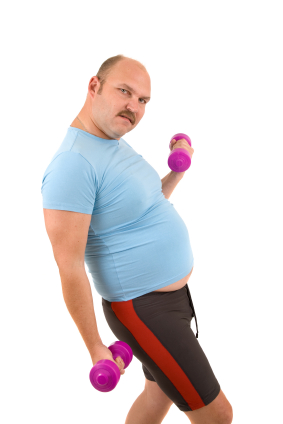
exercise for weight loss and management, dumbbells

If you’re not familiar with resistance training, a personal trainer is an great idea

This is an excerpt from “The Biggest Loser Pushes Envelope on Diabetes,” in Internal Medicine News, vol. 45, No.11, page 17.

In a previous post about The Biggest Loser, I’d written that I didn’t know how much they exercised.

For purposes of discussion, let’s assume the documented major weight losses of Biggest Loser contestants is not simply due to caloric restriction.

Dr. Huizenga shared some of his experience at the recent annual meeting of the American Association of Clinical Endocrinologists.  In a study of 35 Biggest Loser participants, about half had prediabetes or type 2 diabetes.  Hemoglobin A1c, a measure of blood sugar control, fell significantly in this subset.  Three of the six with diabetes were able to stop metformin early on.  By week 29 of the study, average body mass index for the entire group had fallen from 46 to 29.

Yes, exercise helps with weight loss.  But most folks aren’t willing or able to exercise vigorously for four hours a day.  Physical activity is more important for maintenance of weight loss, when it demands much less time.

Steve Parker, M.D.

Small Study Shows Improved Diabetes and Prediabetes With Biggest Loser Plan

“One more rep then I’m outa here!”

Do you wonder how much exercise it takes to lose a lot of weight quickly?  Read on.

TV’s “The Biggest Loser” weight-loss program works great for overweight diabetics and prediabetics, according to an article May 30, 2012, in MedPage Today.  Some quotes:

For example, one man with a hemoglobin A1c (HbA1c) of 9.1 [poor control of diabetes], a body mass index (BMI) of 51 [very fat], and who needed six insulin injections a day as well as other multiple prescriptions was off all medication by week 3, said Robert Huizenga, MD, the medical advisor for the TV show.

In addition, the mean percentage of weight loss of the 35 contestants in the study was 3.7% at week 1, 14.3% at week 5, and 31.9% at week 24…

The exercise regimen for those appearing on “The Biggest Loser” comprised about 4 hours of daily exercise: 1 hour of intense resistance training, 1 hour of intense aerobics, and 2 hours of moderate aerobics.

Caloric intake was at least 70% of the estimated resting daily energy expenditure, Huizenga said.

At the end of the program, participants are told to exercise for 90 minutes a day for the rest of their lives. Huizenga said he is often told by those listening to him that a daily 90-minute exercise regimen is impossible because everyone has such busy lives.

“I have a job and I work out from 90 to 100 minutes per day,” he said. “It’s about setting priorities. Time is not the issue; priorities are the issue.”

Of the 35 participants in this study, six had diabetes and 12 had prediabetes.  This is a small pilot study, then.  I bet the results would be reproducible on a larger scale IF all conditions of the TV program are in place.  Of course, that’s not very realistic.  A chance to win $250,000 (USD) is strong motivation for lifestyle change.  Can you see yourself exercising for four hours a day?

Steve Parker, M.D.

PS: Although not mentioned in the article, these must have been type 2 diabetics, not type 1.

Book Review: The Smarter Science of Slim

Earlier this year, I  reviewed  The Smarter Science of Slim, by Jonathan Bailor and published in 2012.  The review is at my defunct Advanced Mediterranean Diet blog, so I moved it here.  Per Amazon.com’s rating system, I give it four stars (”I like it”).  Evelyn at The Carb Sane Asylum has some different ideas about the book at her blog.

♦   ♦   ♦

Mr. Bailor’s weight-management diet avoids grains, most dairy, oils, refined starches, added sugars, starchy veggies, corn, white potatoes.  You eat meat, chicken, eggs, some fruit, nuts, seeds, and copious low-starch vegetables.  No limit on food if you eat the right items.

Is the Energy Balance Equation valid?

It’s high-fiber, high-protein, moderate-fat, moderate-carb (1/3 of calories from carbohydrate,  1/3 from protein, 1/3 from fat).  He considers it Paleo (Stone Age) eating even though he allows moderate legumes and dairy (fat-free or low-fat cottage cheese and plain Greek yogurt).

Will it lead to weight lose? Quite probably in a majority of followers, especially those eating the standard, low-quality American diet.  When it works, it’s because you’ve cut out the fattening carbohydrates so ubiquitous in Western societies.  The protein and fiber will help with satiety.  Is it a safe eating plan?  Yes.

(For those with diabetes needing to lose weight, I prefer a lower carbohydrate content in the diet, something like Conquer Diabetes and Prediabetes: The Low-Carb Mediterranean Diet.  For non-diabetics, is Smarter Science better than my Advanced Mediterranean Diet 2nd Edition?  Of course not, silly!)

I don’t recall any recipes or specific meal plans.  You put your own meals together following his guidelines.

Our major points of agreement:

  • Exercise isn’t terribly helpful as a weight-loss technique for most folks.
  • We’re overweight because we eat too many starches and sweets.
  • Natural, minimally processed foods are healthier than man-made highly refined items.
  • No need to emphasize “organic” /grass-fed beef/free-range chicken.
  • We don’t do enough high-quality exercise.

I have a few problems with the book:

  • It says we’re eating less.  U.S. caloric consumption over the last several decades has increased by about 150 cals (630 kJ) a day for men and 300 cals (1260 kJ) for women.  The author seems to contradict himself at one point by favorably quoting Hilda Bruch’s writing that “…overeating is observed with great regularity” in the obese.
  • Scary graphs showing increasing instances of heart disease and diabetes over time aren’t helpful because they ignore population growth.  The population-adjusted diabetes rate is indeed increasing whereas heart disease rates are decreasing.
  • It says the Calories In/Calories Out theory of overweight has been proven wrong.  This is by no means true.  It just hasn’t helped us much to reverse the overweight epidemic.  Sure, it’s often said that if you just cut a daily tablespoon of butter out of your diet, you’d lose 11 lb (5 kg) in a year, all other things being equal.  Problem is, all other things are never equal.  In reality, we replace the butter with something else, or we’re slightly less active.  So weight doesn’t change or we gain a little.
  • It says the “eat less, exercise more” mantra has been proven wrong as a weight loss method.  Not really.  See above.  And watch an episode of TV’s “The Biggest Loser.”  Exercise can burn off fat tissue.  The problem is that we tend to overeat within the next 12 hours, replacing the fat we just burned. I agree with the author that “eat less, exercise more” is extremely hard to do, which is the reason it so often fails over the long run.  As Mr. Bailor writes elsewhere: “Hard to do” plus “do not want to do” generally equals “it’s not happening.”  Mr. Bailor would say the reason it ultimately fails is because of a metabolic clog or dysregulation.
  • He says there’s no relationship between energy (calorie) consumption and overweight.  Not true.  Need references?  Google these: PMID 15516193, PMID 17878287, PMID 14762332.  The author puts too much faith in self-reports of food intake, which are notoriously inaccurate.  And obese folks under-report consumption more than others (this is not to say they’re lying).
  • Mr. Bailor’s assessments too often rely on rat and mice studies.
  • By page 59, I had found five text sentences that didn’t match up well with the numeric bibiographic references (e.g., pages 48, 50, 59).
  • S. Boyd Eaton is thrice referred to as S. Boyd.
  • How did he miss the research on high intensity interval training by Tabata and colleagues in 1996?  Gibala is mentioned often but he wasn’t the pioneer.
  • Several diagrams throughout the book didn’t print well (not the author’s fault, of course).
  • In several spots, the author implies that HIS specific eating and exercise program has been tested in research settings.  It hasn’t.

Mr. Bailor’s exercise prescription is the most exciting part of the book for me.  His review of the literature indicates you can gain the weight-management and health benefits of exercise with just 10 or 20 minutes a week.  NOT the hour a day recommended by so many public heath authorities.  And he tells you how to do the exercises without a gym membership or expensive equipment.  That 20 minutes is exhausting and not fun.  You have fun in all the hours you saved.  If this pans out, we’re on the cusp of a fitness revolution.  Gym owners won’t be happy.  Sounds too good to be true, doesn’t it?

One component of the exercise program is high intensity interval training (HIIT), which I’m recently convinced is better than hours per week of low-intensity “cardio” like jogging. Better in terms of both fitness and weight management.

The resistance training part of the program focuses on low repetitions with high resistance, especially eccentric slow muscle contraction.  This is probably similar to programs recommended by Doug McGuff. John Little, Chris Highcock, and Skyler Tanner.  I’m no authority on this but I’m trying to learn.  By this point in the book, I was tired of looking up his cited references (76 pages!).  I just don’t know if this resistance training style is the way to go or not.  I’ll probably have to just try it on myself.

I admire Mr. Bailor’s effort to digest and condense decades of nutrition and exercise research.  He succeeds to a large degree.

Steve Parker, M.D.

For Weight Loss, What’s More Important: Exercise or Food?

This is NOT diet food

What you eat, and how much, are more important than your physical activity.  By far.

  • Your genetics largely determines your response to an exercise program
  • Physical activity isn’t a great way to lose weight
  • School-based or other programs to increase childhood physical activity probably won’t reverse childhood obesity statistics
  • Disregarding weight loss, exercise has other worthwhile metabolic advantages
  • Highly advanced societies shouldn’t blame our overweight problem on decreased levels of physical activity

Skyler Tanner slaughters some sacred cows in his blog post June 4, 2012. I pulled these bullet points from his post. Click on his embedded links for details.

Steve Parker, M.D.

Which Diet Is Better for Weight Loss: Low-Carb or Low-Fat?

I’ve written about a 2009 New England Journal of Medicine article comparing weight-loss diets of various macronutrient (fat, protein, carbohydrate) composition. Its conclusion: Cut back on calories and you will lose weight, regardless of macrontrient percentages.

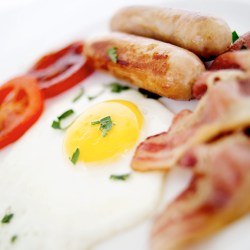
A blurry low-carb high-fat breakfast

A blog reader, Matt, brought up some interesting comments and questions. What follows will make little sense unless you read that prior post.

Matt writes:

Dr. Parker,

If the study folks didn’t do the real low carb diet because they “knew” that ketosis wouldn’t occur, couldn’t they at least have tried it, since what they were trying to prove was a calorie is a calorie?

Looking at the menus, the diet that they are purporting as low carb is really nothing close to a real low carb diet. It is a slightly lower carb diet, and not high enough in fat to prove anything. 35% carb is not Atkins phase anything. For a participant consuming 1600 calories, that’s 140g carb — too high for anyone attempting to restrict carbohydrates for health.

Please comment on the fact that the highest carb diet provided the worst lipid improvement.

Following up a little more, there really is no inference whatsoever that can be made with regard to a low carb diet with this study. Did you read the sample menu? No low carb diet phase would have any of the following as a typical meal. You can tell by looking at the menus that they had to be really PC about a “high fat” diet as well. I mean skim milk on a low carb / high fat diet? Note my level of surprise by the ? and ! in the parens with each “typical meal” option:

Breakfast:

1 poached egg

1/2 bagel (??)

4 oz apple juice (????!!!!)

skim (????) milk

Lunch:

1/2 cup spaghetti (??!!)

1/2 cup squash

1/2 cup peppers

1/2 cup mushrooms

1.5 T Olive Oil

1 small banana (????)

Dinner:

2 oz beef

1 small potato (????!!!!)

3/4 mixed veggies/legumes corn/carrots/lima/peas/green beans (???? since these are among the higher carb veggie choices)

1/2 cup cabbage

1 mini box raisins (??)

1 small apple (?????)

4 t Olive Oil

7 walnut halves

Snack

Skim (???) Milk

1 Graham cracker sheet (??????)

If you want a LC diet with what LC would consider a higher level of carbs (~60g) you need to do this:

Breakfast:

2-4 poached eggs

2 T olive oil

spinach

1 cup whole milk

Lunch:

1/2 cup squash

1/2 cup peppers

1/2 cup mushrooms

2 T Olive Oil

4-6 oz fish

Dinner:

4-6 oz beef

3/4 mixed lower carb (cruciferous/leafy) veggies such as broccoli, collards or other greens,

1/2 cup cabbage

2 T Olive Oil

20 walnut halves

1/2 cup low carb fruit such as cantaloupe

Snack

1/2 cup strawberries

1 cup whole milk yogurt ot cottage cheese

*******************************************

My response:

Thanks for your thoughtful comments/questions, Matt.

You’re right: The “low-carb” diet they studied indeed was not very low-carb, as succinctly illustrated by the sample menu you provided. (I didn’t read the supplementary appendix myself.)

You mention that the “highest carb diet provided the worst lipid improvement.” It’s not that clear-cut.

(Lipid changes are on pages 865-7 of the article, for anyone following along. Conventional wisdom is that better cardiovascular health is associated, generally, with lower total cholesterols, higher HDL chol, lower total LDL chol, and lower triglycerides.)

The study had two low-fat diets, with either 55 or 65% of total calories derived from carbohydrates. The two high fat diets had either 35 or 45% of total calories from carbohydrates.

Total cholesterol levels dropped by about 3 mg/dl in the low-fat diets compared to “no change” in the high-fat diets (2-year values). Measured at 6 months, total chol levels were down by about 5.5 mg/dl in the low-fat groups, and about 3 mg/dl in the high-fat groups. Baseline total chol levels for the whole group averaged 202 mg/dl.

The authors on page 865 write:

All the diets reduced risk factors for cardiovascular disease and diabetes at 6 months and 2 years. At 2 years, the two low-fat diets and the highest-carbohydrate diet decreased low-density lipoprotein [LDL] cholesterol levels more than did the high-fat diets or lowest-carbohydrate diet.

The lowest-carb diet increased HDL chol more than the highest carb diet, but we’re only talking about a 2 mg/dl difference measured at 2 years. HDL rose in all groups. Average baseline HDL level for the entire study group was 49 mg/dl.

All diets decreased triglycerides similarly, by 12-17%.

The magnitude of these changes is not great, and I question whether clinically important. The take-home point for me is that low-carb eating may not be (and probably isn’t) as atherogenic as warned by the medical community 15-20 years ago, judging purely from lipid changes. Other studies found similar numbers. But we’ve already agreed the this was not a serious trial of low-carb dieting.

The study authors write that HDL chol is a biomarker for carbohydrate intake: reducing dietary carbs tends to increase HDL chol levels, and vice versa.

If I understand “Nutrient Intake per Day” in Table 2 correctly, the participants who were told to increase their percentage of calories from fat really didn’t do it: they reduced it by 3.5% (!?). The low-fat cohorts had more success with compliance.

Clearly, it’s quite difficult to get free-living people to change their macronutrient intake and sustain the change for even six months, much less two years. Would compliance have been better if subjects had been allowed to choose a diet according to their natural inclinations? Maybe.

A recent study suggests that eating low-carb helps with prevention of weight regain because it burns an extra 300 calories a day compared to those eating low-fat.  Dr. Barbara Berkeley took a close look at this research on June 30.

Steve Parker, M.D.

Book Review: Six Weeks to OMG

I heard about this book before it was ever available in the U.S. and I thought it had the potential to be huge here.  So I read Six Weeks to OMG: Get Skinnier Than All Your Friends by Venice Fulton, published in 2012.  Per Amazon.com’s rating system, I give it two stars (“I don’t like it”).

♦   ♦   ♦

Judging from the wording and writing style, this book was written for not-too-bright girls and women from 12 to 22 years old.  Others need not bother with it.

Suggest a caption

Will it work for weight loss?  Yes, even without the author’s three cornerstone gimmicks: 1) Skip breakfast, but eat three meals daily, 2) Daily cold-water baths at 59 to 68°F for up to 15 minutes, and 3) Black coffee one or two cups every morning.  There’s no good scientific data to support those prescriptions.

The diet will work because it restricts your consumption of items that make us fat: concentrated sugars and refined starches.  It’s a low-carbohydrate diet—up to 60, 90, or 120 grams a day, depending on how fast you want to lose.

The diet consists mostly of high-protein animal-derived foods, low-carb vegetables, and up to three pieces of fruit daily.  Do not exceed 40 grams of carbohydrate per meal, even less is better, the author says.  Grains and dairy products aren’t mentioned much; it’s easy to blow your carb limit with them.  High-carb vegetables are listed, so you can avoid them.

Mr. Fulton emphasizes some important, valid points.  High protein consumption helps control appetite.  Trans fats are bad.  Eat cold-water fatty fish twice weekly.  Eat off a small plate (maximum of 9-inch diameter).  No snacking.  He says good things about weight training, while failing to mention it’s more much important long-term maintenance than for active weight loss.

He says some things that are just plain wrong, such as 1) everyone can be skinny, 2) there are only eight essential amino acids, 3) exercise is fairly helpful with weight loss, and 4) weight training just once every 10 days is adequate.

I’ll confess I didn’t read every word of the book.  The writing style is just too irritating unless you’re a not-too-bright 12 to 22-year-old.  For instance, every page had at least four exclamation marks!

Here are some of the dumbed-down sentences that unintentionally made me laugh out loud:

  • “The key to success is understanding stuff.”
  • “If you have problems controlling your appetite, the main reason is that you eat too often.”
  • “The person in the mirror, that’s you.”
  • “Human beings are part of the universe.  And that’s full of laws.  The laws of physics, chemistry and biology are three well-known laws.”

If you want a low-carb weight loss diet, you’re better off with Protein Power, The New Atkins For a New You, or the Low-Carb Mediterranean Diet.

Steve Parker, M.D.

Benefits of a Food Journal

Nearly every successful weight-loss effort involves conscious reduction of caloric intake.

Let’s assume you are 40 pounds (18.2 kg) overweight. To hold steady at that weight, you are eating a certain amount of calories, on average, on a daily basis. To lose weight, you have to eat fewer calories than your baseline level, whatever that is. Or you could start burning up more calories through physical activity while holding caloric intake steady. Many people combine caloric restriction with increased exercise. Whichever path is chosen, the result is conversion of excess fat into weightless energy.

Be that as it may, I have run across a few people who can say, “I’ll just cut out soda pop and snack chips,” and they’re able to lose weight. These individuals are a distinct minority of “successful losers.” Most people end up replacing their soda pop and chip calories with other calories, and don’t lose weight.

The idea behind a food journal, also called a log or diary, is to record everything you eat – the type of food and the caloric content – for as long as you are watching your weight. How could this help?

  • You think twice before cheating on your diet.
  • You stay within your specified calorie restriction.
  • It can help you reach your consumption goals for specific nutrients.
  • You learn how many calories are in your food. If you have a teaspoon of sugar in your coffee but drink four cups daily, that sugar becomes significant.
  • If you decide to cheat and exceed you calorie limit, you know how many calories to avoid tomorrow to make up for it.
  • It can help you identify triggers for “emotional eating,” when food is a pacifier instead of necessary nutrition.
  • It helps you learn what is an appropriate amount of food to eat.
  • In short, the food journal improves compliance with the diet.

It’s well established that keeping track of your food intake increases your odds of successful weight loss. Most diets do work, if only temporarily. Compliance deteriorates over time, and that’s when the diet stops working. ‘Cause you’re not on it anymore!

Read more about food journals at CalorieLab or About.com. The article at About.com, by Shereen Jegtvig, is comprehensive and allows you to print her journal page forms.

One of the beautiful things about the Advanced Mediterranean Diet is that it is highly customizable. For example, you have four options for caloric intake, based on your age, sex, and activity level. Each calorie intake level is designed to help you approximate the traditional Mediterranean diet while losing excess weight.

Advanced Mediterranean Diet food journals, which I call Daily Logs, are now available free online here. They include space to record physical activity and miscellaneous comments. Print the PDFs on your printer holding standard (8.5 x 11-inch) printer paper. Each page holds logs for three days. These logs also work with the free DIY Mediterranean Diet (Do-It-Yourself).

Why the term “log” instead of journal or diary? Think of James T. Kirk dictating, “Captain’s log, stardate 754428 . . .” “Daring to go where no man has gone before . . .” Your successful weight-loss journey has been pioneered by others. Now it’s your turn.

Steve Parker, M.D.

PS: NutritionData.com has added a free food diary called “My Tracking.”

How to Choose a Weight-Loss Program

I listed most of your weight-loss program options in Part 1 of this series. Now it’s time to make a choice. And it’s not easy sorting through all the options.

Straight away, I must tell you that women over 300 pounds (136 kg) and men over 350 pounds (159 kg) rarely have permanent success with self-help methods such as diet books, meal replacement programs, diet pills or supplements, and meal-delivery systems. People at those high weights who have tried and failed multiple different weight-loss methods should seriously consider bariatric surgery.

I respect your intelligence and desire to do your “due diligence” and weigh all your options: diet books, diet pills and supplements, bariatric surgery, meal replacement products (e.g., SlimFast), portion-control meal providers (e.g., NutriSystem), Weight Watchers, fad diets, no-diet diets, “just cutting back,” etc. You have to make the choice; I can’t make it for you. Here are some well-respected sources of advice to review before you choose:

For me personally, the “diet book” option is appealing. Why? Convenience. Low cost. Effectiveness. If I forget or don’t understand something, I can re-read it.

Since I’m a diet book author, you may consider me biased in favor of my own books, which are more about lifestyle modification than short-term dieting. If I didn’t think I could do better than the other books on the market, I wouldn’t have bothered to write my own.

So, please consider my Advanced Mediterranean Diet: Lose Weight, Feel Better, Live Longer (2nd Edition). If you have diabetes or prediabetes, see better options below.

I’ve also published a free, online, stripped-down version of my healthy lifestyle program: the Do-It-Yourself Mediterranean Diet.

Also free is my Ketogenic Mediterranean Diet, which is very low-carb.

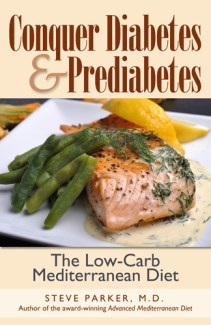
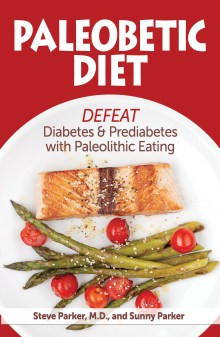
For folks with diabetes and prediabetes, I’ve put together Conquer Diabetes and Prediabetes: The Low-Carb Mediterranean Diet and Paleobetic Diet: Defeat Diabetes and Prediabetes with Paleolithic Eating.

I’m doing everything I can to help you live longer and healthier!

Whatever your choice, I wish you success and good health in 2020 and beyond!

Steve Parker, M.D.

Last modification date: Jan 22, 2020

Steve Parker MD, Advanced Mediterranean Diet

Click the pic to purchase at Amazon.com. E-book versions also available at Smashwords. com.

Click pic to purchase at Amazon.com. E-book versions also available at Smashwords. com.

Click pic to purchase at Amazon.com. E-book versions also available at Smashwords.com.


Prepare For Weight Loss, Part 7: Creative Visualization

How will your life be different after you make a commitment and have the willpower to lose weight permanently?

Odds are, you will be more physically active than you are now. Exercise will be a habit, four to seven days per week. Not necessarily vigorous exercise, perhaps just walking for 30 or 45 minutes. It won’t be a chore. It will be pleasant, if not fun. The exercise will make you more energetic, help you sleep better, and improve your self-esteem.

After you achieve your goal weight, you’ll be able to cut back on exercise to three or four days per week, if you want. If you enjoy eating as much as I do, you may want to keep very active physically so that you can eat more. I must tell you that I rarely see anyone lose a major amount of weight and keep it off without a regimen including regular physical activity. I wish that weren’t the case, and probably you do too, but that is the reality I have witnessed. Please don’t think you’ll be an exception; the odds are overwhelmingly against you. Plan on regular exercise being a part of your new lifestyle.

Commitment and willpower will alter your relationship with food. You will eat to live, rather than live to eat. You have important things to do with your life, dreams to pursue, and so little time left. If you have no long-range goals and are unclear about your purpose for living, you are certainly not alone. I urge you to consult a spiritual adviser such as a minister, priest, or rabbi.

Food is a necessary and enjoyable tool that helps you achieve your goals and fulfill your purpose by keeping you strong and healthy. Chronic overindulgence is a distraction. Carrying excess baggage impedes your progress on life’s journey.

Your new relationship with food will involve two phases: 1) weight loss, and 2) maintenance of that loss.

During the weight-loss phase, you will occasionally feel deprived due to calorie restriction. Your willpower will be tested and sometimes broken. But you recover control and press on. You don’t have to swear off all your favorite foods, just limit them. You will learn to eat reasonable portions of varied, balanced nutrients. You learn to delay gratification. You eat real food that is readily available and good for everyone in the household. You don’t have to sit there sipping your dinner out of a can while others at the table eat baked chicken, broccoli, and bread.

You’re excited and enthusiastic at first, full of hope, particularly when you lose those first three or four pounds. You’re not expecting to lose six or 10 pounds per week as in the TV infomercials because you know those results are bogus or unsustainable. You’re happy losing one-half to one-and-a-half pounds weekly because you know the loss is fat, not water or intestinal contents. You’ve held a pound of butter (four sticks) in your hand—that’s what you’ve lost. And it’s quite an accomplishment. The excitement wears off after three to six weeks, but it’s easier to deal with since you knew it was coming. You focus on the long-term benefits and renew your commitment. It helps that you’re now getting compliments from your friends and co-workers.

After much dedicated effort on your part, you finally attain your goal weight. You feel good about yourself. You take pride, justifiably, in your hard work, discipline, and willpower. You look better, sleep better, have more energy, and have rewarded yourself with some new clothes. But this is a critical juncture with risk—the risk of regaining fat and returning to your starting point. You must successfully navigate the transition to “maintenance phase,” in which you confirm and solidify your weight loss achievement. This is the most puzzling, problematic, and frustrating area in the field of weight management. To some extent, you must chart your own course.

Your relationship to food in the maintenance phase will have certain characteristics, however. In your weight-loss phase, you had been converting 400–600 calories worth of fat into energy every day. Now that you have reached your goal weight and have the will to stay there, you have options. You can 1) start eating an extra 400–600 calories daily, 2) reduce your physical activity by 400–600 calories daily, or 3) mix No. 1 and No. 2 such that you increase your current calorie budget by 400–600 calories. This is our old friend, the Energy Balance Equation.

In view of exercise’s benefits, many people choose to eat more food and continue their exercise program. At this point, the natural inclination, sometimes overwhelming, is to eat more than 400–600 extra calories per day. And you know what will happen. You will need perhaps even more commitment and willpower to keep from slipping back into your old habits, into your lifestyle of the last 10 years. You vow to admit this reality: you can never again eat all you want, whenever you want, over sustained periods of time. You look at a brownie, a candy bar, or a piece of apple pie, and you ask yourself, “Do I really want to walk an extra hour or jog an extra three miles today to burn off those calories?” If so, enjoy. If not, remember what they say: “A moment on the lips, a lifetime on the hips.”

You vow also to admit this reality: you’re going to “fall off the wagon” occasionally and gain four, five, or more pounds of fat. But it’s not the end of the world. You’re not a failure. An extra five or eight pounds won’t hurt you one bit, physically. But you draw the line, stand up straight, hold your head high, and simply return to your weight-loss program for a month or two. You’ve done it before and know you can do it again.

Changing your lifestyle is like breaking a horse. You’re in for a rough ride and you’re going to get thrown a few times. But you pick yourself up, dust yourself off, and climb back on. With time and persistence, your will prevails.

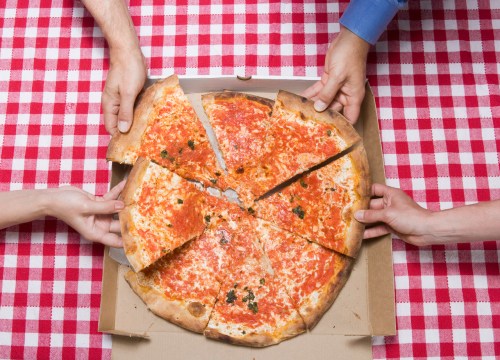
After you commit to permanent weight loss and maintenance, you will likely find yourself eating different types of food than your usual fare. Most people settle into a routine and eat the same 10 or 12 meals over and over. Do you start the day with fried eggs, bacon, biscuits and butter? Perhaps one of your regular meals is fried chicken with mountains of mashed potatoes and gravy. Pizza and soda pop? Maybe you like a hamburger with large fries a couple days per week. During the maintenance phase of weight management, those meals are fine on occasion. But over the long run you will eat substitute meals that are lower in calories, incorporating more fruits, vegetables, and whole grains. As a result you will feel better, obtain more healthy anti-oxidants and other micronutrients, and keep your weight under control.

Steve Parker, M.D.