Why Is My Green Tea Brown?

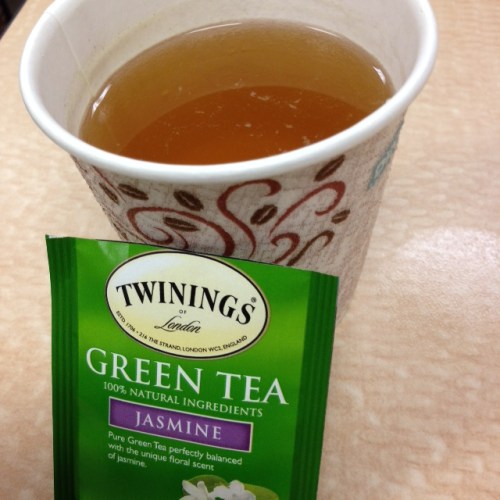
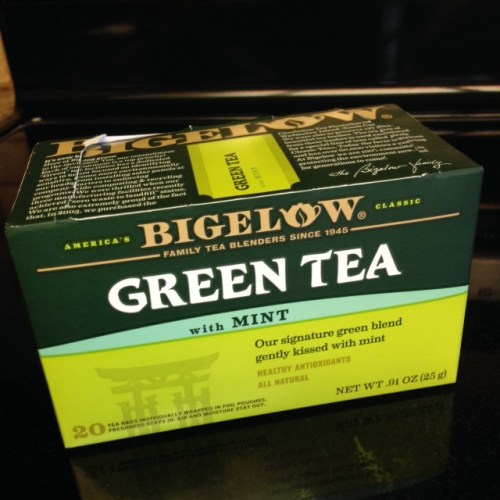
At least the box is green

At least the box is green

I’ve been reading for years how green tea is or might be particularly healthful for us. It’s not just hearsay. Respected journals like the American Journal of Clinical Nutrition suggest green tea’s virtues: longevity and less risk of type 2 diabetes, heart disease, and dementia, to name a few off the top of my head.

I’ve never been a tea drinker. Oh, sure, I’ve drunk iced tea at restaurants now and then. That’s black tea.

I drink coffee, about five cups a day. I work a fair number of night shifts, and the caffeine helps wake me up and keep me alert.

On a lark recently, I thought I’d cut back on the coffee and try green tea. In case you’re wondering, green tea has a third of the caffeine content of coffee.

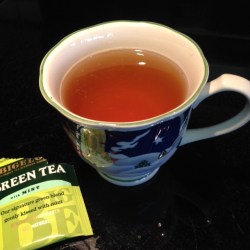
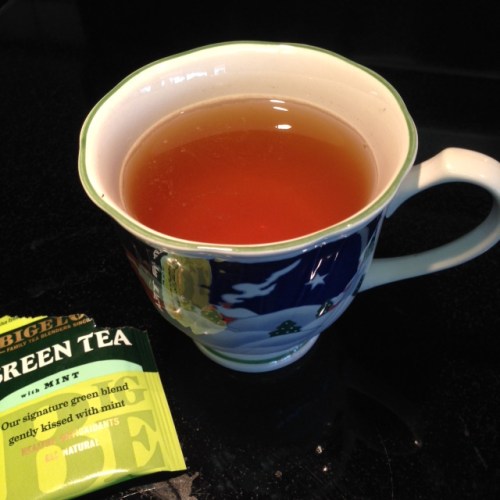
So I go to the supermarket tea section and pick up a box of Bigelow green tea bags. There were five or 10 other options. Why Bigelow? I think I’ve heard the name before. Or the box appealed to me subconsciously. I brew it up easy-peasy per directions and this is what I see:

Mild, pleasant flavor but may not have the phytonutrients I seek

Mild, pleasant flavor but may not have the phytonutrients I seek

WTF?!

Does that look green to you?

I didn’t think so.

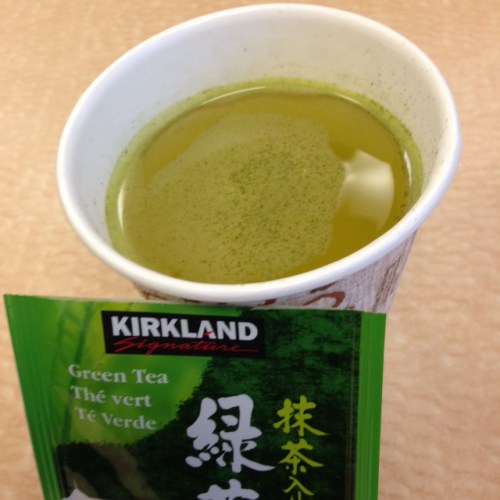
Naturally I start googling. The rest of this paragraph may or may not be true, like everything you read on the Internet. Green tea by tradition should be green. The supermarket teas are not traditional. They are oxidized, not fresh, or processed incorrectly. They’re a bastardization of traditional green teas with primary goals of mass distribution and adequate shelf life. They don’t have much of the “healthy” components you are looking for: anti-oxidants, polyphenols, EGCG, catechins, etc. Phytonutrient content of teas varies from batch to batch. The epidemiological studies that support green tea as healthful involved mostly Asian populations, often Japanese, who were drinking traditional green tea that’s green. Brewing is important: 170°F (77°C) for no more than 2–3 minutes. The fresher the tea leaves, the better. Special packaging may help preserve freshness. A Japanese-sounding brand may use tea grown outside of Japan.

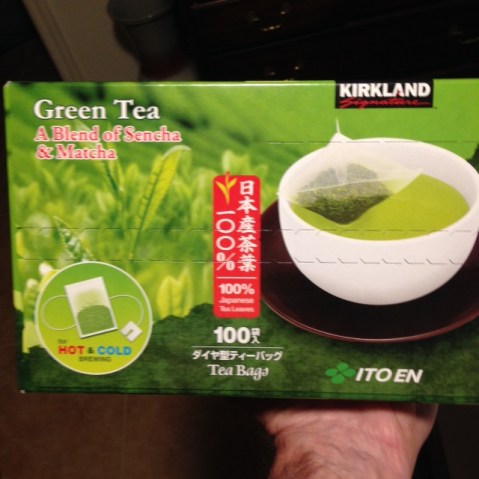
I don’t know any avid green tea drinkers. So I go to Amazon.com and start reading reviews. Apparently there’s a whole world of green tea culture and I’ve just scratched the surface. I’ve already spent three hours on this green tea thing. Judging from Amazon reviews, here are some green teas that might be worth trying: Kirkland Ito En Matcha Blend Japanese Green Tea Bags and Yamamotoyama Green Tea—Sushi Style. (Kirkland is a Costco brand.) (See update below for more teas.) I probably also need to seek out a local Japanese ethnic food store and see what they’ve got or recommend.

I’m not raggin’on Bigelow green tea specifically. I bet most supermarket green teas in the U.S. will come out brown. For all I know, Bigelow may be jam-packed with healthy phytonutrients that will help you live to 110. It has a mild pleasant taste that I enjoyed. I didn’t miss the higher caffeine load of coffee. But it’s not traditional green tea.

I still want to try a green tea habit. If you can give me some pointers, please do so below or email me at steveparkermd AT gmail DoT com. (Do we still have to hide email addresses from bots?)

Steve Parker, M.D.

PS: Just because green tea may be healthful for Southeast Asians, that’s no guarantee it works for other ethnicities.

PPS: I’m not at all convinced that green tea is a panacea that will help me stay healthy or live longer.

PPPS: Green tea is one of Franziska Spritzler’s low-carb beauty foods.

Update July 1, 2016: Camelopardalis on Twitter recommended Fuijukyu loose leaves. I’m also reading good reviews on Jade Leaf Matcha Ceremonial Grade tea.

Steve Parker MD, Advanced Mediterranean Diet

Two diet books in one

Obesity Rate In U.S. Women Now Up to 40%; Men Hold the Line at 35%

That excess weight can shorten your life

That excess weight can shorten your life

Yahoo has a brief article with a few more details. For $30 you can read the original scientific report from Journal of the American Medical Association.

Obesity in this context is defined as a body mass index of 30 or higher. Calculate your BMI here.

Is it your fault if you’re obese?

Steve Parker, M.D.

PS: If you want to buck the overweight/obesity trend, check out my books.

Book Review: “Gorilla Mindset” by Mike Cernovich


Gorilla-Mindset-book

Lawyer, blogger, and Tweetmaster Mike Cernovich has a new book, Gorilla Mindset: How to dominate and unleash the animal inside you to live a life of health, wealth, and freedom. Per Amazon.com’s rating system, I give it four stars (I like it).

♦  ♦  ♦

I’m an internal medicine specialist. For years, I’ve been struggling with how to convince my patients to exercise regularly and lose excess weight permanently. Why? So they’ll be healthier and live longer. Everyone wants to do that, right? But so few do. Because it’s hard to change lifelong habits to achieve a goal that may be years away. To make the change, you need the right mindset. Yes, it starts in your head.

The old mindset is: “I’ve been fat and lazy for years. I’ll always be fat and lazy. I’ve tried and failed a dozen times to change my lifestyle, and will fail every time.”

What’s the necessary new mindset? “I can do this. I’m not a brainless automaton without free will. I can see that discipline and sacrifice today will pay priceless dividends down the road. I don’t have to be fat just because everyone in my family is. I can overcome temptation. I’m not going to spend time with losers that bring me down. I’ll make new friends, people who live like me and support me. I will not be brainwashed by advertisers and food manufacturers who are only concerned about their profit, not my life. I have a plan for my life, and being fat and lazy aren’t in it.”

I wish I could download and install that into my patients’ brains!

Who created this?

Who created this?

I read this book hoping to pick up some new tips that would help me with my patients that need that mindset shift. And the author did not disappoint. I also ran across several techniques that I already use in my diet books, such as visualization.

Mike Cernovich’s methods include self-talk, posture improvement, mindfulness, focus, visualization, framing, and others. They will help with mindset re-set. The book is a fill-in-the-blank workbook, so buy your own copy and get to work.

The book is explicitly aimed at men. I would say the target demographic age is 16 to 40. The mind-bending methods should work for those over 40. It’s for men wanting more out of life, to rise above the hoi polloi, and willing to do the work.

It’s not a “weight loss book” per se; see the subtitle for details. However, Mr. Cernovich lost weight from 260 to 180 lb (118 to 81 kg). So he knows the struggle. He says, “…it’s almost impossible to maintain high levels of health while eating a diet high in processed foods.” I agree.

I particularly liked the chapter on money and livelihood. Young men need this information. The book is chock full of avuncular advice, so needed these days when too many boys grow up without a masculine role model. (Women, think long and hard about your children before you frivorce your husband.)

A little of the advice herein is California hippy-dippy woo, but it shouldn’t hurt you and may help, even if it doesn’t appeal to me. I’m convinced the author firmly believes in his recommendations and follows his own advice. I’m skeptical about some of the nutritional supplement advice, too; I’d check with P.D. Mangan for his thoughts.

The author hopes Gorilla Mindset becomes a perennial classic. He’s not quite there yet with this edition. He needs a chapter addressing sex/girls/women. Also, many young men need help on how to find a life purpose that motivates them. This isn’t enough: “If you feel unfilled [sic], stop doing whatever it is you’re doing. Try something else. Walk the streets until you’re exhausted. Repeat this every day. When you finally see what you want, your life will change.” My teenage daughter recently took an online occupational aptitude test that really helped give her some direction. My son is next; his interests are superficial and all over the map. Of course, aptitude is nothing without deep interest or passion. Another issue for the next edition: What about God and centuries-old religions?

A watershed moment in the Mike’s adolescence was when his father asked him, “When are you going to get serious?”

I ask you the same.

Steve Parker, M.D.

PS: If you think this review has too many words with vowels, you should see my books. They’re full of ’em.


QOTD: Moynihan On Broken Homes and Chaos

“A community that allows a large number of young men to grow up in broken families, dominated by women, never acquiring any stable relationship to male authority, never acquiring any rational expectations about the future—that community asks for and gets chaos.”

—U.S. Senator Daniel Patrick Moynihan, 1965

Mediterranean Diet Reduces Inflammation in Type 2 Diabetes


Santorini, Greek seaside

Santorini, Greek seaside

Markers of inflammation that circulate in our blood are linked to higher rates of type 2 diabetes.

One such marker is C-reactive protein: the higher the CRP, the greater the risk of T2 diabetes.

Another inflammatory marker is adiponectin, a protein secreted by fat cells. Adiponectin levels are inversely related to ongoing inflammation: higher levels of adiponectin indicate lower levels of inflammation. Folks with higher adiponectin levels are at lower risk of type 2 diabetes.

Italian researchers affiliated with the MEDITA clinical trial took 215 men and women with newly diagnosed type 2 diabetes and randomized them to eat either a Mediterranean diet or a low-fat diet. Hemoglobin A1c and inflammatory markers were followed for up to eight years. (I’m not sure, but I think these were relatively mild diabetics from the get-go, probably with HgbA1c under 7%.)

At the end of year one, CRP dropped by 37% and adiponectin rose by 43% in the Mediterranean diet group. In other words, inflammatory markers moved in a healthful direction.

Levels in the low-fat group were unchanged.

For individual Mediterranean dieters who were deemed diet failures (HgbA1c over 7%) at one year, CRP levels were higher and adiponectin levels were lower than their counterparts without diet failure.

Values were also measured two and four years after baseline, but results are not easy to summarize, and I don’t give too much credence to a diet modification purported to last that long. After six to 12 months of a new diet, most folks drift back to their usual way of eating.

Grapes are a time-honored component of the Mediterranean diet

Grapes are a time-honored component of the Mediterranean diet

Action Plan

If you have type 2 diabetes or want to avoid it, consider a Mediterranean-style diet.

Steve Parker, M.D.

PS: Even if you think inflammation is important, you’ll find no shortage of chapters in my books.

Reference: Anti-inflammatory effect of Mediterranean diet in type 2 diabetes is durable: 8-year follow-up of a controlled trial. Diabetes Care, 2016. doi: 10.2337/dc15-2356

Steve Parker MD, Advanced Mediterranean Diet

Two diet books in one

Mediterranean Diet Plus Olive Oil May Prevent Breast Cancer

From my pantry...

From my pantry…

A Mediterranean-style diet with supplemental extra-virgin olive oil seemed to reduce the incidence of breast cancer in a Spanish population. This is consistent with prior observational studies that link the Mediterranean diet with lower rates of breast and other cancers.

The study population involved 4,000 women who were followed for five years. Thirty-five new cases of breast cancer occurred in this PREDIMED study sub-analysis.

The comparison diets were a reduced-fat diet and Mediterranean diet supplemented with mixed nuts.

This is a relatively small study, so results may not be entirely reliable.

Action Plan

If you’re a woman hoping to avoid breast cancer, consider the Mediterranean diet and be sure to eat plenty of extra-virgin olive oil. A good way to do this is to use home-made vinaigrettes.

Steve Parker, M.D.

PS: Even if you think Spaniards are jovial, you won’t find any in my books.

Reference: Mediterranean diet and invasive breast cancer risk among women at high cardiovascular risk in the PREDIMED trial. JAMA Internal Medicine, 2015. doi: 10.1001/jamainternmed.2015.4838

Steve Parker MD, Advanced Mediterranean Diet

Two diet books in one

Exercise Promotes Melanoma and Prostate Cancer

Needs a bit more hormetic stress

“Would you spot me, bro?”

I’ve always assumed that exercise reduces the risk of cancer, contributing to the well-established fact that folks who exercise live longer than others.

But a recent study found a positive association between exercise and two cancers: melanoma and prostate.

The good news is that exercise was linked to lower risk of 13 other cancers.

Here’s a quote for the New York Times Well blog:

The researchers found a reduced risk of breast, lung and colon cancers, which had been reported in earlier research. But they also found a lower risk of tumors in the liver, esophagus, kidney, stomach, endometrium, blood, bone marrow, head and neck, rectum and bladder.

And the reductions in risk for any of these 13 cancers rose steeply as people exercised more. When the researchers compared the top 10 percent of exercisers, meaning those who spent the most time each week engaging in moderate or vigorous workouts, to the 10 percent who were the least active, the exercisers were as much as 20 percent less likely to develop most of the cancers in the study.

I’m surprised the protective effect of exercise against cancer wasn’t stronger.

Action Plan

So how much physical activity does it take to prevent cancer? And what type of exercise? We await further studies for specific answers.

I’m hedging my bets with a combination of aerobic and strength training two or three times a week.

Steve Parker, M.D.

PS: If you think cancer’s bad, read one of my books. Wait, that didn’t come out right.

Olive Oil Helps Control Blood Sugar Levels

Steve Parker MD, Advanced Mediterranean DIet

Naturally low-glycemic index Caprese salad: mozzarella cheese, tomatoes, basil, extra virgin olive oil

Italian researchers found that extra-virgin olive oil taken with meals helps to reduce blood sugar elevations after meals in type 1 diabetics. This may help explain the lower observed incidence of diabetes seen in those eating a traditional Mediterranean diet, which is rich in olive oil.

Before going further into the weeds, remember that glycemic index refers to how high and quickly a particular food elevates blood sugar. High-glycemic index foods raise blood sugar quicker and higher compared to low-glycemic index foods.

The study at hand is a small one: 18 patients. They were given both high- and low-glycemic meals with varying amounts and types of fat. Meals were either low-fat, high in saturated fat (from butter), or high in monounsaturated fat from olive oil. Meals that were high-glycemic index resulted in lower after-meal glucose levels if the meal had high olive oil content, compared to low-fat and butter-rich meals.

If meals were low in glycemic index, blood sugar levels were about the same whether the diet was low-fat, high in saturated fat, or rich in olive oil.

Action Plan

If you have type 1 diabetes and plan on eating high on the glycemic index scale, reduce your blood sugar excursions by incorporating extra-virgin olive oil into your meals.

Steve Parker, M.D.

Reference: Bozzetto, Luigarda, et al. Extra-virgin olive oil reduces glycemic response to a high-glycemic index meal in patients with type 1 diabetes: a randomized controlled trial. Diabetes Care, online before print, February 9, 2016. doi: 10.2337/dc15-2189

Steve Parker MD, Advanced Mediterranean Diet

Two diet books in one

QOTD: John Adams on the U.S. Constitution

Our Constitution was made only for a moral and religious people. It is wholly inadequate to the government of any other.

John Adams, 1798

Diabetes and Alzheimer’s Dementia: What’s the Connection?

dementia, memory loss, Mediterranean diet, low-carb diet, glycemic index, dementia memory loss

“More basic research is critical.”

Several scientific studies, but not all, link type 2 diabetes with Alzheimer’s disease. Some go so far as to say Alzheimer’s is type 3 diabetes.

My Twitter feed brought to my attention a scientific article I thought would clarify the relationships between diabetes, carbohydrate consumption, and Alzheimer’s dementia (full text).

It didn’t.

Click the full text link to read all about insulin, amylin, insulin degrading enzyme, amyloid–β, and other factors that might explain the relationship between type 2 diabetes and Alzheimer’s dementia. You’ll also find a comprehensive annotated list of the scientific studies investigating the link between diabetes and Alzheimer’s.

Bottom line: We still don’t know the fundamental cause of Alzheimer’s disease. A cure and highly effective preventive measures are far in the future.

Action Plan For You

You may be able to reduce your risk of Alzheimer’s disease by:

  • avoiding type 2 diabetes
  • preventing progression of prediabetes to diabetes
  • avoiding obesity
  • exercising regularly
  • eating a Mediterranean-style diet

Carbohydrate restriction helps some folks prevent or resolve obesity, prediabetes, and type 2 diabetes. A low-carb Mediterranean diet is an option in my Advanced Mediterranean Diet (2nd edition).

Steve Parker, M.D.

Reference: Schilling, Melissa. Unraveling Alzheimer’s: Making Sense of the Relationship Between Diabetes and Alzheimer’s Disease. Journal of Alzheimer’s Disease, 51 (2016): 961-977.

Steve Parker MD, Advanced Mediterranean Diet

Two diet books in one