Posted onAugust 13, 2020|Comments Off on #COVID-19 death rates reveal NY and NJ are #1 and #2
…Connecticut and Massachusetts didn’t do very well either.
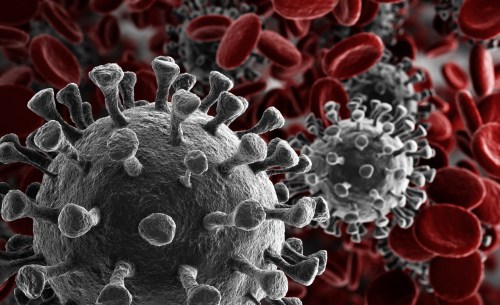
Artist’s rendition of Coronavirus
From New York Post:
More than 32,000 New Yorkers have died from the coronavirus, a toll higher than any other state. New York also ranks second to the worst out of all 50 states, in deaths per million residents. Only New Jersey did worse.
You wouldn’t know it, listening to Gov. Andrew Cuomo, who brags that his administration “tamed the beast.” Or the media that praise him and chide states with much, much lower death rates.
Cuomo is doing everything he can to coverup the errors. He’s stonewalling bipartisan efforts in Albany to investigate the deaths of thousands of elderly in nursing homes ravaged by the virus.
Legislators need to persevere, and in fact broaden their investigation to include the poor performance of many hospitals in the state. On March 2, one day after the first coronavirus case in New York was disclosed, Cuomo told New Yorkers not to worry because “we have the best health care system on the planet.” That’s a whopper. Patients treated for COVID-19 in hospitals here died at more than twice the national average.
Let’s assume that the events of the last five months are neither random nor unexpected. Let’s say they’re part of an ingenious plan to transform American democracy into a lockdown police state controlled by criminal elites and their puppet governors. And let’s say the media’s role is to fan the flames of mass hysteria by sensationalizing every gory detail, every ominous prediction and every slightest uptick in the death toll in order to exert greater control over the population. And let’s say the media used their power to craft a message of terror they’d repeat over and over again until finally, there was just one frightening storyline ringing-out from every soapbox and bullhorn, one group of governors from the same political party implementing the same destructive policies, and one small group of infectious disease experts –all incestuously related– issuing edicts in the form of “professional advice.”
Obesity is a risk factor for developing a more severe case of COVID-19, the novel coronavirus respiratory illness. Looks like the disease will be with us a while longer. Why not start working on that obesity problem today?
Posted onJuly 18, 2020|Comments Off on National Health Expenditures in U.S. in 2019
I’ll be using these stats in my upcoming healthcare reform manifesto unless I can find 2020 numbers:
National health expenditures (NHE) grew 4.6% to $3.8 trillion in 2019, or $11,582 per person, and accounted for 17.7% of Gross Domestic Product(GDP).
Medicare spending grew 6.7% to $799.4 billion in 2019, or 21 percent of total NHE.
Medicaid spending grew 2.9% to $613.5 billion in 2019, or 16 percent of total NHE.
Private health insurance spending grew 3.7% to $1,195.1 billion in 2019, or 31 percent of total NHE.
Out of pocket spending grew 4.6% to $406.5 billion in 2019, or 11 percent of total NHE.
Hospital expenditures grew 6.2% to $1,192.0 billion in 2019, faster than the 4.2% growth in 2018.
Physician and clinical services expenditures grew 4.6% to $772.1 billion in 2019, a faster growth than the 4.0% in 2018.
Prescription drug spending increased 5.7% to $369.7 billion in 2019 [that’s 9.7% of NHE], faster than the 3.8% growth in 2018.
The largest shares of total health spending were sponsored by the federal government (29.0 percent) and the households (28.4 percent). The private business share of health spending accounted for 19.1 percent of total health care spending, state and local governments accounted for 16.1 percent, and other private revenues accounted for 7.5 percent.
Posted onJuly 16, 2020|Comments Off on Yes: Does Legalization of Marijuana Increase Traffic Fatality Rates?
From JAMA Network:
By analyzing additional experimental states over a more recent time period, we have provided additional data that legalization of recreational marijuana is associated with increased traffic fatality rates. Applying these results to national driving statistics, nationwide legalization would be associated with 6800 (95% CI, 4200-9700) excess roadway deaths each year.
Posted onJuly 13, 2020|Comments Off on How Can Low-Carb Diets Be Better Than Others for Weight Loss?
Sous vide chicken and sautéed sugar snap peas. This meal fits into a low-carb or ketogenic diet.
Low-carbohydrate diets help many folks, but not all, lose excess fat weight. When low-carb diets help, it may be related to Total Energy Expenditure (TEE). When you read “energy,” think calories. TEE is a combination of calories needed for 1) basic life processes (i.e., basal metabolic rate, as needed to maintain heart beats, breathing, steady body heat, growth and repair of tissues, etc.), 2) processing of ingested food (dietary thermogenesis), and 3) physical exercise.
Here’s the abstract of an article in The Journal of Nutrition that examines the headline question. It’s complicated and I haven’t read the full study yet.
Many obesity experts believe that to lose excess fat weight, you have to ingest fewer calories than you burn on a daily basis for physical exercise and basal metabolic rate. This creates a calorie (energy) deficit. Your body satisfies that deficit by converting fat tissue to weightless energy. The authors of the study at hand are essentially saying that, after 2-3 weeks, a low-carb diet “revs up your metabolism” to burn more calories. That can help you lose weight or maintain weight loss, unless you over-eat.
Here you go, nutrition nerds:
Background
The effect of macronutrient composition on total energy expenditure (TEE) remains controversial, with divergent findings among studies. One source of heterogeneity may be study duration, as physiological adaptation to lower carbohydrate intake may require 2 to 3 wk.
Objective
We tested the hypothesis that the effects of carbohydrate [expressed as % of energy intake (EI)] on TEE vary with time.
Methods
The sample included trials from a previous meta-analysis and new trials identified in a PubMed search through 9 March 2020 comparing lower- and higher-carbohydrate diets, controlled for EI or body weight. Three reviewers independently extracted data and reconciled discrepancies. Effects on TEE were pooled using inverse-variance-weighted meta-analysis, with between-study heterogeneity assessed using the I2 statistic. Meta-regression was used to quantify the influence of study duration, dichotomized at 2.5 wk.ResultsThe 29 trials ranged in duration from 1 to 140 d (median: 4 d) and included 617 participants. Difference in carbohydrate between intervention arms ranged from 8% to 77% EI (median: 30%). Compared with reported findings in the prior analysis (I2 = 32.2%), we found greater heterogeneity (I2 = 90.9% in the reanalysis, 81.6% in the updated analysis). Study duration modified the diet effect on TEE (P < 0.001). Among 23 shorter trials, TEE was reduced on lower-carbohydrate diets (−50.0 kcal/d; 95% CI: −77.4, −22.6 kcal/d) with substantial heterogeneity (I2 = 69.8). Among 6 longer trials, TEE was increased on low-carbohydrate diets (135.4 kcal/d; 95% CI: 72.0, 198.7 kcal/d) with low heterogeneity (I2 = 26.4). Expressed per 10% decrease in carbohydrate as %EI, the TEE effects in shorter and longer trials were −14.5 kcal/d and 50.4 kcal/d, respectively. Findings were materially unchanged in sensitivity analyses.
Conclusions
Lower-carbohydrate diets transiently reduce TEE, with a larger increase after ∼2.5 wk. These findings highlight the importance of longer trials to understand chronic macronutrient effects and suggest a mechanism whereby lower-carbohydrate diets may facilitate weight loss.
This finding supports a prediction of the carbohydrate-insulin model and suggests a mechanism whereby dietary carbohydrate reduction could aid in the prevention and treatment of obesity. According to this model, the high insulin-to-glucagon ratio with a diet high in glycemic load (mathematical product of glycemic index and carbohydrate amount) shifts the partitioning of metabolic fuels from oxidation in lean tissue to storage in adipose tissue. If the effects observed here persist over the long term, then reducing dietary carbohydrate intake by half from 60% of energy intake (a typical level for low-fat diets) would increase energy expenditure by ∼150 kcal/d, counterbalancing (if not compensated for by other factors) much of the secular increase in energy intake thought by some to underlie the obesity epidemic.
Coronavirus disease 2019 (COVID-19) poses an occupational health risk to food system workers including farmers/producers, grocery store workers, emergency food system staff and volunteers (e.g., food pantry workers), and others. These food system workers have been pushed to the front-line of this pandemic, providing essential services that support food consumption for all Americans. Food system workers are some of the most economically vulnerable populations and are at risk of further financial disparities and contraction of COVID-19 during this pandemic. As we continue to grapple with the best strategies to support the food system and mitigate concerns around the spread of COVID-19, appropriate measures must be considered to better protect and support front-line food system workers that safeguard food access for all Americans.
Posted onJuly 8, 2020|Comments Off on #Coronavirus May Be All Over the Damn Hospital
Young Hank near the keyboard of my MacBook Pro
From Emerging Infectious Diseases:
To determine distribution of severe acute respiratory syndrome coronavirus 2 [SARS-CoV-2, the virus that causes COVID-19] in hospital wards in Wuhan, China, we tested air and surface samples. Contamination was greater in intensive care units than general wards. Virus was widely distributed on floors, computer mice, trash cans, and sickbed handrails and was detected in air ≈4 [meters] from patients.
Posted onJuly 8, 2020|Comments Off on Legalized Recreational #Marijuana Increases Traffic Fatality Rates
“By analyzing additional experimental states over a more recent time period, we have provided additional data that legalization of recreational marijuana is associated with increased traffic fatality rates. Applying these results to national driving statistics, nationwide legalization would be associated with 6800 (95% CI, 4200-9700) excess roadway deaths each year. Despite certain methodological differences, we found an increase similar to that reported by Aydelotte et al. They reported an increase of 1.8 fatal crashes (equivalent to 2.0 fatalities) per BVMT. We concur with their opinion that changes may not be detected immediately after legalization but only after a longer time period or after commercial sales begin.”
Posted onJuly 8, 2020|Comments Off on #Hydroxychloroquine Reduced Death Rate Significantly in #COVID19 Patients in Henry Ford Health System
Intubated to prevent death
DETROIT – Treatment with hydroxychloroquine cut the death rate significantly in sick patients hospitalized with COVID-19 – and without heart-related side-effects, according to a new study published by Henry Ford Health System.
In a large-scale retrospective analysis of 2,541 patients hospitalized between March 10 and May 2, 2020 across the system’s six hospitals, the study found 13% of those treated with hydroxychloroquine alone died compared to 26.4% not treated with hydroxychloroquine. None of the patients had documented serious heart abnormalities; however, patients were monitored for a heart condition routinely pointed to as a reason to avoid the drug as a treatment for COVID-19.
The study was published today in the International Journal of Infectious Diseases, the peer-reviewed, open-access online publication of the International Society of Infectious Diseases (ISID.org).
Patients treated with hydroxychloroquine at Henry Ford met specific protocol criteria as outlined by the hospital system’s Division of Infectious Diseases. The vast majority received the drug soon after admission; 82% within 24 hours and 91% within 48 hours of admission. All patients in the study were 18 or over with a median age of 64 years; 51% were men and 56% African American.
Posted onJuly 7, 2020|Comments Off on Have You Heard of the Three C’s to Prevent a Second Wave of #COVID19 ?
I’m ready for the 2nd wave in AZ
From Calculated Risk:
Some countries have been able to open their economies without an increase in [coronavirus] infections. For example, in Japan, the economy is mostly open, however 1) everyone wears a mask, 2) there is robust contact tracing, and 3) everyone is urged to follow the 3 C’s (avoid Closed spaces, Crowded places, and Close-Contact settings). However, in the US, contact tracing is still ramping up, many people aren’t wearing a mask or face covering, and many people are not following the 3Cs.







 Advanced Mediterranean Diet