Posted onNovember 9, 2020|Comments Off on The Electoral College Declares the President-Elect, Not the Mainstream Media
I’m neither a Republican nor Democrat and this is not a political blog. However I do have at least a little concern that the recent U.S. presidential election was influenced by fraudulent “voting.” Investigations are underway and maybe we’ll have an answer by Dec 14, 2020, the deadline for the electoral college to declare a clear and legal winner. I’m reproducing these tweets here, hoping that they’ll be preserved even if Twitter decides to censor and delete them. Twitter would not allow me to copy one of President Trump’s tweets of Nov 7.
THE OBSERVERS WERE NOT ALLOWED INTO THE COUNTING ROOMS. I WON THE ELECTION, GOT 71,000,000 LEGAL VOTES. BAD THINGS HAPPENED WHICH OUR OBSERVERS WERE NOT ALLOWED TO SEE. NEVER HAPPENED BEFORE. MILLIONS OF MAIL-IN BALLOTS WERE SENT TO PEOPLE WHO NEVER ASKED FOR THEM!
Texas swiftly processed more than 11 million votes & quickly announced winners across 2 time zones.⁰ To ensure transparency we allow poll watchers from each party to participate in the voting & tally processes.
What is happening in some states undermines trust in elections.
It is NOT normal for multiple states, or even one state, to be counting presidential votes for days after Election Day. It is without precedent in modern American history. And it raises significant statutory and constitutional concerns.
On a lighter note, here’s a pic of a jade plant started from a clipping from an outdoors jade plant from Oceanside, CA, from summer of 2019. It has tripled size since then, but does not do well in 100+ degree heat.
Posted onNovember 8, 2020|Comments Off on No Big Difference Among Popular Diets
The french fries and 40 diet
From MedPage Today:
When it comes to choosing among popular diets, patients might as well choose the one they like. The diets all result in modest weight loss and their differences generally disappear at 12 months, scientists said.
The meta-analysis of 121 randomized clinical trials comparing 14 popular diets found that the top three in terms of mean weight loss and blood pressure reductions at 6 months were Atkins (5.5 kg, 5.1 mm Hg systolic); Zone (4.1 kg, 3.5 mm Hg); and DASH (3.6 kg, 4.7 mm Hg), reported Bradley Johnston, PhD, of McMaster University in Hamilton, Ontario, and colleagues.
However, as shown in the study online in The BMJ, the other popular diets were associated with some degree of weight loss and blood pressure improvement at 6 months, on the order of 2-3 kg for body weight and 3-4 mm Hg for systolic blood pressure.
By 12 months, the effects had diminished to the degree that the differences between diets were negligible, the team said.
None of the popular diets were associated with significant reductions in lipids, with the notable exception of the Mediterranean diet, for which there was a mean 4.59 mg/dL reduction in low-density lipoprotein (LDL) cholesterol at 6 months. The Mediterranean diet was also notable in that this effect did not diminish at 12 months, the researchers said.
Diets don’t work if you don’t follow them. Compliance drops off dramatically after 6-12 months. People go back to their old ways of eating and regain the last weight.
Steve Parker, M.D.
PS: The Advanced Mediterranean Diet is not popular. But if you don’t follow it, you’ll gain back the lost weight.
Posted onNovember 7, 2020|Comments Off on How Effective Is Remdesivir for #Covid19 ? #CoronaVirus
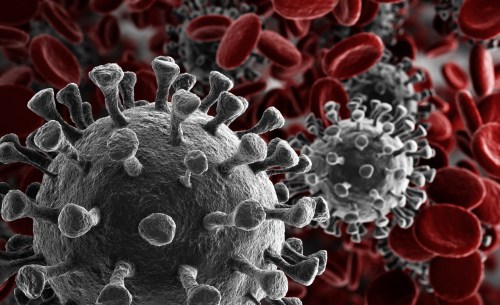
Are you tired of this pic yet?
At the hospital where I work, the active treatment options we have for COVID-19 are dexamethasone, convalescent plasma, and remdesivir.
From NEJM:
In an analysis that used a proportional-odds model with an eight-category ordinal scale, the patients who received remdesivir were found to be more likely than those who received placebo to have clinical improvement at day 15 (odds ratio, 1.5; 95% CI, 1.2 to 1.9, after adjustment for actual disease severity). The Kaplan–Meier estimates of mortality were 6.7% with remdesivir and 11.9% with placebo by day 15 and 11.4% with remdesivir and 15.2% with placebo by day 29 (hazard ratio, 0.73; 95% CI, 0.52 to 1.03). Serious adverse events were reported in 131 of the 532 patients who received remdesivir (24.6%) and in 163 of the 516 patients who received placebo (31.6%).
CONCLUSIONS
Our data show that remdesivir was superior to placebo in shortening the time to recovery in adults who were hospitalized with Covid-19 and had evidence of lower respiratory tract infection.
Posted onNovember 6, 2020|Comments Off on Altering the omega-6/omega-3 fatty acid ratio reduces liver fat in obese adolescents
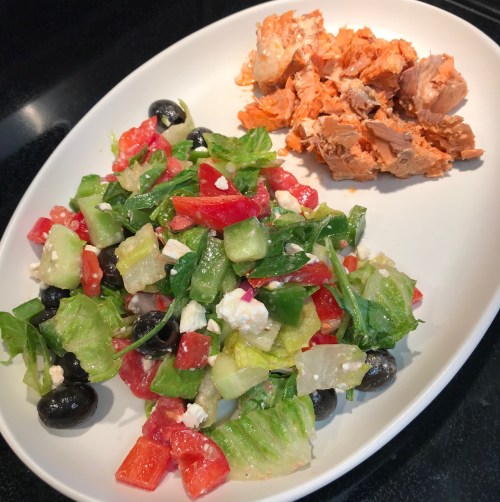
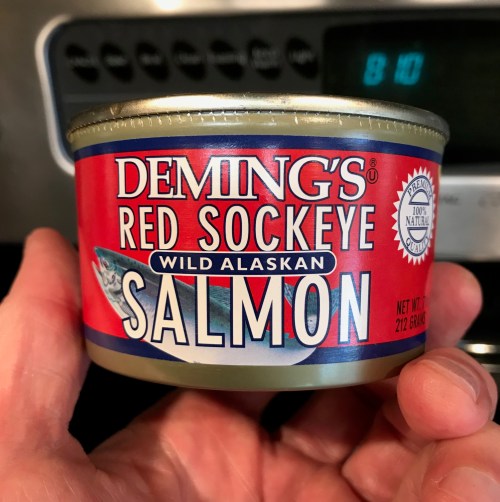
Greek salad with canned salmon. Salmon is one of the cold-water fatty fish.
Omega-6 fatty acids predominate in vegetable oils, including soybean oil. Omega-3 fatty acids, on the other hand, are concentrated in cold-water fatty fish. Some experts believe that excessive consumption of omega-6 fatty acids is inflammatory, contributing to chronic diseases of civilization.
The usual U.S. omega-6/omega-3 fatty acid diet ratio is 15:1. The study at hand altered that to 4:1. That is, they reduced omega-6 or increased omega-3 fatty acid consumption over 12 weeks.
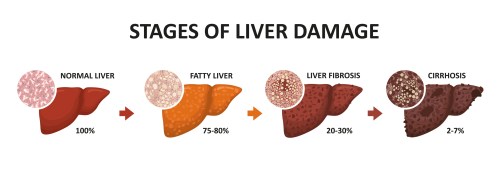
I’ve written about fatty liver disease many times (use search box in interested). The worst outcome is chronic inflammation leading to cirrhosis.
Stages of liver damage. Healthy, fatty, liver fibrosis and cirrhosis. Vector illustration
The study at hand suggests that reducing dietary omega-6 fatty acids and increasing omega-3s can help reverse fat build-up in the liver, at least in obese adolescents.
From a poster presentation published by the American Diabetes Association:
Recent literature suggests that the dietary imbalance between high omega-6 (n6) and low omega-3 (n3) polyunsaturated fatty acids (PUFA) intake, characteristic of the Western diet (average ratio 15:1), leads to development of fatty liver disease. We aimed to determine whether 12 weeks of a low n6/n3 PUFA ratio (4:1) normo-caloric diet might impact fatty liver (MRI assessed hepatic fat content ≥5.5%). Twenty obese adolescents with fatty liver were recruited (13.2±2.9y). Abdominal MRI and OGTT were performed at baseline and after 12-weeks intervention, the oxidized derivatives of linoleic acid (OXLAM) were measured every 4 weeks to assess compliance. Food was supplied to participants isocaloric to their pre-study diet. To control for weight change variable, weight was maintained stable throughout the study. Seventeen adolescents completed the study. After 12 weeks HFF%, decreased of about 26% (Figure 1). There was also a significant decrease in plasma concentrations of ALT (Figure 1), triglycerides (p=0.04) cholesterol (p=0.03), LDL (p=0.07) and an improvement of whole-body insulin resistance (p=0.01). There was a significant decrease of the OXLAM, 9- and 13-HODE (p=0.03 and p=0.01, respectively) and 9- and 13-oxo-ODE (p=0.05 and p=0.01, respectively). These data suggest that, independent of weight loss, a low n6/n3 PUFA diet is effective to ameliorate the metabolic phenotype of adolescents with fatty liver disease.
Posted onNovember 5, 2020|Comments Off on Does Vitamin D Help Prevent and Fight #COVID19 ? #Coronavirus
Dietary sources of vitamin D include cold-water fatty fish, red meat, liver, egg yolks, and some fortified foods. Of course, you can make your own vitamin D with enough skin exposure to sunlight.
Maybe. At vitamin D is relatively cheat and many folks are deficient in vitamin D yet don’t know it. From The Journal of Nutrition:
As others have mentioned, it is unlikely that one silver bullet will end the COVID-19 pandemic; however, evidence-based recommendations can be made that may reduce the risk of a severe response to SARS-CoV-2 infection or viral reactivation. Simpson and Katsanis have reported the benefits of exercising during the COVID-19 pandemic that was based on the evidence they found in their spaceflight research. We recommend that people maintain optimal vitamin D status to support immune function and lower their risk of viral reactivation, a recommendation that also comes from our National Aeronautics and Space Administration (NASA)–funded research. We are not advocating for ultra-high doses of vitamin D supplementation because of possible side effects, but rather a level of supplementation that will prevent vitamin D deficiency and maintain serum concentrations >30 ng/mL. We determined from our Antarctic research that doses of 1000–2000 IU/d, which are within IOM guidelines, are likely sufficient. Modifiable measures such as these may have the potential to safely and easily offer some protection and reduce risk.
Posted onOctober 31, 2020|Comments Off on We Must Have Healthcare Price Transparency! #HealthcareReform
From the Independent Women’s Forum:
Not Perla Ni
A few days after a breast biopsy at a Stanford Health Care facility, Perla Ni opened her bill: $143,396.66.
A breast biopsy takes about 45-minutes. Ms. Ni had a high deductible insurance policy, and she paid $7,750 out of pocket. Her insurer, able to negotiate a discount, paid $67,088. By the way, Ni’s insurer is raising its premiums.
Dr. Marty Makary, Professor of Surgery and Health Policy at the Johns Hopkins School of Medicine, and an advocate of price transparency, points out over at Market Watch that what Ms. Ni paid out of her own pocket would have covered the entire cost of the same procedure at the respected Surgery Center of Oklahoma, which requires cash and posts a menu for its prices.
ObamaCare is more formally known as the Affordable Care Act (ACA), which was passed in 2010. From an article published March 5, 2020, at The Hill:
In its first decade, ObamaCare has failed to solve many of the health care problems it was supposed to address. Even worse, it has compounded many of the issues it was meant to fix — the law of unintended consequences in action.
First, then-candidate Barack Obama said his namesake act would “cut the cost of a typical family’s premiums by up to $2,500 a year.”In reality, the opposite has occurred. According to the Department of Health and Human Services (HHS), “premiums have doubled for individual health insurance plans since 2013, the year before many of Obamacare’s regulations and mandates took effect.”
***
Third, President Obama repeatedly assured voters, “If you like your health care plan, you’ll be able to keep your health care plan, period.” After ObamaCare was enacted, millions of Americans were unable to keep their pre-ObamaCare health insurance plan.
Individual market premiums were $2789/year in 2013, compared to $5712/year in 2017.
Obamacare proponents promised that the plan would drastically reduce the number of uninsured folks. Wasn’t it 30 million uninsured? But there are still 28 million uninsured. And it’s probably going to get worse since citizens are no longer forced to buy something they don’t want or can’t afford.
Nearly all of Obamacare remains in effect except for the mandate to purchase health insurance whether you want it or not.
The author of the article is affiliated with The Heartland Institute.
Posted onOctober 29, 2020|Comments Off on Dr Craig Wax Wants Hospital Price Transparency
Which is less expensive?
The following excerpt was in a letter by Craig Wax to U.S. News and World Report. The final paragraph may be news to you.
IN THE CURRENT DAY [2017], when health insurance and health care delivery are not only regulated, but mandatory for citizens to buy, patients as consumers must know costs. U.S. News & World Report’s annual listing of “Best Hospitals,” based on your rating scales, needs to include hospital service and procedure costs.
Consumer Reports monthly periodical is one such example; it not only reports their definition of quality rating scales but also costs. This is vital for consumers of any product or service to compare all variables, when able. Although, on some health care instances, such as emergencies, you cannot compare when your life or limb may be at risk. However, patients can compare hospitals and other providers of health care service at most other times. In this way, they can develop an understanding of the variables and have a general understanding and preference for facility.
Let’s take the so-called top three children’s hospital pricing schemes.
Most hospitals are designated nonprofit, as are the top three pediatric hospitals in the article. This seems to sound like they are operating at minimal reimbursement margins, but the reverse is true. They set, “chargemaster,” pie-in-the-sky prices but will accept various insurance contract prices as payment in full. Nonprofit is merely a tax designation to dodge business, state and federal taxes, while at the same time, hospitals actively solicit state taxpayer funds and private donations. They seldom offer direct care cash prices due to federal government Medicare health care price fixing.
Please understand that due to federal government Medicare law, that cash prices cheaper than Medicare rates may not be formally offered or posted. The federal government considers it illegal to offer a quality product at a cash discount over Medicare mandated rates.
Posted onOctober 29, 2020|Comments Off on From ConsumersAdvocate: The Best Fitness Trackers For 2020
ConsumersAdvocate.org has an article comparing and contrasting some of the available fitness trackers:
You go, girl!
HOW WE FOUND THE BEST FITNESS TRACKERFEATURES
We checked for fitness trackers with diverse features that users could choose to best match their lifestyle and goals. This includes multiple health and activity monitoring options.
CONNECTIVITY
Many fitness trackers sync with smartphones or Bluetooth to receive calls, get message notifications, and send data to their corresponding fitness apps. We looked at trackers that were easy to connect.
COST
Regular fitness trackers can range from $50 to $200, while hybrid smartwatches can cost over $400. We compared prices to special features to make sure consumers get the most out of their investment.
CUSTOMER EXPERIENCE
Fitness trackers should be durable, lightweight, and comfortable. We interviewed customers and read dozens of reviews and testimonies for thorough feedback on each product.







 Advanced Mediterranean Diet