Mediterranean Diet Lowers Parkinson’s Disease Risk for Women

  • santorini, greece

Investigators studied a female Swedish population.

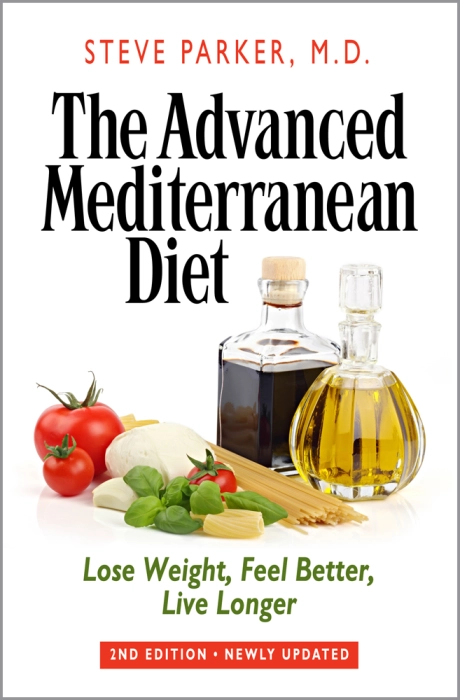
Women who adhere closely to a Mediterranean diet in their 30s and 40s have a lower risk of Parkinson’s disease later in life, particularly once they reach their mid-60s, a large population-based Swedish study found.The study, “Mediterranean Dietary Pattern at Middle Age and Risk of Parkinson’s Disease: A Swedish Cohort Study,” was published in the journal Movement Disorders.Diet is increasingly recognized for its potential influence on a person’s risk of several diseases. With Parkinson’s, for instance, studies have suggested that dairy products could be a risk factor for its development.

Source: Holding to Mediterranean Diet Lowers Parkinson’s Risk for Women, Study Finds

Steve Parker, M.D.

front cover of paleobetic diet

Click to purchase at Amazon.com. E-book also available at Smashwords. com.

Another Reason to Avoid Chronic Proton Pump Inhibitor Use: Higher Risk of Diabetes

prilosec, proton pump inhibitor
Neither the cited study nor I implicate Prilosec in particular

Regular use of proton-pump inhibitors (PPIs) increases patients’ risk of developing type 2 diabetes mellitus (T2DM) by 24%, an observational study published in Gut has suggested.

Source: Regular use of PPIs linked with increased risk of type 2 diabetes, study suggests | News | Pharmaceutical Journal

Proton pump inhibitors are widely used in the U.S. to treat esophageal reflux, ulcers, and dyspepsia. They are among the most widely prescribed drugs. You can also get them over-the-counter. Brand names include Protonix, Prilosec, and Nexium.

The study at hand defined “regular use” as at least twice per week. The study was an epidemiological one observing participants for 10-12 years. The more years of regular use, the greater risk of diabetes developing. Nearly all participants were White, so results may not apply to other ethnicities.

Note that this study doesn’t prove that PPIs cause diabetes. They just found a statistical linkage. As you know, correlation does not equal causation. We don’t know how PPIs could cause T2 diabetes. From the article:

According to the study, the possible mechanism for the association could be related to gut microbiota, as previous studies have shown that PPI use is associated with reduced diversity of gut microbiome and consistent changes in the microbiota phenotype.

If your physician recommends you take a PPI chronically, ask about alternatives.

Steve Parker, M.D.

front cover of paleobetic diet

Click to purchase at Amazon.com. E-book also available at Smashwords. com.

“Thank You” to My Supporters!

I published my first book in 2007 to extend my healing reach beyond the confines of the clinic and hospital room. I’m certain my writing has improved the health of many folks I’ll never know about, and that means more to me than any financial success I’ve had with the books.

In 2020, my net profit from writing was $937.08, which is admittedly pitiful. The prior year profit was $5,802.48. Pandemic effect, maybe? To lower my expenses in 2021, I’ll look into a private PO box instead of US Postal Service ($168/year), drop Amazon Prime ($129/year), and negotiate lower fees with Network Solutions.

I am blessed to have a hospitalist job that pays well. COVID-19 has caused major economic hardship for many of you, including unemployment.

My primary means of advertising has been blogging. Cross-posting on Facebook, Twitter, and LinkedIn has done almost nothing for book sales. A few years ago I could give my hospital patients a business card with links to my books, but my employer insisted I stop.

If you care to support my writing, buy a book. If not for yourself, then for someone you care about.

Steve Parker, M.D.

PS: Guesstimating my combined federal and state taxes being 40%, I have $562.25 left after paying taxes. And don’t forget sales tax on many things I might buy.

front cover of paleobetic diet

Click to purchase at Amazon.com. E-book also available at Smashwords. com.

front cover of paleobetic diet

Click to purchase at Amazon.com. E-book also available at Smashwords. com.

front cover of paleobetic diet

Click to purchase at Amazon.com. E-book also available at Smashwords. com.
What About Convalescent Plasma for Covid-19?

From a January 2021 editorial in NEJM:

Considering the number of SARS-CoV-2 infections, the paucity of treatment options, and the enthusiasm for and controversy about convalescent plasma, a high-quality, multicenter, randomized, controlled trial is most welcome. Libster and colleagues now report in the Journal the results of a well-executed trial of early convalescent plasma in older adult patients in whom symptomatic SARS-CoV-2 infection was diagnosed with the use of a polymerase-chain-reaction assay. In this double-blind trial, 250 ml of convalescent plasma with an IgG titer greater than 1:1000 against SARS-CoV-2 spike (S) protein was compared with saline placebo in patients who were 65 to 74 years of age and had prespecified coexisting conditions and in patients who were 75 years of age or older with or without coexisting conditions.

The patients received convalescent plasma or placebo less than 72 hours after symptom onset. In the intention-to-treat population, a primary end-point event (progression to predefined severe disease during follow-up) occurred in 16% (13 of 80 patients) and 31% (25 of 80 patients) of the well-matched convalescent plasma and placebo groups, respectively. A dose-dependent effect relative to the antibody titers after infusion was observed, and this effect was larger after the exclusion of 6 patients who had a primary end-point event before infusion. The benefits of convalescent plasma with respect to the secondary end points were consistent with those associated with the primary end point. No serious adverse events were observed. The authors conclude that “early administration of high-titer convalescent plasma against SARS-CoV-2 to mildly ill infected older adults reduced the progression of Covid-19.” Even before the current trial, the EUA [emergency use authorization] emphasized the potential advantages of early therapy with high-titer convalescent plasma. Unfortunately, a direct comparison of antibody levels in the current trial with assays specified in the FDA EUA is not available. Antibody titers in the recipients at enrollment were not provided, so no comment can be made about the usefulness of seroreactivity in patients as a criterion for convalescent plasma use.

At this time, convalescent plasma should be reserved for patients in whom the duration, severity, and risk of progression of illness are similar to those in the patients in this trial. Younger high-risk patients (and certain immunodeficient patients) with these disease characteristics should be considered as well.

Source: (A Little) Clarity on Convalescent Plasma for Covid-19 | NEJM

front cover of paleobetic diet

Click to purchase at Amazon.com. E-book also available at Smashwords. com.
Kaiser Family Foundation’s 2020 Employer Health Benefits Survey 

This annual survey of employers provides a detailed look at trends in employer-sponsored health coverage, including premiums, employee contributions, cost-sharing provisions, offer rates, wellness programs, and employer practices. The 2020 survey included 1,765 interviews with non-federal public and private firms.

Annual premiums for employer-sponsored family health coverage reached $21,342 this year, up 4% from last year, with workers on average paying $5,588 toward the cost of their coverage. The average deductible among covered workers in a plan with a general annual deductible is $1,644 for single coverage. Fifty-five percent of small firms and 99% of large firms offer health benefits to at least some of their workers, with an overall offer rate of 56%.

Source: 2020 Employer Health Benefits Survey | KFF

Get and stay as health as possible so you don’t need to use health insurance or pay high deductibles before insurance kicks in. Let me help.

Steve Parker, M.D.

front cover of paleobetic diet

Click to purchase at Amazon.com. E-book also available at Smashwords. com.

Looks Like Blue Cross Has Lost a Huge Antitrust Lawsuit

From The New York Times, Sept 24, 2020:

The nation’s Blue Cross plans have reached a tentative $2.7 billion settlement in a federal lawsuit filed by their customers that accuses the group of engaging in a conspiracy to thwart competition among the individual companies, according to two people with knowledge of the discussions.

The settlement, which was first reported by The Wall Street Journal, would need to be agreed to by each of the three dozen Blue Cross insurers that make up the trade group, the Blue Cross Blue Shield Association. Judge R. David Proctor of the U.S. District Court for the Northern District of Alabama, who is overseeing the case in that state, also still needs to approve the proposed settlement.

It seems that the judge did indeed approve the settlement. I’v read elsewhere that the settlement was only $2.67 billion. This the culmination of litigation that started in 2012. Check the settlement website to see if you qualify for a piece of the pie. The lawyers are asking for 25%. From the settlement website:

Plaintiffs allege that Settling Defendants violated antitrust laws by entering into an agreement not to compete with each other and to limit competition among themselves in selling health insurance and administrative services for health insurance. Settling Defendants deny all allegations of wrongdoing and assert that their conduct results in lower healthcare costs and greater access to care for their customers. The Court has not decided who is right or wrong. Instead, Plaintiffs and Settling Defendants have agreed to a Settlement to avoid the risk and cost of further litigation.

Steve Parker, M.D.

PS: Keep yourself as healthy as possible so you don’t have to get mired in the medical-industrial complex. Let me help.

front cover of paleobetic diet

Click to purchase at Amazon.com. E-book also available at Smashwords. com.

Ketogenic Diet Rapidly Reduces Liver Fat in Non-Alcoholic Fatty Liver Disease

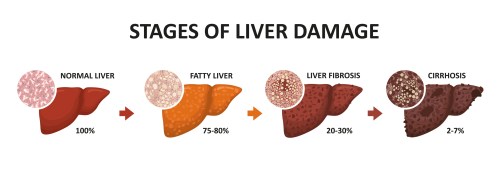
stages of liver damage

Non-alcoholic fatty liver disease is an important contributor to cirrhosis, i.e., scarring in the liver that impairs liver function. In the study at hand, a ketogenic diet reduced liver fat by 31% over just six days. I don’t have many details of the diet used, but it reduced carbohydrates to 20 grams/day.

Significance

Ketogenic diet is an effective treatment for nonalcoholic fatty liver disease (NAFLD). Here, we present evidence that hepatic mitochondrial fluxes and redox state are markedly altered during ketogenic diet-induced reversal of NAFLD in humans. Ketogenic diet for 6 [days] markedly decreased liver fat content and hepatic insulin resistance. These changes were associated with increased net hydrolysis of liver triglycerides and decreased endogenous glucose production and serum insulin concentrations. Partitioning of fatty acids toward ketogenesis increased, which was associated with increased hepatic mitochondrial redox state and decreased hepatic citrate synthase flux. These data demonstrate heretofore undescribed adaptations underlying the reversal of NAFLD by ketogenic diet and highlight hepatic mitochondrial fluxes and redox state as potential treatment targets in NAFLD.

Abstract

Weight loss by ketogenic diet (KD) has gained popularity in management of nonalcoholic fatty liver disease (NAFLD). KD rapidly reverses NAFLD and insulin resistance despite increasing circulating nonesterified fatty acids (NEFA), the main substrate for synthesis of intrahepatic triglycerides (IHTG). To explore the underlying mechanism, we quantified hepatic mitochondrial fluxes and their regulators in humans by using positional isotopomer NMR tracer analysis. Ten overweight/obese subjects received stable isotope infusions of: [D7]glucose, [13C4]β-hydroxybutyrate and [3-13C]lactate before and after a 6-d KD. IHTG was determined by proton magnetic resonance spectroscopy (1H-MRS). The KD diet decreased IHTG by 31% in the face of a 3% decrease in body weight and decreased hepatic insulin resistance (−58%) despite an increase in NEFA concentrations (+35%). These changes were attributed to increased net hydrolysis of IHTG and partitioning of the resulting fatty acids toward ketogenesis (+232%) due to reductions in serum insulin concentrations (−53%) and hepatic citrate synthase flux (−38%), respectively. The former was attributed to decreased hepatic insulin resistance and the latter to increased hepatic mitochondrial redox state (+167%) and decreased plasma leptin (−45%) and triiodothyronine (−21%) concentrations. These data demonstrate heretofore undescribed adaptations underlying the reversal of NAFLD by KD: That is, markedly altered hepatic mitochondrial fluxes and redox state to promote ketogenesis rather than synthesis of IHTG.

Source: Effect of a ketogenic diet on hepatic steatosis and hepatic mitochondrial metabolism in nonalcoholic fatty liver disease | PNAS

Steve Parker, M.D.

PS: If you have the Advanced Mediterranean Diet, 2nd edition, you already have the Ketogenic Mediterranean Diet as one of two options.

What’s the Best Type of Exercise to Reduce Obesity?

Steve Parker MD
Resistance training on left; treadmill on right can be high intensity

From Obesity Reviews:

Current international guidelines recommend people living with obesity should be prescribed a minimum of 300 min of moderately intense activity per week for weight loss. However, the most efficacious exercise prescription to improve anthropometry [measurements and proportions of the body], cardiorespiratory fitness (CRF) and metabolic health in this population remains unknown. Thus, this network meta‐analysis was conducted to assess and rank comparative efficacy of different exercise interventions on anthropometry, CRF and other metabolic risk factors.

* * *

Results reveal that while any type of exercise intervention is more effective than control [no particular exercise, if any], weight loss induced is modest. Interventions that combine high‐intensity aerobic and high‐load resistance training exert beneficial effects that are superior to any other exercise modality at decreasing abdominal adiposity, improving lean body mass and increasing cardiorespiratory fitness. Clinicians should consider this evidence when prescribing exercise for adults living with obesity, to ensure optimal effectiveness.

Source: What exercise prescription is optimal to improve body composition and cardiorespiratory fitness in adults living with obesity? A network meta‐analysis – O’Donoghue – – Obesity Reviews – Wiley Online Library

So, “combine high‐intensity aerobic and high‐load resistance training” to reduce body fat and increase fitness.

Steve Parker, M.D.


front cover of paleobetic diet

Click to purchase at Amazon.com. E-book also available at Smashwords. com.

Determination of Brain Death by Neurologic Criteria

Wish I were here

This is for my personal use. Not for my typical readers. From the World Brain Death Project:

Abstract

Importance

There are inconsistencies in concept, criteria, practice, and documentation of brain death/death by neurologic criteria (BD/DNC) both internationally and within countries.

Objective

To formulate a consensus statement of recommendations on determination of BD/DNC based on review of the literature and expert opinion of a large multidisciplinary, international panel.

Process

Relevant international professional societies were recruited to develop recommendations regarding determination of BD/DNC. Literature searches of the Cochrane, Embase, and MEDLINE databases included January 1, 1992, through April 2020 identified pertinent articles for review. Because of the lack of high-quality data from randomized clinical trials or large observational studies, recommendations were formulated based on consensus of contributors and medical societies that represented relevant disciplines, including critical care, neurology, and neurosurgery.

Evidence Synthesis Based on review of the literature and consensus from a large multidisciplinary, international panel, minimum clinical criteria needed to determine BD/DNC in various circumstances were developed.

Recommendations

Prior to evaluating a patient for BD/DNC, the patient should have an established neurologic diagnosis that can lead to the complete and irreversible loss of all brain function, and conditions that may confound the clinical examination and diseases that may mimic BD/DNC should be excluded. Determination of BD/DNC can be done with a clinical examination that demonstrates coma, brainstem areflexia, and apnea. This is seen when (1) there is no evidence of arousal or awareness to maximal external stimulation, including noxious visual, auditory, and tactile stimulation; (2) pupils are fixed in a midsize or dilated position and are nonreactive to light; (3) corneal, oculocephalic, and oculovestibular reflexes are absent; (4) there is no facial movement to noxious stimulation; (5) the gag reflex is absent to bilateral posterior pharyngeal stimulation; (6) the cough reflex is absent to deep tracheal suctioning; (7) there is no brain-mediated motor response to noxious stimulation of the limbs; and (8) spontaneous respirations are not observed when apnea test targets reach pH <7.30 and Paco2 ≥60 mm Hg. If the clinical examination cannot be completed, ancillary testing may be considered with blood flow studies or electrophysiologic testing. Special consideration is needed for children, for persons receiving extracorporeal membrane oxygenation, and for those receiving therapeutic hypothermia, as well as for factors such as religious, societal, and cultural perspectives; legal requirements; and resource availability.

Conclusions and Relevance

This report provides recommendations for the minimum clinical standards for determination of brain death/death by neurologic criteria in adults and children with clear guidance for various clinical circumstances. The recommendations have widespread international society endorsement and can serve to guide professional societies and countries in the revision or development of protocols and procedures for determination of brain death/death by neurologic criteria, leading to greater consistency within and between countries.

Source: Determination of Brain Death/Death by Neurologic Criteria: The World Brain Death Project | Critical Care Medicine | JAMA | JAMA Network

Daily Users of Proton Pump Inhibitors Have Double the Risk of COVID-19

Are you tired of this pic yet?

Click for details.

You should assume there’s a good reason or two why we have acidic stomach juice. One reason is to prevent infection. I see too many patients who are put on these drugs for a good reason, but they keep taking them after the drug has finished its job. An “as needed” H2 blocker like Pepcid may be a reasonable substitute for PPIs. Check with your personal physician.

I have nothing against Prilosec in particular. It can be very helpful. It’s one of several PPIs on the market.

Steve Parker, M.D.

front cover of paleobetic diet

Click to purchase at Amazon.com. E-book also available at Smashwords. com.