The Unabomber Brought “Manifesto” to the Fore

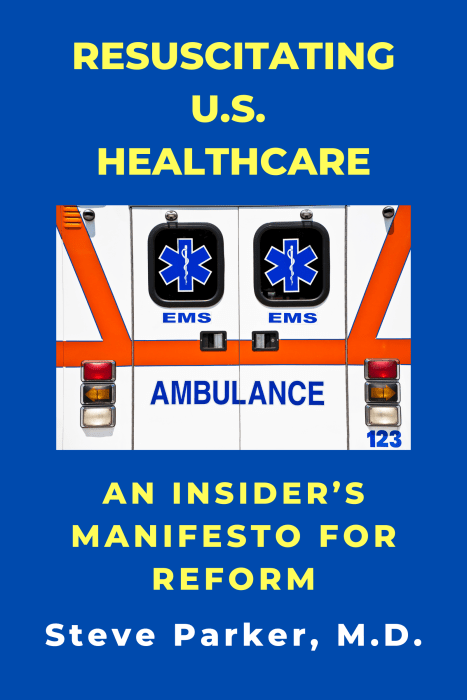
The Unabomber’s manifesto was 35,000 thousand words long. Mine’s got him beat by 2,000 words, every one of which was carefully curated!

The Unabomber was Ted Kaczynski. He titled his manifesto “Industrial Society and Its Future.” It wasn’t about healthcare. He was found dead in his jail cell at age 81; reportedly killed himself.

Most of my writing on health, nutrition, and fitness is designed to keep you out of the clutches of the medical-industrial complex. Don’t get involved with that system if you can safely avoid it!

Steve Parker, M.D.

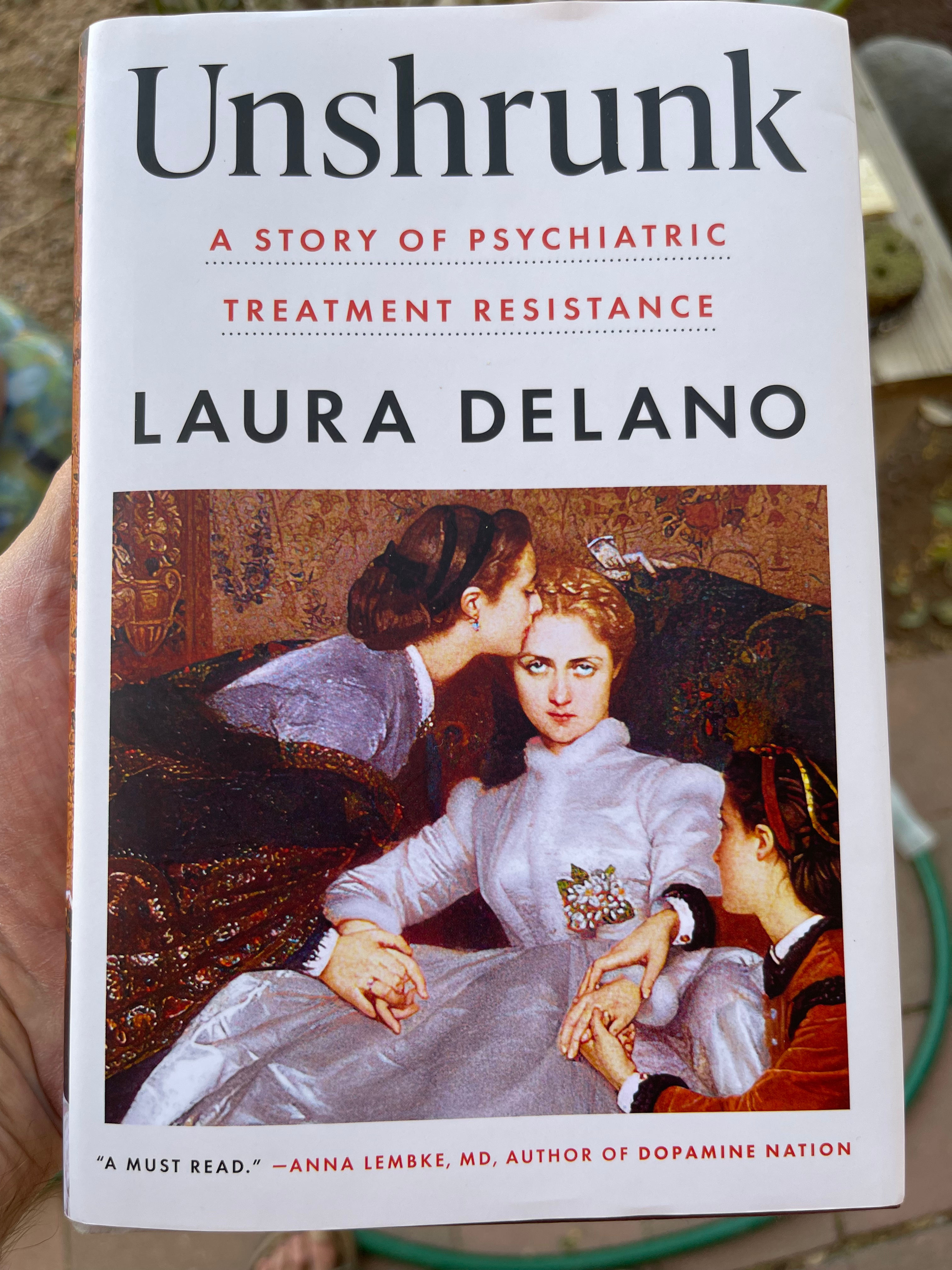
Book Review: Unshrunk

Every shift in my adult hospital medicine practice I run across patients taking one or more psych drugs long-term. I often wonder if the drug is still necessary. Here’s my brief review of Laura Delano’s book, Unshrunk.

For years I’ve been wondering why the U.S. has an apparent epidemic of mental illness, judging from the widespread use of prescription pharmaceuticals like Wellbutrin, Prozac, Xanax, Lexapro, Lamictal, Adderall, and Ritalin. For instance, the Centers for Disease Control reported that in 2023,  24% of adults reported having received mental health treatment (based on taking medication for anxiety or depression or, during the prior 12 months, having taken medication for emotions, concentration, behavior or mental health, or having received mental health therapy from a mental health professional). 

And it’s not only adults. A 2021 article in Psychology Today noted that “In the USA, 8.5 percent of children under 18 (1 in 12) are on “medication for ADD/ADHDautism/ASD, or difficulties with emotions, concentration, or behavior,” according to a national survey. This includes 1.2 percent of pre-schoolers and 12.9 percent of 12- to 17-year-olds (1 in 8).

Laura Delano’s book focuses on her personal experience with “treatment resistant” mental illness. Her psychiatric labels included bipolar disorder, borderline personality disorder, and alcoholism. She would say that the widespread prescribing of psych medications is due to 1) failure to adequately address the underlying causes of mental illness, and 2) widespread acceptance of the (discredited) biochemical model of mental illness. The latter is the idea that a chemical imbalance in the brain is causing distress. You have too much or not enough dopamine, norepinephrine, etc. “Here, take this drug and it will balance your chemicals.” For much of her life, starting at age 13, Laura was on three to six drugs at a time, and she’s convinced they did more harm than good. One drug making you too drowsy? Add this other drug to keep you awake. Years after a serious suicide attempt, Laura eventually got off all of her medications and her life improved greatly. Don’t do this on your own; the tapering off process takes longer than you think. She admits that her wealthy family provided resources that few of us have.

The author points out that FDA approval of psychopharmaceuticals is typically based on safety and efficacy during studies lasting 6-8 weeks in experimental subjects taking only one drug. But what about those patients taking the drug for three years? Along with two or more other drugs?

Laura gives great credit to her involvement with Alcoholics Anonymous, what Dr. Drew Pinsky calls a type of mutual aid. To me, it’s sad that she never believed in the AA idea that “a power greater than us can restore us to sanity.” I pray that she will come to know God/Jesus. I suspect that the clarity of alcohol abstinence helped her brain find a way out of the psychiatrization (her term) that trapped her. Laura’s belief in mutual aid led her to found the Inner Compass Exchange (https://exchange.theinnnercompass.org) to help those hoping escape the mental health industry and its medicalized paradigm.

The book offers hope to those suffering from treatment-resistant mental illness and to those who hope eventually to get off of chronic psych meds. Highly recommended for anyone with a serious interest in mental illness, psychology, or psychiatry.

Steve Parker, M.D.

A “Fun” Guide to the U.S. Healthcare System

Photo by Dominika Greguu0161ovu00e1 on Pexels.com

Opthalmologist Dr. Will Flannery has put together a whimsical guide to the U. S. healthcare system. It’s well worth a look if you’re relatively new to the system and need help understanding deductibles, co-pays, out-of-pocket maximums (hint: they’re not really maximums), in-network, out-of-network, vertical integration, “surprise” medical bills, etc. I was particularly impressed with the section on fighting claim denials; I hope I remember to re-read it when the time comes.

Dr. Glaucomflecken’s Incredibly Uplifting and Really Fun Guide to American Healthcare.

Remember how Obamacare was supposed to make healthcare more affordable? From the guide, “The 2025 out-of-pocket maximum for an Affordable Care Act plan can’t be more than $9,200 for an individual and $18,400 for a family.” When half of Americans can’t afford an emergency $500 bill, how do they pay up to $9,200.

Dr. Glaucomflecken also offers some system improvements that I also advocate in my latest book, Resuscitating U.S. Healthcare: An Insider’s Manifesto for Reform.

Steve Parker, M.D.

Evidence for Long-Term Safety of Ketogenic Diets

Many physicians and dietitians have been hesitant to suggest ketogenic diets due to 1) possible increased risk of cardiovascular disease, and 2) unknown effects on overall mortality.


But a study published at Scientific Reports in October 2024 suggests that ketogenic diets reduce overall mortality by 24% without no effect on cardiovascular-related deaths. Click the link to see the full report. I haven’t read it yet. Don’t ask me what “restricted cubic spline function” means!

Steve Parker, M.D.

h/t The Low Carb Diabetic

PS: My Resuscitating U.S. Healthcare: An Insider’s Manifesto for Reform ranks at #153 in Health Policy at Amazon’s Kindle store.

Alcohol’s Hidden Cancer Risks Revealed

Photo by Chris F on Pexels.com

In January of this year, then-U.S. Surgeon General Vivek Murthy announced that drinking alcohol causes more cancer than previously thought. He proposed that alcohol be labelled with a new warning about this.

Alcohol consumption is thought to be the third-leading cause of preventable cancer in the U.S., behind tobacco and obesity. It is linked to cancer of the breast, throat, esophagus, liver, colorectum, larynx, and mouth (pharynx). In the U.S., alcohol reportedly causes 100,000 yearly cancers, leading to 20,000 yearly deaths. One or even fewer drinks per day may cause breast, mouth, and throat cancer.

And let’s not forget the yearly 13,500 alcohol-related traffic crash fatalities.

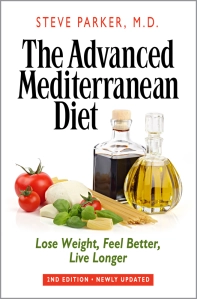
I may need to re-think the inclusion of alcohol as an option in my Advanced Mediterranean Diet.

Steve Parker, M.D.

Does Therapeutic Exercise Help With Knee and Hip Osteoarthitis?

Yes, it helps somewhat. But don’t expect a dramatic improvement, according to this 2023 study published at The Lancet Rheumatology. The benefits tend to accrue to patients who are in most pain and most physically impaired at baseline.

If you’re carrying a lot of excess weight, it only stands to reason that weight loss would take some stress off those worn-out joints.

Steve Parker, M.D.

Ketogenic Diet May Prevent Cardiovascular Disease

In July, 2023, the journal Nutrients published a review of literature on the effect of ketogenic diets on cardiovascular disease. The abstract mentions potentially beneficial changes blood lipids, inflammation, blood pressure, etc., without going where the rubber meets the road: the effect on mortality and incidence of cardiovascular events in live humans. Click the link to see the entire article.

The Abstract:

“The most common and increasing causes of death worldwide are cardiovascular diseases (CVD). Taking into account the fact that diet is a key factor, it is worth exploring this aspect of CVD prevention and therapy. The aim of this article is to assess the potential of the ketogenic diet in the prevention and treatment of CVD. The article is a comprehensive, meticulous analysis of the literature in this area, taking into account the most recent studies currently available. The ketogenic diet has been shown to have a multifaceted effect on the prevention and treatment of CVD. Among other aspects, it has a beneficial effect on the blood lipid profile, even compared to other diets. It shows strong anti-inflammatory and cardioprotective potential, which is due, among other factors, to the anti-inflammatory properties of the state of ketosis, the elimination of simple sugars, the restriction of total carbohydrates and the supply of omega-3 fatty acids. In addition, ketone bodies provide “rescue fuel” for the diseased heart by affecting its metabolism. They also have a beneficial effect on the function of the vascular endothelium, including improving its function and inhibiting premature ageing. The ketogenic diet has a beneficial effect on blood pressure and other CVD risk factors through, among other aspects, weight loss. The evidence cited is often superior to that for standard diets, making it likely that the ketogenic diet shows advantages over other dietary models in the prevention and treatment of cardiovascular diseases. There is a legitimate need for further research in this area.”


Steve Parker, M.D.

PS: If you have the 2nd edition of The Advanced Mediterranean Diet, you already have my ketogenic Mediterranean diet.

Specific Diets That Lower CRP Levels May Prevent Chronic Diseases

Olive oil is a prominent component of the Mediterranean diet

C-reactive protein (CRP) is a bloodstream marker of body-wide inflammation. A prominent theory is that if your CRP is too high, it causes chronic disease states like hypertension, dementia, and cardiovascular disease. A 2024 meta-analysis published in British Journal of Nutrition looked at the effects of various diets on CRP. The implication is that your odds of developing particular chronic diseases is lowered if you adopt a diet that lowers your CRP. Check the Abstract below to see how your diet stacks up:

Adopting a healthy dietary pattern may be an initial step in combating inflammation-related chronic diseases; however, a comprehensive synthesis evaluating current evidence is lacking. This umbrella review aimed to summarise the current evidence on the effects of dietary patterns on circulating C-reactive protein (CRP) levels in adults. We conducted an exhaustive search of the Pubmed, Scopus and Epistemonikos databases, spanning from their inception to November 2023, to identify systematic reviews and meta-analyses across all study designs. Subsequently, we employed a random-effects model to recompute the pooled mean difference. Methodological quality was assessed using the A Measurement Tool to Assess Systematic Reviews 2 (AMSTAR 2) checklist, and evidence certainty was categorised as non-significant, weak, suggestive, highly suggestive or convincing (PROSPERO: CRD42023484917). We included twenty-seven articles with thirty meta-analyses of seven dietary patterns, fifteen of which (50 %) exhibited high methodological quality. The summary effects of randomised controlled trials (RCT) found that the Mediterranean diet was the most effective in reducing circulating CRP levels, followed by Vegetarian/Vegan and Energy-restricted diets, though the evidence was of weak quality. In contrast, Intermittent Fasting, Ketogenic, Nordic and Paleolithic diets did not show an inverse correlation with circulating CRP levels. Some results from combined interventional and observational studies, as well as solely observational studies, also agreed with these findings. These dietary patterns show the potential in reducing CRP levels in adults, yet the lack of high-quality evidence suggests future studies may alter the summary estimates. Therefore, further well-conducted studies are warranted.

Steve Parker, M.D.

“Resuscitating U.S. Healthcare” Book Now on Sale

I’d be much appreciative of some Amazon reviews of my 2024 book, Resuscitating U.S. Healthcare: An Insider’s Manifesto for Reform.

To make the book available to more readers, I just dramatically reduced the price at the U.S. Amazon store. $2.99 for the e-book (Kindle) or $9.95 for the paperback. If you’re curious, Amazon pays me $2.06 for each e-book sold, and $2.74 for the paperback.

I don’t care if you leave a favorable or bad review at Amazon. Just be honest. I’ll incorporate helpful and insightful criticism into the 2nd edition.

BTW, Luigi Mangioni’s manifesto was under 300 words. Mine’s about 35,000. But it’s a quick read.

Steve Parker, M.D.

“Dry January” Is Almost Over; Should You Extend It to 100 Days?

I don’t know Andrew Huberman’s credentials or reliability, but you might find the following helpful. I haven’t watched it yet and may never; it’s two hours.