My First Ever 24-Hour Fast

Mount Humphries as seen from Antelope Hill

Mount Humphries as seen from Antelope Hill.  My wife and I may climb it in a few months.  The Peak is 12,633 ft above sea level.

I just finished my first 24-hour fast.  It wasn’t bad.

Melanie Thomassian’s recent review of fasting was my motivation to give it a try.

I drank all the water and black coffee I wanted—that still qualifies as a fast in my view.  The closest I’d come in the past to a prolonged fast would be a gastrointestinal disorder involving nausea, vomiting, and diarrhea.  It’s easy to avoid food when you know it’s going to make you sick!

I didn’t experience any weakness, dizziness, lack of concentration or any other adverse effects, except possibly for some mild irritability.  The latter may instead have been due to my frustration with my work schedule.  I had misread my schedule and thought I had the day off.  Turns out I had to work a 12-hour shift after all.  I wasn’t happy about having to go in to the hospital.

Out of the 24 hours of fasting, I slept for 7.5 hours and worked a very busy shift for 12.  That helped keep my mind off food.  Craving for food didn’t start until the last two hours.

Another thing that may have helped me was that I usually eat less than the 130 grams a day of carbohydrate that your average dietitian says we need.  I eat more like 80–100 grams of digestible carb.  I’ve been as low as 20–30 grams for months on end.  So my metabolism is already geared up for living off energy from ketones and for producing blood glucose from body proteins and glycerol  (a product of body fat breakdown).

I don’t know if I’ll ever do it again, but I’m glad I did it once.

—Steve

Is It Time To Start Fasting?

Dietriffic dietitian Melanie looked into fasting recently.  Some of her thoughts:

The main problem with this whole area of intermittent fasting, is that research in humans is severely lacking, and what I’ve found online is something I can only describe as ‘evangelism’ in support of this way of eating.

That’s not to say some of what is being said isn’t true, but much of it should be taken with a pinch of salt!

Anyhow, some of the research suggests intermittent fasting may lead to;

Many of these benefits are also commonly cited for calorie restriction and exercise, which seems a more natural way to achieve better health, without the downsides of periodic food deprivation (see here and here).

One group of researchers, however, were extremely enthusiastic about this whole idea of fasting, claiming;

Since May 2003 we have experimented with alternate day calorie restriction, one day consuming 20-50% of estimated daily caloric requirement and the next day ad lib eating, and have observed health benefits starting in as little as two weeks, in insulin resistance, asthma, seasonal allergies, infectious diseases of viral, bacterial and fungal origin (viral URI, recurrent bacterial tonsillitis, chronic sinusitis, periodontal disease), autoimmune disorder (rheumatoid arthritis), osteoarthritis, symptoms due to CNS inflammatory lesions (Tourette’s, Meniere’s) cardiac arrhythmias (PVCs, atrial fibrillation), menopause related hot flashes. We hypothesize that other many conditions would be delayed, prevented or improved, including Alzheimer’s, Parkinson’s, multiple sclerosis, brain injury due to thrombotic stroke atherosclerosis, NIDDM, congestive heart failure.

For the last year I’ve batted around the idea of intermittent fasting but haven’t pulled the trigger.  If I do it, it’ll probably be for a 24-hour period.

Melanie’s a smart lady.  Read the rest.

Bariatric Surgery May Improve Your Health, But Doesn’t Reduce Healthcare Costs

…according to an article at MedPageToday.

“In a critique of the study, JAMA deputy editor Edward H. Livingston, MD, said bariatric surgery clearly benefits a subgroup of patients who have a complication or condition known to improve dramatically with weight loss, such as diabetes and osteoarthritis. Reducing body mass index should not be the exclusive indication for the surgery.”


I Thought Australians Were Smarter Than This

From the Land Down Under: 

A morbidly obese man dying of liver cancer has been awarded more than $350,000 from his doctor because the GP failed to refer him to a weight-loss clinic or send him for lap-band surgery.

Medical experts say the case of Luis Almario is a legal landmark and will force doctors to ensure overweight patients shed kilos or risk being sued.

Read the rest.

Almost Half of U.S. Women Gain a Large Amount of Weight In theTwo Years After Marriage

…according to a link I found in an article at Huffington Post.  An excerpt:

A 2011 Ohio State study found that weight gain of about 20 pounds is average among people who get married (especially for women), and according to Texas healthcare professional Judy Gaman, there are lot of good explanations for the increase. In the video above, she explains that after the wedding, lifestyle patterns change, leading to more food consumed and less activity.

One major culprit is television. Gaman said married people tend to watch more T.V., since they’re not just watching the shows that they personally want to watch.

Prolonged Sitting Isn’t Healthy

Read the details at the Washlngton Post.

h/t Weight Maven Beth Mazur

Gretchen Reynolds Argues That Four Workouts a Week May Be Better Than Six

I wonder if two is just as good as four.  Details at the New York Times.

Are Two Days of Exercise a Week as Good as Six?

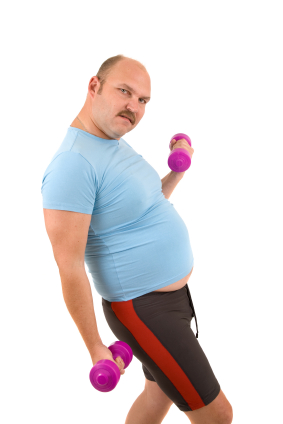
exercise for weight loss and management, dumbbells

If you’re not familiar with weight training, a personal trainer is an great idea

Weight Maven Beth Mazur  found evidence in favor of the fewer days, at least in post-menopausal women.

I don’t like to exercise.  Sometimes I find excuses to avoid even my twice weekly 40-minute workouts.

You may well have good reasons to exercise every day.  Maybe you’re a competitive athlete or enjoy exercise.  If you just want the health benefits of exercise, I’m increasingly convinced that twice a week is enough.

Pharmacist Scott Gavura Rarely Takes Supplements: Should You?

For many, supplements are a way to make expensive urine.  Gavura writes:

Aside from sporadic vitamin D in winter, I don’t take any vitamins or supplements routinely, nor do I give any to my children. Your reasons may be close to mine: There is little to no evidence suggesting that dietary deficiencies are widespread, nor is there good evidence to suggest that vitamin supplements are beneficial in the absence of deficiency. I don’t have any need for an other supplements, nor am I confident in the scientific evidence for many of them.


Read the rest.


Prolonged Sitting Is the New Trans Fat: Avoid It

Within the last couple months I read somewhere that the adverse health effects of sitting all day long are not counteracted by an hour of vigorous exercise.  If true, that’s disappointing to many of us.

I think this is the research report that got the buzz going.

The investigators suggest you’re better off with four hours of standing and two hours of walking.  Easy peasy, right?

Some caveats.  It’s a very short-term small study of young adults (18 initially but three dropped out).  The “prolonged sitting” regime lasted 14 hours.   The health focus of the study was limited to insulin levels, insulin sensitivity, blood sugar levels, and blood lipids like cholesterol and triglycerides.

Where did I read, “Sitting is the new saturated fat”?

The investigators conclude…

One hour of daily physical exercise cannot compensate the negative effects of inactivity on insulin level and plasma lipids if the rest of the day is spent sitting. Reducing inactivity by increasing the time spent walking/standing is more effective than one hour of physical exercise, when energy expenditure is kept constant.

The Washington Post in July, 2011, had an article along the same lines (h/t Beth Mazur).

—Steve Parker, M.D.

Reference:  Duvivier BMFM, Schaper NC, Bremers MA, van Crombrugge G, Menheere PPCA, et al. (2013) Minimal Intensity Physical Activity (Standing and Walking) of Longer Duration Improves Insulin Action and Plasma Lipids More than Shorter Periods of Moderate to Vigorous Exercise (Cycling) in Sedentary Subjects When Energy Expenditure Is Comparable. PLoS ONE 8(2): e55542. doi:10.1371/journal.pone.0055542