Posted onJune 7, 2023|Comments Off on Recipe: Buttoni’s Indian Cabbage
From Peggy at Buttoni’s Low-Carb Recipes:
If you think you don’t like cabbage (like my husband) you have GOT to try this recipe! You’ll swear you are not eating cabbage!! No cabbage odor or strong taste whatsoever to this dish! It is a delightfully crunchy side dish with grilled Tandoori Chicken or pork chops! I order my nigella seeds (black onion seeds or kalongi seed) on-line, but you may be fortunate to have a spice supplier where you live. I would not recommend omitting them, as you will miss out on a flavor layer that is quite nice. Once you taste this recipe (without alterations) you’ll wish you had found this simple recipe long ago! This dish is Atkins Induction, Primal and Paleo friendly.
I haven’t tried this yet but will someday. Filing it here so I don’t lose it. Click for details.
At the risk of being labelled a “domestic terrorist,” I share with you a document from The Rutherford Institute with their permission….
“In a time of deceit telling the truth is a revolutionary act.”— George Orwell
Let’s be clear about one thing: seditious conspiracy isn’t a real crime to anyone but the U.S. government.
To be convicted of seditious conspiracy, the charge levied against Stewart Rhodes who was sentenced to 18 years in prison for being the driving force behind the January 6 Capitol riots, one doesn’t have to engage in violence against the government, vandalize government property, or even trespass on property that the government has declared off-limits to the general public.
This is not about whether Rhodes deserves such a hefty sentence.
This is about the long-term ramifications of empowering the government to wage war on individuals whose political ideas and expression challenge the government’s power, reveal the government’s corruption, expose the government’s lies, and encourage the citizenry to push back against the government’s many injustices.
This is about criminalizing political expression in thoughts, words and deeds.
This is about how the government has used the events of Jan. 6 in order to justify further power grabs and acquire more authoritarian emergency powers.
This was never about so-called threats to democracy.
In fact, the history of this nation is populated by individuals whose rhetoric was aimed at fomenting civil unrest and revolution.
Indeed, by the government’s own definition, America’s founders were seditious conspirators based on the heavily charged rhetoric they used to birth the nation.
Thomas Jefferson, Thomas Paine, Marquis De Lafayette, and John Adams would certainly have been charged for suggesting that Americans should not only take up arms but be prepared to protect their liberties and defend themselves against the government should it violate their rights.
“What country can preserve its liberties if their rulers are not warned from time to time that their people preserve the spirit of resistance. Let them take arms,” declared Jefferson. He also concluded that “the tree of liberty must be refreshed from time to time with the blood of patriots and tyrants.”
“It is the duty of the patriot to protect his country from its government,” insisted Paine.
“When the government violates the people’s rights,” Lafayette warned, “insurrection is, for the people and for each portion of the people, the most sacred of the rights and the most indispensable of duties.”
Adams cautioned, “A settled plan to deprive the people of all the benefits, blessings and ends of the contract, to subvert the fundamentals of the constitution, to deprive them of all share in making and executing laws, will justify a revolution.”
Had America’s founders feared revolutionary words and ideas, there would have been no First Amendment, which protects the right to political expression, even if that expression is anti-government.
No matter what one’s political persuasion might be, every American has a First Amendment right to protest government programs or policies with which they might disagree.
The right to disagree with and speak out against the government is the quintessential freedom.
Every individual has a right to speak truth to power—and foment change—using every nonviolent means available.
Unfortunately, the government is increasingly losing its tolerance for anyone whose political views could be perceived as critical or “anti-government.”
All of us are in danger.
In recent years, the government has used the phrase “domestic terrorist” interchangeably with “anti-government,” “extremist” and “terrorist” to describe anyone who might fall somewhere on a very broad spectrum of viewpoints that could be considered “dangerous.”
The ramifications are so far-reaching as to render almost every American with an opinion about the governmentor who knows someone with an opinion about the government an extremist in word, deed, thought or by association.
You see, the government doesn’t care if you or someone you know has a legitimate grievance. It doesn’t care if your criticisms are well-founded. And it certainly doesn’t care if you have a First Amendment right to speak truth to power.
What the government cares about is whether what you’re thinking or speaking or sharing or consuming as information has the potential to challenge its stranglehold on power.
Get ready for the next phase of the government’s war on thought crimes and truth-tellers.
For years now, the government has used all of the weapons in its vast arsenal—surveillance, threat assessments, fusion centers, pre-crime programs, hate crime laws, militarized police, lockdowns, martial law, etc.—to target potential enemies of the state based on their ideologies, behaviors, affiliations and other characteristics that might be deemed suspicious or dangerous.
For instance, if you believe in and exercise your rights under the Constitution (namely, your right to speak freely, worship freely, associate with like-minded individuals who share your political views, criticize the government, own a weapon, demand a warrant before being questioned or searched, or any other activity viewed as potentially anti-government, racist, bigoted, anarchic or sovereign), you could be at the top of the government’s terrorism watch list.
In other words, if you dare to subscribe to any views that are contrary to the government’s, you may well be suspected of being a domestic terrorist and treated accordingly.
There’s a whole spectrum of behaviors ranging from thought crimes and hate speech to whistleblowing that qualifies for persecution (and prosecution) by the Deep State.
Simply liking or sharing this article on Facebook, retweeting it on Twitter, or merely reading it or any other articles related to government wrongdoing, surveillance, police misconduct or civil liberties might be enough to get you categorized as a particular kind of person with particular kinds of interests that reflect a particular kind of mindset that might just lead you to engage in a particular kinds of activities and, therefore, puts you in the crosshairs of a government investigation as a potential troublemaker a.k.a. domestic extremist.
Chances are, as the Washington Post reports, you have already been assigned a color-coded threat score—green, yellow or red—so police are forewarned about your potential inclination to be a troublemaker depending on whether you’ve had a career in the military, posted a comment perceived as threatening on Facebook, suffer from a particular medical condition, or know someone who knows someone who might have committed a crime.
In other words, you might already be flagged as potentially anti-government in a government database somewhere—Main Core, for example—that identifies and tracks individuals who aren’t inclined to march in lockstep to the police state’s dictates.
As The Interceptreported, the FBI, CIA, NSA and other government agencies have increasingly invested in corporate surveillance technologies that can mine constitutionally protected speech on social media platforms such as Facebook, Twitter and Instagram in order to identify potential extremists and predict who might engage in future acts of anti-government behavior.
Where many Americans go wrong is in naively assuming that you have to be doing something illegal or harmful in order to be flagged and targeted for some form of intervention or detention.
And then at the other end of the spectrum there are those such as Julian Assange and Chelsea Manning, for example, who blow the whistle on government misconduct that is within the public’s right to know.
In true Orwellian fashion, the government would have us believe that it is Assange and Manning who are the real criminals for daring to expose the war machine’s seedy underbelly.
This is how the police state deals with those who challenge its chokehold on power.
This is also why the government fears a citizenry that thinks for itself: because a citizenry that thinks for itself is a citizenry that is informed, engaged and prepared to hold the government accountable to abiding by the rule of law, which translates to government transparency and accountability.
After all, we’re citizens, not subjects.
For those who don’t fully understand the distinction between the two and why transparency is so vital to a healthy constitutional government, Manning explains it well:
This is why the First Amendment is so critical. It gives the citizenry the right to speak freely, protest peacefully, expose government wrongdoing, and criticize the government without fear of arrest, isolation or any of the other punishments that have been meted out to whistleblowers such as Edwards Snowden, Assange and Manning.
The challenge is holding the government accountable to obeying the law.
A little over 50 years ago, the U.S. Supreme Court ruled 6-3 in United States v. Washington Post Co. to block the Nixon Administration’s attempts to use claims of national security to prevent The Washington Post and The New York Times from publishing secret Pentagon papers on how America went to war in Vietnam.
As Justice William O. Douglas remarked on the ruling, “The press was protected so that it could bare the secrets of government and inform the people. Only a free and unrestrained press can effectively expose deception in government. And paramount among the responsibilities of a free press is the duty to prevent any part of the government from deceiving the people and sending them off to distant lands to die of foreign fevers and foreign shot and shell.”
Fast forward to the present day, and we’re witnessing yet another showdown, this time between Assange and the Deep State, which pits the people’s right to know about government misconduct against the might of the military industrial complex.
Yet this isn’t merely about whether whistleblowers and journalists are part of a protected class under the Constitution. It’s a debate over how long “we the people” will remain a protected class under the Constitution.
Following the current trajectory, it won’t be long before anyone who believes in holding the government accountable is labeled an “extremist,” relegated to an underclass that doesn’t fit in, watched all the time, and rounded up when the government deems it necessary.
Salt has long been seen as enemy number one for people with heart problems, with doctors telling patients to cut down on the amount of sodium they consume.
But new research suggests that restricting salt too much may actually raise the risk of an early death in heart failure patients.
Their work builds upon a growing body of research that posits the benefits of cutting out salt to this subset of patients may be overblown.
And the findings could mean a more exciting diet for the more than six million Americans with heart failure.
Compared to those CHF patients consuming over 2.5 grams of sodium daily, those eating below that limit were 80% more likely to die during the observation period. The Daily Mail article shares the sodium content of some common foods and will convince you that keeping sodium under 3 grams/day requires meticulous attention. If you have CHF, consult your personal physician before making significant dietary changes.
Posted onMay 20, 2023|Comments Off on How to Manage GERD Without Proton Pump Inhibitors
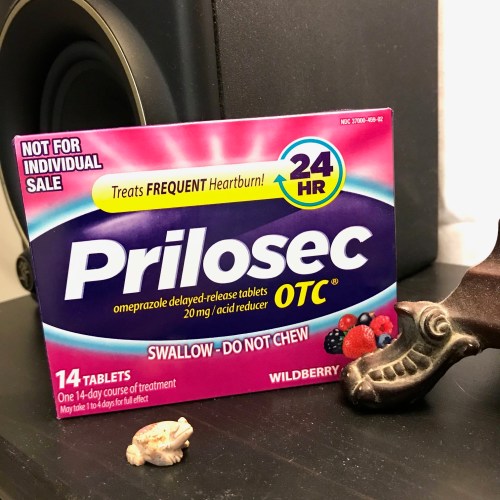
I have nothing against Prilosec in particular. It can be very helpful. It’s one of several PPIs on the market.
I’ve written several blog posts on the risks of chronic use of PPIs (proton pump inhibitors) for gastro-esophageal reflux disease (GERD). By “chronic use” I mean daily or several days every week. In order to avoid the risks of PPI usage, a recent commenter asked me about non-PPI management options.
I’ll assume that occasional use of antacids, H2 blockers (histamine 2 receptor agonists like famotidine), and proton pump inhibitors is not an adequate remedy. At some point (sooner rather than later), you’ll also want to be sure the diagnosis truly is GERD and not something else. This may well require a consultation with a gastroenterologist.
BTW, having to pop a couple Tums antacids for heartburn once every 2-3 months is not a disease. It’s not GERD. It’s occasional heartburn. Untreated GERD symptoms are much more frequent and may be more intense or more prolonged.
So here are some non-PPI options for management of GERD in adults. Some of these will help one person but not the next, and experimentation may be in order.
Lose excess weight. Even common overweight can aggravate the condition.
Elevate head of bed on 6-8 inch bricks.
Avoid supine posture after meals.
No eating for 2-3 hours prior to bedtime.
Avoid tobacco and alcohol.
Low-carb diet.
Avoid tight-fitting garments over the abdomen.
Avoid common triggers: spicy food, carbonated beverages, onions (especially raw), chocolate, high-fat foods, caffeine. If you’re sure these don’t trigger your own GERD, then no particular need to avoid. A spicy meal one week ago doesn’t cause your GERD today. Your triggers will typically be ingested 30 minutes to 8 hours prior to symptom onset.
Medication alternatives to PPIs and H2 blockers (histamine 2 receptor agonists like famotidine):
Sucralfate if pregnant.
Metoclopramide if gastroparesis is present (delayed gastric emptying).
Sodium alginate.
Bothersome symptoms that are refractory to all usual treatment? Get EGD (esophagogastroduodenoscopy) and ambulatory esophageal pH-metry from a gastroenterologist.
Final options for refractory GERD:
Anti-reflux surgery
Transoral incisionless fundoplication
There are probably other options for GERD suppression that I haven’t mentioned.
Finally, I’m not your doctor and don’t know any of the details of your situation. For all you know, I may not even be a real doctor. Work with your personal physician!
Posted onMay 19, 2023|Comments Off on COVID-19 Link Dump: Vax Damage Prevention, Fauci Created the Virus, Metformin Prevents Long Covid, Kirsch: mRNA Vax Neither Safe Nor Effective (But Outright Dangerous), COVID Response Violated Medical Ethics
Most serious adverse events following vaccination occur in the two weeks immediately following a dose of the vaccine. However, evolving data suggest that some patients who otherwise had no adverse events from the vaccine appear to have delayed acute cardiac events (often leading to sudden death). This appears to peak between 4 to 6 months after the vaccine but may extend for at least one year. There has also been evidence of an emergence of “turbo” and relapsed cancers in the months following vaccination. We have developed this document to attempt to limit these complications and reassure those who have been vaccinated. Essentially, both cardiac and cancer-related complications are related to the persistence of spike protein. Therefore, any intervention that reduces the persistence and the ‘load’ of spike protein will likely be beneficial.
Folks, this is a big deal. In Congressional testimony (March 8-9) Dr Robert Redfield, who was director of the Centers for Disease Control during the Covid pandemic, told Congress that Dr. Fauci financed the gain-of-function research that made the virus so contagious, that the virus was not natural and was engineered in a lab, and that Fauci excluded him from meetings and decisions because he, Redfield, was disturbed about what was going on.
Ivermectin and fluvoxamine didn’t prevent Long COVID, but metformin did. A preprint at The Lancet:
Interpretations: A 42% relative decrease and 4.3% absolute decrease in the Long COVID incidence occurred in participants who received early outpatient COVID-19 treatment with metformin compared to exact-matching placebo.
Here are some other direct quotes from the paper:
Steve Kirsch reported on a scientific analysis of the Australian vaccination experience. The journal he quotes is Clinical & Experimental Immunology, a peer-reviewed medical journal covering clinical and translational immunology. The editor-in-chief is Leonie Taams. It is published by Oxford University Press on behalf of the British Society for Immunology, of which it is the official journal. Some direct quotes from the journal:
COVID-19 vaccines cause more side effects than any other vaccine
Not only does spike protein produce unwanted side effects, but mRNA and nanoparticles do as well.
Again, it is inconceivable why it would be impossible to go through the study data in a few months, when it took the CDC less than 4 weeks to give the injections emergency use authorization – unless you want to entertain the idea that the study data were never actually read and scrutinised, a frightening perspective.
The official public message is that the mRNA vaccines are safe. However, the Therapeutic Goods Administration (TGA), the medicine and therapeutic regulatory agency of the Australian Government, states quite clearly on their website that the large-scale trials are still progressing and no full data package has been received from any company.
The mRNA vaccines were supposed to remain at the injection site and be taken up by the lymphatic system. This assumption proved to be wrong. During an autopsy of a vaccinated person that had died after mRNA vaccination it was found that the vaccine disperses rapidly from the injection site and can be found in nearly all parts of the body [1]. … Research has shown that such nanoparticles can cross the blood-brain barrier and the blood-placenta barrier.
Despite not being able to prove a causal link with vaccines, as no autopsies were performed, they still believed that a link with vaccination is possible and further analysis is warranted.
In summary, it is unknown where exactly the vaccine travels once it is injected, and how much spike protein is produced in which (and how many) cells.
The S1 subunit of the SARS-CoV-2 spike protein when injected into transgenic mice overexpressing human ACE-2 caused a COVID-19 like response. It was further shown that the spike protein S1 subunit, when added to red blood cells in vitro, could induce clotting.
The authors found consistent alteration of gene expression following vaccinationin many different immune cell types.
Seneff et al (2022) describe another mechanism by which the mRNA vaccines could interfere with DNA repair.
It is an amazing fact that natural immunity is completely disregarded by health authorities around the world. We know from SARSCoV-1 that natural immunity is durable and persists for at least 12-17 years [17]. Immunologists have suggested that immunity to SARS-Cov-2 is no different
Immunity induced by COVID infection is robust and long lasting.
mRNA vaccines seem to suppress interferon responses. A literature review by Cardozo and Veazev [26] concluded that COVID-19 vaccines could potentially worsen COVID-19 disease.
Natural immunity is still not accepted as proof of immunity in Australia.
A study at the University of California followed up on infections in the workforce after 76% had been fully vaccinated with mRNA vaccines by March 2021 and 86.7% by July 2021. In July 2021 75.2% of the fully vaccinated workforce had symptomatic COVID.
Acharya et al. (2021) and Riemersma et al. (2021) both showed that the vaccinated have very high viral loads similar to the unvaccinated and are therefore as infectious.
Brown et al. (2021) and Servelitta et al (2021) suggested that vaccinated people with symptomatic infection by variants, such as Delta, are as infectious as symptomatic unvaccinated cases and will contribute to the spread of COVID even in highly vaccinated communities.
Countries with higher vaccination rates have also higher caseloads. It was shown that the median of new COVID-19 cases per 100,000 people was largely similar to the percent of the fully vaccinated population.
Multiple recent studies have indicated that the vaccinated are more likely to be infected with Omicron than the unvaccinated. A study by Kirsch (2021) from Denmark suggests that people who received the mRNA vaccines are up to eight times more likely to develop Omicron than those who did not [40]. This and a later study by Kirsch (2022a) conclude that the more one vaccinates, the more one becomes susceptible to COVID-19 infection [41].
This has to be seen in context with the small risk of dying from COVID-19… The chances of someone under 18 years old dying from COVID is near 0%. Those that die usually have severe underlying medical conditions. It is estimated that children are seven times more at risk to die from influenza than from COVID-19. [Editor’s note: so why do colleges mandate the COVID vaccine instead of the influenza vaccine?]
——
More quotes from the journal article, not Kirsch:
Excerpts from the conclusion
Never in Vaccine history have 57 leading scientists and policy experts released a report questioning the safety and efficacy of a vaccine. They not only questioned the safety of the current Covid-19 injections, but were calling for an immediate end to all vaccination. Many doctors and scientists around the world have voiced similar misgivings and warned of consequences due to long-term side effects. Yet there is no discussion or even mention of studies that do not follow the narrativeon safety and efficacy of Covid-19 vaccination.
Medical experts that have questioned the safety of these vaccines have been attacked and demonized, called conspiracy theorists and have been threatened to be de-registered if they go against the narrative. Alternative treatments were prohibited and people who never practised medicine are telling experienced doctors how to do their job. AHPRA is doing the same here in Australia to the detriment and in ignorance of science.
The final paragraph sums it up
As scientists we put up hypotheses and test them using experiments. If a hypothesis is proven to be true according to current knowledge it might still change over time when new evidence comes to light. Hence, sharing and accumulating knowledge is the most important part of science. The question arises when and why this process of science has been changed. No discussion of new knowledge disputing the safety of the COVID-19 vaccines is allowed. Who gave bureaucrats the means to destroy the fundaments of science and tell scientists not to argue the science?
Though it may be difficult to believe in the aftermath of COVID, the medical profession does possess a Code of Ethics. The four fundamental concepts of Medical Ethics – its 4 Pillars – are Autonomy, Beneficence, Non-maleficence, and Justice.
Autonomy, Beneficence, Non-maleficence, and Justice
These ethical concepts are thoroughly established in the profession of medicine. I learned them as a medical student, much as a young Catholic learns the Apostle’s Creed. As a medical professor, I taught them to my students, and I made sure my students knew them. I believed then (and still do) that physicians must know the ethical tenets of their profession, because if they do not know them, they cannot follow them.
These ethical concepts are indeed well-established, but they are more than that. They are also valid, legitimate, and sound. They are based on historical lessons, learned the hard way from past abuses foisted upon unsuspecting and defenseless patients by governments, health care systems, corporations, and doctors. Those painful, shameful lessons arose not only from the actions of rogue states like Nazi Germany, but also from our own United States: witness Project MK-Ultra and the Tuskegee Syphilis Experiment.
The 4 Pillars of Medical Ethics protect patients from abuse. They also allow physicians the moral framework to follow their consciences and exercise their individual judgment – provided, of course, that physicians possess the character to do so. However, like human decency itself, the 4 Pillars were completely disregarded by those in authority during COVID.
The demolition of these core principles was deliberate. It originated at the highest levels of COVID policymaking, which itself had been effectively converted from a public health initiative to a national security/military operation in the United States in March 2020, producing the concomitant shift in ethical standards one would expect from such a change. As we examine the machinations leading to the demise of each of the 4 Pillars of Medical Ethics during COVID, we will define each of these four fundamental tenets, and then discuss how each was abused.
Comments Off on COVID-19 Link Dump: Vax Damage Prevention, Fauci Created the Virus, Metformin Prevents Long Covid, Kirsch: mRNA Vax Neither Safe Nor Effective (But Outright Dangerous), COVID Response Violated Medical Ethics
The average life expectancy for Americans shortened by over seven months [in 2021], according to new data from the Centers for Disease Control and Prevention.
That decrease follows an already big decline of 1.8 years in 2020. As a result, the expected life span of someone born in the U.S. is now 76.4 years — the shortest it has been in nearly two decades.
But we still have the best healthcare system in the world, right? Not if you judge it by life expectancy. From Health System Tracker:
Life expectancy in the U.S. and peer countries generally increased from 1980-2019, but decreased in most countries in 2020 due to COVID-19. From 2020 to 2021, life expectancy at birth began to rebound in most comparable countries while it continued to decline in the U.S. The CDC estimates life expectancy at birth in the U.S. decreased to 76.1 years in 2021, down 2.7 years from 78.8 years in 2019 and down 0.9 years from 2020. The average life expectancy at birth among comparable countries was 82.4 years in 2021, down 0.2 years from 2019 and up 0.4 years from 2020.
Click the article links for potential explanations.
Steve Parker, M.D.
PS: Healthy diet, exercise, and weight management improve longevity. Let me help you.
More recently, Paul looked into hiccup cures because his father had an intractable case. What finally worked for dad? Breathing into a plastic bag.
Boosting blood CO2 (hypercapnia) by breathing in a PLASTIC bag. This one is quite plausible and is easy and safe to try. Hypercapnia definitely affects some kinds of hiccups. The story (from a smart source, a good “friend of PainSci”): “There’s an even easier way out of hiccups — at zero cost. Learned it from my uncle, who studied medicine in Brazil in the 50s. Anesthetized patients with hiccups were a pain, so they needed to get rid of it ASAP. Method: breathing in a PLASTIC bag, small enough for you to get to hypercapnia (get higher blood levels of CO2). You have to hold the bag REALLY tight around nose and mouth to prevent air from escaping, and if you have troubles with dizziness, it’s advisable to sit down for it. As soon as it gets uncomfortable, mostly after 4-6 breaths, you can stop, the hiccup will be gone. I don’t know what this does to the phrenic nerve, but it works 100%.”
Safety Note: Obviously there could be some danger with this method. If he’d had low O2 or was struggling for breath, we likely wouldn’t have dared. (On the other hand, if he’d been in that state, he would’ve been at the hospital.) But he was supervised, with no possibility of getting stuck, and a matter of only just a few breaths. Perhaps there was still some risk… but I think not treating those hiccups was also a risk.
I’ve never tried that method for my hiccups. My personal favorite home remedy is “drinking from the far side of the glass.” AKA, drinking water upside down. Watch this video of a good ol’ boy demonstrating the technique although I would aim for drinking at least 6-8 fl oz of water before quitting. Don’t ask me how it works; it may have something to do with the soft palate or diaphragm.






 Advanced Mediterranean Diet