Does Turning Your Heater Down Help You Lose Weight?

Dr. Stephan Guyenet thinks it might. (I’m skeptical.) It’s not so much central heat as it is failing to expose our bodies adequately to temperatures around 60° F (15.6° C) or lower on a regular basis. Here’s a human experiment Dr. G wrote about:

The second study went further, using a longer cold exposure protocol to investigate changes in fat mass among people with low brown fat activity at baseline (4).  Researchers exposed volunteers to 63 F (17 C) air for two hours a day over a six-week period; again I assume they were lightly clothed.  As in the previous study, they observed an increase in brown fat activity with cold training, and they found that calorie expenditure was higher when subjects were in the ‘cold’ air.  After six weeks of training, body fat mass had declined by about 5 percent.  This is despite the fact that all subjects were lean to begin with!

Read the rest.

Mount Humphries on the horizon is highest point in Arizona, 12,633 ft above sea level. High and cold.

Mount Humphries on the horizon is highest point in Arizona, 12,633 ft above sea level. High and cold.

I thought this study tied in with that one showing an inverse relationship between altitude and obesity. Environmental temperatures rise roughly 3° F with every 1,000 feet (305 meters). But the altitude study controlled for (accounted for) temperature, meaning that the temperature had nothing to do with the association.

Somebody’s probably already tried to link environmental temperatures—whether inside the house or out—to obesity rates. Let me know if you find it.

—Steve

Update:

A few minutes at Pubmed.gov revealed this 2013 abstract:

Objective: Raised ambient temperatures may result in a negative energy balance characterized by decreased food intake and raised energy expenditure. This study tested whether indoor temperatures above the thermoneutral zone for clothed humans (approx. 23 o C) were associated with a reduced body mass index (BMI). Design and Methods: Participants were 100,152 adults (≥ 16 years) drawn from 13 consecutive annual waves of the nationally representative Health Survey for England (1995 – 2007). Results: BMI levels of those residing in air temperatures above 23 o C were lower than those living in an ambient temperature of under 19 o C (b = -.233, SE =.053, p <.001), in analyses that adjusted for participant age, gender, social class, health and the month/year of assessment. Robustness tests showed that high indoor temperatures were associated with reduced BMI levels in winter and non-winter months and early (1995 – 2000) and later (2001 – 2007) survey waves. Including additional demographic, environmental, and health behavior variables did not diminish the link between high indoor temperatures and reduced BMI. Conclusions: Elevated ambient indoor temperatures are associated with low BMI levels. Further research is needed to establish the potential causal nature of this relationship.

And there’s this abstract, probably from the altitude study I mentioned:

http://www.ncbi.nlm.nih.gov/pubmed/23357956

“There was an approximately parabolic relationship between mean annual temperature and obesity, with maximum prevalence in counties with average temperatures near 18 °C [64.4° F].”

I don’t have the full article, but parabolic, to me in this context, probably means the obesity incidence was highest at 64.4° F, with lower obesity incidence both above and below 64.4°.

Of course, living in a particular environment doesn’t equate to exposing yourself to outdoor temperatures. But it makes sense that someone living in a cold environment will have more cold exposure than someone in a hot climate.

Perhaps 64.4° F is a sweet spot for efficient body temp regulation and energy partitioning. Living at temps significantly above or below that may cost you energy-wise: you expend extra calories maintaining a normal body temperature, tending to result in lower obesity incidence.
Exercise Cuts Fall Risk by a Third

…in the elderly, according to an article at MedPageToday. (I thought we already knew that.) Add this to your list of reasons to exercise. Successful aging is a war against gravity.

Tai Chi was the exercise in two of the trials, but the rest consisted of gait, balance, and functional training for activities performed in daily life. Most trials also included strength/resistance training exercises.

***

All the exercises that proved to be effective for fall prevention emphasized balance training, which the researchers said is “ample evidence that this type of program improves balance ability.”

Exercise reduces the risk of fractures by about 40%.

Click for the original research report, a meta-analysis.

QOTD On Obamacare: How Do You Tell If a Politician Is Lying?

“President Obama repeatedly assured Americans that after the Affordable Care Act became law, people who liked their health insurance would be able to keep it. But millions of Americans are getting or are about to get cancellation letters for their health insurance under Obamacare, say experts, and the Obama administration has known that for at least three years.”

Lisa Myers and Hannah Rappleye at NBC News

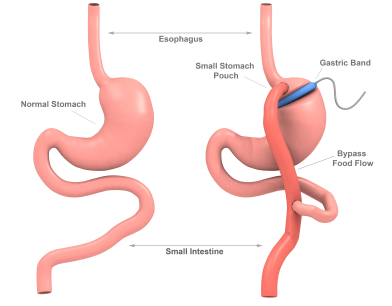
Does Gastric Bypass Cure Type 2 Diabetes?

It does,…according to Seattle researchers.

Steve Parker MD, bariatric surgery

Band Gastric Bypass Surgery

They looked at over 4,000 type 2 diabetics who had gastric bypass surgery for weight loss, following their cases thereafter over many years. Almost seven in 10 had a “complete diabetes remission” within five years of surgery. (Remission was defined as non-diabetic lab values on blood tests and absence of diabetic drug use.) Of those going into remission, 35% redeveloped diabetes within five years of surgery. Those with the more severe or longstanding cases of diabetes before surgery were  more likely to have a recurrence of diabetes.

So it looks to me like, on average, gastric bypass surgery “cures” half of the cases of type 2 diabetes, as measured five years after surgery. As the years pass, even more failures will arise. Nevertheless, that’s an impressive improvement. Given the potential complications of bypass surgery, I’d try a very-low-carb diet before going under the knife. Examples are Dr. Bernstein’s Diabetes Solution and Conquer Diabetes and Prediabetes.

Steve Parker, M.D.

PS: Cure or remission of type 2 diabetes could be defined in other ways. For instance, a more reliable definition of cure might include return of normal pancreas/insulin function as judged by insulin levels and insulin sensitivity. If you have normal blood sugar levels and hemoglobin A1c, yet have ongoing insulin resistance, you’re more likely to develop overt diabetes going forward.

Macular Degeneration Not As Scary As Before

…thanks to science-based research. Science-Based Medicine blog has the poop. A quote:

In my world of treating patients with retinal disease, a revolution has taken place over the past few years. The most aggressive form of macular degeneration has been transformed from a relentlessly progressive, disabling disease to one which can be tamed with medication. Now, patients diagnosed with exudative macular degeneration can expect stablization and even improvement in vision.

It is a story worthy of a Hollywood movie. Start with a reluctant hero; add controversy, Wall Street, politics, and most important of all, a happy ending.

The article is mostly about game-changing VEGF-binding drugs. VEGF = vascular endothelial growth factor. The one I’ve heard most about is Avastin.

Well worth a read if someone you know has age-related macular degeneration (ARMD).

Get Fit With Body Weight Exercises

James Fell features a guest post by Al Kavadlo on fitness via body weight exercises. No gym access? No free weights? No machines?

No problem!

Kim Kardashian Losing Weight With the Atkins Diet

…according to an article at the LA Times. Twenty-five pounds thus far. I don’t follow celebrities much but in case you do, there you go. The description of her meals in the article is similar to my Low-Carb Mediterranean Diet.

Endocrine Groups Agree on Healthy Lifestyle and Diet Choices

MedPageToday has the poop.

Patients may need help managing metabolic and endocrine disorders with healthy eating and lifestyle choices, and now there’s a comprehensive set of clinical guidelines, issued jointly by the American Association of Clinical Endocrinologists, the American College of Endocrinology, and the Obesity Society, to assist them.

I lost interest when they recommended avoiding saturated fats. There’s no call for that.

All patients, in addition to receiving an education in nutrition and meal preparation, should engage in 150 minutes or more of physical activity weekly, and learn ways to avoid a sedentary lifestyle, receive adequate sleep, and budget time to relax and reduce stress. Patients should also generally consume a mix of animal and plant proteins and carbohydrates. They should reduce the fat consumed with dairy and animal products, and avoid saturated fats.

***

Two key recommendations he noted were that healthy eating with a focus on fresh foods — such as fruits and vegetables — was central to a healthy meal plan, and that there was no evidence to support consumption of vitamin supplements except in deficient populations.

Read the rest.

QOTD: Jerry Pournelle on Federal Bunny Inspectors

(Context: The 16-day partial U.S. government shutdown ended a few days ago.)

Rejoice. The Bunny Inspectors, after a two week paid vacation, are back on the job. They will be paid for their “furlough” as if they had worked full time, with no loss of time off, and they can go back to watching stage magic shows to be certain that no thaumaturgist uses a rabbit in his performance without a Federal license from the Department of Agriculture, unless, of course, the rabbit is killed as part of the performance in which case no Federal license is required. I wish I were making all this up, but I am not. It’s the law. They will also inspect back yard rabbit cages where people who keep pet rabbits have their stock, and if anyone sells a pet rabbit without a Federal license the cost is about $5000 per bunny. If you kids keep rabbits, make sure they give them away rather than sell them. It is possible that they can sell rabbits for slaughter without a Federal license, but check with your lawyer before they do it.

                                            —Jerry Pournelle

Alex Jones’ Infowars On the Chase Bank Financial Restrictions

In a recent post, I shared my concern and puzzlement on Chase Bank limiting my access to money in my small business account. Here’s an excerpt from Infowars:

Chase Bank confirmed to Infowars that all business account holders were being subjected to these new regulations. Given that even a relatively small grocery store or restaurant is likely to turnover more than $50k a month in cash payments, this appears to be part of a wider move to shut down businesses who mainly deal in cash. Chase told us customers would have to upgrade to much more expensive accounts to avoid the capital controls, meaning larger corporations will not be affected. The bottom line is that banks think your money is their money and will do everything in their power to prevent you from withdrawing it in large quantities.

Chase Bank has moved to limit cash withdrawals while banning business customers from sending international wire transfers from November 17 onwards, prompting speculation that the bank is preparing for a looming financial crisis in the United States by imposing capital controls.

Read the whole thing.

I don’t know if the federal government put Chase up to this—in preparation for confiscation or a banking collapse—or if it’s just a bad decision within Chase.