Category Archives: Overweight & Obesity

Mediterranean Diet Prevents Middle-Age Weight Gain? I Wish…

Several mainstream media sources last year touted the Mediterranean diet as an effective method for prevention of the expected middle-age weight gain. Reuters is one source, for example. Men on the Mediterranean diet gained 2 lb (about a kilogram) less than other men over six years. Mediterranean-dieting women gained weight too, but a whole 0.77 lb (0.35 kg) less than others.

Big whoop.

The media attention was based on a Spanish study of over 10,000 men and women university graduates over the course of six years. Average baseline age was 38. A Mediterranean diet score was calculated based on a food frequency questionnaire given only at the start of the study. Adherence with a Mediterranean-style diet was judged for each individual as either low, medium, or high.

You’d think this research report would tell you how much weight these folks gained on average over six years, and how many pounds less if one followed the Mediterranean diet. Think again. No such luck, which reminds me of one of my favorite aphorisms: “eschew obfuscation.”

I had to do my own calculations based on Table 3. And I still don’t know how much the average person in this cohort gained over six years.

I am a die-hard Mediterranean diet advocate. It’s linked to myriad health benefits. I’d love to believe it prevents middle-age weight gain. But the results of this study are so modest as to be almost nonexistent.

Steve Parker, M.D.

Reference: Beunza, J., Toledo, E., Hu, F., Bes-Rastrollo, M., Serrano-Martinez, M., Sanchez-Villegas, A., Martinez, J., & Martinez-Gonzalez, M. (2010). Adherence to the Mediterranean diet, long-term weight change, and incident overweight or obesity: the Seguimiento Universidad de Navarra (SUN) cohort American Journal of Clinical Nutrition DOI: 10.3945/ajcn.2010.29764

Book Review: Why We Get Fat

Gary Taubes’ latest book is Why We Get Fat: And What To Do About It. I give it five stars per Amazon.com’s ranking system (I love it).

♦ ♦ ♦

At the start of my medical career over two decades ago, many of my overweight patients were convinced they had a hormone problem causing it. I carefully explained that’s rarely the case. As it turns out, I may have been wrong. And the hormone is insulin.

Mr. Taubes wrote this long-awaited book for two reasons: 1) to make the ideas in his 2007 masterpiece (Good Calories, Bad Calories) more accessible to the public, and 2) to speed up the process of changing conventional wisdom on overweight. GCBC was the equivalent of a college-level course on nutrition, genetics, history, politics, science, physiology, and biochemistry. Many nutrition science geeks loved it while recognizing it was too difficult for the average person to digest.

Paradigm Shift

The author hopes to convince us that “We don’t get fat because we overeat; we overeat because we’re getting fat.” We need to think of obesity as a disorder of excess fat accumulation, then ask why the fat tissue isn’t regulated properly. A limited number of hormones and enzymes regulate fat storage; what’s the problem with them?

Mr. Taubes makes a great effort convince you the old “energy balance equation” doesn’t apply to fat storage. You remember the equation: eat too many calories and you get fat, or fail to burn up enough calories with metabolism and exercise, and you get fat. To lose fat, eat less and exercise more. He prefers to call it the “calories-in/calories-out” theory. He admits it has at least a little validity. Problem is, the theory seems to have an awfully high failure rate when applied to weight management over the long run. We’ve operated under that theory for the last half century, but keep getting fatter and fatter. So the theory must be wrong on the face of it, right? Is there a better one?

So, Why DO We Get Fat?

Here is Taubes’s explanation. The hormone in charge of fat strorage is insulin; it works to make us fatter, building fat tissue. If you’ve got too much fat, you must have too much insulin action. And what drives insulin secretion from your pancreas? Dietary carbohydrates, especially refined carbs such as sugars, flour, cereal grains, starchy vegetables (e.g., corn, beans, rice, potatoes), liquid carbs. These are the “fattening carbs.” Dozens of enzymes and hormones are at play either depositing fat into tissue, or mobilizing the fat to be used as energy. It’s an active process going on continously. Any regulatory derangement that favors fat accumulation will CAUSE gluttony (overeating) or sloth (inactivity). So it’s not your fault.

What To Do About It

Cut back on carb consumption to lower your fat-producing insulin levels, and you turn fat accumulation into fat mobilization.

Before you write off Taubes as a fly-by-night crackpot, be aware that he’s received three Science-in-Society Journalism Awards from the National Association of Science Writers. He’s a respected, professional science writer. Having read two of his books, it’s clear to me he’s very intelligent. If he’s got a hidden agenda, it’s well hidden.

One example illustrates how hormones control growth of tissues, including fat tissue. Consider the transformation of a skinny 11-year-old girl into a voluptuous woman of 18. Various hormones make her grow and accumulate fat in the places we now see curves. The hormones make her eat more, and they control the final product. The girl has no choice. Same with our adult fat tissue, but with different hormones. If some derangement is making us grow fatter, it’s going to make us more sedentary (so more energy can be diverted to fat tissue) or make us overeat, or both. We can’t fight it. At not least very well, as you can readily appreciate if look at the people around you at any American shopping mall.

This’N’That

Taubes’s writing is clear and persuasive. He doesn’t beat you over the head with his conclusions. He lays out a logical series of facts and potential connections and explanations, helping you eventually see things his way. If insulin controls fat storage by building and maintaining fat tissue, and if carboydrates drive insulin secretion, then the way to reduce overweight and obesity is carbohydrate-restricted eating, especially avoiding the fattening carbohydrates. I’m sure that’s true for many folks, perhaps even a majority.

If you’re overweight and skeptical about this approach, you could try out a very-low-carb diet for a couple weeks or a month at little expense and risk (but not zero risk). If Mr. Taubes and I are right, there’s a good chance you’ll lose weight. At the back of the book is a university-affiliated low-carb eating plan.

If cutting carb consumption is so critical for long-term weight control, why is it that so many different diets—with no focus on carb restriction—seem to work, if only for the short run? Taubes suggests it’s because nearly all diets reduce carb consumption to some degree, including the fattening carbs. If you reduce your total daily calories by 500, for example, many of those calories will be from carbs. Simply deciding to “eat healthy” works for some people: stopping soda pop, candy bars, cookies, desserts, beer, etc. That cuts a lot of fattening carbs right there.

Losing excess weight or controlling weight by avoiding carbohydrates was the conventional wisdom prior to 1960, as documented by Mr. Taubes. Low-carb diets for obesity date back almost 200 years. The author attributes many of his ideas to German internist Gustav von Bergmann (1908).

Taubes discusses the Paleolithic diet, mentioning that the average paleo diet derived about a third of total calories from carbohdyrates (compared to the standard American diet’s 55% of calories from carb). My prior literature review found 40-45% of paleo diet calories from carbohydrate. I’m not sure who’s right.

Minor Bone of Contention RE: Coronary Heart Disease

Mr. Taubes provides numerous scientific references to back his assertions. I checked out one in particular because it didn’t sound right. Some background first.

Reducing our total fat and saturated fat consumption over the last 40 years was supposed to lower our LDL cholesterol, thereby reducing the burden of coronary heart disease, which causes heart attacks. Instead, we’ve experienced the obesity epidemic as those fats were replaced by carbohydrates. Taubes mentions a 2009 medical journal article by Kuklina et al, in which Taubes says Kuklina points out the number of heart attacks has not decreased as we’ve made these diet changes. Kuklina et al don’t say that. In fact, age-standardized heart attack rates have decreased in the U.S. during the last decade.

Furthermore, autopsy data document a reduced prevalence of anatomic coronary heart disease in people aged 20-59 from 1979 to 1994, but no change in prevalence for those over 60. The incidence of coronary heart disease decreased in the U.S. from 1971 to 1998 (the latest reliable data). Death rates from heart disease and stroke have been decreasing steadily over the last 40 years in the U.S.; coronary heart disease death rates are down by 50%. I do agree with Taubes that we shouldn’t credit those improvements to reduced total and saturated fat consumption. [Reduced trans fat consumption may play a role, but that’s off-topic.]

I think Mr. Taubes would like to believe that coronary artery disease is either more severe or unchanged in the last few decades because of low-fat, high-carb eating. That would fit nicely with some of his theories, but it’s not the case. Coronary artery disease is better now thanks to a variety of factors, but probably not diet (setting aside the trans-fat issue).

Going Forward

Low-carb dieting was vilified over the last half century partly out of concern that the accompanying high fat consumption would cause premature heart attacks, strokes, and death. We know now that total dietary fat and saturated fat have little to do with coronary heart disease and atherosclerosis (hardening of the arteries), which sets the stage for a resurgence of low-carb eating.

I advocate Mediterranean-style eating as the healthiest, in general. It’s linked with prolonged life and lower risk of heart disease, stroke, dementia, diabetes, and cancer. On the other hand, obesity is a strong risk factor for premature death and development of heart disease, stroke, diabetes, and cancer. If consistent low-carb eating cures the obesity, is it healthier than the Mediterranean diet? Maybe so. Would a combination of low-carb and Mediterranean be better? Maybe so. I’m certain Mr. Taubes would welcome a decades-long interventional study comparing low-carb with the Mediterranean diet. But that’s probably not going to happen in our lifetimes.

Gary Taubes rejects the calories-in/calories-out theory of overweight that hasn’t done a very good job for us over the last 40 years. Taubes’s alternative ideas deserve serious consideration.

Steve Parker, M.D.

References:

Coronary heart disease autopsy data: American Journal of Medicine, 110 (2001): 267-273.

Reduced heart attacks: Circulation, 12 (2010): 1,322-1,328.

Reduced incidence of coronary heart disease: www.UpToDate.com, topic: “Epidemiology of Coronary Heart Disease,” accessed December 11, 2010.

Death rates for coronary heart disease: Journal of the American Medical Association, 294 (2005): 1,255-1,259.

Disclosure: I don’t know Gary Taubes. I requested from the publisher and received a free advance review copy of the book. Otherwise I received nothing of value for this review.

Disclaimer: All matters regarding your health require supervision by a personal physician or other appropriate health professional familiar with your current health status. Always consult your personal physician before making any dietary or exercise changes.

Update April 22, 2013:

As mentioned above, WWGF was based on Taubes’ 2007 book, Good Calories, Bad Calories. You may be interested in a highly critical review of GCBC by Seth at The Science of Nutrition.

“But Doc, I’m Too Heavy to Exercise!”

I’ve written elsewhere about the death-defying aspect of exercise and myriad other health benefits of regular physical activity.

Very heavy folks potentially have more to gain in terms of health and longevity compared to skinny people. So it’s a cruel irony that the heavier you are, the harder it is exercise. At some point even light exercise becomes impossible.

Average-height women tipping the scales at about 280 pounds (127 kg) and men at 360 pounds (164 kg) aren’t going to be able to jog around the block, much less run a marathon. These weights are 100 percent over ideal or healthy levels. An actual “exercise program” probably won’t be possible until some weight is lost simply through very-low-carb eating, calorie restriction, or bariatric surgery. The initial exercise goal for you may just be to get moving through activities of daily living and perhaps brief walks and calisthenics while sitting in a chair.

“I’ll get started after I finish this cigarette.”

Markedly obese people who aren’t up to the aforementioned extreme weights can usually tolerate a low-intensity physical activity program. At 50 percent over ideal weight, an average-height woman of 210 pounds (95 kg) is carrying 70 excess pounds (32 kg) of fat. Her male counter-part lugs around 90 pounds (41 kg) of unnecessary fat. This weight burden causes dramatic breathlessness and fatigue upon exertion, and makes the joints and muscles more susceptible to aching and injury.

If you’re skinny, just imagine trying to walk or run a mile carrying a standard five-gallon (19 liter) water cooler bottle, which weighs only 43 pounds (19.5 kg) when full. The burden of excess fat makes it quite difficult to exercise.

If you’re markedly obese, several tricks will enhance your exercise success. I want you to avoid injury, frustration, and burn out. Start with light activity for only 10 or 15 minutes, gradually increase session length (e.g., by two to four minutes every two to four weeks) and increase exercise intensity only after several months. Your joints and muscles may appreciate easy, low-impact exercises such as stationary cycling, walking, swimming, and pool calisthenics/water aerobics.

You may also benefit from the advice of a personal fitness trainer arranged through a health club, gym, or YMCA/YWCA. Check out several health clubs before you join. Some of them are primarily meat markets for beautiful slender yuppies. You may feel more comfortable in a gym that welcomes and caters to overweight people. Hospitals are increasingly developing fitness centers with obese orthopedic, heart, and diabetic patients in mind.

Steve Parker, M.D.

Waist-Hip Ratio: What Is It, and What’s Yours?

A comment left under my recent Diabetic Mediterranean Diet blog post on healthy weight ranges reminded me about the waist-hip ratio.

The risk of heart and vascular disease is more closely linked to distribution of excess fat than with degree of obesity as measured by overall weight or body mass index. Waist-hip ratio (WHR) is a measure of abdominal or central obesity, the type of fat distribution associated with coronary artery disease. A high ratio indicates the android body habitus. To determine your waist-hip ratio:

  1. While standing, relax your stomach—don’t pull it in. Measure around your waist mid-way between the bottom of the rib cage and the top of your pelvis bone. Usually this is at the level of your belly button, or an inch higher. Don’t go above the rib cage. Keep themeasuring tape horizontal to the ground and don’t compress your skin.
  2. Then measure around your hips at the widest part of your buttocks. Keep the tape horizontal to the ground and don’t compress your skin.
  3. Divide the waist by the hip measurement.The result is your waist-hip ratio.

For example, if your waist is 44 inches (112 cm) and hips are 48 inches (122 cm): 44 divided by 48 is 0.92, which is your waist-hip ratio.

Scientists haven’t yet determined the ideal WHR, but it is probably around 0.85 or less for women, and 0.95 or less for men. Ratios above 1.0 are clearly associated with risk of cardiovascular disease such as heart attacks. The higher the ratio, the higher the risk. Compared with body mass index, WHR is a much stronger predictor of coronary artery disease. Several of the other obesity-related illnesses are also correlated with WHR, but the relationship between WHR and cardiovascular disease is particularly strong.

Steve Parker, M.D.

Does Diminished Work Activity Explain Our 50-Year Overweight Trend?

Daily work-related energy expenditure over the last half-century in the U.S. has decreased by over 100 calories. This may well explain the increase in body weights we’ve seen, according to a 2011 article in PLoS ONE.

I sorta hate to open this can o’ worms, but it’s important. As a population, are we fat because we eat too much or because we burn too few calories in physical activity? Or is it a combination? The correct answer may help us learn how to reverse the trend.

Methodology

Authors of the study at hand estimated the amount of energy (calories) necessary to perform various jobs, then noted changes in numbers of people employed in those jobs over time. In the early 196os, for example, nearly half of U.S. jobs required at least moderate intensity physical activity, compared to less than 20% demanding that degree of energy now. The authors note the dramatic shift from manufacturing to service-type jobs over the last 50 years. Service jobs, like mine, often entail a lot of sitting and standing around.

They chose to ignore how much energy we expend in exercise, figuring what we do in a 40-hour work week overwhelms the 1-2 hours of exercise we may do.

Researchers’ Findings and Conclusions

They found that work-related daily energy expenditure has decreased by over 100 calories over the last half-century, which (in the authors’ view) would account for a significant portion of the increased body weight we’ve seen. Since physically demanding jobs are unlikely to see a resurgence, the authors advocate physically active lifestyles away from workplace.

Discussion

Surveys indicate that only one in four of us fulfill the federal physical activity guidelines: 150 minutes a week of moderate intensity activity or 75 minutes a week of vigorous intensity activity. When activity is actually measured with an accelerometer, only one in 20 achieve that lofty goal. We over-estimate how much we exercise, and under-estimate how much we eat.

The researchers cite studies showing significantly increased average per capita calorie consumption in the U.S. over the last several decades. Some experts estimate the caloric increase is in the range of 500 a day for adults; the authors here think that’s too high but don’t offer a specific alternative. Looking at one of their references (Hall et al), they must think the increase is closer to 200 calories a day, comparing 2005 to 1975.

Several studies suggest that average daily energy expenditure has not decreased in developed countries, at least from the 1980s to the present. A strength of the current study at hand is that it spans about 50 years, up to 2008.

My sense is that both calorie consumption (too much) and physical activity (too little) contribute to our overweight problem that started 40 or 50 years ago. Excessive consumption is the predominant factor. To “exercise off” the calories in a Snickers candy bar, you’d have to jog for an hour. If you’re watching your weight, you’ll have more success if you just skip the Snickers.

In case you couldn’t tell, I still believe in the “calories in/calories out” model of overweight and obesity, aka “the energy balance equation.” At the same time, I believe certain calories are more fattening than others: concentrated sugars and refined starches.

Steve Parker, M.D.

References:

Church, T., Thomas, D., Tudor-Locke, C., Katzmarzyk, P., Earnest, C., Rodarte, R., Martin, C., Blair, S., & Bouchard, C. (2011). Trends over 5 Decades in U.S. Occupation-Related Physical Activity and Their Associations with Obesity PLoS ONE, 6 (5) DOI: 10.1371/journal.pone.0019657

Swinburn, B., et al. Increased food energy supply is more than sufficient to explain the U.S. epidemic of obesity. American Journal of Clinical Nutrition, 2009 (90): 1,453-1,456.

Hall, K.D., et al. The progressive increase of food waste in America and its environmental impact. PLoS ONE, 2009, 4(11): e7940. doi: 10.1371/journal.pone.0007940

“LCHF Diet” Popular in Sweden

LCHF Cheese

Dr. Eenfeldt of DietDoctor.com gave a talk at the recent Ancestral Health Symposium in California, on the rationale of the current low-carb, high-fat diet (LCHF) so popular in his home country of Sweden. It’s very understandable to the general public and is a good introduction to low-carb eating. The entire YouTube video is 55 minutes; if you’re pressed for time, skip the 10-minute Q&A at the end.

He also discusses the benefits of LCHF eating for his patients with diabetes.

If you reduce carbohydrates, you’re going to replace it with either protein, fat, or both. As Dr. Eenfeldt recommends, the Ketogenic Mediterranean and Low-Carb Mediterranean Diets replace carbs more with fats than protein.

Steve Parker, M.D.

What About “The Biggest Loser”?

Dr. Barry Sears (Ph.D., I think) recently wrote about a lecture he attended by a dietitian affiliated with “The Biggest Loser” TV show. She revealed the keys to weight-loss success on the show. Calorie restriction is a major feature, with the typical 300-pounder (136 kg) eating 1,750 calories a day. On my Advanced Mediterranean Diet, 300-pounders get 2,300 calories (men) or 1,900 calories (women).

Although not stressed by Dr. Sears, my impression is that contestants exercise a huge amount.

Go to the link above and you’ll learn that all contestants are paid to participate. In researching my Conquer Diabetes and Prediabetes book, I learned that the actual Biggest Loser wins $250,000 (USD). Also, “The Biggest Loser” is an international phenomenon with multiple countries hosting their own versions, with different pay-off amounts. A former winner, Ali Vincent, lives in my part of the world and still has some celebrity status.

This TV show demonstrates that the calories in/calories out theory of body weight still applies. Including the fact that massive exercise can help significantly with weight loss. In real-world situations, exercise probably contributes only a small degree to loss of excess weight. The major take-home point of the show, for me, is that you can indeed make food and physical activity choices that determine your weight.

Most of us watch too much

I know losing 50 to 10o pounds of fat (25–45 kg) and keeping it off for a couple years is hard; most folks can’t do it. Do you think you’d be more successful if I gave you $250,ooo for your success?

Steve Parker, M.D.

U.S. Diet Change Over the Last Century

U.S. obesity rate over last 40 years

Beth Mazur over at Weight Maven has posted a lecture by Dr. Stephan Guyenet in which he outlines the changes in American diet over the last 100 years. It’s only 16 minutes long. You may find an explanation for our excess weight problem.

Steve Parker, M.D.

Competing Theories of Overweight and Obesity

God, help us figure this out

A few months ago, several of the bloggers/writers I follow were involved in an online debate about two competing theories that attempt to explain the current epidemic of overweight and obesity. The theories:

  1. Carboydrate/Insulin (as argued by Gary Taubes)
  2. Food Reward (as argued by Stephan Guyenet)

The whole dustup was about as interesting to me as debating how may angels can dance on the head of pin.

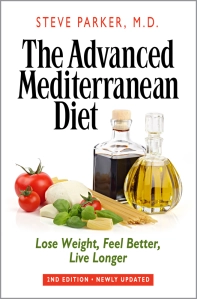
Regular readers here know I’m an advocate of the Carboydrate/Insulin theory. I cite it in Conquer Diabetes and Prediabetes: The Low-Carb Mediterranean Diet and The Advanced Mediterranean Diet: Lose Weight, Feel Better, Live Longer (2nd edition). But the Food Reward theory also has validity. They’re both right, to an extent. They’re not mutually exclusive. The Food Reward theory isn’t as well publiziced as Carbohydrate/Insulin.

Dr. Guyenet lays out a masterful defense of the Food Reward theory at his blog. Mr. Taubes presents his side here, here, here, here, and here. If you have a couple hours to wade through this, I guess I’d start with Taubes’ posts in the order I list them. Finish with Guyenet.

You’d think I’d be more interested in this. I’m still not.

Moving from theory to real world practicality, I do see that limiting consumption of concentrated refined sugars and starches helps with loss of excess body fat and prevention of weight regain. Not for everbody, but many. Whether that’s mediated through lower insulin action or through lower food reward, I don’t care so much.

Steve Parker, M.D.

h/t Dr. Emily Deans

Book Review: The Blood Sugar Solution

I just finished reading the No.1 book at Amazon.com, The Blood Sugar Solution: The UltraHealthy Progam for Losing Weight, Preventing Disease, and Feeling Great Now!  Published in 2012, the author is Dr. Mark Hyman. I give it three stars per Amazon’s rating system (“It’s OK”).  Actually, I came close to giving it two stars, but was afraid the review would have been censored at the Amazon site.

♦   ♦   ♦

The book’s promotional blurbs by the likes of Dr. Oz, Dr. Dean Ornish, and Deepak Chopra predisposed me to dislike this book.  But it’s not as bad as I thought it’d be.

The good parts first.  Dr. Hyman favors the Mediterranean diet, strength training, and high-intensity interval training.  His recommended way of eating is an improvement over the standard American diet, improving prospects for health and longevity.  His dietary approach to insulin-resistant overweight/obesity and type 2 diabetes includes 1) avoidance of sugar, flour, processed foods, 2) preparation of your own meals from natural, whole food, and 3) keeping glycemic loads low.  All well and good for weight loss and blood sugar control.  It’s not a vegetarian diet.

The author proposes a new trade-marked medical condition: diabesity. It refers to insulin resistance in association with (usually) overweight, obesity, and/or type 2 diabetes mellitus.  Dr. Hyman says half of Americans have this brand-new disorder, and he has the cure.  If you don’t have overt diabetes or prediabetes, you’ll have to get your insulin levels measured to see if you have diabesity.

He reiterates many current politically correct fads, such as grass-fed/pastured beef, organic food, detoxification, and strict avoidance of all man-made chemicals, notwithstanding the relative lack of scientific evidence supporting many of these positions.

Dr. Hyman bills himself as a scientist, but his biography in the book doesn’t support that label.  Shoot, I’ve got a degree in zoology, but I’m a practicing physician, not a scientist.

The author thinks there are only six causes of all disease: single-gene genetic disorders, poor diet, chonic stress, microbes, toxins, and allergens.  Hmmm… None of those explain hypothyroidism, rheumatoid arthritis, systemic lupus erythematosis, tinnitus, migraines, irritable bowel syndrome, Parkinsons disease, chronic fatigue syndrome, or multiple sclerosis, to name a few that don’t fit his paradigm.

Dr. Hyman makes a number of claims that are just plain wrong.  Here are some:
  – Over 80% of Americans are deficient in vitamin D
  – Lack of fiber contributes to cancer
  – High C-reactive protein (in blood) is linked to a 1,700% increased probability of developing diabetes
  – Processed, factory-made foods have no nutrients
  – We must take nutritional supplements

Furthermore, he recommends a minimum of 11 and perhaps as many as 16 different supplements even though the supportive science is weak or nonexistent.  Is he selling supplements?

After easily finding these bloopers, I started questioning many other of the author’s statements.   

I was very troubled by the apparent lack of warning about hypoglycemia (low blood sugar).  Many folks with diabetes will be reading this book.  They could experience hypoglycemia on this diet if they’re taking certain diabetes drugs: insulin, sulfonylureas, meglitinides, pramlintide plus insulin, exenatide plus sulfonylurea, and possibly thiazolidinediones, to name a few instances.

If you don’t have diabetes but do need to lose weight, this book may help.  If you have diabetes, strongly consider an alternative such as Dr. Bernstein’s Diabetes Solution or my Conquer Diabetes and Prediabetes.

In the interest of brevity, I’ll not comment on Dr. Hyman’s substitution of time-tested science-based medicine with his own “Functional Medicine.”

Steve Parker, M.D.