Category Archives: Heart Disease

Gum Disease May Cause or Promote Alzheimer’s Disease

From Medical Xpress:

“Researchers have determined that gum disease (gingivitis) plays a decisive role in whether a person develops Alzheimer´s or not.

“We discovered DNA-based proof that the bacteria causing gingivitis can move from the mouth to the brain,” says researcher Piotr Mydel at Broegelmanns Research Laboratory, Department of Clinical Science, University of Bergen (UiB).

The bacteria produces a protein that destroys nerve cells in the brain, which in turn leads to loss of memory and ultimately, Alzheimer’s.”

Source: Brush your teeth—postpone Alzheimer’s

I take this with a large grain of salt. Click for detailed info on the theory and the Porphyromonas gingivalis bacterium. This organism is the most common bacterium found in the arteries of patients with cardiovascular disease.

Steve Parker, M.D.

Steve Parker MD, Advanced Mediterranean Diet

Click the pic to purchase at Amazon.com in the U.S.

High cholesterol doesn’t cause heart disease. Say what?

Plaque unrelated to cholesterol

From The Irish Times:

There is no evidence that high levels of total cholesterol or of “bad” cholesterol cause heart disease, according to a new paper by 17 international physicians based on a review of patient data of almost 1.3 million people.

The authors also say their review shows the use of statins – cholesterol lowering drugs – is “of doubtful benefit” when used as primary prevention of cardiovascular disease.

The authors include Galway-based Prof Sherif Sultan, professor of the International Society for Vascular Surgery; Scottish-based Dr Malcolm Kendrick, author of The Great Cholesterol Con; and Dr David M Diamond, a US-based neuroscientist and cardiovascular disease researcher.

Prof Sultan said millions of people all over the world, including many with no history of heart disease, are taking statins “despite unproven benefits and serious side effects”.

Source: ‘No evidence’ high cholesterol causes heart disease, say doctors

Another Sacred Cow Slaughtered: Omega-3 Fatty Acids Have No Effect on Cardiovascular Disease or Longevity

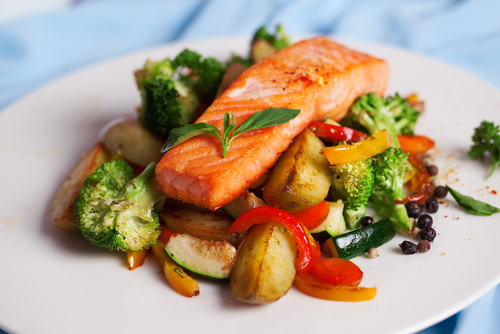
Salmon, a cold-water fatty fish, is a rich source of omega-3 fatty acids

That headline is the conclusion of a Cochrane systematic review of the evidence. As you read the summary below, be aware that the main omega-3 fatty acids are alpha-lenolinic acid (ALA), docosahexaenoic acid (DHA), and eicosapentaenoic acid (EPA).

From Cochrane Library:

Increasing EPA and DHA has little or no effect on all‐cause deaths and cardiovascular events (high‐quality evidence) and probably makes little or no difference to cardiovascular death, coronary deaths or events, stroke, or heart irregularities (moderate‐quality evidence, coronary events are illnesses of the arteries which supply the heart). EPA and DHA slightly reduce serum triglycerides and raise HDL (high‐quality evidence).

Eating more ALA (for example, by increasing walnuts or enriched margarine) probably makes little or no difference to all‐cause or cardiovascular deaths or coronary events but probably slightly reduce cardiovascular events, coronary mortality and heart irregularities (moderate/low‐quality evidence). Effects of ALA on stroke are unclear as the evidence was of very low quality.

There is evidence that taking omega‐3 capsules does not reduce heart disease, stroke or death. There is little evidence of effects of eating fish. Although EPA and DHA reduce triglycerides, supplementary omega‐3 fats are probably not useful for preventing or treating heart and circulatory diseases. However, increasing plant‐based ALA may be slightly protective for some heart and circulatory diseases.

Source: Omega‐3 fatty acids for the primary and secondary prevention of cardiovascular disease – Abdelhamid, AS – 2018 | Cochrane Library

Is Sodium Restriction to 2,300 mg/day Really Necessary?

I’m still not convinced that severe sodium restriction is necessary or even possible for most people

U.S public health authorities recommend maximum daily sodium consumption of 2.3 grams a day, in order to prevent cardiovascular disease. But a 2018 multi-country study published in Lancet supports a much different and higher maximum sodium intake level:

Sodium intake was associated with cardiovascular disease and strokes only in communities where mean intake was greater than 5 g/day. A strategy of sodium reduction in these communities and countries but not in others might be appropriate.

The researchers also found, “All major cardiovascular outcomes decreased with increasing potassium intake in all countries.”

Click for a list of potassium-rich foods from a .gov website.

You’ll find several cold-water fatty fish there.

My Advanced Mediterranean Diet recommends the fish but you’ll find no sodium restriction advice.

Source: Urinary sodium excretion, blood pressure, cardiovascular disease, and mortality: a community-level prospective epidemiological cohort study – The Lancet

Steve Parker MD, Advanced Mediterranean Diet

Two diet books in one

You CAN Lower Blood Pressure Naturally

Lot’s of good ideas in this video. Additionally, I’ve see a couple studies supporting hibiscus tea as a natural remedy.

Dr Berry says only one in a million persons has blood pressure that is sensitive to dietary salt. That is, high salt intake increases blood pressure. On the other had, I’d say one in four of the hypertensive population is salt-sensitive.

Is weight lifting better for heart health than running?

One…..more…..rep!

“Lifting weights is healthier for the heart than going for a run or a walk, new research has found.Scientists looking at the health records of more than 4,000 people have concluded that, while both forms of exercise reduce the risk of developing heart disease, static activities such as weight lifting or press-ups have a greater effect than an equivalent amount of dynamic exercise such as running, walking or cycling.

The research challenges commonly held assumption that so-called “cardiovascular” pursuits like running are of greatest benefit to the heart.”

Source: Weight lifting better for heart health than running, new study finds

I like these findings, but wonder if they can be replicated.

Fresh Praise for the Mediterranean Diet in NYT

Dead whole fish aren’t very appealing to many folks

From Paul Greenberg’s opinion piece in the New York Times (July 19, 2018):

In 1953, not long before President Dwight Eisenhower suffered a heart attack in office, the social scientist Leland Allbaugh published “Crete: A Case Study of an Underdeveloped Area.” The landmark analysis of the eating patterns of an isolated Greek population strongly suggested that a calorie-limited diet high in fresh fruits and vegetables, whole grains, and olive oil and low in animal protein, particularly red meat, could lower the risk of heart attacks and strokes, decrease chronic disease and extend life.

Medical research over the last half-century has largely borne out this initial finding. Weight-loss fads and eating trends come and go, but the so-called Mediterranean diet has stood fast. “Among all diets,” Dr. Walter Willett of Harvard’s T.H. Chan School of Public Health concluded in an email, “the traditional Mediterranean diet is most strongly supported for delivering long term health and wellbeing.”

Click for a more complete definition of the traditional Mediterranean Diet, which includes alcohol. More from Greenberg:

***

As the clinician Artemis Simopoulos pointed out to me, two meatless days a week are the norm in Greek Orthodox communities. This religious provision encouraged traditional communities to eat fish not only on Fridays but on Wednesdays as well. Recent epidemiological evidence links two portions of seafood a week with lower blood pressure, lower LDL cholesterol and lower triglycerides. In spite of this, American seafood consumption has stayed consistently low compared with other developed countries.

***

And for decades now, even Greeks have been abandoning their traditional foods and eating much more than they previously did. “In my view, the reason the diet worked to prevent heart disease on Crete was because they weren’t overeating,” said Marion Nestle, a professor of nutrition, food studies and public health at New York University. “By the time I got to Crete in the early 1990s, they were, and the hospitals were full of heart attacks and people with type 2 diabetes.”

***

Today, 65 years after Allbaugh returned from Crete, with modern America plagued by one of the highest obesity rates in the world and failing to meet life expectancy averages of almost every other developed nation, it’s worth circling back to the eating patterns of the ancients. For if the United States were to put itself on a Mediterranean diet, we would likely see huge improvements not only in human and environmental health, but also in rural economic stability.

RTWT for Greenberg’s roadmap to an American Mediterranean diet.

Steve Parker, M.D.
Steve Parker MD, Advanced Mediterranean Diet

Two diet books in one

Omega-3 Fatty Acids Linked to Lower Multiple Sclerosis Risk 

Dead whole fish aren’t very appealing to many folks

I’ve been telling you guys for years to eat cold-water fatty fish twice weekly. To protect your heart. Now we have another reason…

“Omega-3 fatty acids may play an important role in lowering the risk of developing multiple sclerosis (MS), researchers suggested.Consuming fish at least once a week — or at least once a month with regular fish oil use — was associated with a 44% reduced risk of MS or its precursor, clinically isolated syndrome (CIS), reported Annette Langer-Gould, MD, PhD, of Kaiser Permanente Southern California in Pasadena, CA, and co-authors, in an early-release abstract from the American Academy of Neurology annual meeting, to be held here in April.”

Source: Omega-3s Linked to Lower MS Risk | Medpage Today

Bob Harper of “Biggest Lose” Fame Switches to Mediterranean Diet After His Heart Attack 

Exercise is clearly health-promoting, but it’s unlikely to keep you alive forever. Immortality is over-rated anyway.

The traditional diet consumed in the countries bordering the Mediterranean Sea, has been adopted all over the world because of its health benefits. The most recent convert? Bob Harper, the fitness trainer on “The Biggest Loser.

Harper, 51, recently switched to the Mediterranean diet, per doctor’s orders, after suffering a massive heart attack late February, according to POPSUGAR. He collapsed in a New York City gym and was unconscious for two days. While Harper obviously lives a healthy lifestyle, the POPSUGAR report points out his mother died of a heart attack, and genetics can affect heart health.  It’s not a surprise Harper’s doctor’s would recommend the Mediterranean diet as a form of recovery. According to the Mayo Clinic, this traditional diet reduces the risk of heart disease, cancer, Parkinson’s and Alzheimer’s.

Source: ‘The Biggest Loser’s’ Bob Harper Switches to Mediterranean Diet Post Heart Attack | PRODAY

Steve Parker MD, Advanced Mediterranean Diet

Two diet books in one

What Exactly Is a “Whole Grain”?

Now THIS is whole grain

Do you know what a whole grain food is? I thought I did. But I was wrong. Here’s the definition in a 2013 article in Scientific American:

The term “whole grain” might evoke an image of a whole, intact grain—that is, a fiber-rich coating of bran surrounding a starchy endosperm and a small reproductive kernel known as the germ. But in a definition created in 1999 by the American Association of Cereal Chemists (AACC) International, an organization of food industry professionals and scientists, and adopted by the U.S. Food and Drug Administration in 2006, “whole grain” refers to any mixture of bran, endosperm and germ in the proportions one would expect to see in an intact grain—yet the grains can be, and usually are, processed so that the three parts are separated and ground before being incorporated into foods. (Refined grains, on the other hand, are grains that have been stripped of their bran and germ.) For a food product to be considered whole grain, the FDA saysit must contain at least 51 percent of whole grains by weight. Compared with intact grains, though, processed whole grains often have lower fiber and nutrient levels.

Many of the scientific studies that support the healthfulness of whole grains, and there aren’t many, considered wheat germ and bran cereals as whole grain foods. But those are only parts of a whole grain. The studies that linked lower heart disease and type 2 diabetes with whole grain consumption were diets high in fiber or bran as a whole grain.

Read the whole article (it’s not long) to find out how modern processing of whole grains can reduce their healthfulness.

Food companies lump ground whole grains, partially processed grains and intact unprocessed grains together under the same broad category of “whole grains,” so it’s difficult for consumers to know which they’re getting.