Category Archives: Diet Reviews

Book Review: The Oldways 4-Week Mediterranean Diet Menu Plan

67618_10151198435353246_1768152938_n

I’ve been an admirer of Oldways for many years. They tirelessly advocate for a way of eating that demonstrably lengthens lifespan while reducing rates of heart disease, stroke, cancer, diabetes, and dementia. Especially when compared to the standard American diet.

I’m very pleased to see Oldways present a four-week plan that helps the average person incorporate Mediterranean diet principles into daily life. These recipes are simple, practical, and delicious. No need for exotic ingredients or culinary classes!

Get started soon. You won’t regret it.

Steve Parker, M.D.

Disclosure: Olways provided me with a free pre-publication review copy of the book.

Book Review: The Smarter Science of Slim

Earlier this year, I  reviewed  The Smarter Science of Slim, by Jonathan Bailor and published in 2012.  The review is at my defunct Advanced Mediterranean Diet blog, so I moved it here.  Per Amazon.com’s rating system, I give it four stars (”I like it”).  Evelyn at The Carb Sane Asylum has some different ideas about the book at her blog.

♦   ♦   ♦

Mr. Bailor’s weight-management diet avoids grains, most dairy, oils, refined starches, added sugars, starchy veggies, corn, white potatoes.  You eat meat, chicken, eggs, some fruit, nuts, seeds, and copious low-starch vegetables.  No limit on food if you eat the right items.

Is the Energy Balance Equation valid?

It’s high-fiber, high-protein, moderate-fat, moderate-carb (1/3 of calories from carbohydrate,  1/3 from protein, 1/3 from fat).  He considers it Paleo (Stone Age) eating even though he allows moderate legumes and dairy (fat-free or low-fat cottage cheese and plain Greek yogurt).

Will it lead to weight lose? Quite probably in a majority of followers, especially those eating the standard, low-quality American diet.  When it works, it’s because you’ve cut out the fattening carbohydrates so ubiquitous in Western societies.  The protein and fiber will help with satiety.  Is it a safe eating plan?  Yes.

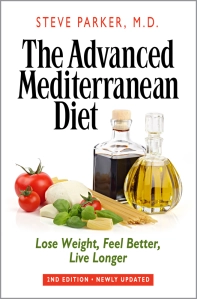
(For those with diabetes needing to lose weight, I prefer a lower carbohydrate content in the diet, something like Conquer Diabetes and Prediabetes: The Low-Carb Mediterranean Diet.  For non-diabetics, is Smarter Science better than my Advanced Mediterranean Diet 2nd Edition?  Of course not, silly!)

I don’t recall any recipes or specific meal plans.  You put your own meals together following his guidelines.

Our major points of agreement:

  • Exercise isn’t terribly helpful as a weight-loss technique for most folks.
  • We’re overweight because we eat too many starches and sweets.
  • Natural, minimally processed foods are healthier than man-made highly refined items.
  • No need to emphasize “organic” /grass-fed beef/free-range chicken.
  • We don’t do enough high-quality exercise.

I have a few problems with the book:

  • It says we’re eating less.  U.S. caloric consumption over the last several decades has increased by about 150 cals (630 kJ) a day for men and 300 cals (1260 kJ) for women.  The author seems to contradict himself at one point by favorably quoting Hilda Bruch’s writing that “…overeating is observed with great regularity” in the obese.
  • Scary graphs showing increasing instances of heart disease and diabetes over time aren’t helpful because they ignore population growth.  The population-adjusted diabetes rate is indeed increasing whereas heart disease rates are decreasing.
  • It says the Calories In/Calories Out theory of overweight has been proven wrong.  This is by no means true.  It just hasn’t helped us much to reverse the overweight epidemic.  Sure, it’s often said that if you just cut a daily tablespoon of butter out of your diet, you’d lose 11 lb (5 kg) in a year, all other things being equal.  Problem is, all other things are never equal.  In reality, we replace the butter with something else, or we’re slightly less active.  So weight doesn’t change or we gain a little.
  • It says the “eat less, exercise more” mantra has been proven wrong as a weight loss method.  Not really.  See above.  And watch an episode of TV’s “The Biggest Loser.”  Exercise can burn off fat tissue.  The problem is that we tend to overeat within the next 12 hours, replacing the fat we just burned. I agree with the author that “eat less, exercise more” is extremely hard to do, which is the reason it so often fails over the long run.  As Mr. Bailor writes elsewhere: “Hard to do” plus “do not want to do” generally equals “it’s not happening.”  Mr. Bailor would say the reason it ultimately fails is because of a metabolic clog or dysregulation.
  • He says there’s no relationship between energy (calorie) consumption and overweight.  Not true.  Need references?  Google these: PMID 15516193, PMID 17878287, PMID 14762332.  The author puts too much faith in self-reports of food intake, which are notoriously inaccurate.  And obese folks under-report consumption more than others (this is not to say they’re lying).
  • Mr. Bailor’s assessments too often rely on rat and mice studies.
  • By page 59, I had found five text sentences that didn’t match up well with the numeric bibiographic references (e.g., pages 48, 50, 59).
  • S. Boyd Eaton is thrice referred to as S. Boyd.
  • How did he miss the research on high intensity interval training by Tabata and colleagues in 1996?  Gibala is mentioned often but he wasn’t the pioneer.
  • Several diagrams throughout the book didn’t print well (not the author’s fault, of course).
  • In several spots, the author implies that HIS specific eating and exercise program has been tested in research settings.  It hasn’t.

Mr. Bailor’s exercise prescription is the most exciting part of the book for me.  His review of the literature indicates you can gain the weight-management and health benefits of exercise with just 10 or 20 minutes a week.  NOT the hour a day recommended by so many public heath authorities.  And he tells you how to do the exercises without a gym membership or expensive equipment.  That 20 minutes is exhausting and not fun.  You have fun in all the hours you saved.  If this pans out, we’re on the cusp of a fitness revolution.  Gym owners won’t be happy.  Sounds too good to be true, doesn’t it?

One component of the exercise program is high intensity interval training (HIIT), which I’m recently convinced is better than hours per week of low-intensity “cardio” like jogging. Better in terms of both fitness and weight management.

The resistance training part of the program focuses on low repetitions with high resistance, especially eccentric slow muscle contraction.  This is probably similar to programs recommended by Doug McGuff. John Little, Chris Highcock, and Skyler Tanner.  I’m no authority on this but I’m trying to learn.  By this point in the book, I was tired of looking up his cited references (76 pages!).  I just don’t know if this resistance training style is the way to go or not.  I’ll probably have to just try it on myself.

I admire Mr. Bailor’s effort to digest and condense decades of nutrition and exercise research.  He succeeds to a large degree.

Steve Parker, M.D.

Salt Restriction May Do More Harm Than Good

Unfairly demonized?

I’ve been a salt-restriction skeptic for a couple decades.  The American Council on  Science and Health has a brief review of the latest research on salt restriction, and it’s not supportive of population-wide sodium restriction.

Remember, table salt molecules contain one sodium atom and one chloride atom.  Salt-restricted and low-sodium diets are usually designated by the amount of sodium, not salt.

That being said, I do believe some individuals have elevated blood pressure related to relatively high sodium intake.  This may apply to one of every five adults with high blood pressure.  To find out if you’re one of the five, you could go on a low-sodium diet—1.5 to 3 grams a day—for one or two months and see what it does to your blood pressure.  Get your personal physician’s blessing first.

Steve Parker, M.D.

Dukan Diet Creator Loses Libel Lawsuit Against Dr. Cohen

Dr. Pierre Dukan sued another diet doctor, Jean-Michel Cohen, for claiming that the Dukan diet could harm dieters.  A French court ruled in Dr. Cohen’s favor last year.  U.K.’s The Telegraph has a few of the details. Claire Al-Aufi has more at Hive Health Media.

I reviewed the Dukan diet last April.  Gee, I hope I’m not Dr. Dukan’s next target!

Steve Parker, M.D.

Book Review: Six Weeks to OMG

I heard about this book before it was ever available in the U.S. and I thought it had the potential to be huge here.  So I read Six Weeks to OMG: Get Skinnier Than All Your Friends by Venice Fulton, published in 2012.  Per Amazon.com’s rating system, I give it two stars (“I don’t like it”).

♦   ♦   ♦

Judging from the wording and writing style, this book was written for not-too-bright girls and women from 12 to 22 years old.  Others need not bother with it.

Suggest a caption

Will it work for weight loss?  Yes, even without the author’s three cornerstone gimmicks: 1) Skip breakfast, but eat three meals daily, 2) Daily cold-water baths at 59 to 68°F for up to 15 minutes, and 3) Black coffee one or two cups every morning.  There’s no good scientific data to support those prescriptions.

The diet will work because it restricts your consumption of items that make us fat: concentrated sugars and refined starches.  It’s a low-carbohydrate diet—up to 60, 90, or 120 grams a day, depending on how fast you want to lose.

The diet consists mostly of high-protein animal-derived foods, low-carb vegetables, and up to three pieces of fruit daily.  Do not exceed 40 grams of carbohydrate per meal, even less is better, the author says.  Grains and dairy products aren’t mentioned much; it’s easy to blow your carb limit with them.  High-carb vegetables are listed, so you can avoid them.

Mr. Fulton emphasizes some important, valid points.  High protein consumption helps control appetite.  Trans fats are bad.  Eat cold-water fatty fish twice weekly.  Eat off a small plate (maximum of 9-inch diameter).  No snacking.  He says good things about weight training, while failing to mention it’s more much important long-term maintenance than for active weight loss.

He says some things that are just plain wrong, such as 1) everyone can be skinny, 2) there are only eight essential amino acids, 3) exercise is fairly helpful with weight loss, and 4) weight training just once every 10 days is adequate.

I’ll confess I didn’t read every word of the book.  The writing style is just too irritating unless you’re a not-too-bright 12 to 22-year-old.  For instance, every page had at least four exclamation marks!

Here are some of the dumbed-down sentences that unintentionally made me laugh out loud:

  • “The key to success is understanding stuff.”
  • “If you have problems controlling your appetite, the main reason is that you eat too often.”
  • “The person in the mirror, that’s you.”
  • “Human beings are part of the universe.  And that’s full of laws.  The laws of physics, chemistry and biology are three well-known laws.”

If you want a low-carb weight loss diet, you’re better off with Protein Power, The New Atkins For a New You, or the Low-Carb Mediterranean Diet.

Steve Parker, M.D.

What Is the Traditional Mediterranean Diet?

Some of my casual readers may have misconceptions as to the definition of the traditional Mediterranean diet.  I use the word “diet” here not as a weight-loss program, but “the usual food and drink of a person or animal.”  Twenty-one countries have a coastline of the Mediterranean sea, and additional countries are in the Mediterranean region.  “Traditional” refers to the mid-20th century.  Observational studies around that time associated the Mediterranean diet with longer life spans, reduced rates of chronic disease (less cardiovascular disease and dementia), and fewer cancers of the colon, breast, prostate, and uterus.

There is no monolithic, immutable, traditional Mediterranean diet.  But there are similarities among many of the regional countries that tend to unite them, gastronomically speaking.  Greece and southern Italy are particularly influential in this context.

So here are the characteristcs of the traditional, healthy Mediterranean diet:

  • It maximizes natural whole foods and minimizes highly processed ones
  • Small amounts of red meat
  • Less than four eggs per week
  • Low to moderate amounts of poultry and fish
  • Daily fresh fruit
  • Seasonal locally grown foods with minimal processing
  • Concentrated sugars only a few times per week
  • Wine in low to moderate amounts, and usually taken at mealtimes
  • Milk products (mainly cheese and yogurt) in low to moderate amounts
  • Olive oil as the predominant fat
  • Abundance of foods from plants: vegetables, fruits, beans, potatoes, nuts, seeds, breads and other whole grain products
  • Naturally low in saturated fat, trans fats, and cholesterol
  • Naturally high in fiber, phytonutrients, vitamins (e.g., folate), antioxidants, and minerals (especially when compared with concentrated, refined starches and sugars in a modern Western diet)
  • Naturally high in monounsaturated and polyunsaturated fats, particularly as a replacement for saturated fats

Be aware that the documented health benefits may be related to a physically active lifestyle and other social and cultural issues.  For example, traditional Mediterranean mealtimes were leisurely family affairs, not a MacDonald’s Happy Meal eaten off your lap on your drive home from work.

Steve Parker, M.D.

Reference:  Oldways Preservation Trust

DIRECT Trial Compares Mediterranean, Low-Fat, and Low-Carb Eating for Weight Loss

Today’s post is a reprint of my 2008 analysis of the DIRECT trial.

In 2008, the New England Journal of Medicine published a well-done study comparing the Mediterranean, low-carb, and low-fat weight-loss diets in an Israeli population over the course of two years.  The researchers conclude that “Mediterranean and low-carbohydrate diets may be effective alternatives to low-fat diets.  The more favorable effects on lipids (with the low-carbohydrate diet) and on glycemic control (with the Mediterranean diet) suggest that personal preferences and metabolic considerations might inform individualized tailoring of dietary interventions.”

How was the study set up?

Moderately obese participants (322) were randomly assigned to one of the three diets: 1) low-fat, calorie-restricted, 2) Mediterranean, calorie-restricted, or 3) low-carbohydrate, non-restricted.  Calories in the low-fat and Mediterranean diets were “restricted” to 1800 per day for the men, 1500 for the women.  Average age of participants was 52, and average body mass index was 31.  [A 5-foot, 10-inch man weighing 216 pounds (98.2 kg) has a BMI of 31.]  Nearly all participants – 277 or 86% of the total – were men.  So there were only 45 women.  Forty-six participants had type 2 diabetes.

The low-fat diet was based on the American Heart Association guidelines of 2000: 30% of calories from fat [this isn’t very low], 10% of calories from saturated fat, cholesterol limited to 300 mg/day.  [The AHA revised their guidelines in 2006.]  Low-fat dieters “were counseled to consume low-fat grains, vegetables, fruits, and legumes and to limit their consumption of additional fats, sweets, and high-fat snacks.”

The Mediterranean diet was based on the recommendations of Walter Willett and P.J. Skerrett as in their book, Eat, Drink, and be Healthy: The Harvard Medical School Guide to Health Eating.  Mediterranean dieters ate 2 fish meals per week, a handful of nuts daily, 30-45 grams of extra virgin olive oil per day, etc.  [One tablespoon of olive oil is 14 grams.]  The AHA states that “this diet reflects the current recommendations from the American Heart Association.”  There were no specific recommendations regarding alcohol in any of the diets.

The low-carb diet was based on  Atkins’ New Diet Revolution of 2002.  The goal was to provide 20 grams of carbohydrate per day for the 2-month induction phase, with a gradual increase to a maximum of 120 grams daily to maintain weight loss.  Total calories, protein, and fat were not limited.  “Participants were counseled to choose vegetarian sources of fat and protein….”

Whole grains were recommended for the low-fat and Mediterranean cohorts.

All participants worked at the same nuclear research facility in Dimona, Israel.  They were given careful instructions, initially and periodically, regarding the diet to which they were assigned.  Lunch is the main meal of the day in Israel, and they all ate lunch at the facility’s self-service cafeteria, which prompted them to choose the proper food items.  I assume they were told to maintain the diet when off-duty.  Adherence to the diets was assessed by a food-frequency questionnaire.

Findings

  • After 24 months, how many participants were still involved?  90% in the low-fat group, 85% in the Mediterranean, 78% in the low-carb.
  • There was little change in the usage of medications, and no significant differences among the groups.
  • Daily energy intake (calories or kcal) decreased from baseline levels significantly – about 450 calories – in all groups at 6, 12, and 24 months compared with baseline, with no significant differences among the groups in the amount of decrease.
  • All groups started with 51% of energy intake (calories) from carbohydrate.
  • At 24 months, the low-carb dieters were getting 40% of their daily calories as carbohydrates.  The other two groups were eating 50% of energy intake from carbs. [This still seems like a lot of carbs on the Atkins diet.  A gram of carbs has 4 calories.  The stated carbohydrate goal was a maximum of 120 grams of carbs daily, on a diet of 1800 calories.  So 120 grams of carbohydrate should be 27% of total daily calories.  At no point did the low-carb group reduce their average percentage of calories from carbohydrates under 40%.  OK, maybe be in the first two weeks but those data are not reported.  On an 1800 calorie diet, 40% of calories from carbs would be 180 grams.]
  • At 24 months, the low-carb dieters were getting 39% of their daily calories as fat.  The other two groups were in the 30-33% range.
  • Baseline fat intake for all groups was 31-32% of total calories, with saturated fat being 10% of the fat calories.
  • The low-fat cohort dropped their fat calories from 31 to 30% of total calories, which is essentially no change from baseline percentage.
  • At 24 months, the low-carbers were getting 22% of their daily calories from protein.  The other groups were at 19%.  [The low-carb Atkins diet is often criticized as having too much protein.]
  • Only the low-carb group made major changes in macronutrient composition of their diet.  Macronutrients are protein, fat, and carbohydrates.  This Atkins group increased saturated fat from 10 to 12% of total calories, reduced carbs from 51 to 40% of calories, increased protein from 19 to 22% of calories, and increased total fat from 32% to 39% or total calories.
  • All cohorts lost weight, but losses were greater in the low-carb and Mediterranean groups.  For the 272 participants who completed the full 24 months of intervention, the losses averaged 3.3 kg (7.3 lb) for the low-fat group, 4.6 kg (10.1 lb) for the Mediterraneans, and 5.5 kg (12.1 lb) for the low-carb group.
  • Among the 45 women, the low-fat group lost only 0.1 kg (0.22 lb), the Mediterraneans lost 6.2 kg (13.6 lb), and the low-carbers lost 2.4 kg (5.3 lb).  There were only 15, 20, and 10 women in these groups, respectively.
  • All groups had significant blood pressure reductions: about 4 mmHg systolic and 1 mmHg diastolic.
  • HDL cholesterol (the “good cholesterol”) increased in all groups, 8.4 mg/dl in the low-carb group, about 6.3 in the others.
  • LDL cholesterol (the “bad cholesterol”) fell 5.6 mg/dl in the Mediterraneans, 3.0 mg/dl in the low-carbers, and none in the low-fat group.  But these were not statistically significant differences between the groups.
  • The ratio of total to HDL cholesterol decreased for all groups, but the relative 20% decrease in the low-carb group was statistically significant compared to the 12% relative decrease in the low-fat group.  The ratio fell 16% in the Mediterranean group.  [The total/HDL ratio is thought to reflect risk of developing atherosclerotic complications.  You want it under 5 to 1, and 3.5 to 1 may be ideal.]
  • The level of high-sensitivity C-reactive protein decreased significantly only in the Mediterranean and low-carb cohorts.  [C-reactive protein is felt to be a marker of the systemic inflammation that has a role in atherosclerosis or hardening of the arteries.]
  • Thirty-six of the diabetics had adequate lab studies for analysis – about 12 in each diet group.  Only those in the Mediterranean group had a significant decrease in fasting glucose – 33 mg/dl.  The low-fat group had an increase.  Glycated hemoglobin decreased in all three groups although to a significant degree (0.9%) only in the low-carb group.  [High glycated hemoglobin levels reflect poor control of blood sugar levels in diabetics.]
  • Insulin levels decreased significantly in all three groups, diabetic or not.  [Abnormally high insulin levels are felt to have adverse health effects.]

Limitations of the study

  • Relatively few women, making it difficult to reliably generalize results to women.
  • Relatively few people with diabetes, making it difficult to reliably generalize results to people with diabetes.
  • Israeli gene pool?  Results not applicable to others?
  • No change in physical activity recommended to participants.  Increased exercise should enhance weight loss.

Take-Home Points

  • Caloric restriction leads to weight loss.
  • Mild degrees of weight loss reduce blood pressure.
  • In this study, the low-carb/Atkins and Mediterranean diets were more effective than the “low-fat” diet.
  • Atkins dieters can lose weight without counting calories, by limiting carbohydrate intake.
  • You gotta wonder if the low-carb group would have been even more successful if they had actually limited carbs to 120 grams daily, or less.
  • It’s possible a lower-fat diet may have been more efficacious than the one utilized here.
  • This study did not enroll enough women to prove that a calorie-restricted Mediterranean diet is superior to low-fat and Atkins diets.  The greater weight loss – 13.6 pounds for Mediterranean versus 5.3 with Atkins – is suggestive and requires further study.
  • The average amounts of weight loss are not much when you think about the effort expended over 24 months of intervention.
  • These dieters reportedly reduced their daily caloric intake from baseline levels by about 450 calories, over the course of two years.  Yet they lost relatively little weight.  The numbers do not jive.  Most likely there is a problem with the methodology.  I doubt the average daily calorie deficit was as high as 450.
  • The Mediterranean diet seems to have been better for the people with diabetes.  Confirmatory studies are imperative.  Insulin resistance is an important factor in type 2 diabetes.  Monounsaturated fats, which are prominent in olive oil and the Mediterranean diet, are linked to improvement in insulin resistance in other studies.
  • For people who need to lose excess fat yet refuse to consciously restrict overall caloric  intake, the low-carb Atkins diet is a reasonable option.
  • The traditional Mediterranean diet has demonstrable long-term health benefits: longer lifespan, less cancer (colon, prostate, breast, uterus), reduction of cardiovascular disease, less dementia, and prevention of type 2 diabetes.  The Atkins diet cannot make those claims in 2008.

-Steve Parker, M.D.

Reference:  Shai, Iris, et al.  Weight Loss with a Low-Carbohydrate, Mediterranean, or Low-Fat Diet.  New England Journal of Medicine, 359 (2008): 229-241.

Additional information and critical analysis:

Dr. Dean Ornish’s analysis in Newsweek online   Dr. Ornish is a leading low-fat diet advocate.

American Heart Association comments on the study in a July 19, 2008, news release

Update on August 23, 2008:

The Mediterranean diet used in this study is based on Walter Willett’s 2001 book, Eat, Drink, and Be Healthy: The Harvard Medical School Guide to Healthy Eating.  From the author:

I wrote this book to show you where the USDA Pyramid is wrong and why it is wrong.  I wanted to offer a new healthy eating guide based of the best scientific evidence, a guide that fixed the fundamental flaws of the USDA Pyramid and helps you make better choices about what you eat.  I also wanted to give you the latest information on new discoveries that shuould have profound effects on our eating patterns. 

Dr. Willett made a conscious decision not to call his new eating plan a Mediterranean diet.  Elsewhere in the book he notes that the Mediterranean diet pyramid promoted by Oldways Preservation and Exchange Trust is a good, evidence-based guide for healthy eating.  The entire book promotes Harvard’s Healthy Eating Pyramid, not the Mediterranean diet per se.

Harvard’s Healthy Eating Pyramid:

Harvard's Healthy Eating Pyramid

So were the Mediterranean dieters in the study at hand even following the Mediterranean diet?  The most glaring difference is Harvard’s lack of emphasis on olive oil.  Of lesser note is Harvard’s recommendation to eat white rice, white bread, potatoes, and refined-flour pasta only sparingly.  However, the researchers for this study directed Mediterranean diet participants to ingest 30-45 grams of olive oil per day.  After comparing the Harvard pyramid with the Oldways Mediterranean pyramid and other Mediterranean diet descriptions, it is fair to say the dieters here were indeed instructed on a Mediterranean diet.  In fact, the Mediterranean diet in this study is quite similar to the Advanced Mediterranean Diet.

Traditional healthy Mediterranean diet pyramid of Oldways Preservation and Exchange Trust:

Traditional healthy Mediterranean diet pyramid of Oldways Preservation and Exchange Trust

After Heart Attack, Which Is Better Diet: Low-Fat or Mediterranean?

For the last 12 years, the answer has been “Mediterranean.”  But a new study challenges that conclusion.

By the way, “diet” in this blog post refers to “a habitual way of eating” rather than a weight-loss program.

Researchers at The Heart Institute of Spokane (Washington) set out to compare the effects of a Mediterranean-style diet and a conventional “heart-healthy” low-fat diet in people who had suffered a heart attack within the last six months.  To test whether diet intervention per se had any effect, a “usual-care” group of patients (101 participants) was also studied.

Methodology

Dietary intervention participants were randomized to either:

  1. low-fat diet (American Heart Association Step II) (50 participants).  Main goals were to reduce cholesterol intake to under 200 mg/day and saturated fat to under 7% of total calories, or
  2. Mediterranean-style diet (51 participants) with the same cholesterol and saturated fat goals, plus an increased intake of omega-3 fatty acids (to over 0.75% of calories) and monounsaturated fats (to 20-25% of calories).  Emphasis was on consumption of cold-water fish 3-5 times per week, and on oils from olives, soybeans, and canola.

Both diets encouraged intake of fresh fruits and vegetables – at least 5 servings a day – and whole grains.  Loss of excess weight was not a goal.

Diet intervention participants were given two individual counseling sessions with a dietitian within the first month, with additional sessions at months 3, 6, 12, 18, and 24.  Participants also attended six group sessions.  Three-day food diaries were examined periodically to assess compliance with dietary recommendations.  Various lipids and omega-3 fatty acids were measured in plasma.  I assume that judicious wine consumption was at least mentioned as part of the Mediterranean diet, but actual intake was not reported.

The “usual-care” group, also known as controls, “received dietary advice from medical center dietitians.  American Heart Association Step II guidelines were presented as a nutrition class or video and written materials.”  Just one presentation, apparently.

All participants were followed on average for almost four years.  “The primary outcome [emphasis added] was a composite of end points including all-cause and cardiac deaths, myocardial infarction, hospital admission for heart failure, unstable angina, or stroke.”  Obviously,  you want to avoid these primary outcome end points.

Results

  • Avoidance of the primary outcome end points was the same in both the low-fat and Mediterranean diet groups.  Each intervention group had eight primary outcome end points.
  •  Forty of the 101 people in the usual care group suffered one or more of the primary outcome end points.  Only 16 of the 101 dietary intervention patients suffered one or more of the primary outcome end points.  Compared to the usual care group, the dietary intervention patients were only one-third as likely to suffer cardiac death, death from any cause, heart attack, hospital admission for heart failure, unstabe angina, or stroke.  This is a significant difference.
  • Goals for cholesterol, saturated fat, and omega-3 intake were achieved, or nearly so, in the dietary intervention groups.
  • Neither diet intervention group lost weight.
  • After two years, there were no differences between low-fat and Mediterranean groups in terms of HDL cholesterol, LDL cholesterol, triglycerides, and fasting glucose.
  • Among the diabetics (10 in each intervention group), there were no differences in fasting glucose.
  • The drop-out rate was low.

Take-Home Points

In the researchers’ words:

[This study] demonstrates that low-fat and Mediterranean-style diets can be similarly effective strategies for therapeutic lifestyle change, particularly when applied with equal intensity of intervention.

[This study] highlights the importance of heart-healthy diets in patients who have recently had [heart attacks].  The 2 intervention groups had relatively low intakes of cholesterol and saturated fat, but only Mediterranean-style diet partipants increased omega-3 fat consumption.  Because neither cardiovascular events nor risk factors differed between interventions , [this study] does not substantiate claims that increased omega-3 fat intake, predominantly from eating fish, adds benefit beyond a diet emphasizing reduced cholesterol and saturated fat.

The authors admit that the small number of participants is a weakness of their study.

They also cite another study, Medi-RIVAGE, that tends to support their findings.  Yet the Medi-RIVAGE “data predicted a 9% reduction in cardiovascular disease risk with the low-fat diet and a 15% reduction with this particular Mediterranean diet.”  According to the Medi-RIVAGE study abstract, “After a 3-mo intervention, both diets [low-fat and Mediterranean] significantly reduced cardiovascular disease risk factors to an overall comparable extent.”

The seeming equality of the low-fat and Mediterranean diets is a surprise to me.  I would have predicted superiority of the Mediterranean diet.  Alcohol and nut consumption have been associated with improved cardiovascular outcomes in several observational studies.  I wonder if these two intervention groups had the same or different consumption of alcohol and nuts.

But these researchers may be on to something here.  That is,  low-fat and Mediterranean diets – with intensive dietary instruction – are equally good diet interventions for preventing future cardiac events in people who have had a recent heart attack.  Dr. Dean Ornish’s vegetarian program might also stack up well against these two diets and “usual care.”

Before I abandon my preference for the Mediterranean diet in prevention of cardiac disease, I’d like to see the findings of this study confirmed by a larger one.  In addition to cardiovascular benefits, the Mediterranean diet is associated with:

No diet other than the Mediterranean can legitimately claim all these benefits.  And it tastes good.

Steve Parker, M.D.

References:

Tuttle, Katherine R., et al.  Comparison of Low-Fat Versus Mediterranean-Style Dietary Intervention After First Myocardial Infarction (from The Heart Institute of Spokane Diet Intervention and Evaluation Trial).  American Journal of Cardiology, 101 (2008): 1,532-1,531.

Vincent-Baudry, Stephanie, et al.  The Medi-RIVAGE study: reduction of cardiovascular disease risk factors after a 3-mo intervention with a Mediterranean-type diet or a low-fat diet.  American Journal of Clinical Nutrition, 82 (2005): 964-971.

Book Review: The Blue Zones

Here’s my review of The Blue Zones: Lessons for Living Longer From the People Who’ve Lived the Longest, a 2008 book by Dan Buettner. I give the book four stars on Amazon.com’s five-star system (“I like it”).

The publisher donated three copies of The Blue Zones as give-aways, which I gave away to my blog readers.

♦ ♦ ♦

The lifestyle principles advocated in The Blue Zones would indeed help the average person in the developed world live a longer and healthier life. The book is a much-needed antidote to rampant longevity quackery. Dan Buettner’s idea behind the book was “discovering the world’s best practices in health and longevity and putting them to work in our lives.” He succeeds.

Mr. Buettner assembled a multidisciplinary team of advisors and researchers to help him with a very difficult subject. Do people living to 100, scattered over several continents, share any characteristics? Do those commonalities lead to health and longevity?

They studied four longevity hot spots (Blue Zones):

  • Okinawa islands (Japan)
  • Barbagia region of Sardinia (an island off the Italian mainland)
  • Loma Linda, California (a large cluster of Seventh Day Adventists)
  • the Nicoya Peninsula (Costa Rica).

Research focused on people who lived to be 100.

Until recently, two of the Blue Zones—the Nicoyan Peninsula and Sardinia—were quite isolated, with relatively little influence from the outside world.

Mr. Buettner et al identify nine key traits that are associated with longevity and health in these cultures. Of course, association is not causation, which Mr. Buettner readily admits. He draws more conclusions from the data than would many (most?) longevity scientists. Scientists can wait for more data, but the rest of us have to decide and act based on what we know today. Here are the “Power Nine”:

  1. regular low-intensity physical activity
  2. hari hachi bu (eat until only 80% full—from Okinawa)
  3. eat more plants and less meat than typical Western cultures
  4. judicious alcohol, favoring dark red wine
  5. have a clear purpose for being alive (a reason to get up in the morning, that makes a difference)
  6. keep stress under control
  7. participate in a spiritual community
  8. make family a priority
  9. be part of a tribe (social support system) that “shares Blue Zone values”

Of these, I would say the available research best supports numbers 1, 4, 7, 8, and the social support system.

I doubt that hari hachi bu (eat until you’re only 80% full) will work for us in the U.S. It’s never been tested rigorously. The idea is to avoid obesity.

The author believes that average lifespan could be increased by a decade via compliance with the Power Nine. And these would be good, relatively healthy years. Not an extra 10 years living in a nursing home.

Appropriately and early on, Mr. Buettner addresses the issue of genetics by mentioning a single study of Danish twins that convinces him longevity is only 25% deterimined by genetic heritage. Environment and lifestyle choices determine the other 75%. I believe he underestimates the effect of genetics.

Over half the population of the Nicoya Peninsula Blue Zone are of Chorotega Indian descent, not from Spanish Conquistadores. Would a Danish twin study have much to say about Chorotega Indians’ longevity? We don’t know, but I’m skeptical. Also, the Sardinians and Okinawans would seem to have centuries of a degree of inbreeding, too, according to Buettner’s own documentation.

Do the Adventists tend to marry and breed with each other (like Mormons), thereby concentrating longevity genes? You won’t find the question addressed in the book.

Because I think genetics plays a larger role in longevity than 25%, I’d estimate that the healthy lifestyle choices in this book might prolong life by six or seven years instead of 10. But I’m splitting hairs. I don’t have any better evidence than Mr. Buettner, just a hunch plus years of experience treating diseased and dying patients.

These four Blue Zones do share a mostly plant-based diet of natural foods with minimal processing. Two of the populations—the Okinawans and Costa Ricans—didn’t seem to have any choice. Heavy meat consumption just wasn’t an option available to them. Rather than promoting a low-meat plant-based diet, it might be more accurate to conclude that “you don’t have to eat a lot of meat, chicken, or fish to live a long healthy life.”

In other words, it may not matter how much meat you eat as long as you eat the healthy optimal level of fruits, vegetables, and whole grains. It’s a critical difference not addressed in this book except among the Adventists.

Even if you could live an extra two years as a vegan, I’m sure many people would choose to eat meat anyway. By the way, this book conflates vegan, lacto-vegetarian, lacto-ovo vegetarian, near-vegetarian, and vegetarian into one: vegetarian. They are not necessarily the same. It’s a common problem when considering the health aspects of vegetarianism.

By the same token, plenty of my patients have told me they don’t like any kind of exercise and they won’t do it, even if it would give them an extra two years of life. What many don’t realize is that from a functional standpoint, regular exercise makes their bodies perform as if they were ten years younger. There’s a huge difference between the ages of 80 and 70 in terms of functional abilities.

Why read the book now that you have the Power Nine? To convince you to change your unhealthy ways, and indispensible instruction on how to do so.

Steve Parker, M.D.

Disclosure: The publisher’s representative did not pay me for this review, nor ask for a favorable review. They offered me a review copy and three give-aways, and I accepted. I figure the cost of the books to the publisher was $16 USD total.

Book Review: Why We Get Fat

Gary Taubes’ latest book is Why We Get Fat: And What To Do About It. I give it five stars per Amazon.com’s ranking system (I love it).

♦ ♦ ♦

At the start of my medical career over two decades ago, many of my overweight patients were convinced they had a hormone problem causing it. I carefully explained that’s rarely the case. As it turns out, I may have been wrong. And the hormone is insulin.

Mr. Taubes wrote this long-awaited book for two reasons: 1) to make the ideas in his 2007 masterpiece (Good Calories, Bad Calories) more accessible to the public, and 2) to speed up the process of changing conventional wisdom on overweight. GCBC was the equivalent of a college-level course on nutrition, genetics, history, politics, science, physiology, and biochemistry. Many nutrition science geeks loved it while recognizing it was too difficult for the average person to digest.

Paradigm Shift

The author hopes to convince us that “We don’t get fat because we overeat; we overeat because we’re getting fat.” We need to think of obesity as a disorder of excess fat accumulation, then ask why the fat tissue isn’t regulated properly. A limited number of hormones and enzymes regulate fat storage; what’s the problem with them?

Mr. Taubes makes a great effort convince you the old “energy balance equation” doesn’t apply to fat storage. You remember the equation: eat too many calories and you get fat, or fail to burn up enough calories with metabolism and exercise, and you get fat. To lose fat, eat less and exercise more. He prefers to call it the “calories-in/calories-out” theory. He admits it has at least a little validity. Problem is, the theory seems to have an awfully high failure rate when applied to weight management over the long run. We’ve operated under that theory for the last half century, but keep getting fatter and fatter. So the theory must be wrong on the face of it, right? Is there a better one?

So, Why DO We Get Fat?

Here is Taubes’s explanation. The hormone in charge of fat strorage is insulin; it works to make us fatter, building fat tissue. If you’ve got too much fat, you must have too much insulin action. And what drives insulin secretion from your pancreas? Dietary carbohydrates, especially refined carbs such as sugars, flour, cereal grains, starchy vegetables (e.g., corn, beans, rice, potatoes), liquid carbs. These are the “fattening carbs.” Dozens of enzymes and hormones are at play either depositing fat into tissue, or mobilizing the fat to be used as energy. It’s an active process going on continously. Any regulatory derangement that favors fat accumulation will CAUSE gluttony (overeating) or sloth (inactivity). So it’s not your fault.

What To Do About It

Cut back on carb consumption to lower your fat-producing insulin levels, and you turn fat accumulation into fat mobilization.

Before you write off Taubes as a fly-by-night crackpot, be aware that he’s received three Science-in-Society Journalism Awards from the National Association of Science Writers. He’s a respected, professional science writer. Having read two of his books, it’s clear to me he’s very intelligent. If he’s got a hidden agenda, it’s well hidden.

One example illustrates how hormones control growth of tissues, including fat tissue. Consider the transformation of a skinny 11-year-old girl into a voluptuous woman of 18. Various hormones make her grow and accumulate fat in the places we now see curves. The hormones make her eat more, and they control the final product. The girl has no choice. Same with our adult fat tissue, but with different hormones. If some derangement is making us grow fatter, it’s going to make us more sedentary (so more energy can be diverted to fat tissue) or make us overeat, or both. We can’t fight it. At not least very well, as you can readily appreciate if look at the people around you at any American shopping mall.

This’N’That

Taubes’s writing is clear and persuasive. He doesn’t beat you over the head with his conclusions. He lays out a logical series of facts and potential connections and explanations, helping you eventually see things his way. If insulin controls fat storage by building and maintaining fat tissue, and if carboydrates drive insulin secretion, then the way to reduce overweight and obesity is carbohydrate-restricted eating, especially avoiding the fattening carbohydrates. I’m sure that’s true for many folks, perhaps even a majority.

If you’re overweight and skeptical about this approach, you could try out a very-low-carb diet for a couple weeks or a month at little expense and risk (but not zero risk). If Mr. Taubes and I are right, there’s a good chance you’ll lose weight. At the back of the book is a university-affiliated low-carb eating plan.

If cutting carb consumption is so critical for long-term weight control, why is it that so many different diets—with no focus on carb restriction—seem to work, if only for the short run? Taubes suggests it’s because nearly all diets reduce carb consumption to some degree, including the fattening carbs. If you reduce your total daily calories by 500, for example, many of those calories will be from carbs. Simply deciding to “eat healthy” works for some people: stopping soda pop, candy bars, cookies, desserts, beer, etc. That cuts a lot of fattening carbs right there.

Losing excess weight or controlling weight by avoiding carbohydrates was the conventional wisdom prior to 1960, as documented by Mr. Taubes. Low-carb diets for obesity date back almost 200 years. The author attributes many of his ideas to German internist Gustav von Bergmann (1908).

Taubes discusses the Paleolithic diet, mentioning that the average paleo diet derived about a third of total calories from carbohdyrates (compared to the standard American diet’s 55% of calories from carb). My prior literature review found 40-45% of paleo diet calories from carbohydrate. I’m not sure who’s right.

Minor Bone of Contention RE: Coronary Heart Disease

Mr. Taubes provides numerous scientific references to back his assertions. I checked out one in particular because it didn’t sound right. Some background first.

Reducing our total fat and saturated fat consumption over the last 40 years was supposed to lower our LDL cholesterol, thereby reducing the burden of coronary heart disease, which causes heart attacks. Instead, we’ve experienced the obesity epidemic as those fats were replaced by carbohydrates. Taubes mentions a 2009 medical journal article by Kuklina et al, in which Taubes says Kuklina points out the number of heart attacks has not decreased as we’ve made these diet changes. Kuklina et al don’t say that. In fact, age-standardized heart attack rates have decreased in the U.S. during the last decade.

Furthermore, autopsy data document a reduced prevalence of anatomic coronary heart disease in people aged 20-59 from 1979 to 1994, but no change in prevalence for those over 60. The incidence of coronary heart disease decreased in the U.S. from 1971 to 1998 (the latest reliable data). Death rates from heart disease and stroke have been decreasing steadily over the last 40 years in the U.S.; coronary heart disease death rates are down by 50%. I do agree with Taubes that we shouldn’t credit those improvements to reduced total and saturated fat consumption. [Reduced trans fat consumption may play a role, but that’s off-topic.]

I think Mr. Taubes would like to believe that coronary artery disease is either more severe or unchanged in the last few decades because of low-fat, high-carb eating. That would fit nicely with some of his theories, but it’s not the case. Coronary artery disease is better now thanks to a variety of factors, but probably not diet (setting aside the trans-fat issue).

Going Forward

Low-carb dieting was vilified over the last half century partly out of concern that the accompanying high fat consumption would cause premature heart attacks, strokes, and death. We know now that total dietary fat and saturated fat have little to do with coronary heart disease and atherosclerosis (hardening of the arteries), which sets the stage for a resurgence of low-carb eating.

I advocate Mediterranean-style eating as the healthiest, in general. It’s linked with prolonged life and lower risk of heart disease, stroke, dementia, diabetes, and cancer. On the other hand, obesity is a strong risk factor for premature death and development of heart disease, stroke, diabetes, and cancer. If consistent low-carb eating cures the obesity, is it healthier than the Mediterranean diet? Maybe so. Would a combination of low-carb and Mediterranean be better? Maybe so. I’m certain Mr. Taubes would welcome a decades-long interventional study comparing low-carb with the Mediterranean diet. But that’s probably not going to happen in our lifetimes.

Gary Taubes rejects the calories-in/calories-out theory of overweight that hasn’t done a very good job for us over the last 40 years. Taubes’s alternative ideas deserve serious consideration.

Steve Parker, M.D.

References:

Coronary heart disease autopsy data: American Journal of Medicine, 110 (2001): 267-273.

Reduced heart attacks: Circulation, 12 (2010): 1,322-1,328.

Reduced incidence of coronary heart disease: www.UpToDate.com, topic: “Epidemiology of Coronary Heart Disease,” accessed December 11, 2010.

Death rates for coronary heart disease: Journal of the American Medical Association, 294 (2005): 1,255-1,259.

Disclosure: I don’t know Gary Taubes. I requested from the publisher and received a free advance review copy of the book. Otherwise I received nothing of value for this review.

Disclaimer: All matters regarding your health require supervision by a personal physician or other appropriate health professional familiar with your current health status. Always consult your personal physician before making any dietary or exercise changes.

Update April 22, 2013:

As mentioned above, WWGF was based on Taubes’ 2007 book, Good Calories, Bad Calories. You may be interested in a highly critical review of GCBC by Seth at The Science of Nutrition.