Category Archives: Dementia

How to Preserve Brain Function Despite Aging

There are ways of slowing or reversing losses in cognitive function. The most effective discovered so far is physical exercise, which protects the brain by protecting the body’s cardiovascular health. Mental exercise, often called brain training, is widely promoted, but it boosts only the particular skill that is practised – its narrow impact mirroring that of educational interventions at other ages. Various drugs are being investigated for their value in staving off normal cognitive decline, but for now preventive maintenance is still the best bet – avoid smoking, drinking to excess, head injuries and the like.

Don’t forget regular exercise. Also, I think the Mediterranean diet helps preserve brain function, but it’s difficult to prove.
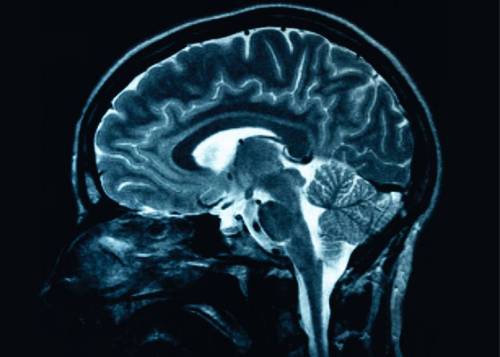
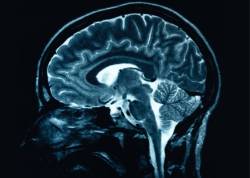
MRI scan of brain

MRI scan of brain

That quotes from an Instant Expert paper on intelligence. It’s full of interesting facts such as the typical difference in IQ between strangers is 17 points. It answers the question whether an enriched school or home environment can increase intelligence.

The article mentions overload of patients’ brains when medical care is too complicated:

Given the complexity of self-care regimes, it is hardly surprising that some people make dangerous errors or fail to comply. The effective management of diabetes, for example, requires a person to keep blood sugar levels within a healthy range, which means coordinating diet, exercise and medication throughout the day, which in turn requires planning for contingencies, recognising when blood sugar is veering too high or low, knowing how to regain control and conceptualising the imperceptible but cumulative damage caused by failing to maintain control. There is no set recipe for people with diabetes to follow – their bodies and circumstances differ. Moreover, they get little training, virtually no supervision and no days off. Effectively managing your diabetes is a cognitively complex job and poor performance has serious consequences, including emergency room visits, lost limbs or eyesight, and even death. The lower the diabetic person’s IQ, the greater the risks.

You’ll also learn about the Flynn effect and possible explanations for it:

Over the past century, each successive generation has answered more IQ test items correctly than the last, the rise being equivalent to around 3 IQ points per decade in developed nations. This is dubbed the “Flynn effect” after the political scientist James Flynn, who most thoroughly documented it. Are humans getting smarter, and if so, why? 

I’m more inclined to think Idiocracy describes our future.

Steve Parker, M.D.

h/t James Fulford

Mediterranean Diet Helps Preserve Brain Function

Well, perhaps that’s a bit of an overstatement. Preserved brain function and the Mediterranean diet were  positively associated in a study involving Americans in Utah. This fits with prior observations that the Mediterranean diet prevents dementia.

Macadamia nuts

In the study at hand, the DASH diet (Dietary Approaches to Stop Hypertension) also protected the brain:

Higher levels of accordance [compliance] with both the DASH and Mediterranean dietary patterns were associated with consistently higher levels of cognitive function in elderly men and women over an 11-year period. Whole grains and nuts and legumes were positively associated with higher cognitive functions and may be core neuroprotective foods common to various healthy plant-centered diets around the globe.

See the American Journal of Clinical Nutrition for details.

Mediterranean Diet Once Again LInked to Reduced Age-Related Brain Decline

…particularly in Australian men at high genetic risk for Alzheimer’s disease. MedPageToday has the details.

Higher Blood Sugar Levels Once Again Linked to Dementia

dementia, memory loss, Mediterranean diet, low-carb diet, glycemic index, dementia memory loss

“Let’s work on getting those blood sugars down, honey.”

On the heels of a report finding no association between Alzheimer’s disease and abnormal blood sugar metabolism, MedPageToday features an new study linking high blood sugars to future development of dementia. And diabetics with sugar levels higher than other diabetics were more prone to develop dementia.

Some of you have already noted that not all cases of dementia are Alzheimer’s dementia. But Alzheimer’s accounts for a solid majority of dementia cases.

Some quotes from MedPageToday:

During a median follow-up of 6.8 years, 524 participants [of the 2000 total] developed dementia, consisting of 74 with diabetes and 450 without. Patients without diabetes and who developed dementia had significantly higher average glucose levels in the 5 years before diagnosis of dementia (P=0.01). The difference translated into a hazard ratio of 1.18 (95% CI 1.04-1.33).

Among the patients with diabetes, glucose levels averaged 190 mg/dL in those who developed dementia versus 160 mg/dL in those who did not. The difference represented a 40% increase in the hazard for dementia (HR 1.40, 95% CI 1.12-1.76).

Steve Parker, M.D.

Reference: Crane PK et al. “Glucose Levels and Risk of Dementia” N Engl J Med 2013; 369: 540-548.

Reminder: Conquer Diabetes and Prediabetes is now available on Kindle.

Alzheimer’s Disease NOT Related to Abnormal Blood Sugar Metabolism….This Week Anyway

MRI scan of brain

MRI scan of brain

Several studies over the last few years have pointed to a positive association between Alzheimer’s dementia and abnormal glucose metabolism, such as diabetes, elevated blood sugars, and insulin resistance.

A new study finds no such linkage. See JAMA Neurology for details. The study at hand even included autopsy results. We don’t see that very often these days.

MedPageToday has a write-up also.

When I see multiple conflicting reports on a clinical issue over a number of years, it makes me think the reported association is weak or nonexistent.

Steve Parker, M.D.

ACE Inhibitors May Slow Rate of Decline in Dementia

Larry Huston has the details. ACE inhibitors are commonly used to treat high blood pressure.

The ACE inhibitors in the study were perindopril, ramipril, trandolapril, captopril, fosinopril, lisinopril, prinivil and monopril.

Protect Your Aging Hippocampus (and Memory) With Exercise

…according to an article at MedPageToday. The 317 study participants were at high risk of Alzheimer’s dementia due to family history. The protective dose of exercise was at least 7.7 MET per hour/week. Please comment if you can translate that into something practical!

Insulin Resistance Linked to Brain Shrinkage (Atrophy)

MRI scan of brain

MRI scan of brain

…according to a new report in Diabetes Care.  As if that weren’t bad enough, brain functioning was also adversely affected! The next question is: Would prevention or reversal of insulin resistance preserve the brain?  Stay tuned, because nobody knows yet.

Only a few of the study participants had diabetes.  The study at hand supports others that suggest diabetes predisposes to dementia.

What Can I Do About It Now?

You could have your doctor order some expensive blood tests to see if you’re insulin resistant. (Insurance may not pay for them, either.) Or you can measure your waist size. If your waist circumference is over 39 inches (99 cm) and you’re overweight or obese, odds are good that you have some insulin resistance.

A couple ways to improve your insulin sensitivity (reduce insulin resistance) are:

  • lose your excess fat weight
  • start a regular exercise program

Steve Parker, M.D.

Does Diet Affect Age-Related Memory Loss and Dementia Risk?

dementia, memory loss, Mediterranean diet, low-carb diet, glycemic index, dementia memory loss

Don’t wait to take action until it’s too late

High blood insulin levels and insulin resistance promote age-related degeneration of the brain, leading to memory loss and dementia according to Robert Krikorian, Ph.D.  He’s a professor in the Department of Psychiatry and Behavioral Neuroscience, University of Cincinnati Academic Health Center.  He has an article in a recent issue of Current Psychiatry – Online.

Proper insulin signaling in the brain is important for healthy functioning of our brains’ memory centers.  This signaling breaks down in the setting of insulin resistance and the associated high insulin levels.  Dr. Krikorian makes much of the fact that high insulin levels and insulin resistance are closely tied to obesity.  He writes that:

Waist circumference of ≥100 cm (39 inches) is a sensitive, specific, and independent predictor of hyperinsulinemia for men and women and a stronger predictor than body mass index, waist-to-hip ratio, and other measures of body fat.

Take-Home Points

Dr. Krikorian thinks that dietary approaches to the prevention of dementia are effective yet underutilized.  He mentions reduction of insulin levels by restricting calories or a ketogenic diet: they’ve been linked with improved memory in middle-aged and older adults.

Dr. K suggests the following measures to prevent dementia and memory loss:

  • eliminate high-glycemic foods like processed carbohydrates and sweets
  • replace high-glycemic foods with fruits and vegetables (the higher polyphenol intake may help by itself)
  • certain polyphenols, such as those found in berries, may be particularly helpful in improving brain metabolic function
  • keep your waist size under 39 inches, or aim for that if you’re overweight

I must mention that many, perhaps most, dementia experts are not as confident  as Dr. Krikorian that these dietary changes are effective.  I think they are, to a degree.

The Mediterranean diet is high in fruits and vegetables and relatively low-glycemic.  It’s usually mentioned by experts as the diet that may prevent dementia and slow its progression.

Read the full article.

I’ve written before about how blood sugars in the upper normal range are linked to brain degeneration.  Dr. Krikorian’s recommendations would tend to keep blood sugar levels in the lower end of the normal range.

Steve Parker, M.D.

PS: Speaking of dementia and ketogenic, have you ever heard of the Ketogenic Mediterranean Diet?  (Free condensed version here.)

High Normal Blood Sugar Levels Linked To Brain Degeneration

MRI scan of brain

MRI scan of brain

Our bodies keep blood sugar levels in a fairly narrow range.  You might think you’re fine if you’re anywhere within the defined normal range.  Think again.  Australian researchers found that folks with fasting blood sugars toward the upper end of the normal range had more degeneration (atrophy) in parts of the brain called the hippocampus and amygdala, compared to those in the low normal range.  Degeneration in those areas is often manifested as dementia.

The hippocampus is critical for learning and memory formation and retention.  The amygdala is also involved in memory as well as emotion.  The two areas are intimately connected, literally.

How Was the Study Done?

Over 250 study participants aged 60 to 64 years had normal brains at baseline and were free of diabetes and prediabetes.  They were overwhelmingly caucasian.  MRI brain scans were done at baseline and again four years later.  Significant atrophy (shrinkage) was seen in the hippocampus and amygdala over time, with greater atrophy seen in those with higher baseline fasting glucose levels.

Fasting blood sugar was measured only once, at the start, and ranged from 58 to 108 mg/dl (3.2 to 6.0 mmol/l).  (Fasting glucose of 108 would be prediabetes according to the American Diabetes Association, but not by the World Health Organization.)  Participants weren’t tested for deterioration of cognition.

So What?

The results of the study at hand are consistent with others that link higher rates of dementia with diabetes.  Diabetics, even when under treatment, usually have higher average blood sugars than non-diabetics.  The study authors speculate that damage from higher blood sugars may be mediated by inflammation and abnormal blood clotting (prothrombotic factors and platelet activation).

The Mayo Clinic recently reported that diets high in carbohydrates and sugar increase the odds of developing cognitive impairment in the elderly years.

It’s interesting to contemplate whether non-diabetics and diabetics would have less risk of developing dementia if blood sugars could be kept in the lower end of the normal range.  How could you do that?  Possibilities include:

  • avoid sugars and other refined carbohydrates
  • limit all carbohydrates
  • favor low-glycemic-index foods over high
  • regular exercise, which helps maintain insulin sensitivity (insulin is a major blood sugar regulator)
  • avoid overweight and obesity, which helps maintain insulin sensitivity
  • for diabetics: all of the above plus drugs that control blood sugar

Steve Parker, M.D.

Reference:  Cherbuin, Nicolas, et al.  Higher normal fasting plasma glucose is associated with hippocampal atrophy: The PATH Study.  Neurology, September 4, 2012, vol. 79, No. 10, pp: 1,010-1,026.  doi:10.1212/WNL.0b013e31826846de