Category Archives: Cancer

Exercise Promotes Melanoma and Prostate Cancer

Needs a bit more hormetic stress

“Would you spot me, bro?”

I’ve always assumed that exercise reduces the risk of cancer, contributing to the well-established fact that folks who exercise live longer than others.

But a recent study found a positive association between exercise and two cancers: melanoma and prostate.

The good news is that exercise was linked to lower risk of 13 other cancers.

Here’s a quote for the New York Times Well blog:

The researchers found a reduced risk of breast, lung and colon cancers, which had been reported in earlier research. But they also found a lower risk of tumors in the liver, esophagus, kidney, stomach, endometrium, blood, bone marrow, head and neck, rectum and bladder.

And the reductions in risk for any of these 13 cancers rose steeply as people exercised more. When the researchers compared the top 10 percent of exercisers, meaning those who spent the most time each week engaging in moderate or vigorous workouts, to the 10 percent who were the least active, the exercisers were as much as 20 percent less likely to develop most of the cancers in the study.

I’m surprised the protective effect of exercise against cancer wasn’t stronger.

Action Plan

So how much physical activity does it take to prevent cancer? And what type of exercise? We await further studies for specific answers.

I’m hedging my bets with a combination of aerobic and strength training two or three times a week.

Steve Parker, M.D.

PS: If you think cancer’s bad, read one of my books. Wait, that didn’t come out right.
Elevated Fasting Blood Sugars May Increase Your Risk for Pancreatic Cancer

kkkk

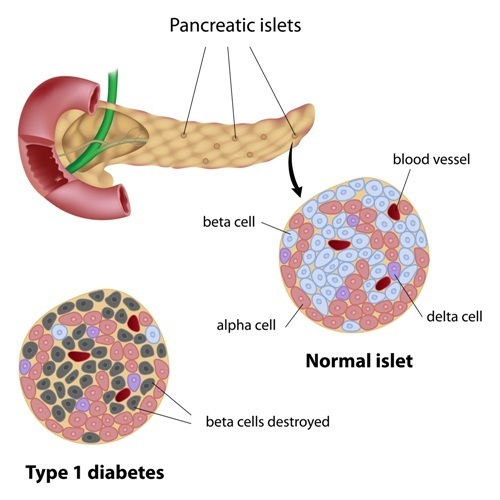
Insulin from the pancreas’ beta cells is a major regulator of blood sugar levels

A recent meta-analysis found that elevated fasting blood glucose levels, even below the diabetic range, are associated with higher risk of developing pancreatic cancer. This is important because you can take action today to lower your fasting blood sugar level, which may lower your risk of pancreatic cancer over the long-term. The researchers conclude that…

Every 0.56 mmol/L [10 mg/dl] increase in fasting blood glucose is associated with a 14% increase in the rate of pancreatic cancer.

In the developed world, your risk of getting an invasive cancer is roughly one in four. Pancreatic cancer is the most lethal. Surgery is the way to cure it, but at the time of diagnosis only two in 10 patients are candidates for surgery because the cancer has already spread. Pancreatic cancer is the fourth leading cause of cancer death in the USA and the fifth in the UK. Nevertheless, pancreas cancer is not terribly common; the US has 50,000 new cases annually. As a hospitalist, I run across one or two new cases of pancreas cancer every year.

We’ve known for years that type 2 diabetes is linked to pancreatic cancer, with diabetics having twice the risk of nondiabetics.

What if you have elevated fasting blood sugars? There’s no proof that reducing them to the normal range will reduce your risk of pancreatic cancer. But if it were me, that’s what I’d shoot for, by losing excess fat weight, exercising, and eating a Low-Carb Mediterranean Diet book detail page at Amazon.com.

Other that type 2 diabetes and prediabetes, some other risk factors for pancreas cancer are:

  • heredity
  • smoking
  • sedentary lifestyle
  • body mass index over 30 (obesity in other words)

You can alter most of those risk factors. Why not get started today?

Steve Parker, M.D.

PS: If you’re not sure if your fasting blood sugar’s elevated, click here.

Vegetables and Fruits Once Again Linked to Longevity

MedPageToday has some of the details.  A quote:

The largest benefits were seen in people who ate seven or more servings of fruits and vegetables a day compared with those who ate less than one serving, with the higher level of consumption associated with significantly lower all-cause mortality (hazard ratio 0.67; 95% CI 0.58-0.78), lead researcher Oyinlola Oyebode of University College London, and colleagues, reported online in the Journal of Epidemiology and Community Health.

Zucchini, roma tomatoes, and spaghetti squash

Zucchini, roma tomatoes, and spaghetti squash

The population under study was English. In addition to lower risk of death, the heavy fruit and vegetable consumers had lower rates of cancer and cardiovascular disease. Click for the actual research report.

If seven servings a day seems like a lot, note that a typical serving is only half a cup. You’ll get those on my Advanced Mediterranean Diet.

Steve Parker, M.D.

Why Are Nuts So Prominent in My Diet Plans?

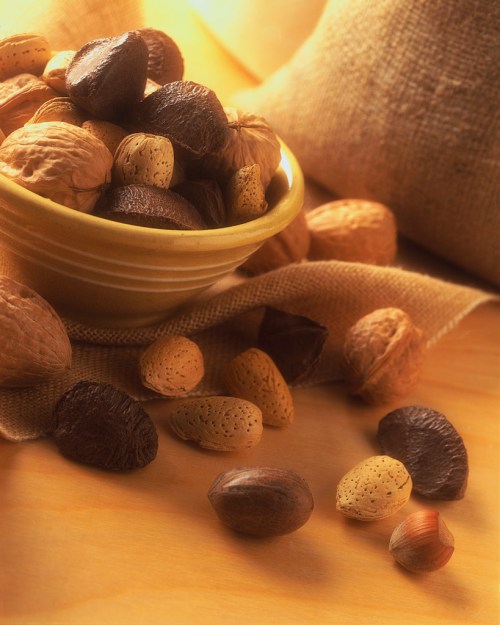
Nuts with more omega-3 fatty acids (compared to omega-6) may be the healthiest

Nuts with the lowest omega-6/omega-3 fatty acid ratios may be the healthiest. In other words, increase your omega-3s and decrease omega-6s.

Conner Middelmann-Whitney explains in her recent post at Psychology Today. In a nutshell, they are linked to longer life and better health. For example:

In the largest study of its kind, Harvard scientists found that people who ate a handful of nuts every day were 20% less likely to die from any cause over a 30-year period than those who didn’t consume nuts. The study also found that regular nut-eaters were leaner than those who didn’t eat nuts, a finding that should calm any fears that eating nuts will make you gain weight.

The report also looked at the protective effect on specific causes of death. “The most obvious benefit was a reduction of 29% in deaths from heart disease—the major killer of people in America,” according to Charles S. Fuchs, director of the Gastrointestinal Cancer Treatment Center at Dana-Farber, the senior author of the report and a professor of medicine at Harvard Medical School. “But we also saw a significant reduction—11% —in the risk of dying from cancer,” added Fuchs.

Read the whole enchilada.

Nuts are integral to my Advanced Mediterranean Diet, Low-Carb Mediterranean Diet, Paleobetic Diet, and Ketogenic Mediterranean Diet.

Walnuts seem to have the lowest omega-6/omega-3 fatty acid ratio of all the common nuts. That may make them the healthiest nut. The jury is still out. Paleo dieters focus on cutting out omega-6s and increasing omega-3s. Julianne Taylor has a great post on how to do that with a variety of foods, not just nuts.

Steve Parker, M.D.

Need Help With Your Mediterranean Diet Meals?

Conner Middelmann-Whitney has got you covered. She’s just launched a new service that delivers meal plans right to your email box every week. It’s called Everyday Mediterranean Meal Plans.

Here are some major features of the meals:

  • Low-glycemic
  • Gluten-free
  • Heavily plant based (at least 2 vegetarian dishes each week)
  • Prepared without using processed ingredients or unhealthy fats
  • Seasonal
  • Include a “Nutrition notes” section explaining what makes them healthy
  • Simple to prepare, requiring no complicated equipment, nor much cooking experience
  • There is at least one “Express” meal per week that takes a typical home cook 30 minutes or less to make
  • Each Meal Plan includes a detailed shopping list enabling people to shop ahead for these five dishes, thus cutting down on time spend shopping and food waste
  • The cost is quite reasonable

Read more details here.

Click here for a free sample.

If you’re running out of Mediterranean diet meal ideas, I don’t see how you can go wrong with this new service.

I also recommend Conner’s book, Zest for Life: The Mediterranean Anti-Cancer Diet.

Steve Parker, M.D.

Disclosure: I have received no monetary compensation for this endorsement. I do it as a favor to Conner because I admire in her nutrition and culinary skills and believe in her mission to promote health and prevent cancer via the Mediterranean diet.

High Blood Levels of Omega-3 Fatty Acids Linked to Prostate Cancer

…increasing the risk by almost 50%. Click for details.

Heart-Healthy Lifestyle Also Cuts Cancer Risk By Half

…according to a report in MedPageToday.

I'm still not convinced that severe sodium restriction is necessary or even possible for most people

I’m still not convinced that severe sodium restriction is necessary or even possible for most people

The American Heart Association has published guidelines aiming to reduce premature death and illness caused by cardiovascular diseases such as heart attacks, high blood pressure, and strokes.

The guidelines focus on seven factors critical to cardiovascular health:

  • smoking
  • blood sugar
  • blood pressure
  • physical activity
  • total cholesterol
  • body mass index (BMI)
  • ideal diet

Using data from the Atherosclerosis Risk In Communities study (almost two decades’ follow-up), researchers found that those who maintained goals for six or seven of the American Heart Association critical factors had a 51% lower risk of cancer compared with those meeting no goals.

For detailed information about the specific goals, click here.

As you might expect, I was curious about what the American Heart Association considered a heart-healthy diet.  I quote the AHA summary:

The recommendation for the definition of the dietary goals and metric, therefore, is as follows: “In the context of a diet that is appropriate in energy balance, pursuing an overall dietary pattern that is consistent with a DASH [Dietary Approaches to Stop Hypertension]-type eating plan, including but not limited to:

  • Fruits and vegetables: ≥ 4.5 cups per day
  • Fish: ≥ two 3.5-oz servings per week (preferably oily fish)
  • Fiber-rich whole grains (≥ 1.1 g of fiber per 10 g of carbohydrate): ≥ three 1-oz-equivalent servings per day
  • Sodium: < 1500 mg per day
  • Sugar-sweetened beverages: ≤ 450 kcal (36 oz) per week

Intake goals are expressed for a 2000-kcal diet and should be scaled accordingly for other levels of caloric intake. For example, ≤ 450 calories per week represents only up to one quarter of discretionary calories (as recommended) coming from any types of sugar intake for a 2000-kcal diet.

Diet recommendations are more complicated than that; read the full report for details.  Only 5% of study participants ate the “ideal diet.”  The Mediterranean diet easily meets four out of five of those diet goals; you’d have to be extremely careful to reach the sodium goal on most any diet.

Cardiovascular diseases and cancer are among the top causes of death in Western societies.  Adhering to the guidelines above may kill two birds with one stone.

Steve Parker, M.D.

Huge U.S. Study Confirms Health and Longevity Benefits of the Mediterranean Diet

This is a reprint of the very first blog post I ever did, from December 24, 2007, at my old Advanced Mediterranean Diet Blog.  

We now have results of the first U.S. study on mortality and the Mediterranean dietary pattern.  380,000 people, aged 50-71, were surveyed on their dietary habits and scored on their conformity to the Mediterranean diet.  They were visited again 10 years later.  As you would expect, some of them died.  12,105 to be exact: 5985 from cancer, 3451 from cardiovascular disease, 2669 from other causes.  However, the people with the highest adherence to the Mediterranean diet had better survival overall, and specifically better odds of avoiding death from cardiovascular disease and cancer.  Compared to the people with low conformity to the Mediterranean diet, the high conformers were 15-20% less likely to die over the 10 years of the study.  The study authors, funded by the National Institutes of Health, noted eight similar studies in Europe and one in Australia with similar results.

Nothing to do with this post…I just like this picture

Once again, my promotion of the Mediterranean diet is vindicated by the scientific literature.  I’m not aware of any other diet that can prove anywhere near this degree of health benefit.  If you are, please share

Steve Parker, M.D.

Reference: Mitrou, Panagiota N., et al.  Mediterranean Dietary Pattern and Prediction of All-Cause Mortality in a US Population,  Archives of Internal Medicine, 167 (2007): 2461-2468.


Huge U.S. Study Confirms Health and Longevity Benefits of the Mediterranean Diet

This is a reprint of my very first blog post, from December 24, 2007, at the old Advanced Mediterranean Diet Blog

We now have results of the first U.S. study on mortality and the Mediterranean dietary pattern.  380,000 people, aged 50-71, were surveyed on their dietary habits and scored on their conformity to the Mediterranean diet.  They were visited again 10 years later.  As you would expect, some of them died.  12,105 to be exact: 5985 from cancer, 3451 from cardiovascular disease, 2669 from other causes.  However, the people with the highest adherence to the Mediterranean diet had better survival overall, and specifically better odds of avoiding death from cardiovascular disease and cancer.  Compared to the people with low conformity to the Mediterranean diet, the high conformers were 15-20% less likely to die over the 10 years of the study.  The study authors, funded by the National Institutes of Health, noted eight similar studies in Europe and one in Australia with similar results.

Once again, my promotion of the Mediterranean diet is vindicated by the scientific literature.  I’m not aware of any other diet that can prove anywhere near this degree of health benefit.  If you are, please share

Reference: Mitrou, Panagiota N., et al.  Mediterranean Dietary Pattern and Prediction of All-Cause Mortality in a US Population,  Archives of Internal Medicine, 167 (2007): 2461-2468.


Reduce Your Cancer Risk Starting Today

In 2007, the World Cancer Research Fund and the American Institute for Cancer Research jointly published a report having the potential to reduce cancer rates by at least a third, if their recommendations were adopted.  A multinational team of 21 respected experts was charged with analyzing over 7,000 studies relating to diet, exercise, body weight, and cancer.  The panel assumes everyone already knows to avoid smoking and chewing tobacco.  Here are their 10 basic recommendations:

1.  Be as lean as possible within the normal range of body weight (BMI or body mass index of 18.5 to 24.9).  Being overweight or obese promotes certain cancers.

2.  Be physically active every day.  Example: 30 minutes of brisk walking.

3.  Limit consumption of energy-dense (high-calorie) foods.  Avoid sugary drinks.  Water is the best alternative to sugary drinks.  Natural fruit juice is a reasonable fruit serving, but limit to one daily.

4.  Eat mostly foods of plant origin.  Fill at least two-thirds of your plate with vegetables, fruits, whole grains, and beans.

5.  Limit intake of red meat and avoid processed meats.  Red meats are beef, pork, and lamb.  Limit to 18 ounces of cooked red meat per week.

6.  For pure cancer avoidance, don’t drink alcohol.  The panel recognizes, however, that alcohol likely helps in prevention of coronary heart disease.  If you drink alcohol for heart benefits, limit to two drinks daily if you are a man, and one daily if you are a woman.

7.  Limit consumption of salt (associated with stomach cancer).  Avoid moldy cereals and legumes (molds produce aflatoxins which cause liver cancer).

8.  Aim to meet nutritional needs through food intake rather than supplements.

9.  Mothers should breast-feed for six months (at least?).  Children should be breast-fed.

10.  Cancer survivors should still follow the recommendations for prevention of cancer.

Much of this is consistent with my book, The Advanced Mediterranean Diet: Lose Weight, Feel Better, Live Longer (2nd Edition).  The AMD is a diet/weight loss book, with little reason to seriously address breast-feeding and cancer survivors.  The association between salt intake and stomach cancer is news to me.  Stomach cancer is not very common in the United States, where I and most of my audience live.  Overweight people following the Advanced Mediterranean Diet will be far ahead of the game if they get their BMI just down to 24.9.  I’m not convinced 18.5 would be any healthier, and many studies suggest the opposite.

Steve Parker, M.D.

References: Food, Nutrition, Physical Activity, and the Prevention of Cancer: A Global Perspective