Category Archives: Alzheimer Disease

Trust the Science? ABC News Reports Possible Alzheimer Disease Mechanism FRAUD

MRI of brain

Science magazine has been investigating this for six months. This is disturbing, to say the least.

For several decades, a leading theory on the cause of Alzheimer disease is that a toxic protein called beta amyloid builds up in certain parts of the brain, impairing function. If that’s true, the next questions are 1) why does the protein accumulate, and 2) what can be done to prevent it.

From ABC News:

Allegations that part of a key 2006 study of Alzheimer’s disease may have been fabricated have rocked the research community, calling into question the validity of the study’s influential results.

Science magazine said Thursday that it uncovered evidence that images in the much-cited study, published 16 years ago in the journal Nature, may have been doctored.

***

More than $1 billion of government funding, through the National Institutes of Health, has been directed to amyloid-related Alzheimer’s research. While the investigation suggests that studies of Aβ*56 should be opened up to new scrutiny, experts said the entire theory shouldn’t be discredited.

Steve Parker, M.D.

PS: The Mediterranean diet is linked to lower risk of dementia.

Specific Diets That Lower CRP Levels May Prevent Chronic Diseases

Olive oil is a prominent component of the Mediterranean diet

C-reactive protein (CRP) is a bloodstream marker of body-wide inflammation. A prominent theory is that if your CRP is too high, it causes chronic disease states like hypertension, dementia, and cardiovascular disease. A 2024 meta-analysis published in British Journal of Nutrition looked at the effects of various diets on CRP. The implication is that your odds of developing particular chronic diseases is lowered if you adopt a diet that lowers your CRP. Check the Abstract below to see how your diet stacks up:

Adopting a healthy dietary pattern may be an initial step in combating inflammation-related chronic diseases; however, a comprehensive synthesis evaluating current evidence is lacking. This umbrella review aimed to summarise the current evidence on the effects of dietary patterns on circulating C-reactive protein (CRP) levels in adults. We conducted an exhaustive search of the Pubmed, Scopus and Epistemonikos databases, spanning from their inception to November 2023, to identify systematic reviews and meta-analyses across all study designs. Subsequently, we employed a random-effects model to recompute the pooled mean difference. Methodological quality was assessed using the A Measurement Tool to Assess Systematic Reviews 2 (AMSTAR 2) checklist, and evidence certainty was categorised as non-significant, weak, suggestive, highly suggestive or convincing (PROSPERO: CRD42023484917). We included twenty-seven articles with thirty meta-analyses of seven dietary patterns, fifteen of which (50 %) exhibited high methodological quality. The summary effects of randomised controlled trials (RCT) found that the Mediterranean diet was the most effective in reducing circulating CRP levels, followed by Vegetarian/Vegan and Energy-restricted diets, though the evidence was of weak quality. In contrast, Intermittent Fasting, Ketogenic, Nordic and Paleolithic diets did not show an inverse correlation with circulating CRP levels. Some results from combined interventional and observational studies, as well as solely observational studies, also agreed with these findings. These dietary patterns show the potential in reducing CRP levels in adults, yet the lack of high-quality evidence suggests future studies may alter the summary estimates. Therefore, further well-conducted studies are warranted.

Steve Parker, M.D.

High Intensity Exercise May Be Uniquely Beneficial to the Brain

…at least according to Dr Rhonda Patrick. I’d never heard of her before and don’t know her credentials.

You know what else is good for the brain? The Mediterranean diet.

Not Dr Patrick

I’m linking this video here in hopes of digging deeper in the future. You can read about her at what I assume is one of her websites.

Steve Parker, M.D.

Low to Moderate Alcohol Drinking Linked to Improved Cognitive Function in Adults

Jameson’s in a hotel bar near Chicago

From JAMA network:

These findings suggested that low to moderate alcohol drinking was associated with better global cognition scores, and these associations appeared stronger for white participants than for black participants.

Source: Association of Low to Moderate Alcohol Drinking With Cognitive Functions From Middle to Older Age Among US Adults | Dementia and Cognitive Impairment | JAMA Network Open | JAMA Network

     Steve Parker, M.D.

front cover of paleobetic diet

Click to purchase at Amazon.com. E-book also available at Smashwords. com.

Avoid Soybean Oil (if you’re a male mouse)

Soybean oil seems to be a real problem for male mice. We need more research in humans before declaring it a dangerous toxin to us. If you’re eating the Standard American Diet, you’ll find it hard if not impossible to avoid.

From EurekAlert:

New UC Riverside research shows soybean oil not only leads to obesity and diabetes, but could also affect neurological conditions like autism, Alzheimer’s disease, anxiety, and depression.

Used for fast food frying, added to packaged foods, and fed to livestock, soybean oil is by far the most widely produced and consumed edible oil in the U.S., according to the U.S. Department of Agriculture. In all likelihood, it is not healthy for humans.

Source: America’s most widely consumed oil causes genetic changes in the brain | EurekAlert! Science News

Steve Parker, M.D.

Steve Parker MD, Advanced Mediterranean Diet

Click the pic to purchase at Amazon.com. E-book versions also available at Smashwords. com.

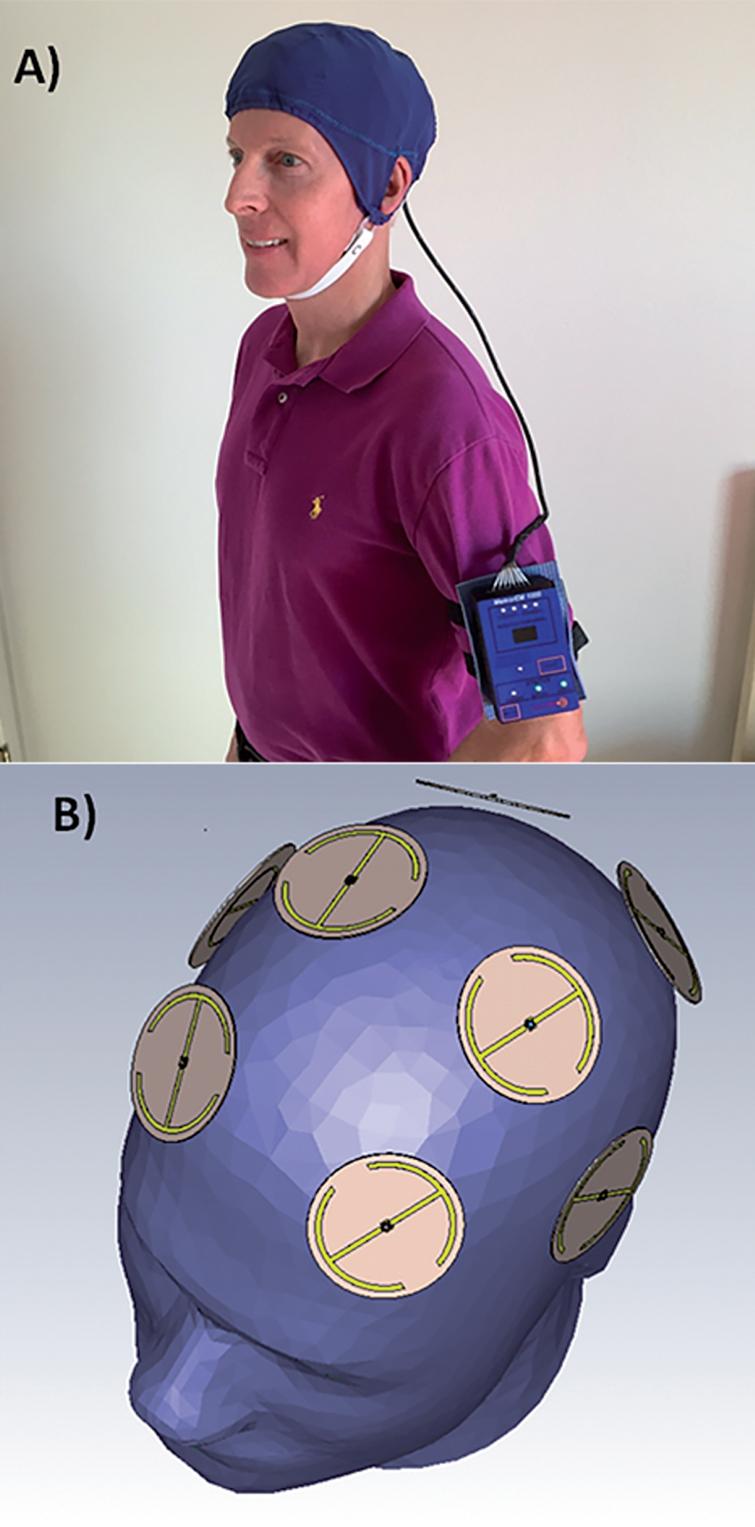
Transcranial Electromagnetic Treatment in Alzheimer’s Disease: Cognitive Enhancement and Associated Changes in Cerebrospinal Fluid, Blood, and Brain Imaging 

A) A MemorEMTM head device being worn by a subject. B) Position of the eight electromagnetic emitters embedded between the device’s two-layered head cap. Emitters collectively provide global forebrain TEMT via rapid sequential emitter activation.

This is from the cited journal article. I hope this is considered fair use rather than copyright infringement.

This is the most creative therapeutic approach to Alzheimer’s Disease I’ve seen in a while. It may even be preventative. I have no idea whether it will pan out in the long run. I’m always skeptical.

Click for a Scientific American article that discusses a different experimental protocol and probably different device.

Abstract

Background: Small aggregates (oligomers) of the toxic proteins amyloid-β (Aβ) and phospho-tau (p-tau) are essential contributors to Alzheimer’s disease (AD). In mouse models for AD or human AD brain extracts, Transcranial Electromagnetic Treatment (TEMT) disaggregates both Aβ and p-tau oligomers, and induces brain mitochondrial enhancement. These apparent “disease-modifying” actions of TEMT both prevent and reverse memory impairment in AD transgenic mice.

Objective: To evaluate the safety and initial clinical efficacy of TEMT against AD, a comprehensive open-label clinical trial was performed.

Methods: Eight mild/moderate AD patients were treated with TEMT in-home by their caregivers for 2 months utilizing a unique head device. TEMT was given for two 1-hour periods each day, with subjects primarily evaluated at baseline, end-of-treatment, and 2 weeks following treatment completion.

Results: No deleterious behavioral effects, discomfort, or physiologic changes resulted from 2 months of TEMT, as well as no evidence of tumor or microhemorrhage induction. TEMT induced clinically important and statistically significant improvements in ADAS-cog, as well as in the Rey AVLT. TEMT also produced increases in cerebrospinal fluid (CSF) levels of soluble Aβ1-40 and Aβ1-42, cognition-related changes in CSF oligomeric Aβ, a decreased CSF p-tau/Aβ1-42 ratio, and reduced levels of oligomeric Aβ in plasma. Pre- versus post-treatment FDG-PET brain scans revealed stable cerebral glucose utilization, with several subjects exhibiting enhanced glucose utilization. Evaluation of diffusion tensor imaging (fractional anisotropy) scans in individual subjects provided support for TEMT-induced increases in functional connectivity within the cognitively-important cingulate cortex/cingulum.

Conclusion: TEMT administration to AD subjects appears to be safe, while providing cognitive enhancement, changes to CSF/blood AD markers, and evidence of stable/enhanced brain connectivity.

Source: A Clinical Trial of Transcranial Electromagnetic Treatment in Alzheimer’s Disease: Cognitive Enhancement and Associated Changes in Cerebrospinal Fluid, Blood, and Brain Imaging – IOS Press

Steve Parker, M.D.

PS: I notice that several of the study authors are based in my area of operations, south-central Arizona.

PPS: The Mediterranean diet for years has been linked to lower risk of dementia.

Steve Parker MD, Advanced Mediterranean Diet

Click the pic to purchase at Amazon.com

If Gut Bacteria Cause Alzheimer’s Dementia, What If You Alter Those Bacteria?

The short answer? We don’t know the answer to either of those questions.

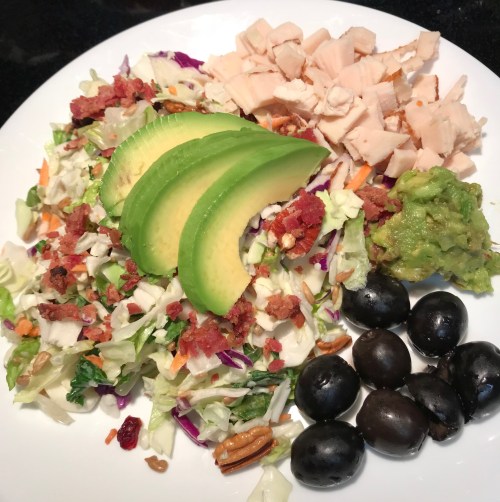
Low-carb salad

The gut bacteria (aka microbiome) seem to be able to decrease or increase inflammation that could cause or exacerbate Alzheimer’s dementia. The  microbiome’s effect on inflammation depends on the species of bacteria present, and the amount of those bacteria. At least one study found that Alzheimer’s patients have a greater abundance of the pro-inflammatory species and less of the anti-inflammatory species, compared to other folks.

Researchers with Wake Forest School of Medicine tried to find answers to the questions in the title of this post. (Click for full text.) They studied 17 experimental subjects, average age 64, who had mild cognitive impairment (11) or “cogni/subjective memory complaints” (6). God bless them for submitting to three spinal taps apiece. The experimental diets were 1) Mediterranean-Ketogenic (under 20 g carb/day), or 2) Low-fat American Heart Association diet (under 40 g fat/day). Participants were on each diet for six weeks.

The investigators didn’t find anything useful for those of us trying today to avoid Alzheimer’s or prevent the progression of mild cognitive impairment to dementia. Their bottom line is, “The data suggest that specific gut microbial signatures may depict [characterize] the mild cognitive impairment and that the modified Mediterranean-ketogenic diet can modulate the gut microbiome and metabolites in association with improved Alzheimer’s disease biomarkers in cerebrospinal fluid.”

So we won’t know for several more years, if ever, whether intentional modification of diet will “improve” our gut microbiomes, leading to lower risk of dementia.

What we have known for many year, however, is that the traditional Mediterranean diet is linked to lower risk of Alzhiemer’s dementia.

For more details, see Science Daily:

In a small pilot study, the researchers identified several distinct gut microbiome signatures — the chemicals produced by bacteria — in study participants with mild cognitive impairment (MCI) but not in their counterparts with normal cognition, and found that these bacterial signatures correlated with higher levels of markers of Alzheimer’s disease in the cerebrospinal fluid of the participants with MCI.

Through cross-group dietary intervention, the study also showed that a modified Mediterranean-ketogenic diet produced changes in the gut microbiome and its metabolites that correlated with reduced levels of Alzheimer’s markers in the members of both study groups.

Source: Diet’s effect on gut bacteria could play role in reducing Alzheimer’s risk — ScienceDaily

Steve Parker, M.D.

Steve Parker MD, Advanced Mediterranean Diet

Two diets in one book, including the Ketogenic Mediterranean Diet

Click the pic to purchase the world’s first practical ketogenic Mediterranean diet at Amazon.com


Can a Ketogenic Diet Prevent or Treat  Alzheimer’s disease?

Sunny’s Super Salad

Maybe…we don’t know yet. From a recent scientific article:

“Highlights

•Impaired brain glucose metabolism and amyloid β plaques are associated with Alzheimer’s disease pathology.

•Ketones provide an alternative metabolic precursor to glucose in the brain.

•Ketogenic diets likely reduce amyloid plaques and may reverse their neurotoxicity.

•Modern diets high in carbohydrates may contribute to increasing Alzheimer’s incidence.

•The ketogenic diet (including carbohydrate restriction) might be useful in the management of Alzheimer’s disease.”

Source: The ketogenic diet as a potential treatment and prevention strategy for Alzheimer’s disease – ScienceDirect

Poor Sleep Linked to Alzhieimer’s Disease

“A 2017 analysis combined results of 27 studies that looked at the relationship between sleep and cognitive problems, including Alzheimer’s. Overall, poor sleepers appeared to have about a 68 percent higher risk of these disorders than those who were rested, researchers reported last year in Sleep. That said, most studies have a chicken-and-egg problem. Alzheimer’s is known to cause difficulty sleeping. If Alzheimer’s both affects sleep and is affected by it, which comes first?For now, the direction and the strength of the cause-and-effect arrow remain unclear. But approximately one-third of U.S. adults are considered sleep deprived (getting less than seven hours of sleep a night) and Alzheimer’s is expected to strike almost 14 million U.S. adults by 2050 (5.7 million have the disease today). The research has the potential to make a big difference.”

Source: The brain may clean out Alzheimer’s plaques during sleep | Science News

Yes, Seafood Consumption Will Contaminate Your Brain With Mercury, But It Doesn’t Seem to Cause Damage 

Dead whole fish aren't very appealing to many folks

Dead whole fish aren’t very appealing to many folks

I advocate consumption of cold-water fatty fish a couple times per week for long-term protection against heart and brain disease. The protective component of fish may be the omega-3 fatty acids.

On the other hand, much seafood is contaminated with mercury, which can be toxic. So, is the mercury in fish actually toxic to brain tissue of folks eating reasonable amounts of fish?

A recent autopsy study answers, “No.”

Read further for details.
Much more appetizing!

From the Journal of the American Medical Association, 2016 Feb 2;315(5):489-97. doi: 10.1001/jama.2015.19451. “Association of Seafood Consumption, Brain Mercury Level, and APOE ε4 Status With Brain Neuropathology in Older Adults.”

IMPORTANCE:Seafood consumption is promoted for its many health benefits even though its contamination by mercury, a known neurotoxin, is a growing concern.

OBJECTIVE:To determine whether seafood consumption is correlated with increased brain mercury levels and also whether seafood consumption or brain mercury levels are correlated with brain neuropathologies.

DESIGN, SETTING, AND PARTICIPANTS:Cross-sectional analyses of deceased participants in the Memory and Aging Project clinical neuropathological cohort study, 2004-2013. Participants resided in Chicago retirement communities and subsidized housing. The study included 286 autopsied brains of 554 deceased participants (51.6%). The mean (SD) age at death was 89.9 (6.1) years, 67% (193) were women, and the mean (SD) educational attainment was 14.6 (2.7) years.

EXPOSURES:Seafood intake was first measured by a food frequency questionnaire at a mean of 4.5 years before death.

MAIN OUTCOMES AND MEASURES:Dementia-related pathologies assessed were Alzheimer disease, Lewy bodies, and the number of macroinfarcts and microinfarcts. Dietary consumption of seafood and n-3 fatty acids was annually assessed by a food frequency questionnaire in the years before death. Tissue concentrations of mercury and selenium were measured using instrumental neutron activation analyses.RESULTS:Among the 286 autopsied brains of 544 participants, brain mercury levels were positively correlated with the number of seafood meals consumed per week (ρ = 0.16; P = .02). In models adjusted for age, sex, education, and total energy intake, seafood consumption (≥ 1 meal[s]/week) was significantly correlated with less Alzheimer disease pathology including lower density of neuritic plaques (β = -0.69 score units [95% CI, -1.34 to -0.04]), less severe and widespread neurofibrillary tangles (β = -0.77 score units [95% CI, -1.52 to -0.02]), and lower neuropathologically defined Alzheimer disease (β = -0.53 score units [95% CI, -0.96 to -0.10]) but only among apolipoprotein E (APOE ε4) carriers. Higher intake levels of α-linolenic acid (18:3 n-3) were correlated with lower odds of cerebral macroinfarctions (odds ratio for tertiles 3 vs 1, 0.51 [95% CI, 0.27 to 0.94]). Fish oil supplementation had no statistically significant correlation with any neuropathologic marker. Higher brain concentrations of mercury were not significantly correlated with increased levels of brain neuropathology.

CONCLUSIONS AND RELEVANCE:In cross-sectional analyses, moderate seafood consumption was correlated with lesser Alzheimer disease neuropathology. Although seafood consumption was also correlated with higher brain levels of mercury, these levels were not correlated with brain neuropathology.

Source: Association of Seafood Consumption, Brain Mercury Level, and APOE ε4 Status With Brain Neuropathology in Older Adults. – PubMed – NCBI