Nuttin’ But Salads N=1 Experiment: Week 2 Summary

Surprisingly filling. Note three fruits: strawberries, blueberries, and mandarin orange.

I’m a day late for my Week 2 Summary because I was out of town yesterday and had no access to my scale. Weight today is 168 lb (76.4 kg), so down 5 lb (2.3 kg) in the last seven days. That’s amazing and I’m not sure it’s real and repeatable. I may be up a couple pounds by tomorrow.

Weight loss total since starting the experiment 16 days ago: 7.5 lb loss (3.4 kg), from 175.5 to 168 lb.

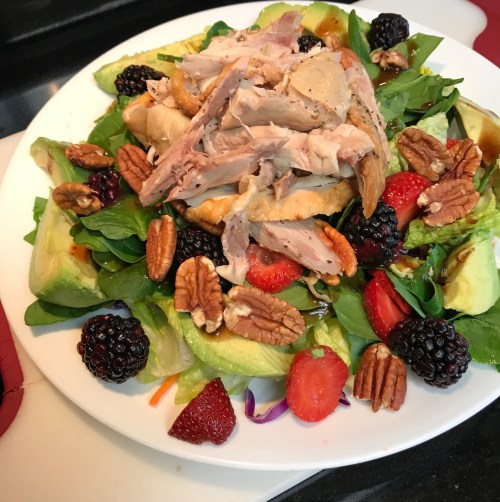
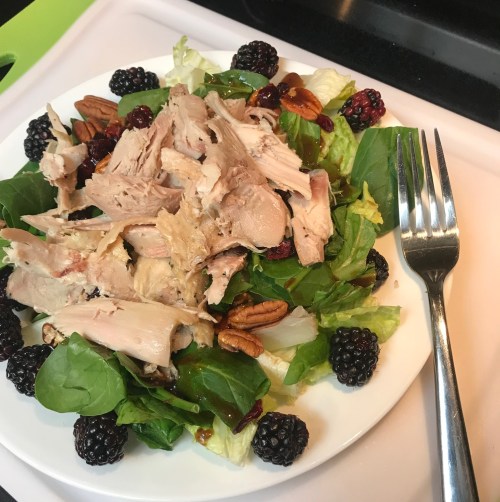
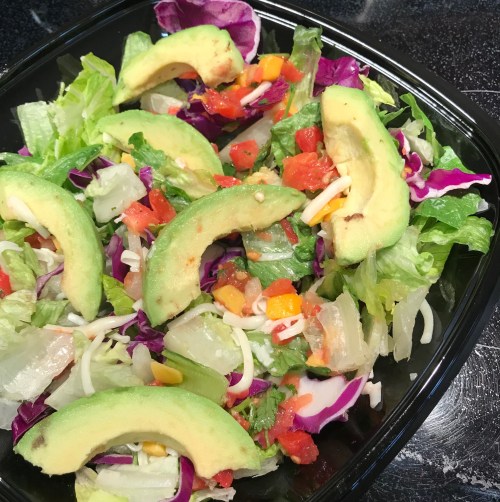
This good-looking salad is from El Pollo Loco. I topped it with chicken.

I feel good and have plenty of energy. On day 10 I noticed I didn’t have much appetite and tended to eat just because I knew I needed to. I don’t spend much time thinking about foods I should miss, like pizza, pastries, candy, and bread.

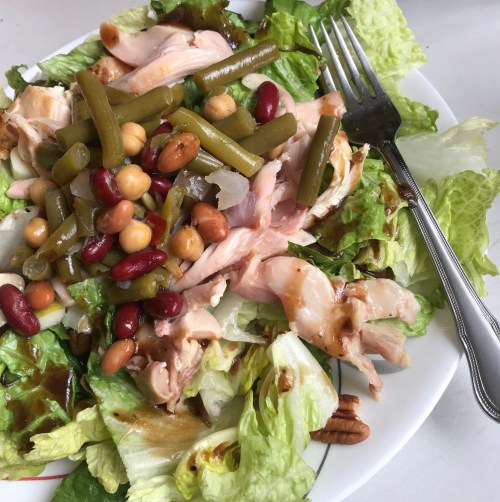
This salad was a dud. We saw a five-bean salad in a jar at Sam’s Club, marinated with sugar and vinegar. Just a bad combination with other items on the plate. Even by itself, it’s not my cup ‘o tea. The chicken was one of Sam’s $5 roasted chickens. I learned that I don’t particularly like dark meat on my salads.

I’ve been lifting weights for several years, twice weekly. I did my first weight-lifting session on day 3 or so of this experiment. I noticed my performance was down about 5% from baseline. The workout was harder than usual. But that has not happened since.

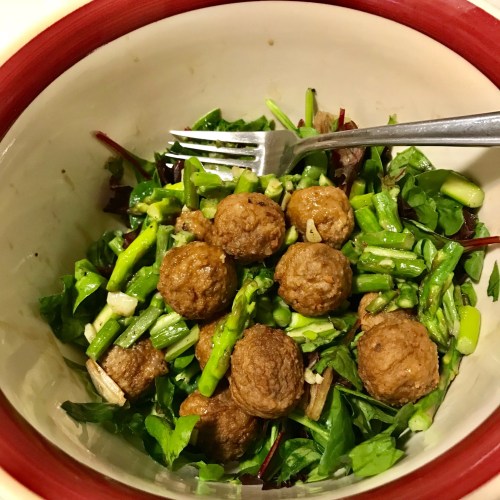
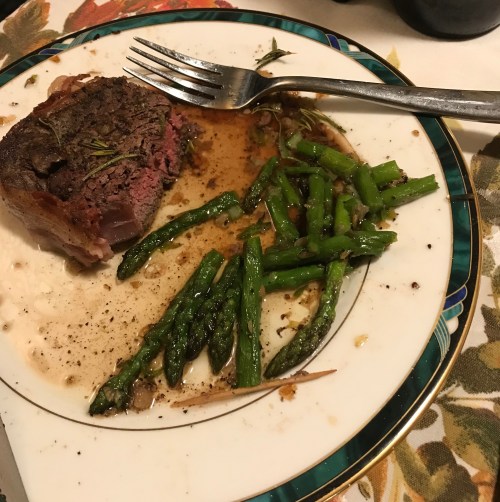
My only cheat meal thus far. My wife made us filet mignon, sautéed asparagus, and chocolate-dipped strawberries for Valentine’s Day.

A typical large salad takes me 25 minutes to eat, not counting conversation or distractions. Lots of chewing. I’ve never times my meals before, but doubt they took this long.

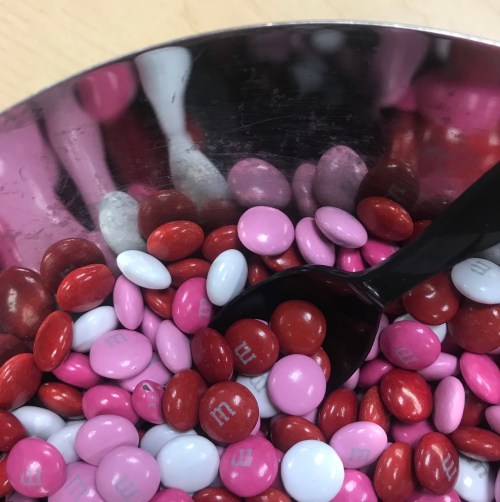
I got my wife a Lamborghini for Valentine’s Day

When I’m tempted by fat-promoting food, I tell myself, “No, I’m eating Nuttin’ But Salads.”

Steve Parker, M.D.

PS: My weight the day after the original post was 168.6 (76.6 kg), not 168 lb. Go figure.

PPS: Weight two days after the post was 167.6 lb (76.1 kg).

Nuttin’ But Salads N=1 Experiment: Week 1 Summary


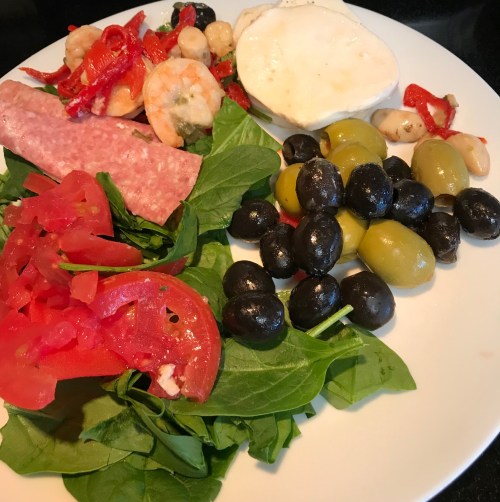
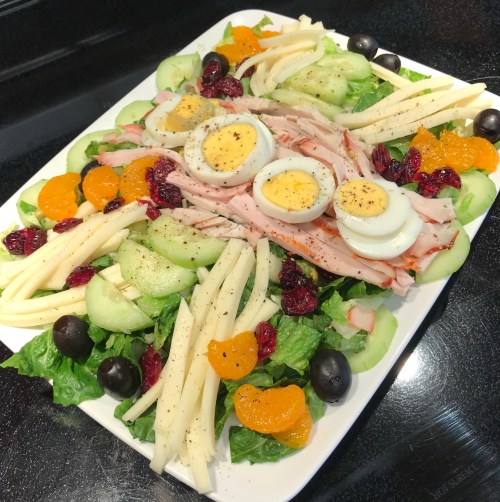
Let’s call this a chef salad (or is it chef’s salad?)

Click to learn what I’m doing.

My wife made nearly all of the salads. I have a few days off from my 12-hour shifts and will try to put at least one new super-salad together.

This is a taco salad. You can’t see much of the spicy hamburger meat under the quacamole. Somewhat time-consuming to make, but delicious.

My initial weight was 175.5 lb (79.8 kg). A week later I’m down to 171.6 lb (78 kg). Rounding off, that’s down 4 lb (1.8 kg). (See postscripts below!)

That 4 pounds can’t all be fat. Most of it must be water loss, lowered intestinal content, and perhaps lowered stores of glycogen in muscle and liver. I doubt any of it is muscle loss because I’m careful to eat adequate protein and am working out with weights twice weekly. From here on out the weight loss will slow dramatically if not stall completely.
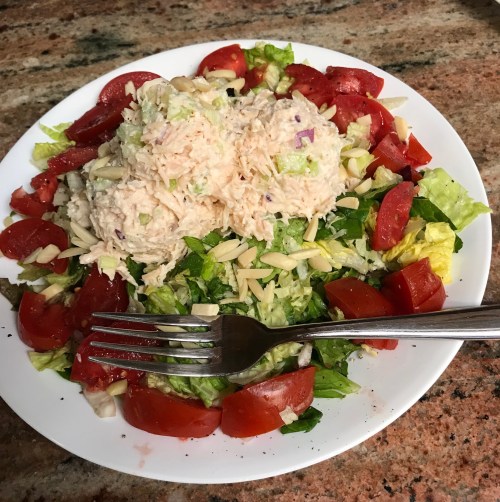
Chicken salad with tomatoes and almond slivers

I like the simplicity of eating two large salads a day, and nothing else. In the event I get hungry between meals, I’m allowing another salad or a protein food (meat, eggs, fish, chicken, etc). But I haven’t done that yet. I eat before and after my shifts at the hospital. I’ve successfully fought off the temptations in the Doctor’s Lounge, my employer’s office, and invitations to the nurses’ potluck dinners.
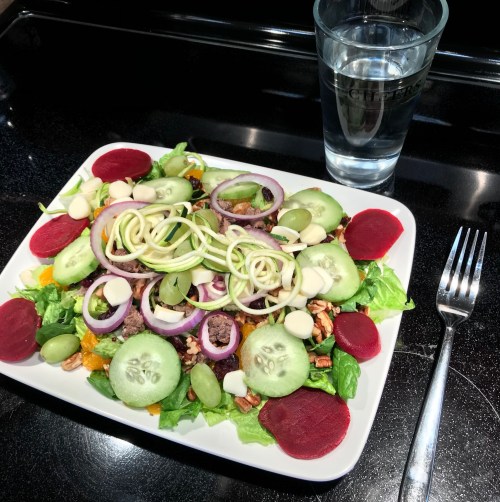
That’s spiralized raw zucchini on top, canned beets on the sides

My wife has been in contact with 30+ folks online about the potential of this type of weight-loss program. Nearly all say “Yeah, I could see this happening, but only if I could have just one regular meal a day.” OK…but if it’s the wrong meal, you ain’t gonna lose weight. And does that meal start you down the slippery slope of noncompliance that ends in failure?

No name

I haven’t done any nutritional analysis yet. Maybe in the coming month.

Fajita salad?

I saw an ad on TV for Jenny Craig yesterday. They promised weight loss “up to 16 pounds in four weeks.” I have a powerful word to describe my opinion on that claim, but in the interest of decorum I’ll just say I’m skeptical. On the other hand, they could have said “up to 160 pound in four weeks” and both claims technically would be accurate. The key is “up to….” Up to includes both zero pounds lost and even weight gain. The average TV viewer is going to hear “up to 16 pounds in four weeks”and think, “Man, that sounds like a great program and I’m really going to lose a lot of weight quick!” But that’s not Jenny Craig’s fault.

Steve Parker, M.D.

PS: The day after I wrote this, my weight was 173.6 lb. So up from 171.6 That’s not an unusual fluctuation for someone my size. Assuming my scale is accurate, the change reflects hydration status, intestinal contents, and recent food intake.

PPS: Weight two days after original post was 173 lb (78.6 kg). The 171.6 above seems to have been a fluke. I’ll revise my first-week weight loss to 2.5 lb (1.1 kg).
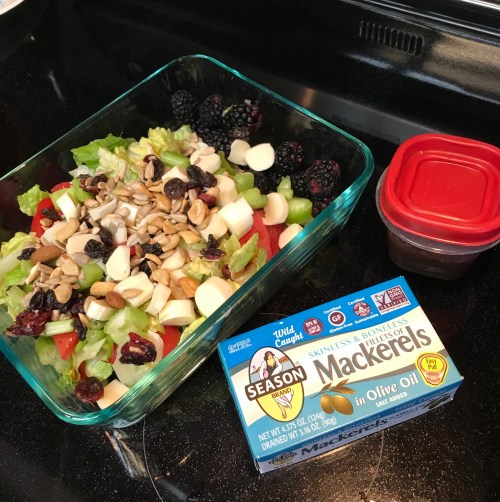
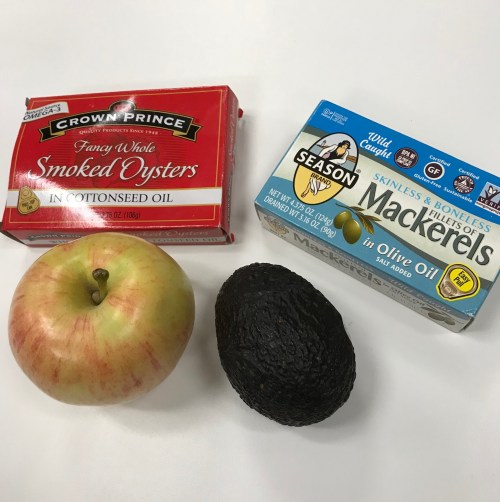
This is one I made in a rush just before going to the hospital. I’d never tried canned makerel before – not bad. The red container holds commercial balsamic vinaigrette.

Nuttin’ But Salads: An N=1 Experiment

I could stand to lose about 10 pounds of excess fat. I’m sure my 20-year-old suits would fit better around the waist. Not that I’m overweight or fat. My BMI is 24.4 (weight 175.5 lb and height 5 feet and 11.25 inches. (Damn. I’m only 63 and already have some age-related shrinkage.)

So what I’m going to do for the next 30 days is eat only salads and see what happens. Not bland iceberg lettuce salads with a few tomato wedges drizzled with ranch dressing. No, these will be super-salads, meaning they provide an adequate amount of the myriad nutrients necessary for health. Right now I can tell you this will require variety and supplemental protein compared to the salads most folks visualize.

Salads have a long history of being “diet food.” Yet I can’t think of an extant popular diet based on them.

Any thoughts or predictions?

Steve Parker, M.D.

PS: How could a “nuttin’ but salads” diet lead to weight loss? I’m thinking there are certain foods that make people get fat, and avoiding them may lead to weight loss or prevent excessive weight gain. Certainly there are exceptions, but I’ve noticed the following items make people fat and keep them fat:

  • sugars, particularly if refined and concentrated
  • starches, particularly if refined and concentrated
  • soda pop, pastries, bread in all forms, pizza, candy, chips, cookies, cake, ice cream, pie, pasta, etc.
  • foods that taste too good, leading to over-consumption
  • excessive calories (from any source?)

I’m not sure about potatoes, beans, nuts, cheeses, and rice.

I also wonder if excessive variety may be a problem for many trying to lose weight, leading to too much temptation and experimentation. Maybe it’s good to get sick and tired of always eating the same thing. Maybe all you need is 3–4 different kinds of salads, plus protein food, and 1–2 fruits a day. Add more only when (if ever?) down to goal weight. Make a huge bowl of salad in the AM and eat it at mealtimes 2–3 times a day; make a different salad tomorrow?


What Are the Better Blood Pressure Meds for Athletes?

Not that serious…yet

Seriously athletic folks, particularly those in sports with high aerobic demand, should avoid these BP drug classes:

  • Diuretics (they predispose to dehydration)
  • Beta blockers (they may decrease exercise tolerance via slowing of heart rate)

Better choices for athletes are:

  • Angiotensin converting enzyme inhibitors (ACEIs)
  • Angiotensin II receptor blockers (ARBs)
  • long-acting dihydropyridine calcium channel blockers

These latter drugs are not likely to affect athletic performance or cause other complications. If you can’t figure out which class of drug you take, ask your physician or pharmacist.

Steve Parker, M.D.

What Exactly Is a “Whole Grain”?

Now THIS is whole grain

Do you know what a whole grain food is? I thought I did. But I was wrong. Here’s the definition in a 2013 article in Scientific American:

The term “whole grain” might evoke an image of a whole, intact grain—that is, a fiber-rich coating of bran surrounding a starchy endosperm and a small reproductive kernel known as the germ. But in a definition created in 1999 by the American Association of Cereal Chemists (AACC) International, an organization of food industry professionals and scientists, and adopted by the U.S. Food and Drug Administration in 2006, “whole grain” refers to any mixture of bran, endosperm and germ in the proportions one would expect to see in an intact grain—yet the grains can be, and usually are, processed so that the three parts are separated and ground before being incorporated into foods. (Refined grains, on the other hand, are grains that have been stripped of their bran and germ.) For a food product to be considered whole grain, the FDA saysit must contain at least 51 percent of whole grains by weight. Compared with intact grains, though, processed whole grains often have lower fiber and nutrient levels.

Many of the scientific studies that support the healthfulness of whole grains, and there aren’t many, considered wheat germ and bran cereals as whole grain foods. But those are only parts of a whole grain. The studies that linked lower heart disease and type 2 diabetes with whole grain consumption were diets high in fiber or bran as a whole grain.

Read the whole article (it’s not long) to find out how modern processing of whole grains can reduce their healthfulness.

Food companies lump ground whole grains, partially processed grains and intact unprocessed grains together under the same broad category of “whole grains,” so it’s difficult for consumers to know which they’re getting.

Don’t Eat Feed; Eat Food

Future Feed

From Hawaiian Libertarian:

“Food is grown, raised, harvested and processed — and if not consumed while fresh — preserved in as natural and organic a state as possible to keep most of it’s nutritious and nourishing qualities intact.

Feed is mass produced by a few large multinational corporations line using bio-technological innovations to quickly and efficiently manufacture product units ready for global distribution and a near infinite shelf life. Its primary traits are using genetically modified grain products to create a marketable product that is usually adulterated with preservatives and flavor enhancements that give it a long shelf life in airtight packaging and designed in a laboratory to stimulate the taste buds to fool the human body into thinking it’s something good for you.

But above all, the primary difference between Food and Feed can be discerned by this: most real food requires little (if any) corporate mass media marketing campaigns to sell product and expand market shares and waistlines alike.”

Source: Hawaiian libertarian: FEED Inc. & The Corporate Campaign Dialectic

Are You Serious About Losing Weight in 2018?

Then you better start preparing. Read this.


“Hmmm…What’s the best way to lose weight?”


How Does the Mediterranean Diet Protect Against Disease?

From the Journals of Gerontology:

Consuming a Mediterranean diet rich in minimally processed plant foods has been associated with a reduced risk of developing multiple chronic diseases and increased life expectancy. Data from several randomized clinic trials have demonstrated a beneficial effect in the primary and secondary prevention of cardiovascular disease, type 2 diabetes, atrial fibrillation and breast cancer. The exact mechanism by which an increased adherence to the traditional Mediterranean diet exerts its favorable effects is not known. However, accumulating evidence indicates that the five most important adaptations induced by the Mediterranean dietary pattern are: (1) lipid lowering effect, (2) protection against oxidative stress, inflammation and platelet aggregation, (3) modification of hormones and growth factors involved in the pathogenesis of cancer, (4) inhibition of nutrient sensing pathways by specific amino acid restriction, and (4) gut microbiota-mediated production of metabolites influencing metabolic health. More studies are needed to understand how single modifications of nutrients typical of the Mediterranean diet interact with energy intake, energy expenditure, and the microbiome in modulating the key mechanisms that promote cellular, tissue, and organ health during aging.

Remember the Reason for the Season

Stained glass window created by F. Zettler (1878-1911) at the German Church (St. Gertrude’s church) in Gamla Stan in Stockholm, depicting a Nativity Scene.

How Did Walter White Lose That Weight in “Breaking Bad”?

That’s a guacamole deviled egg.
Photo Copyright: Steve Parker

In 2014 Howard Stern interviewed Bryan Cranston and asked how he lost weight so quickly for his role as Walter White on Breaking Bad:

“Stern: When you had chemo and was getting sick playing the part of Walter White, in order to go through rapid weight loss you deliberately didn’t eat for 10 days? True or false?

Cranston: False.

Stern: How’d you lose all that weight?

Cranston: No carbohydrates. I just took out all the carbohydrates.

Stern: How much weight did you drop?

Cranston: 16 pounds, in ten days.

Stern: Painful?

Cranston: No. The first three days are really hard, ’cause your body’s changing and craving sugar and wants, you know, and then you deprive it of the sugar and it starts burning fat.”

Source: How Walter White lost weight in Breaking Bad, it wasn’t chemo – High Steaks

h/t Tom Naughton