Paul Ingraham Cured My Patello-Femoral Pain Syndrome (PFPS)

…and Paul’s not even a physician or physical therapist. But he’s a smart guy, writer, and former massage therapist. Click for his article on patello-femoral pain syndrome if interested. I paid about $20 USD for the full article, and it was well worth it. Full disclosure: I don’t know Paul and earn no commission or other compensation for this endorsement.

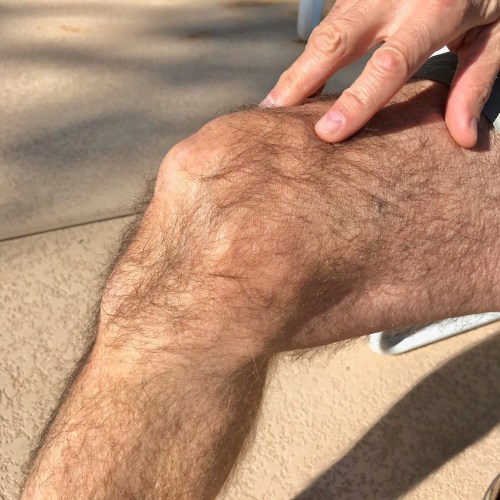
Photo credit: Steven Paul Parker II

The key to my cure was probably radical rest, or what Paul calls profound rest.

If you have PFPS, I hope you find something useful here.

Regular readers here know I’m a huge proponent of exercise. Unfortunately, exercise can be risky. You can injure yourself. I did that a few years ago when I was getting in shape to climb Humphreys Peak. I accelerated my training program too rapidly and developed patell0-femoral pain syndrome (PFPS).

This is how my right knee felt in 2017:

I’ve developed over the last month some bothersome pain in my right knee. It’s not interfered much with my actual hiking, but I pay for it over the subsequent day or two. I’m starting to think this may put the kibosh on my Humphries Peak trek next month.

The pain is mostly anterior (front part of the knee) and is most noticeable after I’ve been sitting for a while with the bent knee, then get up to walk. The pain improves greatly after walking for a minute or less. It also hurts a bit when I step up on something using my right leg. If I sit with my knee straight (in full extension), it doesn’t hurt when I get up. The joint is neither unusually warm nor swollen. Ibuprofen doesn’t seem to help it.

That episode resolved after I stopped hiking for 3-4 months. But in 2018 I had recurrence of similar pains in my left knee, with no clear precipitant this time. I continued my usual weight-training program and expected another spontaneous resolution. Six months passed…no improvement. That’s when I found Paul Ingraham’s article.

By the way, I’m the one who diagnosed my PFPS. It’s been said that a doctor who diagnoses and treats himself has a fool for a patient. He can’t be adequately objective.

Alternative diagnoses would include patello-femoral osteoarthritis and degenerative meniscus, due to my age (over 60). Diagnosis of the osteoarthritis could be facilitated by knee X-rays: weight-bearing posterior-anterior imaging, weight-bearing lateral view, and sunrise view.

This was my treatment plan for PFPS in early Feb 2019, based on Paul Ingraham’s recommendations. Paul explains how to do various specific exercises below in his article.

  1. Avoid all activities that stress the patella-femoral joint or aggravate pain for at least two weeks, if not longer (2–3 months). Paul calls it “profound rest.” I started this Feb 17. No knee-loading exercise (e.g., leg presses, any kind of squat, deep knee bends) until pain is truly in remission from rest. I quit my usual squats, Bulgarian split-squats, and single-leg Romanian deadlifts.
  2. Consider Motrin (ibuprofen) 400-600 mg three times daily for two weeks (I did 600 mg 3x/day) but usually no help
  3. Consider cold-packs (10–20 mins) when it flares up but usually no help. (I never did this because I couldn’t find my WalMart cold-pack.)
  4. Find a substitute for the squats? E.g., stationary bike? No bike for now: too much stress on patello-femoral joint at this time
  5. Paul’s not big on stretching (quadriceps and hamstring stretches routinely recommended by others). I didn’t stretch.
  6. While recovering, keep leg straight most of the time, even when sitting. Sit less. (I didn’t sit less but did make a huge effort to keep my  affected led fully extended, or at least not bent more that 20 degrees at any time. This necessitated sitting on the edge of my seat at work, and/or lowering the height of the seat. At home relaxing, I’d keep my leg fully extended. I think this was extremely important for my healing. I considered getting a standing desk for home or work but didn’t.)
  7. Start with exercises that keep knees straight. Exercise both lower extremities. As condition improves, can start to add other exercises, very slowly, that allow bent knees. Single-leg RDLs may be a good start (started in Sept 2019). Restart squats, deep knee bends, and leg presses (cycling?) only very late into recovery. Rehab must progress VERY SLOWLY. If an exercise causes more knee pain, back off and work the hips first. Exercise 2–3 times/week. Walking on the flat in moderation is usually OK. Strengthening hip abductors may be helpful.
  8. Hamstring curls via machine or therabands. Curl to 60 degrees, not 120. (I curled to 90 degrees using therabands).
  9. Quadricep setting. (I didn’t do this. Straight-leg raises on your back seem to be similar, which I did.)
  10. Straight-leg raises, on back and side-lying. (Done: 3 sets of 10 reps each side.)
  11. Clam shells. (Done: 3 sets of 10 reps each side.)
  12. Knee lifts? (don’t know what that is; not done).
  13. Consider the following although not from Paul: Hip abductor strengthening: “monster walks” (lateral steps with elastic band around (just proximal to) knees: 1 min x 3 sets. Hip hikes (what’s this?): 2 sets of 20 reps each side.
  14. Consider the following although not from Paul: Quad strengthening: terminal knee extensions with elastic band, 3 sets of 15 reps; leg presses?; semi squat, 3 sets of 10 reps (also recumbent bike?). Also consider stork stance TKE (terminal knee extensions) as alternative to standard TKE.
  15. Paul likes trekking poles for hikers. (I’ve been using these for years; Leki brand.)
  16. Not from Paul: Home physical therapy for six weeks
  17. Not from Paul: Turkish get-ups now or later? Much further into recovery!

Update of Progress on April 4, 2019:

Knee definitely feeling better, probably due to profound rest as above.  On Feb 23, I aggravated knee mildly by sledding in snow with Paul in Care Free – no regrets! Around Feb 26, Sunny got me started on Platinum’s Ortho-Chon Plus, 3 caps twice daily. Per 3 caps: glucosamine sulfate 800 mg, turmeric 380 mg, methylsulfonylmethane 350 mg, berberine HCL 145 mg, Boswellia serrata extract 140 mg, hyaluronic acid 50 mg, cat’s claw 10 mg, total cetylated fatty acids 3 mg. Not sure if these did any good at all; I’m skeptical. Started feeling less pain around Feb 29.

I am not healed or in remission yet. Doing hip exercises twice or once/wk with Therabands: clamshells, straight leg raises, side-lying straight leg raises, hamstring curls.

I had to put hip exercises on hold temporarily on March 28 due to a right low back muscle strain either from the exercises or weed pulling.

Update on Nov 25, 2019:

The PFPS is in remission and has been since July or so. For the last couple months I’ve been doing single-leg Romanian deadlifts and “walking” on elliptical-type aerobic machines at Anytime Fitness—some machines also work the upper limbs, others don’t—which are very easy on my knees. Avoiding treadmill since I have a palpable click in one knee, and treadmill aggravates my degenerative joint disease (DJD in both knees but predominantly left knee).

Next step is to slowly re-introduce exercises that load the knees (particularly the patell0-femoral joint). This is scary but must be done. My quads have atrophied somewhat. Squats? Lunges? Bulgarian split squats?

Steve Parker, M.D.

Steve Parker MD, Advanced Mediterranean Diet

Click the pic to purchase at Amazon.com. E-book versions also available at Smashwords. com.

 

Low-Carb Diets May Shorten Your Life

…and high-carb diets might be just as harmful. In the research at hand, low-carb was defined as under 40% of calories from carbohydrate, and high-carb was over 70% of calories.

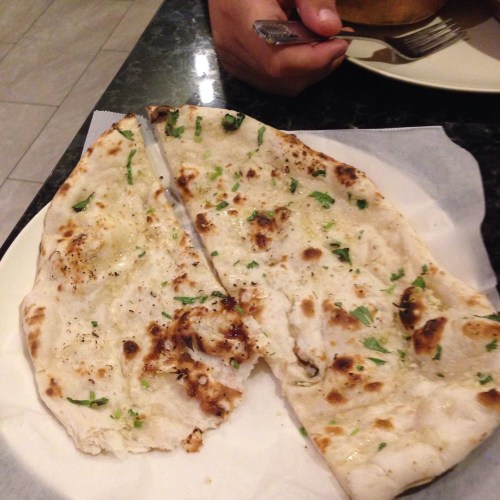
Garlic Naan, a type of flat bread

The longevity sweet spot was 50-55% of calories from carbs. Guess what? That’s the typical carb percentage in the traditional Mediterranean diet.

If you want to eat low-carb, read further to identify the possibly healthier substitutions for carbs. Tl;dr version: Eat plant-derived protein and fats.

From a 2018 study in The Lancet Public Health:

Background

Low carbohydrate diets, which restrict carbohydrate in favour of increased protein or fat intake, or both, are a popular weight-loss strategy. However, the long-term effect of carbohydrate restriction on mortality is controversial and could depend on whether dietary carbohydrate is replaced by plant-based or animal-based fat and protein. We aimed to investigate the association between carbohydrate intake and mortality.

Methods

We studied 15 428 adults aged 45–64 years, in four US communities, who completed a dietary questionnaire at enrolment in the Atherosclerosis Risk in Communities (ARIC) study (between 1987 and 1989), and who did not report extreme caloric intake (4200 kcal per day for men and 3600 kcal per day for women). The primary outcome was all-cause mortality. We investigated the association between the percentage of energy from carbohydrate intake and all-cause mortality, accounting for possible non-linear relationships in this cohort. We further examined this association, combining ARIC data with data for carbohydrate intake reported from seven multinational prospective studies in a meta-analysis. Finally, we assessed whether the substitution of animal or plant sources of fat and protein for carbohydrate affected mortality.

Findings

During a median follow-up of 25 years there were 6283 deaths in the ARIC cohort, and there were 40 181 deaths across all cohort studies. In the ARIC cohort, after multivariable adjustment, there was a U-shaped association between the percentage of energy consumed from carbohydrate (mean 48·9%, SD 9·4) and mortality: a percentage of 50–55% energy from carbohydrate was associated with the lowest risk of mortality. In the meta-analysis of all cohorts (432 179 participants), both low carbohydrate consumption (70%) conferred greater mortality risk than did moderate intake, which was consistent with a U-shaped association (pooled hazard ratio 1·20, 95% CI 1·09–1·32 for low carbohydrate consumption; 1·23, 1·11–1·36 for high carbohydrate consumption). However, results varied by the source of macronutrients: mortality increased when carbohydrates were exchanged for animal-derived fat or protein (1·18, 1·08–1·29) and mortality decreased when the substitutions were plant-based (0·82, 0·78–0·87).

Interpretation

Both high and low percentages of carbohydrate diets were associated with increased mortality, with minimal risk observed at 50–55% carbohydrate intake. Low carbohydrate dietary patterns favouring animal-derived protein and fat sources, from sources such as lamb, beef, pork, and chicken, were associated with higher mortality, whereas those that favoured plant-derived protein and fat intake, from sources such as vegetables, nuts, peanut butter, and whole-grain breads, were associated with lower mortality, suggesting that the source of food notably modifies the association between carbohydrate intake and mortality.

Source: Dietary carbohydrate intake and mortality: a prospective cohort study and meta-analysis – The Lancet Public Health

Steve Parker, M.D.

PS: These types of studies are often unreliable.

Steve Parker MD, Advanced Mediterranean Diet

Click the pic to purchase at Amazon.com. E-book versions also available at Smashwords. com.
 

One Way to Preserve Fat Free Mass During A Low-Calorie Diet 

Greek salad with canned salmon

The parts of your body that aren’t fat tissue are collectively called fat-free mass or lean mass. Fat-free mass includes muscle, organs, bones, water, connective tissue, etc. Reduced-calorie diets are often linked to reduction of body components—like muscle—other than the desired loss of excess fat.

One proven effective way to preserve muscle mass on a reduced-calorie diet is to consume adequate protein. Judicious exercise may also help.

I haven’t read the full article below, and probably won’t. For what it’s worth, they say fat-free mass can be preserved during a very low-carb ketogenic diet via adequate intake of vitamin D, leucine, and whey protein. D you think maybe they’re selling a particular supplement?

The abstract isn’t very well written. Or is it the title that’s misleading.

Abstract

The loss of fat free mass (FFM) that occurs during a weight loss secondary to low-calorie diet can lead to numerous and deleterious consequences. We performed a review in order to evaluate the till-now evidence regarding the optimum treatment for maintaining FFM during low-calorie diet. This review included eligible studies. In order to maintain FFM during a low-calorie diet, there are various diet strategies: adopt a very-low carbohydrates ketogenic diets (VLCKD) and take an adequate amount of specific nutrients (vitamin D, leucine, whey protein). As regard the numerous and various low-calorie diet proposals for achieving weight loss, the comparison of VLCKD with prudent low-calorie diet demonstrated that FFM was practically unaffected by VLCKD. This is possible for numerous mechanisms, involving insulin and insulin like grow factor-I – growth hormone (IGF-I-GH) axis, and which acts by stimulating protein synthesis. Considering protein and amino acids intake, an adequate daily intake of leucine (4 grams/day), and whey protein (20 grams/day) is recommended.

Regarding vitamin D, if the blood vitamin D has low values (<30 ng/ml), it is mandatory that an adequate supplementation is provided, specifically calcifediol because in the obese subject, this form is recommended to avoid seizure in the adipose tissue: 3–4 drops/day or 20–30 drops/week of calcifediol are generally adequate to restore normal 25(OH)D plasma levels in obese subjects.

Source: Current Opinion On Dietary Advice In Order To Preserve Fat Free Mass During A Low-Calorie Diet – ScienceDirect

I had never heard of that obesity-califidiol connection.

Steve Parker, M.D.

Steve Parker MD, Advanced Mediterranean Diet

Click the pic to purchase at Amazon.com. E-book versions also available at Smashwords. com.

The U.S. can slash healthcare costs 75% with two fundamental changes 


View from first part of the Romero Canyn trail near Tucson, AZ

From Sean Masaki Flynn at Market Watch:

As the Democratic presidential candidates argue about “Medicare for All” versus a “public option,” two simple policy changes could slash U.S. health-care costs by 75% while increasing access and improving the quality of care.

These policies have been proven to work by ingenious companies like Whole Foods and innovative governments like the state of Indiana and Singapore. If they were rolled out nationally, the United States would save $2.4 trillion per year across individuals, businesses, and the government.The first policy—price tags—is a necessary prerequisite for competition and efficiency. Under our current system, it’s nearly impossible for people with health insurance to find out in advance what anything covered by their insurance will end up costing. Patients have no way to comparison shop for procedures covered by insurance, and providers are under little pressure to lower costs.

The second money-saving policy links health insurance (with an annual  deductible) to a health saving account (HSA).

Look, people. We gotta do something. There’s no way that healthcare in the U.S. should devour almost 20% of Gross Domestic Product. We can get it down to 5%. I know how.

Source: The U.S. can slash health-care costs 75% with 2 fundamental changes — and without ‘Medicare for All’ – MarketWatch

Steve Parker, M.D.

PS: Reduce your need for healthcare via diet and exercise!

Steve Parker MD, Advanced Mediterranean Diet

Click the pic to purchase at Amazon.com. E-book versions also available at Smashwords. com.


A practical guide to the Mediterranean diet – From Harvard

There are myriad reasons the traditional Mediterranean diet is considered one of the healthiest diets. From Harvard Medical Publishing, an article written by a Registered Dietitian:

The Mediterranean diet has received much attention as a healthy way to eat, and with good reason. The Mediterranean diet has been shown to reduce risk of heart disease, metabolic syndrome, diabetes, certain cancers, depression, and in older adults, a decreased risk of frailty, along with better mental and physical function. In January [2019], US News and World Report named it the “best diet overall” for the second year running.

Source: A practical guide to the Mediterranean diet – Harvard Health Blog – Harvard Health Publishing

Ready to get started? Click the link above.

Ready to lose weight and start a fitness program, too? Click the pic below.

Steve Parker, M.D.

Steve Parker MD, Advanced Mediterranean Diet

Click the pic to purchase at Amazon.com. E-book versions also available at Smashwords. com.


QOTD: Paul Craig Roberts on Revisionist History

Tens of millions died in World War II, including many civilians

“Historians, and even book reviewers, who tell the truth pay a high price. For reasons I provide in my review [of David Irving’s Hitler’s War and Churchill’s War], generally it is decades after a war before truth about the war can emerge. By then the court historians have fused lies with patriotism and created a pleasing myth about the war, and when emerging truth impinges on that myth, the truth-teller is denounced for making a case for the enemy.

Wars are fought with words as well as with bullets and bombs. The propaganda and demonization of the enemy are extreme. This is especially the case when it is the victors who start the war and have to cover up this fact as well as the war crimes for which they are responsible. When decades later the covered up crimes of the victors are brought to light, truth is up against the explanation that has been controlled for a half century. This makes the truth seem outlandish, and this makes it easy to demonize and even destroy the historian who brought the truth to the surface.”

If you think you know much about the history of World War II, check out this iconoclastic review at Unz.com.

Fake News: Bee Colonies NOT in Decline

We had one of these swarms in our front yard a few years ago for several weeks. Yes, that’s hundreds of bees. And most in Arizona are Africanized.

Remember 8–10 years ago when scientists told us that bee colonies were mysteriously disappearing. They called it Colony Collapse Disorder. Maybe caused by pesticides or other pollution. If the trend continued, crops wouldn’t be pollinated and we’d starve to death. Apocalypse within a few years.

Looks harmless enough, right?

Turns out it was Fake News. Thank God.

More reason for science skepticism.

Steve Parker, M.D.

PS: See details at Issues & Insights, the source of the graphs above.

Steve Parker MD, Advanced Mediterranean Diet

Click the pic to purchase at Amazon.com. E-book versions also available at Smashwords. com.

 

Do You Really Need That Heart Stent or Bypass Surgery?

Heart attacks and chest pains are linked to blocked arteries in the heart

Doctors are often criticised for over-using coronary artery angioplasty/stenting and coronary artery bypass grafting.

From Stanford Medicine:

Patients with severe but stable heart disease who are treated with medications and lifestyle advice alone are no more at risk of a heart attack or death than those who undergo invasive surgical procedures, according to a large, federally-funded clinical trial led by researchers at the Stanford School of Medicine and New York University’s medical school.

The trial did show, however, that among patients with coronary artery disease who also had symptoms of angina — chest pain caused by restricted blood flow to the heart — treatment with invasive procedures, such as stents or bypass surgery, was more effective at relieving symptoms and improving quality of life.“For patients with severe but stable heart disease who don’t want to undergo these invasive procedures, these results are very reassuring,” said David Maron, MD, clinical professor of medicine and director of preventive cardiology at the Stanford School of Medicine, and co-chair of the trial, called ISCHEMIA, for International Study of Comparative Health Effectiveness with Medical and Invasive Approaches.

***

“Based on our results, we recommend that all patients take medications proven to reduce risk of heart attack, be physically active, eat a healthy diet and quit smoking,” Maron said. “Patients without angina will not see an improvement, but those with angina of any severity will tend to have a greater, lasting improvement in quality of life if they have an invasive heart procedure. They should talk with their physicians to decide whether to undergo revascularization.”

Source: Stents, bypass surgery show no benefit in heart disease mortality rates among stable patients | News Center | Stanford Medicine

Steve Parker, M.D.

PS: The Mediterranean diet is a healthy diet, and you can even lose weight with it!

Steve Parker MD, Advanced Mediterranean Diet

Click the pic to purchase at Amazon.com. E-book versions also available at Smashwords. com.

Google Now Has Sensitive Medical Data on Millions of People

…according to Daily Mail:

Lawyers, medical professionals and tech experts have reacted with a mixture of horror and fury after it emerged that Google has been secretly acquiring sensitive medical data on millions of people without their knowledge or consent.

Questions were immediately raised around the ethics of the data-gathering operation – code-named Project Nightingale – as well as the security of patient data after the program was first reported on Monday.

Others called for an immediate change to privacy laws after Google and Ascension, the healthcare organization it has partnered with, boasted that the scheme is completely legal.

Dr. Robert Epstein, an author, medical researcher and former editor-in-chief at Psychology Today, summed up the mood when he tweeted: ‘You can’t make this s*** up. #BeAfraid.’

Source: Furious backlash after it emerges Google has secretly amassed healthcare data on millions of people | Daily Mail Online

The “confidential” data reportedly included names, dates of birth, lab results, diagnoses, and hospitalization records.

Thanks, Ascension. How much did you make off the deal?

I’ve increasingly noticed that I have to depend on Daily Mail or other non-U.S. sources for news that “the powers that be” apparently don’t want me to hear about.

Steve Parker, M.D.

PS: Keep your sensitive healthcare data out of Google’s  and Ascension’s clutches by getting healthier.

Steve Parker MD, Advanced Mediterranean Diet

Click the pic to purchase at Amazon.com. E-book versions also available at Smashwords. com.
 

Is This the Optimal Anti-Aging Regimen?

dementia, memory loss, Mediterranean diet, low-carb diet, glycemic index, dementia memory loss

“Darling, think about upping your NMN dose.”

David Sinclair is a PhD professor and researcher at Harvard. Harriet Hall, M.D., reviewed his 2019 anti-aging book at Science-Based Medicine. Here’s his current anti-aging regimen as outlined by Dr Hall:

He makes no recommendations for others except “Eat fewer calories”, “Don’t sweat the small stuff”, and “Exercise”.

But he argues that if he does nothing, he will age and die, so he has nothing to lose by trying unproven treatments, and he has personally chosen to do these things:

    • He takes a gram each of NMN [nicotinamide mononucleotide] resveratrol, and metformin daily.
    • He takes vitamin D, vitamin K2, and 83 mg. aspirin.
    • He limits sugar, bread, and pasta intake, doesn’t eat desserts, and avoids eating meat from animals.
    • He skips one meal a day.
    • He gets frequent blood tests to monitor biomarkers; if not optimal, he tries to moderate them with food and exercise.
    • He stays active, goes to the gym, jogs, lifts weights, uses the sauna and then dunks in an ice-cold pool.
    • He doesn’t smoke.
    • He avoids microwaved plastic, excessive UV exposure, X-rays, and CT scans.
    • He tries to keep environmental temperatures on the cool side.
    • He maintains a BMI of 23-25 [click to calculate your BMI].

He plans to fine-tune his regimen as research evolves. He acknowledges “It’s impossible to say if my regimen is working…but it doesn’t seem to be hurting.” He says he feels the same at 50 as he did at 30.

Source: Aging: Is It a Preventable Disease? – Science-Based Medicine

Steve Parker, M.D.

PS: P.D. Mangan posted an interview it Alan S. Green, M.D., who’s using rapamycin to slow aging.

PPS: The Mediterranean diet has an anti-aging effect if you consider improved longevity to be anti-aging.

Steve Parker MD, Advanced Mediterranean Diet

Click the pic to purchase at Amazon.com. E-book versions also available at Smashwords. com.