Introducing George Mann and His Role in the Diet-Heart Hypothesis

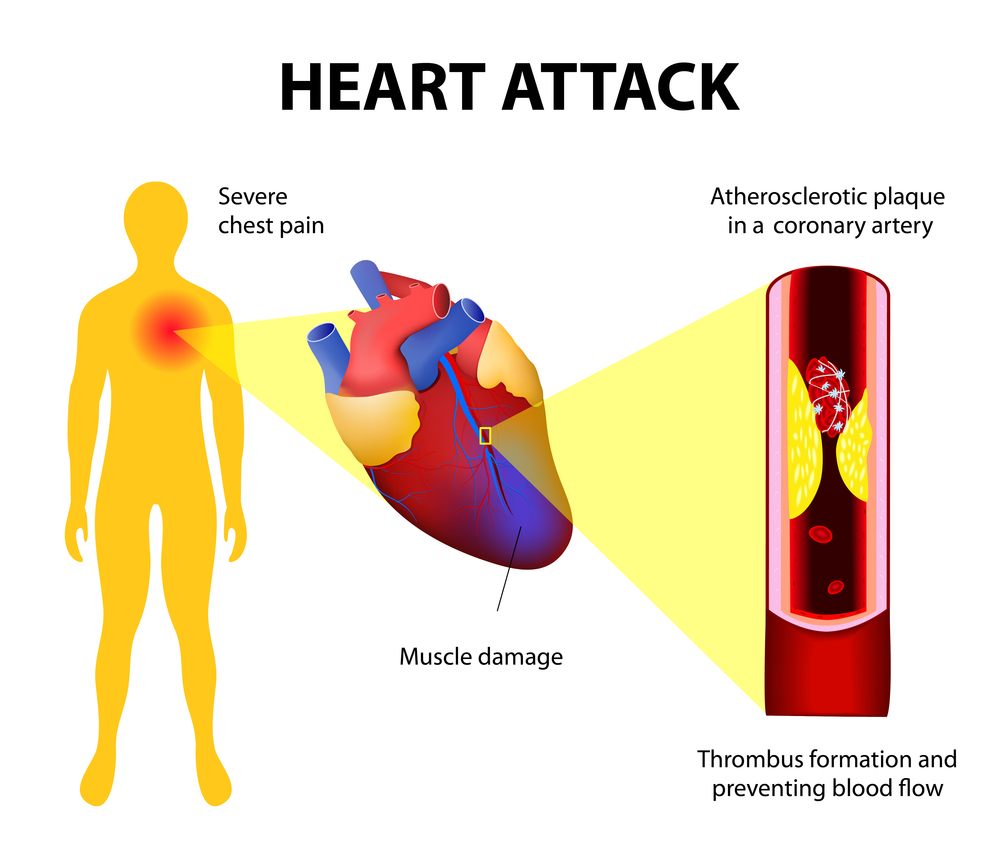
Heart attacks and chest pains are linked to blocked arteries in the heart

It was around 2009 when I was prepared to abandon the time-honored diet-heart hypothesis. I remember wondering if I’d be excommunicated from the medical community, i.e., lose my medical license due heresy. In a nutshell, the diet-heart hypothesis to which I refer was the idea that dietary saturated fat was the clear-cut cause of coronary artery disease and associated angina pectoris, heart attacks, and cardiac deaths.

My re-evaluation of the evidence lead me to create the ketogenic Mediterranean diet, which is in the 2nd edition of my Advanced Mediterranean diet. Search Amazon.com and you’ll find several other subsequent ketogenic Mediterranean diet books; I wonder if any of them cited my work.

Dr. Axel Sigurdsson recently wrote an updated history of the diet-heart hypothesis, focusing on the downfall of the hypothesis and the role of George Mann, whom I’d swear I never herd of. An excerpt:

Ancel Keys changed the world. He was right about many things—that lifestyle matters, that food affects disease, that public health can’t afford to wait forever. But in boiling heart disease down to a single nutrient, he oversimplified a complex truth. His hypothesis became policy before it was fully proven. And once policy hardens, it resists correction.

George Mann was no savior. His critiques were often bombastic, his tone combative. But beneath the fire was a warning science should have heeded: that premature consensus can blind, that evidence must lead—not politics, not personalities, not the noise of institutional momentum.

I recommend the entire article to you. I suspect AI (artificial intelligence) was utilized, mainly judging from the three pictures. Dr. Sigurdsson has been publishing some great articles recently, and I believe credited AI in some of them, which is OK by me.

Steve Parker, M.D.

COVID-19 Update: Vaccines Linked to Neuro-Psychiatric disorders

MRI of brain

Alleged attorney Jeff Childers reports an alleged link between the covid-19 vaccine(s) and neuropsychiatric disorders. The item starts a third of the way down the web page. I haven’t read the source article and probably won’t. You’ll see mention below of cerebral venous sinus thrombosis. One of the neurologists I work with has started ordering more brain scans looking for that. Coincidence?

All that follows is from Childers. To facilitate readability, I won’t put it in italics like I usually do quotations:

For years, scientists who questioned mRNA safety were told to put up or shut up (“publish or perish”). Well— now they’ve published. And I’ll give you one guess whether or not the conclusions support our long-standing concerns. Today, a new peer-reviewed study published in the International Journal of Innovative Research in Medical Science, blandly titled “View of Association Between COVID-19 Vaccination and Neuropsychiatric Conditions.

image 10.png

The results, however, were not bland.

In the just-published peer-reviewed study, researchers analyzed over three decades of vaccine injury reports in the U.S. government’s own VAERS database, comparing covid mRNA vaccines to both flu shots and all other vaccines (combined). Using the CDC’s and FDA’s own method for detecting safety problems —called “Proportional Reporting Ratios” or PRRs— they found that reports of serious neuropsychiatric issues like brain fog, psychosis, dementia, and even suicidal behavior were not just higher, but dozens to hundreds of times more frequent after the covid shots.

If you thought people were crazy to take the jab, you might have been onto something.

The safety signal thresholds weren’t just crossed; they were blown out of the water, with some categories showing PRRs over four hundred, far above the FDA’s red-flag threshold of two. The study concluded these signals were sufficiently alarming to warrant immediate attention and further investigation— an understatement as big as the Statue of Liberty.

Among the most alarming findings, the study flagged massive spikes in reports of serious brain-related problems after covid vaccination. Compared to flu shots, reports of brain fog were up over 100-fold, psychosis nearly 80 times higher, and Alzheimer’s-type dementia more than 40 times more frequent. Even more chilling, reports related to suicidal thoughts or behaviors, including suicide attempts and self-harm, showed increases as high as 80-fold. One rare but deadly condition —cerebral venous sinus thrombosis, a type of brain clot— was reported at rates over 400 times higher than with flu vaccines.

These numbers weren’t small deviations— they were sky-high red flags by the FDA’s own data and safety standards.


Steve Parker, M.D.

So All the Rumors About Jeffrey Epstein Are Wrong?

I doubt many Trump supporters saw his recent post telling many of them he doesn’t want their support anymore. He’ll find out in 2026 (mid-term elections) how many Trumpsters he’s alienated. Time will tell if the Epstein story has legs or not. Nicholas J. Fuentes predicts this Trump post will lead to his downfall. Larry C. Johnson outlines why the Epstein story isn’t a hoax.

We live in interesting times.

Steve Parker, M.D.

Ketogenic Diets Reduce Risk of Death

Many physicians and dietitians have been hesitant to suggest ketogenic diets due to 1) possible increased risk of cardiovascular disease, and 2) unknown effects on overall mortality.

But a study published at Scientific Reports in October 2024 suggests that ketogenic diets reduce overall mortality by 24% with no effect on cardiovascular-related deaths. Click the link to see the full report. I haven’t read it yet. Don’t ask me what “restricted cubic spline function” means!

Steve Parker, M.D.

h/t The Low Carb Diabetic

Image

Never Give Up

Image

It All Depends on Your Perspective

Paul Harvey on the Signers of the Declaration of Independence

…Listen to the Father’s Voice

Not quite what you were expecting, was it?

Wishing a glorious Father’s Day to all you dads.

The Unabomber Brought “Manifesto” to the Fore

The Unabomber’s manifesto was 35,000 thousand words long. Mine’s got him beat by 2,000 words, every one of which was carefully curated!

The Unabomber was Ted Kaczynski. He titled his manifesto “Industrial Society and Its Future.” It wasn’t about healthcare. He was found dead in his jail cell at age 81; reportedly killed himself.

Most of my writing on health, nutrition, and fitness is designed to keep you out of the clutches of the medical-industrial complex. Don’t get involved with that system if you can safely avoid it!

Steve Parker, M.D.

Book Review: Unshrunk

Every shift in my adult hospital medicine practice I run across patients taking one or more psych drugs long-term. I often wonder if the drug is still necessary. Here’s my brief review of Laura Delano’s book, Unshrunk.

For years I’ve been wondering why the U.S. has an apparent epidemic of mental illness, judging from the widespread use of prescription pharmaceuticals like Wellbutrin, Prozac, Xanax, Lexapro, Lamictal, Adderall, and Ritalin. For instance, the Centers for Disease Control reported that in 2023,  24% of adults reported having received mental health treatment (based on taking medication for anxiety or depression or, during the prior 12 months, having taken medication for emotions, concentration, behavior or mental health, or having received mental health therapy from a mental health professional). 

And it’s not only adults. A 2021 article in Psychology Today noted that “In the USA, 8.5 percent of children under 18 (1 in 12) are on “medication for ADD/ADHDautism/ASD, or difficulties with emotions, concentration, or behavior,” according to a national survey. This includes 1.2 percent of pre-schoolers and 12.9 percent of 12- to 17-year-olds (1 in 8).

Laura Delano’s book focuses on her personal experience with “treatment resistant” mental illness. Her psychiatric labels included bipolar disorder, borderline personality disorder, and alcoholism. She would say that the widespread prescribing of psych medications is due to 1) failure to adequately address the underlying causes of mental illness, and 2) widespread acceptance of the (discredited) biochemical model of mental illness. The latter is the idea that a chemical imbalance in the brain is causing distress. You have too much or not enough dopamine, norepinephrine, etc. “Here, take this drug and it will balance your chemicals.” For much of her life, starting at age 13, Laura was on three to six drugs at a time, and she’s convinced they did more harm than good. One drug making you too drowsy? Add this other drug to keep you awake. Years after a serious suicide attempt, Laura eventually got off all of her medications and her life improved greatly. Don’t do this on your own; the tapering off process takes longer than you think. She admits that her wealthy family provided resources that few of us have.

The author points out that FDA approval of psychopharmaceuticals is typically based on safety and efficacy during studies lasting 6-8 weeks in experimental subjects taking only one drug. But what about those patients taking the drug for three years? Along with two or more other drugs?

Laura gives great credit to her involvement with Alcoholics Anonymous, what Dr. Drew Pinsky calls a type of mutual aid. To me, it’s sad that she never believed in the AA idea that “a power greater than us can restore us to sanity.” I pray that she will come to know God/Jesus. I suspect that the clarity of alcohol abstinence helped her brain find a way out of the psychiatrization (her term) that trapped her. Laura’s belief in mutual aid led her to found the Inner Compass Exchange (https://exchange.theinnnercompass.org) to help those hoping escape the mental health industry and its medicalized paradigm.

The book offers hope to those suffering from treatment-resistant mental illness and to those who hope eventually to get off of chronic psych meds. Highly recommended for anyone with a serious interest in mental illness, psychology, or psychiatry.

Steve Parker, M.D.