Sounds crazy, doesn’t it? An article at Obesity Panacea has the details that may convince you.
In case you can’t see that link, here’s the URL: http://blogs.plos.org/obesitypanacea/2013/04/10/obesity-and-altitude/
Sounds crazy, doesn’t it? An article at Obesity Panacea has the details that may convince you.
In case you can’t see that link, here’s the URL: http://blogs.plos.org/obesitypanacea/2013/04/10/obesity-and-altitude/
Comments Off on Is Obesity Caused By Lack of Altitude?
Posted in Uncategorized
Melanie Thomassian at Dietriffic has issued a social media-based challenge to see if you can form an exercise habit over the course of 30 days starting April 15.
Much of the psychology literature I’ve seen suggests that habit formation takes more like eight to 12 weeks.
You’ve got very little to lose, and much to gain if you’re currently a couch potato. Why not join us?
I’ve heard anecdotal reports of this for years. Here’s scientific evidence, although only eight patients were studied. Whether those at normal weight or overweight improve similarly is unknown to me.
PS: Frequent episodes of heartburn is a condition called GERD: gastroesophageal reflux disease.
h/t Melissa McEwan
Comments Off on If You’re Obese, Very Low-Carb Diet Improves Heartburn
Posted in Low-Carb Eating
Tagged gastroesophageal reflux disease, GERD, heartburn, obesity
I love it when ads for medical remedies claim to be “homeopathic.” That way I know straight away they’re no better than placebo.
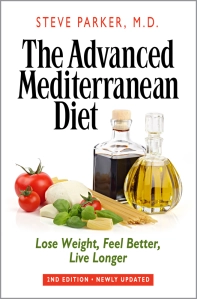
Remember that PREDIMED study published a couple months ago. It showed significant health benefits from a Mediterranean diet supplemented with EVOO and/or nuts. The general press simply focused on the Mediterranean diet angle, which helped with my book sales (thank you!).
Lawrence Appel and Linda Van Horn have an editorial on PREDIMED in New England Journal of Medicine, from which I quote:
Policymakers already recommend consumption of a Mediterranean-style diet on the basis of a persuasive body of evidence from observational studies. Our sense is that the policy implications of the PREDIMED trial relate primarily to the supplemental foods. Specifically, in the context of a Mediterranean-style diet, increased consumption of mixed nuts or substitution of regular olive oil with extra-virgin olive oil has beneficial effects on cardiovascular disease.
Comments Off on Extra Virgin Olive Oil and Mixed Nuts May Be Critical to Healthy Mediterranean Diet
Posted in Uncategorized
Tagged extra virgin olive oil, Mediterranean diet, nuts, PREDIMED
If you think you might have a drinking problem, you gotta read this. Of AA, Ebert wrote,
It was the best thing that ever happened to me.
…you just have to walk more, according to an article at MedPageToday. And that takes more time.
Comments Off on Walking Is Probably Just As Healthy As Jogging
Posted in Uncategorized
I bring this to your attention because of the potassium link. Most of us have heard that reducing salt (sodium) intake is supposed to be good for us, although even that’s debatable. Fewer have heard that higher potassium may be good for us. Those diet characteristics—low sodium and high potassium—are naturally incorporated into the Paleolithic diet (aka Stone Age, caveman, hunter-gatherer or paleo diet).
Read MedPageToday for details. The association between sodium restriction and lower rates of cardiovascular disease and mortality is a confusing mess. My gut feeling is that strict sodium avoidance is important for only 20% of the population, at most. From MedPageToday:
However, the assertion that reduced salt intake will have beneficial effects on disease outcomes contradicts the results of a 2011 meta-analysis, which failed to show significant relationships between reduced salt intake and mortality or cardiovascular outcomes.
Comments Off on More Potassium and Less Sodium May Reduce Cardiovascular Disease and Prolong Life
Posted in Uncategorized
Comments Off on “Pre-exercise stretching is generally unnecessary and likely counterproductive”
Posted in Uncategorized
Tagged exercise, stretching
A high ratio of omega-6 to omega-3 fatty acid was also detrimental. On the other hand, high monounsaturated fat consumption was protective of the brain.
Comments Off on In Women, Age-Related Brain Decline Linked to High Saturated Fat Intake
Posted in Uncategorized