Ketogenic Diet Overview

We’re starting to see a resurgence of interest in ketogenic diets for weight loss and management, at least in the United States. Also called “very-low-carb diets,” ketogenic diets have been around for over a hundred years. A few writers in the vanguard recently are Jimmy Moore, Dr. Peter Attia, and Dr. Georgia Ede. Before them, Dr. Robert Atkins was a modern pioneer with his famous Atkins Diet and its Induction Phase.

What is a Ketogenic Diet?

There are many different programs but they tend to share certain characteristics. They restrict digestible carbohydrate consumption to 50 or fewer grams a day, sometimes under 20 grams. This totally eliminates or drastically reduces some foods, such as grains, beans, starchy vegetables (corn, potatoes, peas, etc), milk, and sugar. Nor can you have products made from these, such as bread, cookies, pies, cakes, potato and corn chips, and candy. You eat meat, eggs, fish, chicken, certain cheeses, nuts, low-carb vegetables (e.g., salad greens, broccoli, green beans, cauliflower), and oils. Total calorie consumption is not restricted; you count carb grams rather than calories. This is a radical change in eating for most people.

You’re may be wondering what “ketogenic” means. First, understand that your body gets nearly all its energy either from fats, or from carbohydrates like glucose and glycogen. In people eating normally, 60% of their energy at rest comes from fats. In a ketogenic diet, the carbohydrate content of the diet is so low that the body has to break down even more of its fat to supply energy needed by most tissues. Fat breakdown generates ketone bodies in the bloodstream. Hence, “ketogenic diet.” Some of the recent writers are using the phrase “nutritional ketosis” to summarize this metabolic state.

Ketogenic Versus Traditional Calorie-Restricted Dieting

Are there advantages to ketogenic diets for weight loss and management? Numerous recent studies have demonstrated superior weight-loss results with very-low-carb diets as compared to traditional calorie-restricted diets. Weight loss is often faster and more consistently in the range of one or two pounds (0.5 to 0.9 kg) a week. Very-low-carb dieters have less trouble with hunger. If you do get hungry, there’s always something you can eat. From a practical, day-to-day viewpoint, these diets can be easier to follow, with a bit less regimentation than calorie-restricted plans.

Ketogenic diets typically lower blood sugar levels, which is important for anyone with diabetes, prediabetes, and metabolic syndrome. We see higher levels of HDL cholesterol (the good kind), lower triglyceride levels, and a shift in LDL cholesterol to the “large fluffy” kind, all of which may reduce the risk of heart disease. Getting even further into the science weeds, very-low-carb diets reduce insulin levels in people who often have elevated levels (hyperinsulinemia), which may help reduce chronic diseases like type 2 diabetes, high blood pressure, some cancers, and coronary heart disease.  Clearly, ketogenic diets work well for a significant portion of the overweight population, but not for everybody.

Sounds great so far! So why aren’t very-low-carb diets used more often? Many dieters can’t live with the restrictions. Your body may rebel against the switch from a carbohydrate-based energy metabolism to one based on fats. Most of us live in a society or subculture in which carbohydrates are everywhere and they’re cheap; temptation is never-ending.

What Could Go Wrong on a Ketogenic Diet?

Very-low-carb ketogenic diets have been associated with headaches, bad breath, easy bruising, nausea, fatigue, aching, muscle cramps, constipation, and dizziness, among other symptoms.

“Induction flu” may occur around days two through five, consisting of achiness, easy fatigue, and low energy. Atkins dieters came up with the term. It usually clears up after a few days. Some people think of induction flu as a withdrawal syndrome from sugar or refined carbohydrate. My conception is that it’s simply an adjustment period for your body to switch from a carbohydrate-based energy system to one based on fat. Your body cells need time to rev up certain enzymes systems while mothballing other enzymes. To prevent or minimize induction flu, Drs. Stephen Phinney, Jeff Volek, and Eric Westman routinely recommend eating 1/2 tsp of table salt daily.

Very-low-carb ketogenic diets may have the potential to cause osteoporosis (thin, brittle bones), kidney stones, low blood pressure, constipation, gout, high uric acid in the blood, excessive loss of sodium and potassium in the urine, worsening of kidney disease, deficiency of calcium and vitamins A, B, C, and D, among other adverse effects. From a practical viewpoint, these are rarely seen, and many experts say they don’t occur in a well-designed ketogenic diet eaten by an essentially healthy person. I favor ketogenic diets designed by physicians or dietitians. In view of these potential adverse effects, however, it’s a good idea to run your ketogenic diet of choice by your personal physician before you get started. This is especially important if you have diabetes, chronic kidney or liver disease, or a history of gout, low blood pressure, or kidney stones.

Athletic individuals who perform vigorous exercise should expect a deterioration in performance levels during the first four weeks or so of any ketogenic very-low-carb diet. Again, the body needs that time to adjust to burning mostly fat for fuel rather than carbohydrate.

Competitive weightlifters or other anaerobic athletes (e.g., sprinters) may be hampered by the low muscle glycogen stores that accompany ketogenic diets. They may need more carbohydrates, perhaps 150 grams a day.

What’s Next After Losing Weight on a Ketogenic Diet?

A majority of folks eventually increase their carbohydrate consumption above 50 grams a day, which usually takes them out of nutritional ketosis. If they return to the typical 200-300 grams a day that most people eat, they’ll probably gain the lost weight back. Many have found, however, that they can go up to 70-100 grams and maintain at a happy weight. A well-designed program should give careful instructions on the transition out of ketosis and avoidance of regain.

To see a ketogenic diet I designed for my patients, visit:

http://diabeticmediterraneandiet.com/ketogenic-mediterranean-diet/

Steve Parker, M.D.

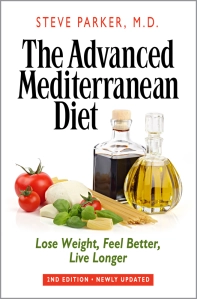
Steve Parker, M.D., is a leading medical expert on the Mediterranean diet and creator of the world’s first low-carb Mediterranean diet.  He has three decades’ experience practicing Internal Medicine and counseling on effective weight-loss strategies.  Dr. Parker is the author of “The Advanced Mediterranean Diet: Lose Weight, Feel Better, Live Longer (2nd Edition),“Conquer Diabetes and Prediabetes: The Low-Carb Mediterranean Diet, “ and “KMD: Ketogenic Mediterranean Diet.”


Another Reason for Regular Exercise…

…before you break your hip. From MedPageToday:

After a hip fracture or other serious fall-related injury, how much independence older adults regained depended to a large extent on how well they were doing beforehand, a study showed.

Functional trajectories were tightly linked, with rapid recovery observed only in those with no or mild disability before the fall,Thomas M. Gill, MD, of Yale University, and colleagues found.

Read the rest.

Need a fitness program? Consider this one.

Steve Parker, M.D.

Time Outdoors In Childhood Prevents Myopia (Nearsightedness)

Steve Parker MD, paleobetic diet,

Should have spent more time outdoors

I’ve worn glasses since the third grade (about 8 years old) and I’ve always wondered why.

I suspect that myopia (nearsightedness) is a modern phenomenon. If you don’t see well, you’re more likely to get bitten by a poisonous snake or overcome by a predator that you should have seen coming. Or you simply trip and fall over obstacles, incurring cuts or fractures. In prehistoric times, these circumstances would lessen your chances of passing your genes on to the next generation. In other words, there was strong selection pressure in favor of good vision.

(For now, I’ll ignore the possibility that poor vision may have beneficial aspects. “Parker, you don’t see good. Stay here with the women while we chase down that ibex.”)

Steve Parker MD, eye chart, eye exam

My eyes are this bad

According to an article at PopSci, I may have avoided myopia by spending more time outside when I was a youngster:

A team of Australian researchers recently reviewed major studies since 1993 of kids, myopia and time spent outdoors. They found more than a dozen studies, examining more than 16,000 school-age kids in total, that found children were more likely to be nearsighted or to develop nearsightedness if they spent less time outdoors. A few of the later studies also found that being outdoors protected even those kids who did a lot of near work or had myopic parents. The studies included kids living in Europe, the U.S., Asia, the Middle East and Australia.

Read the rest.

Steve Parker MD, paleo diet, paleobetic

Nubian ibex in Israel

So get your kids outside. They may even benefit just from the sunshine.

And for my fellow myopics out there, note that your risk of a retinal detachment is higher than average. By the time that usually happens, our children are already grown, so there’s little or no selection pressure against it.

Steve Parker, M.D.

QOTD: Rudyard Kipling


As it will be in the future, it was at the birth of Man —
There are only four things certain since Social Progress began: —
That the Dog returns to his Vomit and the Sow returns to her Mire,
And the burnt Fool’s bandaged finger goes wabbling back to the Fire;

And that after this is accomplished, and the brave new world begins
When all men are paid for existing and no man must pay for his sins,
As surely as Water will wet us, as surely as Fire will burn,
The Gods of the Copybook Headings with terror and slaughter return!

concluding stanzas of Rudyard Kipling’s “Gods of the Copybook Headings”, 1919

It’s Your Mother’s Fault You’re Fat

Or so suggests an article at Obesity Reviews. Women who gained excessive weight while pregnant had children prone to obesity both early and later in life. The opposite applies to women who didn’t gain enough weight during pregnancy.


Your Genes Determine Your Personal Response to Physical Training

Her response depends on genes, training program, nutrition, discipline, adequate sleep, adequate rest, etc.

Her response to depends on genes, training program, nutrition, discipline, adequate sleep, adequate rest, etc.

Here’s an excerpt from an interview with author David Epstein in Outside online. Epstein wrote The Sports Gene: Inside the Science Of Extraordinary Athletic Performance:

Interviewer: That’s one of the most fascinating and unexpected parts of the book, where you discuss the Heritage study’s findings on trainability. Explain its implications.

Epstein: That’s the most famous exercise-genetics study ever done. It’s the collaboration of five colleges in the U.S. and Canada. They took sedentary, two-generation families, which didn’t have a training history, and put them through stationary-bike exercise plans that were totally controlled. Families had to go into the lab and exercise over five months. The goal was to see how people would improve, and they were split into four different university centers to do the training and every center saw the exact same pattern. About 15% of people improved their aerobic capacity very little or not at all. And 15% improved 50% or more doing identical training. Families tended to stick together in the improvement curve, so about half of any person’s improvement was determined by their parents. I remember the editorial that ran in the journal of applied physiology “some people’s alphabet soup—meaning their DNA—didn’t spell ‘runner.’” One person training the exact same as another person can have completely different outcomes.

The exercise in this study was aerobic training. If I recall correctly, I’ve read similar reports regarding response to weight training, aka resistance training. Am I right?

Many folks don’t like to admit this genetic limitation, assuming it’s true. “Set your mind to it, work hard—10,000 hours—and you can do or be anything you want.” Have you ever been tortured by unrealistic expectations? The truth will set you free.

Read the rest.

Steve Parker, M.D.

QOTD: Fred Reed on American Fear

Something strange is happening in the United States. A Canadian friend recently said, “I can remember when Americans weren’t afraid of everything.” Just so. Don’t run on the playground because you might fall. Don’t roughhouse because you might get a bruise. Don’t go outside at high noon because you might get skin cancer. Don’t swim after eating because you might get a cramp. If a child draws a soldier, call a SWAT team because he is a murderous psychopath. Don’t ride a bicycle without a helmet. Fill in the deep end of the pool because someone might drown. Supervise everything. Control everything. Fear everything.

If these are not the neurotic fears of women and capons, please tell me what they are. Such run the schools. They make policy.

Fred Reed


You’re Still at Risk Healthwise Even If You’re “Metabolically Healthy”

I'll eat my hat if this dude doesn't have metabolic syndrome

I’ll eat my hat if this dude doesn’t have metabolic syndrome

See details at MedPageToday.

Some studies suggest you can be healthy and long-lived while obese as long as you are “metabolically healthy.” That is, if you have normal blood pressure, LDL cholesterol, triglycerides, blood sugar, and waist circumference. A new meta-analysis finds that ain’t so: you’re still at higher risk for death or cardiovascular events if you’re obese and free of metabolic syndrome features.

“Our results do not support this concept of ‘benign obesity’ and demonstrate that there is no ‘healthy’ pattern of obesity,” Kramer and colleagues wrote. “Even within the same category of metabolic status (healthy or unhealthy) we show that certain cardiovascular risk factors (blood pressure, waist circumference, low high-density lipoprotein cholesterol level, insulin resistance) progressively increase from normal weight to overweight to obese.”

Click for the scientific journal abstract.

This report does not directly address the “fat but fit” concept, whereby you can counteract some of the adverse health effects of obesity by being fit. By fit, I mean regularly exercising and achieving a decent level of capacity and tolerance for physical activity. Fat but fit still holds.

Steve Parker, M.D.

Why Do So Many Dietitians Argue Against Low-Carb Diets?

Click for details from dietitian Franziska Spritzler. Briefly:

1. They think it’s dangerous. 
2.They believe the diet-heart hypothesis
3. They think the diet is unbalanced.  
4. They think no one will follow it long term.

Franziska ably debunks these ideas one by one.

What is 23andMe Really Up To?

23andMe is a genetic testing company that will analyze your personal collection of genes and suggest related health—and disease—implications. If you know you’re prone to developing a certain disease or condition, perhaps you can take steps beforehand to mitigate the risk.

The company was recently directed by the U.S. Food and Drug Administration to stop selling their service. Click for the FDA’s warning letter to 23andMe’s CEO.

Some have questioned 23andMe’s motives. Charles Seife, writing at Scientific American, has some ideas:

But as the FDA frets about the accuracy of 23andMe’s tests, it is missing their true function, and consequently the agency has no clue about the real dangers they pose. The Personal Genome Service isn’t primarily intended to be a medical device. It is a mechanism meant to be a front end for a massive information-gathering operation against an unwitting public.

***

What does 23andMe want to do with all that data? Right now the talk is all about medical research—and, in fact, the company is doing some interesting work. It has been sifting through its genomic database, which is combined with information that volunteers submit about themselves, to find possible genetic links to people’s traits. (The bright-light/sneeze genetic tag is a 23andMe discovery.) More promising are 23andMe’s attempts to recruit people who suffer from certain diseases, such as Parkinson’s and a few types of cancer. Simply through brute-force pattern matching, the company has a chance of finding genetic causes of these ailments, which could lead to a way to combat them. (And perhaps a blockbuster patent or three.)

That’s just the beginning, though.

Read the whole enchilada.