Nuts Consumption Linked to Less Heart Disease and Longer Life Span

Details are in the American Journal of Clinical Nutrition. From the abstract:

“Our meta-analysis indicates that nut intake is inversely associated with ischemic heart disease, overall cardiovascular disease, and all-cause mortality but not significantly associated with diabetes and stroke. The inverse association between the consumption of nuts and diabetes was attenuated after adjustment for body mass index. These findings support recommendations to include nuts as part of a healthy dietary pattern for the prevention of chronic diseases.”

Nuts feature prominently in all my diet plans. Heart disease is still the No.1 killer in Western societies. 

Mediterranean Diet Helps With Maintenance of Weight Loss After Ketogenic Diet

Italian seaside tangentially related to this post

Italian seaside tangentially related to this post

Investigators affiliated with universities in Italy and Greece wondered about the effect on obesity of two ketogenic “Mediterranean” diet spells interspersed with a traditional Mediterranean diet over the course of one year. They found significant weight loss, and perhaps more importantly, no regain of lost weight over the year, on average.

This scientific study is right up my alley. I was excited when I found it. Less excited after I read it.

The Set-Up

This was a retrospective review of medical records of patients of a private nutritional service in three fitness and weight control centers in Italy between 2006 and 2010. It’s unclear whether patients were paying for fitness/weight loss services. 327 patient records were examined. Of these, 89 obese participants met the inclusion and exclusion criteria and started the program; 68 completed it and were the ones analyzed. (That’s not at all a bad drop-out rate for a year-long study.)  The completers were 59 males and 12 females (I know, the numbers don’t add up, but that’s what they reported). Ages were between 25 and 65. Average weight was 101 kg (222 lb), average BMI 35.8, average age 49. All were Caucasian. No diabetics.

Here’s the program:

  1. 20 days of a very-low-carb ketogenic diet, then
  2. 20 days of a low-carbohydrate non-ketogenic diet for stabilization, then
  3. 4 months of a normal caloric Mediterranean diet, then
  4. repeat #1 and #2, then
  5. 6 months of a normal caloric Mediterranean diet

In the ketogenic phases, which the authors referred to as KEMEPHY, participants followed a commercially available protocol called TISANOREICA. KEMEPHY is combination of four herbal extracts that is ill-defined (at least in this article), with the idea of ameliorating weakness and tiredness during ketosis. The investigators called this a ketogenic Mediterranean diet, although I saw little “Mediterranean” about it. They ate “beef & veal, poultry, fish, raw and cooked green vegetables without restriction, cold cuts (dried beef, carpaccio and cured ham), eggs and seasoned cheese (e.g., parmesan).” Coffee and tea were allowed. Items to avoid included alcohol, bread, pasta, rice, milk, and yogurt. “In addition to facilitate the adhesion to the nutritional regime, each subject was given a variety of specialty meals constituted principally of protein and fibers. “These meals (TISANOREICA) that are composed of a protein blend obtained from soya, peas, oats (equivalent to 18 g/portion) and virtually zero carbohydrate (but that mimic their taste) were included in the standard ration.” They took a multivitamin every morning. Prescribed carbohydrate was about 30 grams a day, with macronutrient distribution of 12% carb, 36 or 41% protein, and 51 0r 52% fat. It appears that prescribed daily calories averaged 976 (but how can that be prescribed when some food items are “unrestricted”?).

I found little explanation of period #2 mentioned above, the low-carb non-ketogenic diet. Prescribed macronutrients were 25 or 33% carb, 27 0r 31% protein, 41 or 44% fat, and about 91 g carbohydrate. Prescribed daily calories appear to have averaged 1111.

After the first and second active weight loss ketogenic phases, participants ate what sounds like a traditional Mediterranean diet. Average prescribed macronutrient distribution was 57% carbohydrate, 15 % protein, and 27% fat. Wine was allowed. It looks like 1800 calories a day were recommended.

Food consumption was measured via analysis of 3-day diaries, but you have to guess how often that was done because the authors don’t say. The results of the diary analyses are not reported.

What Did They Find?

Most of the weight loss occurred during the two ketogenic phases. Average weight loss in the first ketogenic period was 7.4 kg (16 lb), and another 5.2 kg (11 lb) in the second ketogenic period. Overall average weight loss for the entire year was 16.1 kg (35 lb).

Average systolic blood pressure over the year dropped a statistically significant 8 units over the year, from 125 to 116 mmHg.

Over the 12 months, they found stable and statistically significant drops in total cholesterol, LDL cholesterol (“bad cholesterol”), triglycerides, and blood sugar levels. No change in HDL cholesterol (“good cholesterol”).

Liver and kidney function tests didn’t change.

The authors didn’t give explanations for the drop-outs.

Although the group on average didn’t regain lost weight, eight participants regained most of it. The investigators write that “…the post dietary analysis showed that they were not compliant with nutritional guidelines given for the Mediterranean diet period. These subjects returned tho their previous nutrition habits (“junk” food, high glycaemic index, etc.) with a mean “real” daily intake of 2470 Kcal rather than the prescribed 1800 Kcal.”

Comments

A key take-home point for me is that the traditional Mediterranean diet prevented the weight regain that we see with many, if not most, successful diets.

However, most formulas for calculating steady state caloric requirements would suggest these guys would burn more than the 1800 daily calories recommended to them during the “normal calorie” months. How hard did the dieters work to keep calories around 1800? We can only speculate.

Although the researchers describe the long periods of traditional Mediterranean diet as “normal caloric,” they don’t say how that calorie level was determined  and achieved in the real world. Trust me, you can get fat eating the Mediterranean diet if you eat too much.

I’ll be the first to admit a variety of weight loss diets work, at least short-term. The problem is that people go back to their old ways of eating regain much of the lost weight, typically starting six months after starting the program. It was smart for the investigators to place that second ketogenic phase just before the typical regain would have started!

There are so few women in this study that it would be impossible to generalize results to women. Why so few? Furthermore, weight loss and other results weren’t broken down for each sex.

I suspect the results of this study will be used for marketing KEMEPHY and TISANOREICA. For all I know, that’s why the study was done. We’re trusting the investigators to have done a fair job choosing which patient charts to analyze retrospectively. They could have cherry-picked only the good ones. Some of the funding was from universities, some was from Gianluca Mech SpA (what’s that?).

How much of the success of this protocol is due to the herbal extracts and TISANOREICA, I have no idea.

The authors made no mention of the fact the average fasting glucose at baseline was 103 mg/dl (5.7 mmol/l). That’s elevated into the prediabetic range. So probably half of these folks had prediabetes. After the one-year program, average fasting glucose was normal at 95 mg/dl (5.3 mmol/l).

The improved lipids, blood sugars, and lower blood pressure may have simply reflected successful weight loss and therefore could have been achieved  by a variety of diets.

The authors attribute their success to the weight-losing metabolic effects of the ketogenic diet (particularly the relatively high protein content), combined with the traditional Mediterranean diet preventing weight regain.

The authors write:

The Mediterranean diet is associated with a longer life span, lower rates of coronary heart disease, hypercholesterolemia, hypertension, diabetes and obesity. But it is difficult to isolate the “healthy” constituents of the Mediterranean diet, since it is not a single entity and varies between regions and countries. All things considered there is no “one size fits all” dietary recommendation and for this reason we have tried to merge the benefits of these two approaches: the long term “all-life” Mediterranean diet coupled with brief periods of a metabolism enhancing ketogenic diet.

I’ve attempted a similar merger with my Low-Carb Mediterranean Diet. Click here for an outline. Another stab at it was the Spanish Ketogenic Mediterranean Diet. And here’s my version of a Ketogenic Mediterranean Diet.

Steve Parker, M.D.

Reference: Paoli, Antonio, et al. Long Term Successful Weight Loss with a Combination Biphasic Ketogenic Mediterranean Diet and Mediterranean Diet Maintenance Protocol. Nutrients, 5 (2013): 5205-5217. doi: 10.3390/nu5125205

QOTD: A Peaceful Death

When I die, I want to go peacefully like my grandfather did–in his sleep. Not yelling and screaming like the passengers in his car.        

         – Bob Monkhouse

QOTD: James Fell on Cooking and Weight Management

If you want to lose weight you need to cook. Period.

James Fell

Dr. Briffa Versus UK’s NHS: Low-Carb Diets Are Better Than Low-Fat

The United Kingdom’s National Health Service recently published guidelines favoring low-fat diets over low-carb ones. Dr. John Briffa objects: 

“See here http://authoritynutrition.com/23-studies-on-low-carb-and-low-fat-diets/ for a comprehensive review of 23 studies which demonstrates superior results achieved by low-carb diets with regard to weight loss and disease markers. To my mind, dietician Sian Porter and the NHS Choices website have done a bad job of communicating the facts and summarising the evidence. I wish to formally complain about the inaccuracies in this article and its (to me) clear bias and lack of balance.”

Read the whole enchilada.

Can You Help a Doc Out With a Diet Testimonial?

A major U.S. women’s magazine (Woman’s World) is doing an article on my Low-Carb Mediterranean Diet. The writer would like to be able to interview folks (by phone or e-mail) who have done the diet and had success with it. The article is mostly about successful weight  loss  Of course, additional benefits of the diet are control of diabetes and prediabetes. Before and after pics would be icing on the cake but are not necessary.

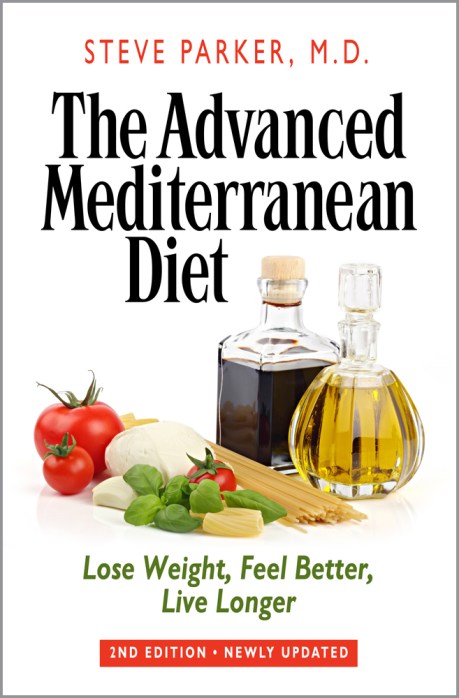
Steve Parker MD, Advanced Mediterranean Diet

Two diet books in one


If you’ve read Control Diabetes and Prediabetes: The Low-Carb Mediterrean Diet, or The Advanced Mediterranean Diet (2nd edition), or KMD: Ketogenic Mediterranean Diet, then you’ve seen the Low-Carb Mediterranean Diet. Advanced Mediterranean Diet also has a traditional portion/calorie-controlled diet. Control Diabetes and KMD both start with the Ketogenic Mediterranean diet (30 carb grams/day) and then add more carbohydrates as tolerated by the individual, resulting in the Low-Carb Mediterranean Diet. Most folks following the Low-Carb Mediterranean Diet will max out carb consumption at 80–100 grams a day.

I’m terrible at marketing myself and my ideas, so I’ve not kept track of individual success stories from the past.

If you’d be willing to share your success story, please email me with a few of the details at steveparkermd AT gmail.com. I’ll not divulge your information to anyone else. If you share with me, I’ll assume I have your permission to send your story and e-mail address to the writer.

Thanks for your consideration.

Steve Parker, M.D.

Your Gluten Sensitivity May Instead be FODMAP Sensitivity

RealClearScience has the details. If you think gluten will make you sick, maybe it does so through a psychological mechanism called the nocebo effect. Melanie Thomassian will teach you about FODMAPs.


Is Pollution Causing Type 2 Diabetes and Obesity?

It sounds like Jerome Ruzzin is convinced it does. I put some thought into it last August and was skeptical—still am, but I’m keeping an open mind. Mr. Ruzzin has a review article published in 2012 at BMC Public Health (“Public health concern behind the exposure to persistent organic pollutants and the risk of metabolic diseases”). Here’s his summary:

The global prevalence of metabolic diseases like obesity and type 2 diabetes, and its colossal economic and social costs represent a major public health issue for our societies. There is now solid evidence demonstrating the contribution of POPs [persistent organic pollutants], at environmental levels, to metabolic disorders. Thus, human exposure to POPs might have, for decades, been sufficient and enough to participate to the epidemics of obesity and type 2 diabetes. Based on recent studies, the fundaments of current risk assessment of POPs, like “concept of additive effects” or “dioxins and dl-PCBs induced similar biological effects through AhR”, appear unlikely to predict the risk of metabolic diseases. Furthermore, POP regulation in food products should be harmonized and re-evaluated to better protect consumers. Neglecting the novel and emerging knowledge about the link between POPs and metabolic diseases will have significant health impacts for the general population and the next generations.

Read the whole enchilada.

Salmon is a good source of omega-3 fatty acids, but are they dangerously polluted?

Salmon are a good source of omega-3 fatty acids, but are they dangerously polluted?

The cold-water fatty fish I so often recommend to my patients could be hurting them. They are major reservoirs of food-based POPs.

Steve Parker, M.D.

QOTD: H.L. Mencken on the U.S. Presidency

As democracy is perfected, the office of president represents, more and more closely, the inner soul of the people. On some great and glorious day the plain folks of the land will reach their heart’s desire at last and the White House will be adorned by a downright moron.

                     –H. L. Mencken

Recipe: Waldorfian Salad

paleobetic diet, low-carb diet

One cup of Waldorfian salad. I doubled the cinnamon in this batch, so yours will look less brown.

Today’s meal is inspired by the classic Waldorf salad, made famous by New York’s Waldorf Hotel over a century ago. The hotel today is called the Waldorf-Astoria.

The primary ingredients are apples, walnuts, and celery.

The original salad was made with mayonnaise, which I left out this time as an experiment in Old Stone Age eating. Cavemen didn’t have mayonaise or Miracle Whip, after all.

paleobetic diet

Good source of omega-3 fatty acids

Instead of mayonnaise, we use a dressing—a vinaigrette—made with walnut oil. Walnut oil is attractive in part because it is rich in omega-3 fatty acids: 1.77 grams per tbsp (15 ml). Compared with Paleolithic diets, modern Western diets are too low in omega-3s and too high in omega-6s. You can use your left-over walnut oil the way you’d use olive oil.

paleobetic diet, low-carb diet, ketogenic diet

I made my dressing in this BPA-laden plastic container

This recipe makes two large servings of 2 cups (480 ml) each. Small or sedentary folks may well be satisfied with a 1- or 1.5-cup serving.

paleobetic diet, low-carb diet, ketogenic diet

Try different varieties of apple and let me know how it works out.

Ingredients:

2 apples, raw, medium size, skin on, diced (I used Red Delicious; consider Granny Smith, Fuji, or Gala)

3 celery stalks, 8-inches long (20 cm), diced

1 cup (240 ml) walnuts, broken by hand into small chunks (Option for ? more flavor: toast in a skillet over medium-high heat for 7-10 minutes or in oven (350 F or 175 C) on baking sheet for 10 minutes

1/4 tsp (1.2 ml) black pepper, ground

1/4 tsp (1.2 ml) salt

1.5 tbsp (22 ml) walnut oil

1 tbsp (15 ml) cider vinegar

1/2 tsp (2.5 ml) cinnamon

1/4 tsp (1.2 ml) nutmeg

Instructions:

First make a dressing with the bottom six ingredients. I put mine in a small container with a lid, then shook vigorously. Or you can put them in a small bowl and whisk them.

paleobetic diet, low-carb diet, ketogenic diet

Walnut pieces

Place the walnuts, apples and celery in a bowel, add the dressing and toss thoroughly. You’re done.

Serve as is, or chill first in the refrigerator. Maybe it was my imagination, but I thought it tasted better after it sat on the counter for 10 minutes. Consider serving on a bed of lettuce (1-2 oz), but if you do, increase your digestible carb count by 1-2 grams.

If you want more calories or protein than this recipe provides, chicken or steak should go well with Waldorfian salad and won’t increase your carb grams.

Number of Servings: 2 (2 cups each)

Advanced Mediterranean Diet Boxes Per Serving: 3 fats, 2 fruits

Nutritional Analysis Per Serving:

73% fat

21% carbohydrate

6% protein

500 calories

27.5 g carbohydrate

7.6 g fiber

20 g digestible carbohydrate

341 mg sodium

529 mg potassium

Prominent features: High in copper and manganese, low in sodium. This is vegetarian (so much for the paleo diet being meat-centric). On a 2,000 calorie diet, this provides only 15% of the Recommended Dietary Allowance for protein, so you’ll want to eat more protein at some point during the day.