Category Archives: Weight Loss

Eat Cod to Lose More Weight

BUS30079Five servings of cod per week led to loss of an extra 3.7 pounds (1.7 kg) over eight weeks, according to a 2009 research report.

European researchers noted that cod consumption in a prior study enhanced weight loss. They wondered if that result could be reproduced, and whether the effect was “dose dependent.” In other words, would those eating more cod lose more weight than those eating less?

They studied 125 subjects between the ages of 20 and 40, with body mass index between 27.5 and 32.5. The abstract doesn’t mention sex of the participants. They were all placed on calorie-restricted diets with identical percentages of protein, fat, and carbohydrate, and were followed for eight weeks. Researchers divided the subjects into three groups:

  1. One group was given 150 g (a little over 5 ounces) of cod three times weekly
  2. Another group was given 150 g cod five times weekly
  3. The third group was given no seafood

Average weight loss overall was 11 pounds (5 kg). The more cod consumed, the greater the weight loss. Those eating five servings a week averaged 3.7 pounds (1.7 kg) more than the group not eating seafood.

It’s unclear whether other types of fish would produce similar results.

These results support the prominent role of fish in the Ketogenic Mediterranean Diet.

Steve Parker, M.D.

Reference: Ramel, A., et al. Consumption of cod and weight loss in young overweight and obese adults on an energy reduced diet for 8-weeks. Nutrition, Metabolism and Cardiovascular Diseases, 19 (2009): 690-696.

Drink Vinegar and Lose 2-4 Pounds Effortlessly

CB052540Japanese researchers a couple years ago documented that daily vinegar reduces body weight, fat mass, and triglycerides in overweight Japanese adults.

Beverages containing vinegar are commonly consumed in Japan. The main component—4 to 8%— of vinegar is acetic acid. Vinegar can lower cholesterol levels, lower blood pressure, and limit increases in blood sugar after meals.

Japanese researchers studied the effects of vinegar on 175 overweight—body mass index between 25 and 30—subjects aged 25 to 60. Men totaled 111; women 64. Average weight 74.4 kg (164 pounds). They were divided into three groups that received either a placebo drink, 15 ml apple vinegar (750 mg of acetic acid), or 30 ml apple vinegar (1,500 mg acetic acid). Placebo and vinegar were mixed into 500 ml of a beverage, half of which was drunk twice daily after breakfast and supper for 12 weeks. Changes in body fat were measured with CT technology. Subjects were told to eat and exercise as usual.

Results

By the end of the 12 weeks, weight had decreased by 1-2 kg (2.2 to 4.4 pounds) in the vinegar drinkers, with 30 ml of vinegar a bit more effective. CT scanning showed that the lost weight was fat mass rather than muscle or water. Triglyceride levels in the vinegar groups fell by about 20%. The placebo drinkers saw no changes.

Four weeks after the intervention ended, subjects were retested: values had returned to their baseline, pre-study levels.

The scientists report that the acetic acid in vinegar inhibits production of fat and may stimulate burning of fat as fuel. Although vinegar contains many other ingredients, they think the acetic acid is responsible for the observed changes.

My Comments

It’s possible that apple vinegar components other than acetic acid led to the weight loss and lowered triglyceride levels. Further study could clarify this.

Remember that weight lossed was regained after the vinegar was discontinued. Would you want to drink the vinegar indefinitely to maintain a loss of 2-4 pounds? Probably not, unless you like vinegar. But adding 12 weeks of vinegar to your weight-loss program might be worth it if you’re just preparing for a school reunion or the start of swimsuit season.

These results may or may not be applicable to non-Japanese races.

This study supports the use of vinaigrette as a salad or vegetable dressing in people trying to lose weight with diets such as the Ketogenic Mediterranean Diet or Advanced Mediterranean Diet. Vinaigrettes are combinations of olive oil and vinegar, often with various spices added. If you eat a salad twice a day, it would be easy to add 15 ml (1 tbsp) of vinegar to your diet daily.

With a little imagination, you could come up with other ways to add 15–30 ml (1–2 tbsp) of vinegar to your diet.

Update May 17, 2012:  After posting this, I ran across on article on the Apple Cider Vinegar Diet at Life123.

Steve Parker, M.D.

Reference: Kondo, Toomoo, et al. Vinegar intake reduces body weight, body fat mass, and serum triglyceride levels in obese Japanese subjects. Bioscience, Biotechnology, and Biochemistry, 73 (2009): 1,837-1,843.

Response to Weight-Loss Diet May Depend on Genes

Dieters with particular genetic make-up respond better or worse to specific types of weight-loss diets, suggest researchers who presented data at the 2010 Cardiovascular Disease Epidemiology and Prevention /Nutrition, Physical Activity, and Metabolism conference. Findings are preliminary, but may explain the common phenomenon of two people going on the same diet, but only one achieving good results.

I’ll bet you can imagine several other explanations.

Several years ago, the “A to Z” study compared the weight loss of 311 overweight women on one of four diets: Atkins (low-carb), Ornish (very low fat, vegetarian), Learn (low-fat), and Zone (moderate carb restriction, high protein, moderate fat). Atkins was a bit better than the other diets, in terms of long-term (one year) weight loss. But within each diet group, some women lost 40–50 pounds (18–23 kg), whereas others gained over 10 pounds (4.5 kg).

Stanford University researchers obtained DNA from 138 of the 311 women and noted the occurence of three genes—ABP2, ADRB2, and PPAR-gamma—that had previously been shown to predict weight loss via diet-gene interactions. For example, a particular mix of these genes predict better weight loss with a low-fat diet; a different mix predicts more loss with a low-carb diet.

Women who had been randomly assigned to one of the A to Z diets tended to lose much more weight if they happened to have the gene mix appropriate for that diet (compared to those on the same diet with the wrong gene mix). The difference, for example, might be loss of 12 pounds versus two pounds.

The lead researcher, Dr. Mindy P. Nelson, told TheHeart.Org that the proportion in the general population genetically predisposed to the low-fat versus low-carb approach is about 50:50.

Take-Home Points

These results, again, are preliminary; additional testing is necessary for confirmation. If they had been able to test the DNA of the other 178 women in the A to Z study, the results could have been either stronger or shown no diet-gene interaction. The study hasn’t even been published in a peer-reviewed journal yet.

Men may or may not be subject to similar diet-gene interaction.

With a little effort, you’ll be able to find the aforementioned genetic test available via the Internet. It’s under $100 (U.S.). The company sends you a kit to swab the inside of your cheek, then you mail your DNA to them.

Other peope just try a particular diet first and see if it works over 4–6 weeks. Successful long-term weight loss is like smoking cessation—most smokers try 5–7 different times or methods before hitting on one that works for them.

Regular readers here know that I advocate, for weight loss, both a reduced-calorie, balanced Mediterranean diet (Advanced Mediterranean Diet) and a very low-carb diet (Ketogenic Mediterranean Diet). Regardless of genetics, experience has taught me that there’s no single weight-loss program that works for everyone across-the-board.

This potential diet-gene interaction could be a major finding that will stop the arguing about which is the single best way to lose excess fat. Many paths may lead to the mountaintop.

Steve Parker, M.D.

Reference: O’Riordan, Michael. Dieting by DNA? Popular diets work best by genotype, reseach shows. HeartWire by TheHeart.Org, March 8, 2010.

Anti-Aging and Other Metabolic Benefits of Exercise

At my Diabetic Mediterranean Diet blog, I recently noted that regular physical activity prevented or postponed death. Onward now to other benefits.

Waist Management

Where does the fat go when you lose weight dieting? Chemical reactions convert it to energy, water, and carbon dioxide, which weigh less than the fat. Most of your energy supply is used to fuel basic life-maintaining physiologic processes at rest, referred to as resting or basal metabolism. Basal metabolic rate (BMR) is expressed as calories per kilogram of body weight per hour.

The major determinants of BMR are age, sex, and the body’s relative proportions of muscle and fat. Heredity plays a lesser role. Energy not used for basal metabolism is either stored as fat or converted by the muscles to physical activity. Most of us use about 70 percent of our energy supply for basal metabolism and 30 percent for physical activity. Those who exercise regularly and vigorously may expend 40–60 percent of their calorie intake doing physical activity. Excess energy not used in resting metabolism or physical activity is stored as fat.

Insulin, remember, is the main hormone converting that excess energy into fat; and carbohydrates are the major cause of insulin release by the pancreas.

To some extent, overweight and obesity result from an imbalance between energy intake (food) and expenditure (exercise and basal metabolism). Excessive carbohydrate consumption in particular drives the imbalance towards overweight, via insulin’s fat-storing properties.

In terms of losing weight, the most important metabolic effect of exercise is that it turns fat into weightless energy. We see that weekly on TV’s “Biggest Loser” show; participants exercise a huge amount. Please be aware that conditions set up for the show are totally unrealistic for the vast majority of people.

Physical activity alone as a weight-loss method isn’t very effective. But there are several other reasons to recommend exercise to those wishing to lose weight. Exercise counteracts the decrease in basal metabolic rate seen with calorie-restricted diets. In some folks, exercise temporarily reduces appetite (but others note the opposite effect). While caloric restriction during dieting can diminish your sense of energy and vitality, exercise typically does the opposite. Many dieters, especially those on low-calorie poorly designed diets, lose lean tissue (such as muscle and water) in addition to fat. This isn’t desirable over the long run. Exercise counteracts the tendency to lose muscle mass while nevertheless modestly facilitating fat loss.

How much does exercise contribute to most successful weight-loss efforts? Only about 10 percent on average. The other 90 percent is from food restriction.

Fountain of Youth

Regular exercise is a demonstrable “fountain of youth.” Peak aerobic power (or fitness) naturally diminishes by 50 percent between young adulthood and age 65. In other words, as age advances even a light physical task becomes fatiguing if it is sustained over time. By the age of 75 or 80, many of us depend on others for help with the ordinary tasks of daily living, such as housecleaning and grocery shopping. Regular exercise increases fitness (aerobic power) by 15–20 percent in middle-aged and older men and women, the equivalent of a 10–20 year reduction in biological age! This prolongation of self-sufficiency improves quality of life.

Heart Health

Exercise helps control multiple cardiac (heart attack) risk factors: obesity, high cholesterol, elevated blood pressure, high triglycerides, and diabetes. Regular aerobic activity tends to lower LDL cholesterol, the “bad cholesterol.” Jogging 10 or 12 miles per week, or the equivalent amount of other exercise, increases HDL cholesterol (“good cholesterol”) substantially. Exercise increases heart muscle efficiency and blood flow to the heart. For the person who has already had a heart attack, regular physical activity decreases the incidence of fatal recurrence by 20–30 percent and adds an extra two or three years of life, on average.

Effect on Diabetes

Eighty-five percent of type 2 diabetics are overweight or obese. It’s not just a random association. Obesity contributes heavily to most cases of type 2 diabetes, particularly in those predisposed by heredity. Insulin is the key that allows bloodstream sugar (glucose) into cells for utilization as energy, thus keeping blood sugar from reaching dangerously high levels. Overweight bodies produce plenty of insulin, often more than average. The problem in overweight diabetics is that the cells are no longer sensitive to insulin’s effect. Weight loss and exercise independently return insulin sensitivity towards normal. Many diabetics can improve their condition through sensible exercise and weight management.

Miscellaneous Benefits

In case you need more reasons to start or keep exercising, consider the following additional benefits: 1) enhanced immune function, 2) stronger bones, 3) preservation and improvement of flexibility, 4) lower blood pressure by 8–10 points, 5) diminished premenstrual bloating, breast tenderness, and mood changes, 6) reduced incidence of dementia, 7) less trouble with constipation, 7) better ability to handle stress, 8) less trouble with insomnia, 9) improved self-esteem, 10) enhanced sense of well-being, with less anxiety and depression, 11) higher perceived level of energy, and 12) prevention of weight regain.

People who lose fat weight but regain it cite lack of exercise as one explanation. One scientific study by S. Kayman and associates looked at people who dropped 20 percent or more of their total weight, and the role of exercise in maintaining that loss. Two years after the initial weight loss, 90 percent of the successful loss-maintainers reported exercising regularly. Of those who regained their weight, only 34 percent were exercising.

Steve Parker, M.D.

Mediterranean Diet Ranked No.2 Overall

US News and World Report last year ranked 20 popular diets for weight loss, overall healthfulness, and diabetes and heart disease management. Overall best diet was awarded to the DASH diet. Mediterranean came in No.2. The Mayo Clinic has free info on the DASH diet. Here’s my definition of the Mediterranean diet.

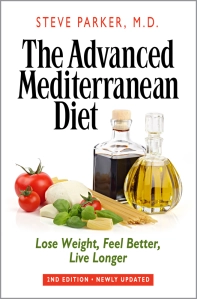
Click for my weight-loss version of the Mediterranean diet: The Advanced Mediterranean Diet (2nd Edition).

Steve Parker, M.D.

Spanish Ketogenic Mediterranean Diet Cures Metabolic Syndrome

The very-low-carb Spanish Ketogenic Mediterranean Diet cures metabolic syndrome, according to investigators at the University of Córdoba in Spain. The metabolic syndrome is a collection of clinical factors that are linked to high risk of developing type 2 diabetes and heart disease. Individual components of the syndrome include elevated blood sugar, high trigylcerides, low HDL cholesterol, high blood pressure, and abdominal fat accumulation.

Spanish researchers put 26 people with metabolic syndrome on the Spanish Ketogenic Mediterranean Diet for twelve weeks and monitored what happened. At baseline, average age was 41 and average body mass index was 36.6. Investigators didn’t say how many diabetics or prediabetics were included. No participant was taking medication.

What’s the Spanish Ketogenic Mediterranean Diet?

Calories are unlimited, but dieters are encouraged to keep carbohydrate consumption under 30 grams day. They eat fish, lean meat, eggs, chicken, cheese, green vegetables and salad, at least 30 ml (2 tbsp) daily of virgin olive oil, and 200-400 ml of red wine daily ( a cup or 8 fluid ounces equals 240 ml). On at least four days of the week, the primary protein food is fish. On those four days, you don’t eat meat, chicken, eggs, or cheese. On up to three days a week, you could eat non-fish protein foods but no fish on those days.

How’s this different from my Ketogenic Mediterranean Diet? The major differences are that mine includes one ounce (28 g) of nuts daily, less fish overall, and you can mix fish and non-fish protein foods every day.

Regular exercisers were excluded from participation, and my sense is that exercise during the diet trial was discouraged.

What Were the Results?

Metabolic syndrome resolved in all participants.

Three of the original 26 participants were dropped from analysis because they weren’t compliant with the diet. Another one was lost to follow-up. Final analysis was based on the 22 who completed the study.

Eight of the 22 participants had adverse effects. These were considered slight and mostly appeared and disappeared during the first week. Effects included weakness, headache, constipation, “sickness”, diarrhea, and insomnia.

Average weight dropped from 106 kg (233 lb) to 92 kg (202 lb).

Body mass index fell from 36.6 to 32.

Average fasting blood sugar fell from 119 mg/dl (6.6 mmol/l) to 92 mg/dl (5.1 mmol/l).

Triglycerides fell from 225 mg/dl to 110 mg/dl.

Average systolic blood pressure fell from 142 mmHg to 124.

Average diastolic blood pressure fell from 89 to 76.

So What?

A majority of people labeled with metabolic sydrome continue in metabolic sydrome for years. That’s because they don’t do anything effective to counteract it. These researchers show that it can be cured in 12 weeks, at least temporarily, with the Spanish Ketogenic Mediterranean Diet.

Very-low-carb diets are especially good at lowering trigylcerides, lowering blood sugar, and raising HDL cholesterol. Overweight dieters tend to lose more weight, and more quickly, than on other diets. Very-low-carb diets, therefore, should be particularly effective as an approach to metabolic syndrome. It’s quite possible that other very-low-carb diets, such as Atkins Induction Phase, would have performed just as well as the Spanish Ketogenic Mediterranean Diet. In fact, most effective reduced-calorie weight-loss diets would tend to improve metabolic syndrome, even curing some cases, regardless of carb content.

Most physicians recommend that people with metabolic syndrome either start or intensify an exercise program. The program at hand worked without exercise. I recommend regular exercise for postponing death and other reasons.

Will the dieters of this study still be cured of metabolic syndrome a year later? Unlikely. Most will go back to their old ways of eating, regaining the weight, and moving their blood sugars, triglycerides, and HDL cholesterols in the wrong direction.

Steve Parker, M.D.

Reference: Pérez-Guisado J, & Muñoz-Serrano A (2011). A Pilot Study of the Spanish Ketogenic Mediterranean Diet: An Effective Therapy for the Metabolic Syndrome. Journal of medicinal food PMID: 21612461

Does Loss of Excess Weight Improve Longevity?

Intentional weight loss didn’t have any effect either way on risk of death, according to research out of Baltimore. Surprising, huh?

Obesity tends to shorten lifespan, mostly due to higher rates of cancer and cardiovascular disease like heart attacks and strokes. Doctors and dietitians recommend loss of excess weight all day long, figuring it will reduce the risk of obesity-related death and disease. That’s not necessarily the case, however. It’s called the “obesity paradox“: some types of overweight and obese patients actually seem to do better (e.g., live longer) if they’re above the so-called healthy body mass index of 18.5 to 24.9. For instance: those with heart failure, coronary artery disease, and advanced kidney disease.

It’s never really been clear whether the average obese person (body mass index over 30) improves his longevity by losing some excess weight. That’s what the study at hand is about.

Methodology

Baltimore-based investigators followed the health status of 585 overweight or obese older adults over the course of 12 years. Half of them were randomized to an intentional weight loss intervention. All of them had a high blood pressure diagnosis. Average age was 66. Average body mass index was 31. Details of the weight-loss intervention are unclear, but it was probably along the lines of “eat less, exercise more.”

What Did They Find?

The weight-loss group lost and maintained an average of 4.4 kg (9.7 lb) over the 12 years of the study. This is about 5% of initial body weight, the minimal amount thought to be helpful for improvement in weight-related medical problems. Most of the weight loss was over the first three years.

The men assigned to the weight-loss program had about half the risk of dying over the course of the study, compared to the men not assigned to weight loss. The authors don’t seem to put much stock in it, however, stating that “…no significant difference overall was found in all-cause mortality between older overweight and obese adults who were randomly assigned to an intentional weight-loss intervention and those who were not.”

Comments

With regards to the men losing weight, we’re only talking about 100-150 test subjects, a relatively small number. So I understand why the researchers didn’t make a big deal of the lower mortality: it may not be reproducible.

This same research group did a similar study of 318 arthritis patients and intentional weight loss, finding a 50% lower death rate over eight years.

The authors reviewed many similar studies done by other teams, noting increased death rates from weight loss in some studies, and lesser death rates in others.

When the studies are all over the place like this, it usually means there’s no strong association either way. Nearly all the pertinent studies were done on relatively healthy, middle-aged and older folks. The most reliable thing you can say about the issue is that loss of excess fat weight doesn’t increase your odds of premature death.

Remember that patients with coronary heart disease, congestive heart failure, or advanced kidney disease tend to live longer if they’re overweight or at least mildly obese. It’s the obesity paradox. Will they live longer or die earlier if they go on a weight-loss program? We don’t know.

We do know that intentional weight loss helps:

  • prevent type 2 diabetes
  • maintain reasonable blood pressures (avoiding high blood pressure)
  • improves lower limb functional ability

Maybe that’s enough.

Steve Parker, M.D.

Reference: Shea MK, Nicklas BJ, Houston DK, Miller ME, Davis CC, Kitzman DW, Espeland MA, Appel LJ, & Kritchevsky SB (2011). The effect of intentional weight loss on all-cause mortality in older adults: results of a randomized controlled weight-loss trial. The American journal of clinical nutrition, 94 (3), 839-46 PMID: 21775558

Actor Alec Baldwin Eliminates Sugar, Loses 30 Pounds

Mother Nature Network last January reported Alec Baldwin’s successful weight loss effort.  An excerpt:

“I gave up sugar,” he told Access Hollywood. “I lost 30 pounds in four months. It’s amazing.”
“(I do) Pilates, spin, not as much yoga as I’d like,” he added. “When we’re shooting (’30 Rock’) it’s tough…When we’re shooting and I can’t work out, I just have to eat less. So, I’m very conscious of that. But sugar was the real killer for me — that was the problem.”


Book Review: The Blood Sugar Solution

I just finished reading the No.1 book at Amazon.com, The Blood Sugar Solution: The UltraHealthy Progam for Losing Weight, Preventing Disease, and Feeling Great Now!  Published in 2012, the author is Dr. Mark Hyman. I give it three stars per Amazon’s rating system (“It’s OK”).  Actually, I came close to giving it two stars, but was afraid the review would have been censored at the Amazon site.

♦   ♦   ♦

The book’s promotional blurbs by the likes of Dr. Oz, Dr. Dean Ornish, and Deepak Chopra predisposed me to dislike this book.  But it’s not as bad as I thought it’d be.

The good parts first.  Dr. Hyman favors the Mediterranean diet, strength training, and high-intensity interval training.  His recommended way of eating is an improvement over the standard American diet, improving prospects for health and longevity.  His dietary approach to insulin-resistant overweight/obesity and type 2 diabetes includes 1) avoidance of sugar, flour, processed foods, 2) preparation of your own meals from natural, whole food, and 3) keeping glycemic loads low.  All well and good for weight loss and blood sugar control.  It’s not a vegetarian diet.

The author proposes a new trade-marked medical condition: diabesity. It refers to insulin resistance in association with (usually) overweight, obesity, and/or type 2 diabetes mellitus.  Dr. Hyman says half of Americans have this brand-new disorder, and he has the cure.  If you don’t have overt diabetes or prediabetes, you’ll have to get your insulin levels measured to see if you have diabesity.

He reiterates many current politically correct fads, such as grass-fed/pastured beef, organic food, detoxification, and strict avoidance of all man-made chemicals, notwithstanding the relative lack of scientific evidence supporting many of these positions.

Dr. Hyman bills himself as a scientist, but his biography in the book doesn’t support that label.  Shoot, I’ve got a degree in zoology, but I’m a practicing physician, not a scientist.

The author thinks there are only six causes of all disease: single-gene genetic disorders, poor diet, chonic stress, microbes, toxins, and allergens.  Hmmm… None of those explain hypothyroidism, rheumatoid arthritis, systemic lupus erythematosis, tinnitus, migraines, irritable bowel syndrome, Parkinsons disease, chronic fatigue syndrome, or multiple sclerosis, to name a few that don’t fit his paradigm.

Dr. Hyman makes a number of claims that are just plain wrong.  Here are some:
  – Over 80% of Americans are deficient in vitamin D
  – Lack of fiber contributes to cancer
  – High C-reactive protein (in blood) is linked to a 1,700% increased probability of developing diabetes
  – Processed, factory-made foods have no nutrients
  – We must take nutritional supplements

Furthermore, he recommends a minimum of 11 and perhaps as many as 16 different supplements even though the supportive science is weak or nonexistent.  Is he selling supplements?

After easily finding these bloopers, I started questioning many other of the author’s statements.   

I was very troubled by the apparent lack of warning about hypoglycemia (low blood sugar).  Many folks with diabetes will be reading this book.  They could experience hypoglycemia on this diet if they’re taking certain diabetes drugs: insulin, sulfonylureas, meglitinides, pramlintide plus insulin, exenatide plus sulfonylurea, and possibly thiazolidinediones, to name a few instances.

If you don’t have diabetes but do need to lose weight, this book may help.  If you have diabetes, strongly consider an alternative such as Dr. Bernstein’s Diabetes Solution or my Conquer Diabetes and Prediabetes.

In the interest of brevity, I’ll not comment on Dr. Hyman’s substitution of time-tested science-based medicine with his own “Functional Medicine.”

Steve Parker, M.D.

Does Cutting Out Sugary Drinks Help With Weight Loss?

Are you obese, love sugary drinks, and want to easily lose four pounds (1.8 kg) over the next six months? Simply cut a couple of sugary drinks out of your daily diet, replace them with water or diet soda, and you may lose the pounds.  Or so say University of North Carolina researchers.
Down 4 pounds in 6 months. I'll take it!

In the U.S., our consumption of calories from sugar-sweetened beverages (SSBs) almost doubled between 1965 and 2002, now comprising 21% of our total calories.  (I’ve seen lower estimates, too, such as all added sugars accounting for 17% of total calories.)  Remember that our overweight and obesity rates started rising around 1970.  Any connection there?

Some have speculated that cutting back on SSB consumption would lead to loss of some excess weight.  But it’s never really been tested until now.

By the way, your typical sugary carbonated beverage has 145 calories of pure carbohydrate, most often high fructose corn syrup.  That’s equivalent to 10 tsp (50 ml) of table sugar.  Soft drinks are liquid candy.

Methodology

UNC investigators recruited  about 300 overweight and obese folks (average BMI 36, average weight 100 kg (220 lb), 84% female, 54% black) who drank at least 280 calories daily of caloric beverages (sugar-sweetened beverages, juice, juice drinks, sweetened coffee and tea, sweetened milk, sports drinks, and alcohol).  In other words, they all drank at least two soft drinks or the equivalent daily.  Participants agreed to make a dietary substitution for six months.

The participants were randomly assigned to one of three study groups with a hundred participants per group. For the next six months…

  • Group WA substituted at least two of their SSBs daily with water (WA), any type as long as it was calorie-free.  Bottled water was provided.  This reduced sugary drink calories by 230/day.
  • Group DB substituted at least two of their SSBs daily with calorie-free diet beverages (DB).  Beverages were provided.  This reduced sugary drink calories by 230/day.
  • Group AC (attention controls) made no changes in baseline beverage consumption.  Investigators made a point not to talk to them about beverages.

All three groups had monthly group meetings.  WA and DB group meetings were focused on adherence to the beverage substitution guidelines.
The AC group meetings will involved a weigh-in and general weight loss information (e.g., read food labels, increase vegetable consumption, portion control, and increase physical exercise).

“All … groups had access to a group-specific …website, where they recorded the beverages (water and DB only) they consumed, reported their weekly weight, received feedback on progress, viewed tips, and linked to group-specific resources.”

Results

All three groups lost statistically significant amounts of weight, but there was no difference in amount of weight lost among the groups.  In other words, the folks who substituted water or diet beverages for  sweet drinks didn’t do any better than the AC (attentive control) group.

Average amounts of weight lost were in the range of 1.8 to 2.5% of total body weight.  For example, if you weigh 200 lb (91 kg) and lose 2% of your weight, that’s a 4-lb loss (1.8 kg). 

Compared to the AC group, the WA group showed a statistically significant decrease in fasting blood sugar (down 3 mg/dl).  BTW, none of the participants were diabetic.

Sugar cane

Take-Home Points

Would the substituters have lost weight if they had simply cut out two sugary drinks a day, skipping the monthy meetings and website?  Don’t know.  But I bet that’s how the mainstream press will spin this. 

If I were obese and had a sugary drink habit, I’d start substituting water.  Yesterday.

Substituting water for a couple sugary drinks a day could reduce risk of developing diabetes.

I was hoping to see a significantly greater weight loss in the water and diet drink substituters compared to the AC (Attention Control) group.  Presumably all of these AC folks would have stayed at their baseline weights if they hadn’t done any of this.  The substitution groups apparently didn’t receive the general weight-loss information given to the AC group.

One caveat: All groups had monthly meetings for six months.  What were the substitution groups  talking about other than adherence to the protocol?  Your guess is as good as mine since the researchers don’t say.  Perhaps something about those meetings led to the weight loss, not the act of substituting water or diet drinks for sugar.

So they lost an average of 4–5 lb (2 kg).  Big deal, right?  But remember this was just a six-month study.  Could that 4 lb turn into 12 lb (5.5 kg) over 18 months?  Maybe, but we don’t know. 

Here’s the thing about averages.  Some of these people I’m sure lost closer to 5% of body weight, and some didn’t lose any, or gained.  Which group would you be in?  Only one way to find out. 

Remember that many medical conditions linked to overweight and obesity improve with loss of just 5% of body weight.

The substituters cut out 230 calories a day of sugary drinks.  All other things being equal, they should have lost 12 lb (5.5 kg).  Problem is, all other things aren’t equal.  Numerous other factors are at play, such as activity levels, replacement of sugary drink calories with other calories, measurement errors, reporting errors, etc.

This was a female-heavy study.  Would this strategy work for men?  Even better in men?  We don’t know.  Why not try it yourself?

Steve Parker, M.D.

PS: I did a sugar-free and wheat-free experiment on myself earlier this year.  Lost some weight, too.

Reference: Tate, Deborah, et al.  Replacing caloric beverages with water or diet beverages for weight loss in adults: main results of the Choose Healthy Options Conscioulsly Everday (CHOICE) randomized clinical trialAmerican Journal of Clinical Nutrition, February 1, 2012, Epub ahead of print.  doi: 10.3945/ajcn.111.026278