Category Archives: Stroke

Even If You Already Have Cardiovascular Disease, the Mediterranean Diet Helps

…to prevent future events—like heart attacks and strokes—and to prolong life. Details are at the American Journal of Clinical Nutrition.

Do Fruits and Vegetables Prevent Disease? Which Ones?

Potential answers are in the American Journal of Clinical Nutrition (2012).  I quote:

For hypertension, coronary heart disease, and stroke, there is convincing evidence that increasing the consumption of vegetables and fruit reduces the risk of disease. There is probable evidence that the risk of cancer in general is inversely associated with the consumption of vegetables and fruit. In addition, there is possible evidence that an increased consumption of vegetables and fruit may prevent body weight gain. As overweight is the most important risk factor for type 2 diabetes mellitus, an increased consumption of vegetables and fruit therefore might indirectly reduces the incidence of type 2 diabetes mellitus. Independent of overweight, there is probable evidence that there is no influence of increased consumption on the risk of type 2 diabetes mellitus. There is possible evidence that increasing the consumption of vegetables and fruit lowers the risk of certain eye diseases, dementia and the risk of osteoporosis. Likewise, current data on asthma, chronic obstructive pulmonary disease, and rheumatoid arthritis indicate that an increase in vegetable and fruit consumption may contribute to the prevention of these diseases. For inflammatory bowel disease, glaucoma, and diabetic retinopathy, there was insufficient evidence regarding an association with the consumption of vegetables and fruit.

It bothers me that vegetables and fruits are lumped together: they’re not the same.

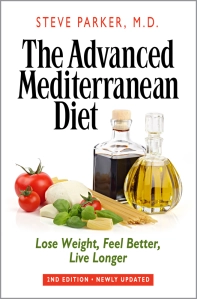
All of my diets—Advanced Mediterranean, Low-Carb Mediterranean, and Ketogenic Mediterranean—provide plenty of fruits and vegetables.

Berry Science, or Berriology

Mmm, mm, good! And they’re low carb

The Mediterranean diet was originally found to be a healthy diet by comparing populations who followed the diet with those who didn’t.  The result?  Mediterranean dieters enjoyed longer lifespans and less heart disease, cancer, strokes, diabetes, and dementia.

Over the last 15 years, researchers have been clarifying exactly how and why this might be the case.  A study from Finland is a typical example.

The traditional Mediterranean diet provides an abundance of fresh fruit, including berries.  Berries are a rich source of vitamin C and polyphenols, substances with the potential to affect metabolic and disease processes in our bodies.

The Finnish researchers studied 72 middle-aged subjects, having half of them consume moderate amounts of berries, and half consume a placebo product over 8 weeks.  Compared with the placebo group, the berry eaters showed inhibited platelet funtion, a 5% increase in HDL cholesterol (the “good” cholesterol), and a 7-point drop in systolic blood pressure.

What does platelet function have to do with anything?  Platelets are critical components of blood clots.  Blood clots can stop life-threatening bleeding, but also contribute to life-threatening strokes and heart attacks.  Inhibition of platelet function can decrease the occurence of blood clots that cause heart attacks and strokes.  That’s why millions of people take daily aspirin, the best known platelet inhibitor.

Cardiovascular disease is a group of conditions that include high blood pressure, heart attacks, poor circulation, and strokes.  Berry consumption in this small Finnish study resulted in favorable changes in blood pressure, HDL cholesterol, and platelet function.  These changes would tend to reduce the occurence and severity of cardiovascular disease.

So berries don’t just taste good, they’re good for us.  If price is a concern, focus on the berries that are in season or use frozen berries.

Steve Parker, M.D.

Reference: Erlund, I., et al, Favorable effects of berry consumption on platelet function, blood pressure, and HDL cholesterol.  American Journal of Clinical Nutrition, 87 (2007): 323-331.

Fat or Fit: Which Is Healthier?

Men live longer if they improve or maintain their fitness level over time, according to research out of the Cooper Clinic in Dallas, Texas. Part of that improved longevity stems from reduced risk of death from cardiovascular disease such as heart attack and stroke.

Compared with men who lose fitness with aging, those who maintained their fitness had a 30% lower risk of death; those who improved their fitness had a 40% lower risk of death. Fitness was judged by performance on a maximal treadmill exercise stress test.

Body mass index over time didn’t have any effect on all-cause mortality but was linked to higher risk of cardiovascular death. The researchers, however, figured that losses in fitness were the more likely explanation for higher cardiovascular deaths. In other words, as men age, it’s more important to maintain or improve fitness than to lose excess body fat or avoid overweight.

Steve Parker, M.D.

Reference: Lee, Duck-chul, et al. Long-term effects of changes in cardiorespiratory fitness and bodly mass index on all-cause and cardiovascular disease mortality in men. Circulation, 124 (2011): 2,483-2,490

Tuna Preserves Brain Blood Flow In People Over 65

Among people over 65, consumption of tuna/other fish is associated with preserved blood flow to the brain, according to a 2008 research report in the journal Neurology.

“Silent” brain infarcts – tiny strokes that are not obvious – are very common with advancing age. If a group of people 65 and older is MRI scanned and found to have no strokes, MRI scans performed five years later will show tiny strokes in 20% of them. Almost 90% of these new strokes are simply incidental findings without clinically evident stroke or transient ischemic attack.

As the authors point out:

Subclinical infarcts and white matter abnormalities are considered to be of vascular origin, presumably resulting from occlusion of small arteries in the brain and subsequent ischemia.

These subclinical strokes, along with brain white matter abnormalities, are not benign. They are associated eventually with impairment in thinking and behavior, and with higher risk of future obvious stroke.

Eating tuna or other broiled or baked fish tends to raise plasma omega-3 fatty acid levels and is associated with lower stroke risk and dementia and Alzheimer disease. Researchers wondered if fish consumption affected the risk of subclinical brain infarcts or other subclinical brain abnormalities.

Methodology

Scientists studied 3,660 participants over 65 years old in the Cardiovascular Health Study, by MRI scanning, lab testing, physical exam, and food frequency questionnaire. Five years later, 2,313 were rescanned. Hospital and clinic records were reviewed. Participants were men and women in four U.S. communities. Fish intake was classified as to whether tuna, other broiled or baked fish, and fried fish or fish sandwiches (fish burgers). In a subset of participants, blood levels of omega-3 fatty acids were measured.

Conclusions of the Scientists

Among older adults, modest consumption of tuna/other fish, but not fried fish, was associated with lower prevalence of subclinical infarcts and white matter abnormalities on MRI examinations. Our results add to prior evidence that suggest that dietary intake of fish with higher eicosapentaenoic acid [EPA] and docosahexaenoic acid [DHA] content, and not fried fish intake, may have clinically important health benefits.

…the results of the present article support the growing evidence that the type of fish meal consumed is important for obtaining the health benefits of fish consumption.

Discussion

The fish with higher omega-3 fatty acids, such as EPA and DHA, are the cold-water fatty fish such as albacore tuna, salmon, trout, sardines, anchovies, herring, halibut, sea bass, swordfish, and mackerel. These are sometimes referred to as dark meat fish or oily fish. These are the same types of fish most closely associated with lower rates of coronary artery disease and sudden cardiac death.

The types of fish used in fish sticks, fish burgers, and other fried fish meals are typically low in omega-3 fatty acids.

If you choose to eat fish for the health benefits, aim for two servings per week of cold-water fatty fish. The Friday night all-U-can-eat fried catfish buffet doesn’t cut it.

Steve Parker, M.D.

Reference: Virtanen, J.K., et al. Fish consumption and risk of subclinical brain abnormalities on MRI in older [U.S.] adults. Neurology, 71 (2008): 439-446.

It’s Not Too Late to Get Healthier, Even if Middle-Aged

Are your eventual health problems a matter of fate by the time you reach middle age?

A study from the Medical University of South Carolina asked whether middle-aged folks could improve their health and longevity by making healthful changes in lifestyle.  15,708 study participants, ages 45-64, were surveyed with regards to four “healthy lifestyle” components, namely:

  • five or more fruits and vegetables daily
  • regular exercise
  • healthy weight range (BMI 18.5-29.9)
  • no current smoking

When first surveyed, 8.5% of the participants had all four of the healthy lifestyle components.  When surveyed six years later, 8.4% of the remainder had adopted these four healthy lifestyle features.  Overall death rate and cardiovascular disease events were monitored over the next four years.  Compared to the study participants who did not adopt a healthy lifestyle, the new adopters had a 40% lower incidence of death from all causes and 35% less cardiovascular disease events.

So middle-aged people can improve their longevity and avoid cardiovascular disease by making healthy lifestyle changes.  These improvements are very significant in degree and comparable to, if not better than, results seen with many expensive medications and invasive medical procedures.

Why not make some changes today?

Steve Parker, M.D.

References: King, Dana E., et al.  Turning Back the Clock: Adopting a Healthy Lifestyle in Middle Age.  American Journal of Medicine, 120(2007): 598-603.

Eye-Popping Statistics

I often talk to people interested in improving their health or losing weight via lifestyle modification, mostly changes in diet and exercise.  Many of them are motivated by health-related facts.  Here is a smattering of facts I compiled in 2008 (so some are outdated), starting out worrisome and ending hopeful: 

  • 65% of U.S. adults are overweight or obese.  Half are overweight, half are obese. 

  • 12% of deaths in the U.S. are due to lack of regular physical activity – 250,000 deaths yearly.

  • 11% of U.S. adults have diabetes mellitus.

  • 24 million in the U.S. have diabetes.  Another 57 million have pre-diabetes, a condition that increases your risk for diabetes.

  • 23% of U.S. adults over 60 have diabetes. 

  • 85% of people with type 2 diabetes are overweight.

  • 200,000 yearly deaths in the U.S. are due to obesity.

  • Excess body fat causes 14 to 20% of all cancer-related deaths in the U.S.

  • 550,000 people die yearly of cancer in the U.S. 

  • Obesity-related cancers in men: prostate and colorectal.  Obesity-related cancers in women: endometrial (uterine), cervix, ovary, breast.  Both sexes: kidney, esophageal adenocarcinoma.

  • 20% of us in the U.S. will die of cancer.

  • Lifetime risk of developing invasive cancer in the U.S. is four in 10 (a little higher in men, a little lower in women).

  • At least one-half of high blood pressure cases are caused by excess body fat.  Every 20 pounds of excess fat increases blood pressure by two to three points.

  • Peak aerobic power (a measure of physical fitness) decreases by 50% between age 20 and 65.

  • Middle-aged and older people through regular exercise can increase their aerobic power by 15 to 20%, equivalent to a 10 or 20-year reduction in biological age. 

  • Regular aerobic exercise reduces blood pressure by 8 to 11 points.  

  • Have you already had a heart attack?  If so, regular exercise reduces the odds of fatal recurrence by 25% and adds two to three years to life.

  • The Mediterranean diet is associated with lower incidence of cancer (colon, breast, prostate, uterus), cardiovascular disease (e.g., heart attacks), and dementia (both Alzheimers and vascular types). 

  • High fruit and vegetable consumption protects against cancer of the lung, stomach, colon, rectum, oral cavity, and esophagus.  The protective “dose” is five servings a day.

  • Coronary artery disease is the cause of heart attacks and many cases of sudden cardiac death.  Legume consumption lowers the risk of coronary artery disease.  The protective dose is four servings of legumes a week. 

  • Whole grain consumption is associated with reduced risk of coronary artery disease (e.g., heart attacks), lower risk of death, lower incidence of type 2 diabetes and several cancers.  The protective dose is three servings a day. 

The good news is that we can significantly reduce our risk of premature death and common illnesses such as high blood pressure, cancer, diabetes, coronary artery disease, and dementia.  How?  Weight management, diet modification, and physical activity.     

Steve Parker, M.D.

Evidence In Favor of Healthfulness of Whole Grains

I bought a sack of potatoes the other day.  The advertising on the sack proclaimed   these potatoes as “Gluten-Free!”.  As if other potatoes have gluten (they don’t).

In these days of gluten-free this and gluten-free that, the health benefits of grains—especially wheat—are being questioned.

A 2008 review article in a scientific journal confirmed the association between high whole grain intake and reduced incidence of cardiovascular disease.  Heart disease and strokes (subsets of cardiovascular disease) are the first and fourth leading causes of death, respectively, in the U.S.

The article authors, Philip Mellen, Thomas Walsh, and David Herrington, reviewed the scientific literature on the subject and found seven pertinent published observational studies.  Study participants were divided into those with high average whole grain intake (2.5 servings per day) and those with low average intake (0.2 servings a day, or 1 serving every 5 days).  Compared with low intake, participants with high intake had 21% lower risk of cardiovascular disease events, such as heart disease, stroke, and death from cardiovascular disease.

Refined grain intake, such as standard white bread, was not associated with cardiovascular disease one way or the other.

The authors conclude, “There is a consistent, inverse association between dietary whole grains and incident cardiovascular disease…and clinicians should redouble efforts to incorporate clear messages on the beneficial effects of whole grains into public health and clinical practice endeavors.”

I’ll be the first to admit that observational studies don’t prove that whole grains reduce the risk of cardiovascular disease.  They identify an association that should lead to additional testing of the hypothesis.  I don’t see any proof on the foreseeable horizon.

If heart attacks and strokes ran in my blood lines (genes), I’d try to incorporate two or three daily servings of whole grain into my diet, assuming I had no good reasons to avoid grains.

That being said, I’m also convinced that many can live long health lives without grains.

Steve Parker, M.D.

References and resources:

Mellen, Philip, et al.  Whole grain intake and cardiovascular disease: A meta-analysis.  Nutrition, Metabolism & Cardiovascular Diseases, 18, (2008): 283-290.

The Whole Grains Council.  Learn more about the benefits of various whole grains and how to find whole grain products.  Many recipes here, plus links to hundreds of recipes at other websites.

Alcohol Habit (Especially Wine) Starting in Middle-Age Reduces Heart Attack and Stroke

Jesus turned water into wine at a wedding.  His mother asked him to do it.  Of all the miracles he performed and could have performed, I wonder why this is the first one recorded in the Holy Bible.

We have known for years that low or moderate alcohol consumption tends to lower the risk of cardiovascular disease such as heart attack and stroke, and prolongs life span.  Physicians have been hesitant to suggest that nondrinkers take up the habit.  We don’t want to be responsible for, or even accused of, turning someone into an alcoholic.  We don’t want to be held accountable for someone else’s drunken acts.  Every well-trained physician is quite aware of the ravages of alcohol use and abuse.  We see them up close and personal in our patients.

A scientific study from a few years ago, however, lends support to a middle-aged individual’s decision to start consuming moderate amounts of alcohol on a regular basis.  It even provides a positive defense if a doctor recommends it to carefully selected patients.

This research, by the way, was supported by a grant from the National Heart, Lung, and Blood Institute, not the wine/alcohol industry.

Methodology

Researchers at the Medical University of South Carolina examined data on 15,637 participants in the Atherosclerosis Risk in Communities (ARIC) study over a 10-year period.  These men and women were 45 to 64 years old at the time of enrollment, living in four communities across the U.S.  Of the participants, 27% were black, 73% nonblack, 28% were smokers, and 80% of them had high blood pressure, high cholesterol, or diabetes.

Out of 15,637 participants at the time of enrollment, 7,359 indicated that they didn’t drink alcohol.  At baseline, these 7,359 had no cardiovascular disease except for some with high blood pressure.    Subsequent interviews with them found that six percent of the nondrinkers – 442 people – decided independently to become moderate alcohol drinkers.  Or at least they identified themselves as such.

“Moderate” intake was defined as 1-14 drinks per week for men, and 1-7 drinks a week for women.  Incidentally, 0.4% of the initial non-drinking cohort – 21 people – became self-identified heavy drinkers.

93.6% of the 7,359 non-drinkers said that they continued to be non-drinkers.  These 6,917 people are the “persistent nondrinkers.”

Type of alcohol consumed was also surveyed and broken down into 1) wine-only drinkers, or 2) mixed drinkers: beer, liquor, wine.

Researchers then monitored health outcomes for an average of 4 years, comparing the “new moderate drinkers” with the “persistent nondrinkers.”

Results

  •  Over 4 years, 6.9% of the new moderate drinkers suffered a cardiovascular event, defined as a heart attack, stroke, a coronary heart disease procedure (e.g, angioplasty), or death from cardiovascular disease.
  • Over 4 years, 10% of the persistent nondrinkers suffered a cardiovascular event.
  • The new moderate drinkers were 38% less likely than persistent nondrinkers to suffer a new cardiovascular event (P = 0.008, which is a very strong association).  The difference persisted even after adjustment for demographic and cardiovascular risk factors.
  • There was no difference in all-cause mortality (death rate) between the new moderate drinkers and the persistent nondrinkers.
  • New  drinkers had modest but statistically significant improvements in HDL and LDL cholesterol and mean blood pressure compared with persistent nondrinkers.
  • 133 new moderate drinkers consumed only wine
  • 234 new moderate drinkers consumed mixed types of alcohol
  • Wine-only drinkers were 68% less likely than nondrinkers to suffer a cardiovascular event.
  • “Consumers of moderate amounts of beer/liquor/mixed (which includes some wine) tended to also be less likely to have had a subsequent cardiovascular event than nondrinkers…but the difference was not significant.”

A Few Study Limitations

  • Four years is a relatively brief follow-up, especially for cancer outcomes.  Alcohol consumption is associated with certain types of cancer.
  • If moderate alcohol consumption indeed lowers death rates as suggested by several other studies, this study may not have lasted long enough to see it.
  • The alcohol data depended on self-reports.

Take-Home Points

The study authors cite four other studies that support a slight advantage to wine over other alcohol types.  It’s a mystery to me why they fail to stress the apparent superiority of wine in the current study.  Several other studies that found improved longevity or cardiovascular outcomes in low-to-moderate drinkers suggest that the type of alcohol does not matter.  Perhaps “the jury is still out.”  In the study at hand, however, it is clear that the reduced cardiovascular disease rate in new moderate drinkers is associated with wine.

In all fairness, other studies show no beneficial health or longevity benefit to alcohol consumption.  But at this point, the majority of published studies support a beneficial effect.

Wine is a component of the traditional healthy Mediterranean diet.  The Mediterranean diet is associated with prolonged life span and reduced cardiovascular disease.  This study strongly suggests that wine is one of the causative healthy components of the Mediterranean diet.

Starting a judicious wine habit in middle age is relatively safe for selected people and may, in fact, improve cardiovascular health, if not longevity.

Now the question is, red or white.  Or grape juice?

Steve Parker, M.D.

Reference:  King, Dana E., et al.  Adopting Moderate Alchohol Consumption in Middle Age: Subsequent Cardiovascular Events.  American Journal of Medicine, 121 (2008): 201-206.

Mediterranean Diet Cuts Stroke Risk In Women

The journal Circulation in 2009 reported that the Mediterranean diet reduces risk of stroke in women by 13%. This supplements our prior knowledge that the healthy diet is associated with lower risk of coronary heart disease in both men and women.

Researchers in Boston analyzed the records of 74,886 middle-aged women in the Nurses’ Health Study to deteremine how closely they followed a Mediterranean diet pattern. They followed participants’ health status for 20 years, noting how many women developed stroke, coronary heart disease, and “cardiovascular death” (fatalities from strokes and coronary heart disease combined).

Compared with the women who adhered minimally to the Mediterranean diet pattern, the women with highest compliance had 13% fewer strokes. Consistent with earlier studies, the Mediterranean dieters had 39% lower risk of cardiovascular death and 29% lower risk for coronary heart disease (again, comparing the women with highest and lowest compliance).

Take-Home Points

To gain the health benefits of the Mediterranean diet, consider making changes to the way you eat.

Here are the characteristics of the traditional Mediterranean diet:

  • It maximizes natural whole foods and minimizes highly processed ones
  • Small amounts of red meat
  • Less than four eggs per week
  • Low to moderate amounts of poultry and fish
  • Daily fresh fruit
  • Seasonal locally grown foods with minimal processing
  • Concentrated sugars only a few times per week
  • Wine in low to moderate amounts, and usually taken at mealtimes
  • Milk products (mainly cheese and yogurt) in low to moderate amounts
  • Olive oil as the predominant fat
  • Abundance of foods from plants: vegetables, fruits, beans, potatoes, nuts, seeds, breads and other whole grain products

Steve Parker, M.D.

Reference: Fung, Teresa, et al. Mediterranean diet and incidence of and mortality from coronary heart disease and stroke in women. Circulation, 119 (2009): 1,093-1,100.